
The Science of Thermal Recovery: When to Use Cold Plunges vs. Saunas
Deliberate cold exposure and heat therapy both accelerate athletic recovery, but they trigger opposite physiological mechanisms. Understanding when to use ice or heat is critical, as the wrong timing can actually blunt muscle growth.
By Factlen Editorial Team
- Endurance & Team Sports
- Prioritizing rapid functional recovery and the mitigation of acute muscle soreness.
- Systemic Wellness & Longevity
- Leveraging thermal stress for neurochemical balance and cellular resilience.
- Strength & Hypertrophy
- Protecting the inflammatory signals required for muscle protein synthesis.
What's not represented
- · Recreational athletes who lack access to specialized thermal recovery facilities.
- · Individuals with cardiovascular conditions for whom extreme temperature therapies pose medical risks.
Why this matters
Applying the wrong temperature therapy at the wrong time can sabotage your fitness goals. By understanding the distinct mechanisms of heat and cold, you can strategically accelerate recovery, protect muscle growth, and build systemic resilience.
Key points
- Cold water immersion triggers vasoconstriction, rapidly flushing metabolic waste and significantly reducing delayed onset muscle soreness (DOMS).
- Heat therapy causes vasodilation, increasing blood flow and delivering oxygen and nutrients to micro-damaged muscle tissue.
- Plunging into cold water immediately after resistance training blunts the inflammatory signals required for muscle protein synthesis and hypertrophy.
- Regular sauna use drives hyperthermic conditioning, increasing blood plasma volume and improving cardiovascular endurance.
- Contrast water therapy alternates hot and cold to create a vascular pumping action, ideal for rapid recovery during multi-day tournaments.
- Cold exposure spikes dopamine and norepinephrine for mental focus, while heat activates the parasympathetic nervous system for deep relaxation.
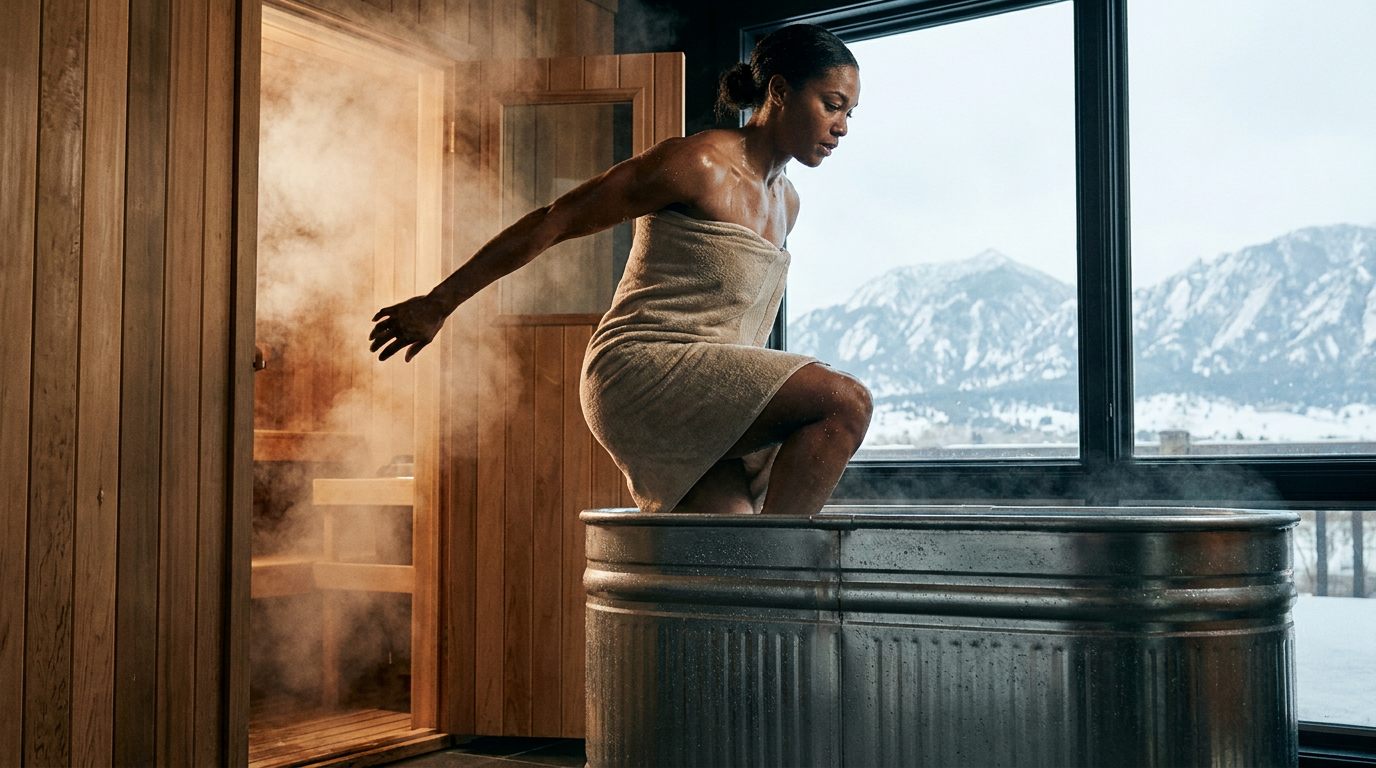
Elite athletes and weekend warriors alike are increasingly adopting thermal recovery protocols, transforming ice baths and saunas from niche locker-room fixtures into mainstream wellness staples. The appeal is obvious: a passive, time-efficient method to accelerate healing and get back to training faster. But while deliberate cold exposure and heat therapy are often used interchangeably in the pursuit of recovery, they trigger entirely opposite physiological cascades. Understanding the distinct mechanisms behind ice and heat is critical, as applying the wrong temperature at the wrong time can actually sabotage the very fitness goals an athlete is working to achieve.[6][8]
The foundation of both thermal modalities is a biological concept known as hormesis—a process where exposure to a mild, controlled stressor induces highly beneficial adaptations. This "eustress" forces the nervous and cardiovascular systems to react, ultimately building a more resilient organism. However, the specific adaptations the body makes depend entirely on whether it is fighting to retain core heat or desperately trying to shed it. By manipulating this survival response, athletes can target specific recovery pathways, from clearing metabolic waste to stimulating cellular repair.[5][8]
When an athlete submerges their body in cold water—typically maintained between 50 and 59 degrees Fahrenheit—the immediate physiological response is severe and rapid vasoconstriction. The blood vessels in the skin and extremities narrow dramatically, forcing blood away from the limbs and toward the core to protect vital organs. This intense mechanical clamping effect significantly reduces acute inflammation and limits the pooling of edema in micro-damaged muscle tissue, acting as a systemic flush for the extremities.[1][6]
The primary, evidence-backed benefit of this cold water immersion is the profound mitigation of delayed onset muscle soreness (DOMS). Extensive meta-analyses of dozens of randomized controlled trials confirm that cold plunges significantly reduce perceived soreness and fatigue for up to 96 hours post-exercise. The most profound analgesic effects occur in the first 24 hours, making the ice bath an unparalleled tool for athletes who need to wake up the next morning and perform at a high level without debilitating stiffness.[1][2]

However, the potent anti-inflammatory power of the cold plunge comes with a significant caveat for strength athletes, often referred to as the hypertrophy trap. Inflammation is not inherently bad; in fact, it is a necessary biological signal that triggers muscle repair and protein synthesis. Plunging into ice water immediately after a heavy resistance training session blunts this vital signaling pathway, effectively short-circuiting the body's ability to build new muscle mass and adapt to the lifting stimulus.[4][6]
Heat therapy operates on the exact opposite physiological mechanism: profound and sustained vasodilation. Whether relaxing in a traditional dry sauna or a modern infrared cabin, exposure to high temperatures causes the body's blood vessels to expand significantly. This widening increases blood flow to fatigued and micro-torn muscles, delivering a massive rush of oxygen and vital nutrients while simultaneously flushing out metabolic waste products like hydrogen ions that accumulate during intense exercise.[7][8]
Heat therapy operates on the exact opposite physiological mechanism: profound and sustained vasodilation.
Beyond simple blood flow dynamics, heat stress triggers the cellular production of specialized molecules known as heat shock proteins (HSPs). These proteins act as cellular paramedics, rushing to repair damaged proteins and protecting cells from oxidative stress. The activation of HSPs accelerates the repair phase of muscle tissue at a microscopic level, making heat therapy an exceptionally effective recovery tool following heavy lifting or highly damaging eccentric exercise.[7][8]
Regular sauna use also drives powerful cardiovascular adaptations, a process exercise physiologists refer to as hyperthermic conditioning. Repeated exposure to heat stress stimulates the production of red blood cells and increases total blood plasma volume. For endurance athletes, this adaptation means the heart does not have to work as hard to deliver oxygen during subsequent workouts, effectively boosting VO2 max, improving stamina, and lowering the working heart rate.[7][8]

For athletes who want to capture the benefits of both extremes, contrast water therapy (CWT) offers a highly effective middle ground. By alternating between hot and cold environments—typically spending a few minutes in a sauna or hot tub followed immediately by a brief cold plunge—the body experiences a rapid vascular "pumping action." This protocol forces the blood vessels to rapidly dilate and then constrict in succession.[2][3]
This rapid shift from vasodilation to vasoconstriction acts as a powerful mechanical flush for the muscular system. Systematic reviews indicate that contrast therapy is highly effective at reducing muscle strength loss and clearing metabolic byproducts. It is particularly popular during multi-day tournaments, such as tennis majors or CrossFit competitions, where athletes must perform repeatedly with minimal rest and cannot afford to wait for passive recovery.[2][3]
Beyond the muscular and cardiovascular systems, thermal therapy exerts a profound influence on human neurochemistry. The initial shock of entering cold water triggers a massive release of dopamine and norepinephrine in the brain. This neurochemical surge produces a state of heightened focus, alertness, and mental clarity that can last for hours, followed by a parasympathetic rebound that noticeably reduces baseline anxiety and builds psychological resilience.[5][6]

Conversely, heat therapy is a powerful activator of the parasympathetic nervous system from the moment the session begins. The deep, penetrating warmth of a sauna lowers circulating cortisol levels and shifts the body out of the sympathetic "fight or flight" state that dominates hard training. This deep relaxation response is critical for improving sleep architecture, which remains the ultimate and most irreplaceable foundation of athletic recovery.[7][8]
The science ultimately points to a strategic, timing-based approach rather than a blanket endorsement of either modality. For athletes prioritizing strength, power, and muscle hypertrophy, heat therapy is the optimal post-workout choice, while cold exposure should be strictly reserved for active recovery days or separated from resistance training by at least six to eight hours to protect protein synthesis.[4][6]

For endurance runners, team sport athletes, or anyone needing to maximize functional recovery within a tight 24-hour window, cold water immersion remains the gold standard. By matching the thermal modality to the specific physiological goal of the training block, athletes can stop guessing and start leveraging temperature as a precision tool for both performance and longevity.[1][2]
How we got here
2013
A landmark meta-analysis in PLOS One confirms that contrast water therapy significantly reduces muscle strength loss compared to passive recovery.
2015
Harvard Medical School highlights research linking regular sauna use to improved cardiovascular health and increased blood plasma volume.
2017
The Journal of Strength and Conditioning Research publishes comprehensive data showing cold water immersion accelerates neuromuscular recovery in team sports.
2022
Sports Medicine publishes a 28-study meta-analysis confirming cold water immersion is superior to active recovery for mitigating delayed onset muscle soreness.
2025
Emerging consensus solidifies the 'hypertrophy caveat,' advising strength athletes to separate cold exposure from resistance training to protect muscle growth.
Viewpoints in depth
Endurance & Team Sports
Prioritizing rapid functional recovery and the mitigation of acute muscle soreness.
For athletes competing in multi-day tournaments or high-mileage endurance blocks, the primary goal is returning to baseline as quickly as possible. This camp heavily favors cold water immersion and contrast therapy because these modalities rapidly flush metabolic waste and blunt the acute inflammation that causes delayed onset muscle soreness (DOMS). While they acknowledge that cold might slightly blunt long-term adaptations, the immediate need to perform at a high level the next day supersedes the desire for maximum muscle growth.
Strength & Hypertrophy
Protecting the inflammatory signals required for muscle protein synthesis.
Strength coaches and bodybuilders view recovery through the lens of long-term tissue adaptation rather than immediate pain relief. This perspective warns against the indiscriminate use of ice baths, pointing to robust evidence that cold water immersion immediately following resistance training blunts the very inflammatory pathways that signal muscle growth. Instead, this camp advocates for heat therapy, which increases blood flow and delivers the nutrients necessary for protein synthesis without short-circuiting the body's natural repair mechanisms.
Systemic Wellness & Longevity
Leveraging thermal stress for neurochemical balance and cellular resilience.
Beyond athletic performance, longevity researchers and wellness advocates focus on the systemic benefits of thermal hormesis. This camp highlights how deliberate cold exposure triggers a massive release of dopamine and norepinephrine, building psychological resilience and focus. Conversely, they champion regular sauna use for its ability to activate heat shock proteins (HSPs) and stimulate the parasympathetic nervous system, lowering cortisol and improving sleep architecture. For this group, temperature is a tool for holistic health rather than just muscle repair.
What we don't know
- The exact minimum effective dose of heat exposure required to maximize heat shock protein production in elite athletes.
- Whether the long-term psychological resilience built by deliberate cold exposure directly translates to measurable performance gains in high-pressure competition.
- The precise optimal ratio of hot-to-cold duration in contrast water therapy for different specific sports and body types.
Key terms
- Vasoconstriction
- The narrowing of blood vessels, typically in response to cold, which forces blood toward the body's core and reduces localized swelling.
- Vasodilation
- The widening of blood vessels, typically in response to heat, which increases blood flow and nutrient delivery to muscle tissue.
- Heat Shock Proteins (HSPs)
- Specialized cellular proteins produced in response to heat stress that help repair damaged proteins and protect cells from oxidative damage.
- Delayed Onset Muscle Soreness (DOMS)
- The deep muscle ache and stiffness that typically peaks 24 to 72 hours after intense or unfamiliar exercise.
- Hormesis
- A biological phenomenon where exposure to a mild, controlled stressor—like extreme temperature—induces beneficial adaptations and builds resilience.
Frequently asked
Should I take an ice bath immediately after lifting weights?
No. Cold water immersion immediately after resistance training blunts the inflammatory response necessary for muscle protein synthesis and hypertrophy. Wait at least six hours or plunge on rest days.
How cold does a cold plunge need to be?
Research indicates that water temperatures between 50 and 59 degrees Fahrenheit (10 to 15 degrees Celsius) are sufficient to trigger the physiological benefits of cold shock without excessive risk.
Does sitting in a sauna improve cardiovascular fitness?
Yes. Regular sauna use triggers hyperthermic conditioning, which increases blood plasma volume and red blood cell count, leading to improved endurance and a lower heart rate during exercise.
What is contrast water therapy?
Contrast therapy involves alternating between hot and cold environments—such as a sauna and an ice bath—to create a vascular pumping action that flushes metabolic waste from fatigued muscles.
Sources
Source coverage
8 outlets
3 viewpoints surfaced








[1]Sports MedicineEndurance & Team Sports
Effects of Cold-Water Immersion Compared with Other Recovery Modalities on Athletic Performance Following Acute Strenuous Exercise
Read on Sports Medicine →[2]Journal of Strength and Conditioning ResearchEndurance & Team Sports
Effects of Cold Water Immersion and Contrast Water Therapy for Recovery From Team Sport
Read on Journal of Strength and Conditioning Research →[3]PLOS OneStrength & Hypertrophy
Contrast Water Therapy and Exercise Induced Muscle Damage: A Systematic Review
Read on PLOS One →[4]The Journal of PhysiologyStrength & Hypertrophy
The effects of cold water immersion and active recovery on inflammation and cell stress responses in human skeletal muscle
Read on The Journal of Physiology →[5]Huberman LabSystemic Wellness & Longevity
Cold Plunges and Deliberate Cooling
Read on Huberman Lab →[6]Coldture WellnessSystemic Wellness & Longevity
Deliberate cold exposure: Boost recovery and resilience
Read on Coldture Wellness →[7]Lifespan FitnessSystemic Wellness & Longevity
How Regular Sauna Sessions Can Enhance Athletic Performance
Read on Lifespan Fitness →[8]Factlen Editorial TeamSystemic Wellness & Longevity
Synthesis by Factlen editorial team
Read on Factlen Editorial Team →
Every angle. Every day.
Get fitness stories with full source coverage and perspective breakdowns delivered to your inbox.