
The Rise of Local AI: How to Run Frontier Models on Your Own Hardware
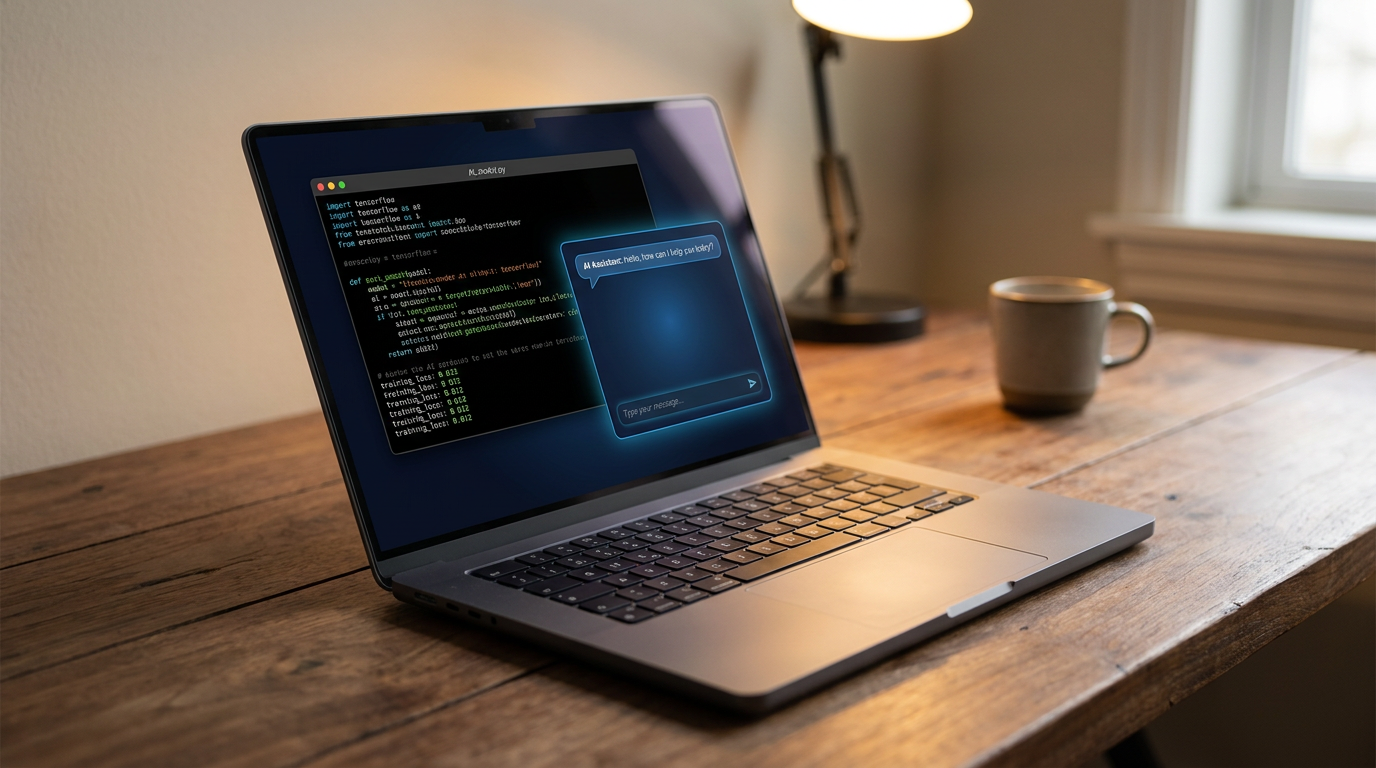
Advances in open-weight models and user-friendly software have made it possible to run highly capable AI directly on consumer laptops, offering full privacy and zero API costs.
By Factlen Editorial Team
- Privacy & Enterprise Advocates
- Focus on data sovereignty and the elimination of recurring API costs.
- Cloud AI Providers
- Maintain that the absolute frontier of AI reasoning will always require massive data centers.
- Open-Source Purists
- Argue that true open-source requires public training data and code, not just downloadable weights.
What's not represented
- · Hardware Manufacturers
- · Everyday Consumers
Why this matters
For years, using powerful AI meant surrendering your data to tech giants and paying recurring subscription fees. The ability to run frontier-level AI locally shifts control back to the user, enabling absolute privacy for sensitive work and zero-cost automation for developers.
Key points
- Open-weight models like Llama 4 and Qwen 3 now rival cloud-based APIs for everyday coding and writing tasks.
- Quantization techniques have compressed massive AI models to fit within the 8GB to 16GB RAM limits of standard laptops.
- Tools like Ollama and LM Studio have eliminated the need for complex coding to install and run local AI.
- Running AI locally guarantees absolute data privacy, as no prompts or files are ever sent to the internet.
- While local models are free to use, they drain laptop batteries quickly and cannot match the sheer scale of data center AI.
For the first few years of the generative artificial intelligence boom, interacting with a large language model meant renting time on a distant supercomputer. Every prompt typed into ChatGPT, Claude, or Gemini was beamed to massive data centers owned by a handful of tech giants. But by mid-2026, a quiet revolution has decentralized the landscape. The frontier of artificial intelligence is no longer strictly confined to the cloud; it is increasingly running locally on the laptops and desktops of everyday users. This paradigm shift is democratizing access to high-level reasoning capabilities, fundamentally changing how developers, researchers, and privacy-conscious professionals interact with machine learning.[6]
This shift is driven by the convergence of two major trends: the release of highly capable "open-weight" models and the development of frictionless software tools that make running them as easy as installing a web browser. Today, a standard consumer laptop can host an AI assistant that rivals the performance of 2023's GPT-4, operating entirely offline. Users are no longer forced to choose between the high quality of proprietary cloud models and the privacy of local execution; they are simply choosing between two different flavors of highly capable AI.[1][4]
The catalyst for this local AI movement has been a relentless wave of model releases from major tech companies and specialized research labs. Meta’s Llama 4, Alibaba’s Qwen 3, Google DeepMind’s Gemma 3, and Mistral’s Codestral have fundamentally altered the math of AI deployment. Unlike proprietary models locked behind opaque API paywalls, these models are distributed with their "weights"—the core neural network parameters—available for anyone to download. This open-weight approach has fostered a massive community of developers who fine-tune, optimize, and share these models across the globe.[1][2]
However, the raw size of these models initially posed a significant barrier to entry. A state-of-the-art model with 70 billion parameters traditionally required multiple high-end graphics processing units (GPUs) just to load into memory, placing it far out of reach for the average consumer or independent developer. The breakthrough that brought these massive neural networks to standard laptops came via a mathematical compression technique known as quantization, which drastically reduces the hardware requirements without destroying the model's underlying intelligence.[3]

Quantization mathematically compresses the model's weights, often reducing them from 16-bit precision down to highly efficient 4-bit or 8-bit formats. While this aggressive compression results in a negligible drop in the model's nuanced reasoning quality, it drastically reduces the file size and memory footprint. A model that once required 40 gigabytes of VRAM can now be squeezed into just 8 gigabytes, allowing it to run comfortably on a standard machine. This optimization is the invisible engine making the current local AI boom possible.[3]
The software architecture powering this compression is an open-source C++ framework called llama.cpp. Originally created as a hacker's weekend project to get Meta's first Llama model running on a MacBook, it has rapidly evolved into the industrial backbone of the local AI ecosystem. The framework allows models to run efficiently across a wide variety of consumer hardware, dynamically splitting the intense computational load between a computer's standard CPU and its dedicated GPU to maximize token generation speed.[3][4]
But llama.cpp itself is a command-line tool, which initially kept local AI confined to highly technical developers willing to compile code from source and manage complex dependencies. That barrier evaporated with the arrival of user-friendly wrappers like Ollama and LM Studio. Ollama operates as a lightweight background service, allowing users to download and run complex models with a single, simple terminal command, such as `ollama run llama3`. It handles all the complex quantization, file management, and hardware routing invisibly in the background, turning a multi-hour setup process into a two-minute installation.[4]
That barrier evaporated with the arrival of user-friendly wrappers like Ollama and LM Studio.
For those who prefer a graphical interface over the command line, LM Studio offers an experience akin to an app store for artificial intelligence. Users can search for specific models, check if they will fit within their computer's available memory, download them with a click, and chat with them in a familiar, polished interface. Crucially, these tools also expose local APIs, meaning developers can build applications that talk to their local, offline model exactly as they would talk to OpenAI's cloud servers, requiring almost zero changes to their existing codebases.[3][4]
The hardware requirements for local AI have also become surprisingly accessible, reshaping the computer market. While a dedicated NVIDIA GPU remains the gold standard for sheer generation speed, Apple's transition to "unified memory" in its M-series chips has made MacBooks uniquely suited for local AI workloads. Because the CPU and GPU share the same massive pool of RAM, an M3 Mac with 16GB or 32GB of memory can run surprisingly large models that would otherwise require expensive, specialized PC hardware.[2][4]

For users operating on standard 8GB laptops without specialized chips or dedicated graphics cards, the ecosystem has adapted by producing highly optimized, smaller models. Microsoft's Phi-4-mini and Google's Gemma 3 provide excellent performance for daily writing, document summarization, and basic coding tasks while sipping minimal memory. These compact models punch far above their weight class, proving that parameter count is not the only metric that matters. This tiering of models ensures that anyone with a modern computer can participate in the local AI ecosystem, regardless of their hardware budget.[1][3]
The primary driver pushing users and enterprises toward local AI is the guarantee of absolute data privacy. In 2023, companies like Samsung famously banned the internal use of ChatGPT after engineers inadvertently pasted proprietary source code into the cloud-based tool, exposing trade secrets to external servers. When an AI model runs locally, the data never leaves the physical machine. This absolute data sovereignty is crucial for healthcare workers handling sensitive patient data, lawyers analyzing confidential legal contracts, and developers working on proprietary corporate codebases where cloud transmission is a strict liability.[3][4]
Cost reduction is the second major factor accelerating local adoption. While cloud APIs charge per token—meaning every word read or written incurs a micro-transaction—local models are entirely free to use after the initial hardware investment. This is particularly transformative for "agentic" workflows, where an AI might autonomously read hundreds of files, write code, test it, and iterate over several hours. Running such loops on a cloud API can quickly rack up massive, unpredictable bills; running them locally costs nothing but the electricity required to power the laptop.[4][5]
Despite the incredible momentum, the ecosystem is currently navigating a complex and often contentious debate over terminology. Most models marketed to the public as "open source" are technically only "open weight." While companies like Meta and Alibaba release the trained neural network weights for download, they often strictly withhold the original training data and the code used to create the model. Furthermore, they frequently attach custom licenses that restrict commercial use if a product exceeds a certain number of monthly active users.[2][4]

True open-source purists point to models like the Allen Institute for AI's OLMo as the actual gold standard for the industry. OLMo releases every piece of training data, the full training code, and every intermediate checkpoint under a highly permissive Apache 2.0 license, allowing anyone to reproduce the model from scratch. This distinction matters deeply for academic researchers and enterprise compliance teams who need to understand exactly how a model makes its decisions, rather than just treating a downloaded file from a tech giant as an opaque, un-auditable black box.[2]
Local AI is not without its practical, everyday trade-offs. Running a large language model is computationally intense; it will drain a laptop battery incredibly quickly and cause the machine's cooling fans to spin up to maximum speed during heavy generation tasks. Furthermore, while local models are incredibly capable for daily coding and writing, the absolute bleeding edge of AI reasoning—the massive, trillion-parameter models housed in billion-dollar data centers—will likely always remain in the cloud due to the sheer physics, memory bandwidth, and power requirements needed to run them.[4]
Yet, for the vast majority of daily professional tasks—drafting emails, summarizing complex documents, and writing boilerplate code—the performance gap between the cloud and the laptop has effectively closed. As consumer hardware manufacturers continue to optimize their silicon specifically for AI workloads, the default assumption of the tech industry is rapidly shifting. Your most powerful digital assistant no longer needs to live on someone else's server, subject to their privacy policies and pricing changes; it can live entirely on your own desk, fully under your control.[6]
How we got here
Early 2023
The release of Meta's original LLaMA model sparks the local AI movement as developers race to run it on consumer hardware.
Mid 2023
The creation of llama.cpp allows large models to run efficiently on standard MacBooks without specialized PC hardware.
Late 2023
Tools like Ollama and LM Studio launch, replacing complex command-line setups with user-friendly, one-click installations.
2024-2025
A surge of highly capable open-weight models from Alibaba, Mistral, and Google narrows the performance gap with proprietary cloud APIs.
Mid 2026
Local AI becomes a standard workflow for developers, driven by privacy concerns and the release of frontier-level models like Llama 4 and Qwen 3.
Viewpoints in depth
Privacy & Enterprise Advocates
Focus on data sovereignty and the elimination of recurring API costs.
For corporate developers, healthcare professionals, and legal teams, the cloud is a liability. Sending proprietary code or sensitive client data to a third-party API introduces unacceptable security risks. This camp views local LLMs as the ultimate fix: a one-time hardware investment that guarantees zero data leakage and eliminates the unpredictable per-token billing of cloud providers.
Open-Source Purists
Argue that true open-source requires public training data and code, not just downloadable weights.
Researchers and open-source advocates caution against conflating 'open weight' with 'open source.' They argue that models like Meta's Llama 4, while freely downloadable, remain black boxes because their training data and code are hidden. True open-source proponents champion models like OLMo, which release every intermediate checkpoint and dataset, ensuring the community can audit and reproduce the AI from scratch.
Cloud AI Providers
Maintain that the absolute frontier of AI reasoning will always require massive data centers.
While acknowledging the utility of local models for everyday tasks, cloud providers emphasize that the bleeding edge of artificial intelligence cannot be compressed onto a laptop. They argue that tasks requiring massive context windows, complex multi-step reasoning, or enterprise-scale deployment will continue to rely on the vast computational power of centralized data centers.
What we don't know
- Whether future frontier models will become too large to compress effectively for consumer hardware.
- How regulatory frameworks will adapt to powerful, uncensored AI models running entirely offline.
- If Apple and Microsoft will integrate these open-weight ecosystems directly into their operating systems, bypassing third-party tools.
Key terms
- Local LLM
- A large language model that runs entirely on a user's own hardware, rather than on a cloud provider's servers.
- Open-weight model
- An AI model where the trained neural network parameters are publicly available to download, even if the original training data is kept private.
- Quantization
- A mathematical compression technique that reduces the memory size of an AI model with minimal impact on its reasoning capabilities.
- llama.cpp
- An open-source software engine that allows large language models to run efficiently on standard consumer hardware.
- Unified memory
- A hardware architecture, notably used in Apple Silicon, where the CPU and GPU share the same pool of RAM, making it highly efficient for running AI models.
Frequently asked
Do I need a powerful GPU to run AI locally?
No. While a dedicated GPU speeds up response times, modern tools like Ollama use 'llama.cpp' to run capable models efficiently on standard CPUs and Apple Silicon unified memory.
Is it legal to use these models for commercial work?
It depends on the model's license. Many models use permissive licenses like Apache 2.0 or MIT, but some, like Meta's Llama 4, have user-cap restrictions for large-scale commercial deployment.
Can I run ChatGPT or Claude locally?
No. The flagship models from OpenAI and Anthropic are closed-source and only accessible via the cloud. However, open-weight alternatives like Llama 4 and Qwen 3 offer comparable performance for many tasks.
Does local AI require an internet connection?
Only once, to download the model files. After the download is complete, the AI runs entirely offline, ensuring complete privacy.
Sources
Source coverage
6 outlets
3 viewpoints surfaced






[1]Hugging Face BlogOpen-Source Purists
The Best Open Source LLM Models to Run Locally in 2026
Read on Hugging Face Blog →[2]CodeToCloudOpen-Source Purists
Open-Source LLMs for Developers: The Complete Guide
Read on CodeToCloud →[3]AI Thinker LabPrivacy & Enterprise Advocates
How to run AI models locally in 2026
Read on AI Thinker Lab →[4]DualitePrivacy & Enterprise Advocates
Top 5 Best Local LLM Tools in 2026
Read on Dualite →[5]Kilo AIPrivacy & Enterprise Advocates
Best Open-Source & Open-Weight AI Coding Models in 2026
Read on Kilo AI →[6]Factlen Editorial TeamCloud AI Providers
Synthesis by Factlen editorial team
Read on Factlen Editorial Team →
More in ai
See all 96 stories →EU AI Act
EU AI Act Enforcement Begins: What the August 2026 Deadlines Mean for Global Tech
7 sources

Local AI
The 2026 Guide to Local AI: How to Run LLMs on Your Own Hardware
7 sources
Drug Discovery
New AI Model Accelerates Molecular Simulations 10,000x, Speeding Up Early Drug Discovery
7 sources

Optical Computing
How Photonic Chips Are Rewiring AI to Run on Light
7 sources

Every angle. Every day.
Get ai stories with full source coverage and perspective breakdowns delivered to your inbox.