
The NEPA Streamlining: How the New Federal Housing Act Cuts Environmental Red Tape for Small-Scale Housing Projects
A newly enacted federal housing law introduces sweeping categorical exclusions to the National Environmental Policy Act, allowing small-scale and infill residential projects to bypass years of environmental review. The policy shift aims to accelerate construction timelines and lower costs without compromising major ecological protections.

Share this story
In short
- The New Federal Housing Act expands NEPA categorical exclusions for residential projects under 50 units.
- The exemption applies strictly to infill development within existing urban footprints.
- Bypassing the Environmental Assessment phase can save developers up to two years of regulatory delays.
For decades, the invisible bottleneck of American housing construction has not been a lack of materials or labor, but a mountain of paperwork. The National Environmental Policy Act (NEPA), signed into law in 1970 to protect the environment from massive federal infrastructure projects, eventually became a hurdle for small-scale residential developments. Now, the New Federal Housing Act of 2026 is fundamentally rewriting how these rules apply to the housing sector.
The core mechanism of the new law is a dramatic expansion of "Categorical Exclusions" (CEs) for residential construction. Previously, any housing project receiving federal funds—such as HUD grants, HOME funds, or federal loan guarantees—triggered a rigorous Environmental Assessment (EA). This process required developers to study everything from traffic patterns to historical preservation impacts, even if they were just building a 20-unit apartment block on an abandoned city parking lot.[2]
Under the new streamlining provisions, residential projects of up to 50 units located within existing urban footprints are now categorically excluded from these full environmental reviews. The federal government has effectively declared that small-scale infill housing inherently lacks the "significant environmental impact" required to trigger NEPA's heaviest scrutiny.
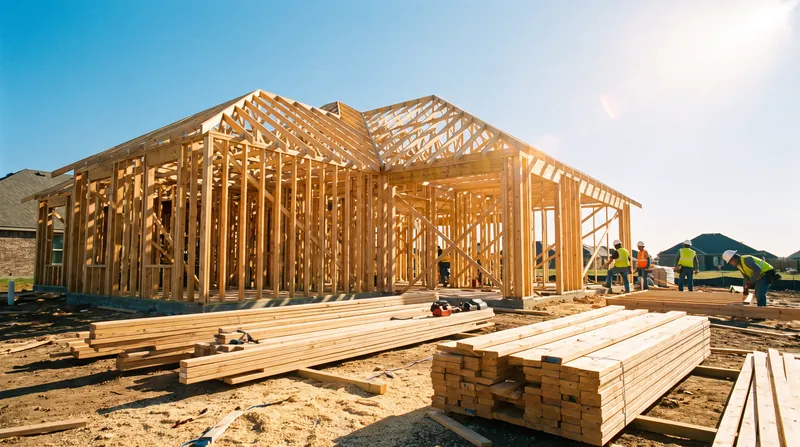
The timeline implications for builders are staggering. An Environmental Assessment typically takes 18 to 24 months to complete, during which time a project cannot break ground. By bypassing this phase, developers can move directly from local permitting to construction, shaving years off the development cycle and avoiding the compounding costs of inflation and high interest rates.[1]
This regulatory unblocking has immediate downstream effects on the architecture and interior design industries. Historically, design teams faced a "start-stop" workflow: completing schematic designs to submit for environmental review, then pausing for two years while the EA was processed. By the time the project was approved, material costs had changed, design trends had shifted, and interior specifications often had to be entirely reworked.[2]
With the NEPA phase bypassed, architectural and interior design teams can now maintain project momentum. They can move seamlessly from schematic design to construction documents and material procurement without a multi-year hiatus. This continuity allows design firms to lock in pricing for fixtures, finishes, and appliances much earlier in the cycle, protecting project budgets from inflation.[1][2]
Crucially, the new law includes strict geographic guardrails to prevent ecological abuse. The categorical exclusion only applies to "infill" development—meaning the project must be located on a site that is already surrounded by existing urban infrastructure. Builders cannot use the exemption to pave over wetlands, clear-cut pristine forests, or build in designated floodplains.
The financial math of the streamlining is what has the real estate industry celebrating. Carrying costs—the expense of holding land and paying loan interest while waiting for permits—can add tens of thousands of dollars to the cost of a single apartment. Economic models estimate that saving two years of regulatory delay reduces the final cost of a housing unit by roughly $45,000.[1]
This cost reduction is particularly vital for affordable housing developers. Non-profit builders rely heavily on federal subsidies, meaning they were disproportionately caught in the NEPA web. The new rules allow these organizations to stretch their limited funding further, building more units rather than spending grant money on environmental consultants and legal fees.
The political coalition that pushed this reform through was highly unusual, uniting pro-development industry groups with a new generation of urban environmentalists. These "supply-side progressives" argue that dense, walkable infill housing is fundamentally good for the climate because it reduces suburban sprawl and lowers per-capita carbon emissions from transportation.[2]
However, traditional conservation groups have expressed reservations. They caution that while a single 40-unit building may not have a massive environmental footprint, the cumulative impact of dozens of such projects in a single neighborhood could strain local water systems, power grids, and public infrastructure without the holistic oversight that NEPA previously provided.
To address these concerns, the legislation maintains a "safety valve." Federal agencies can still require a full Environmental Assessment for a small project if there are extraordinary circumstances—such as the discovery of an endangered species habitat on the specific lot, or the presence of severe toxic contamination that requires remediation.
The new law also raises the legal burden of proof required for third parties to challenge a categorical exclusion. For decades, neighborhood groups opposed to new housing (often labeled NIMBYs, or "Not In My Back Yard") used NEPA lawsuits as a weapon to delay projects until the developer ran out of money. The 2026 Act makes it significantly harder to file frivolous environmental lawsuits against small infill projects.
The ultimate success of the NEPA streamlining will depend on how local municipalities react. While the federal red tape has been cut, many states—most notably California with its California Environmental Quality Act (CEQA)—have their own parallel environmental review laws. If state and local governments do not align their policies with the new federal standard, developers may still face significant delays.[1][2]
Despite these localized hurdles, the New Federal Housing Act represents the most significant deregulation of residential construction at the federal level in half a century. By recognizing that building homes inside existing cities is an environmental net-positive, Washington has fundamentally changed the calculus for developers, designers, and homebuyers alike.[2]
Jargon, explained
- NEPA
- The National Environmental Policy Act, a 1970 law requiring federal agencies to assess the environmental effects of their proposed actions prior to making decisions.
- Categorical Exclusion (CE)
- A class of actions that a federal agency has determined do not individually or cumulatively have a significant effect on the human environment, exempting them from detailed environmental review.
- Environmental Assessment (EA)
- A concise public document that a federal agency prepares under NEPA to provide sufficient evidence and analysis to determine whether a proposed project requires a full Environmental Impact Statement.
- Infill Development
- The process of developing vacant or under-used parcels within existing urban areas that are already largely developed.
- Carrying Costs
- The expenses associated with holding a property or maintaining a project before it generates revenue, including loan interest, property taxes, and insurance.
Common questions
Does this new law apply to single-family homes?
Yes, but single-family homes rarely triggered NEPA unless they were part of a massive subdivision receiving federal funds. This law primarily benefits multi-family projects between 10 and 49 units.
Will this override my city's local zoning laws?
No. The Federal Housing Act only removes the federal environmental review requirement. Developers must still comply with all local zoning, height limits, and municipal building codes.
Can developers build in wetlands now?
No. The categorical exclusion strictly applies to 'infill' development on land already surrounded by urban infrastructure, and it does not override the Clean Water Act's protections for wetlands.
How does this affect interior design and architecture?
By removing a two-year regulatory pause, design teams can move continuously from schematic design to material procurement, allowing them to lock in pricing and avoid redesigning projects due to shifting trends or inflation.
Competing readings
Housing Developers & Advocates
Argue that regulatory time delays are the primary driver of the housing affordability crisis.
For the real estate industry, time is literally money. Developers and housing advocates argue that the old NEPA rules effectively penalized builders for using federal funds, making affordable housing the most difficult type of housing to build. By eliminating the 18-to-24-month Environmental Assessment phase, builders can avoid the compounding costs of high-interest construction loans and inflation. This camp views the streamlining not as an environmental rollback, but as a necessary correction to a system where well-intentioned 'green tape' was weaponized to halt progress.
Urban Environmentalists
Support the regulatory cuts because dense, urban infill housing is a net-positive for the climate.
A growing faction of 'supply-side progressives' and urban environmentalists strongly support the NEPA exemptions. Their core argument is macroeconomic: building dense, multi-family housing inside existing cities reduces the need for suburban sprawl. When people live in walkable, transit-rich neighborhoods, their per-capita carbon emissions plummet compared to those living in car-dependent suburbs. For this group, delaying a 40-unit urban apartment building over localized environmental concerns ironically causes greater global environmental damage by pushing that housing demand outward into undeveloped greenfields.
Traditional Conservationists
Caution that removing federal oversight could lead to cumulative infrastructure strain and the loss of localized protections.
Traditional environmental law organizations and local conservationists view the categorical exclusions with caution. While they acknowledge the housing shortage, they argue that NEPA's holistic review process was vital for catching localized issues that developers often miss. Their primary concern is 'cumulative impact.' While one 40-unit building might not strain a neighborhood's water runoff systems or power grid, ten such buildings constructed simultaneously under the new exemptions could overwhelm local infrastructure without any federal agency looking at the bigger picture.
- Housing Developers & Advocates
- Argue that regulatory time delays are the primary driver of the housing affordability crisis, and that streamlining is essential to lowering costs.
- Urban Environmentalists
- Support the regulatory cuts because dense, urban infill housing reduces reliance on cars and prevents suburban sprawl, making it a net-positive for the climate.
- Traditional Conservationists
- Caution that removing federal oversight could lead to cumulative infrastructure strain and the loss of localized ecological protections.
Perspectives this story doesn't cover
- Local municipal planning departments
- Neighborhood associations
Sources
Source coverage
2 outlets
3 viewpoints surfaced


- [1]BloombergHousing Developers & Advocates
Builders Cheer as Washington Cuts Environmental Review Times for Small Housing Projects
Read on Bloomberg → - [2]Factlen Editorial TeamUrban Environmentalists
Synthesis by Factlen editorial team
Read on Factlen Editorial Team →
More in Home
See all →Product Safety
CPSC Shifts to Aggressive Enforcement: Targets Fake Labels, E-Commerce, and Criminal Charges
6 sources

Practice Rights
Multi-State Laws Grant Interior Designers Right to 'Seal' Blueprints, Streamlining Home Renovation
5 sources

Manufactured Housing
HUD Finalizes Most Extensive Manufactured Home Code Update in 30 Years, Allowing Attics and Open Floor Plans
2 sources
Furniture Safety
The STURDY Act Explainer: How the New Federal Mandate is Redesigning Bedroom Furniture
4 sources

Comments
Every angle. Every day.
Get Home stories with full source coverage and perspective breakdowns, free every day.