
Why Canadian Boycotts Are Forcing a Pivot in U.S. Tourism Marketing
A historic 20% drop in Canadian visitation to the United States has displaced Canada as the top U.S. source market, driven largely by political friction and ethical boycotts. In response, U.S. destination marketers are abandoning broad patriotic campaigns in favor of highly targeted digital outreach, while Canada's domestic tourism industry reaps a multi-billion dollar windfall.

Share this story
In short
- Canadian visitation to the U.S. plummeted by 20.9% in 2025, displacing Canada as the top U.S. source market.
- Nearly 70% of Canadian travelers report boycotting the U.S. due to political and ethical concerns.
- The U.S. travel sector faces a projected revenue shortfall of up to $29 billion.
For decades, the United States and Canada have shared one of the most lucrative and reliable cross-border tourism corridors in the world. Millions of Canadians routinely head south for sunbelt winters, cross-border shopping, and major sporting events, forming the bedrock of the U.S. inbound travel economy.[7]
But that reliable pipeline has fractured. In 2025, inbound travel from Canada to the United States plummeted by 20.9%, a historic contraction that fundamentally reshaped the North American travel landscape. The drop was so severe that Canada lost its long-held position as the number one source market for international visitors to the U.S., falling to second place behind Mexico.[1]
The macroeconomic impact of this northern freeze is staggering. Tourism Economics, a division of Oxford Economics, originally projected that the U.S. would see a 9% increase in international inbound travel in 2025. Instead, the firm was forced to revise its baseline forecast to an 8.2% year-over-year decline.[2]
This reversal translates to a massive financial hit. Rather than gaining an anticipated $16.3 billion in revenue, the U.S. travel sector is now facing a shortfall estimated between $25 billion and $29 billion. The United States is currently projected to be the only major country to see a drop in international tourist spending this year.[2]
The root causes of the decline extend far beyond standard economic friction like exchange rates or inflation. A comprehensive 2026 survey by the Business Development Bank of Canada revealed that nearly 70% of Canadian travelers are actively boycotting the U.S. as a destination for political or ethical reasons.[5]
Industry analysts point to a distinct political effect, noting that Canadian resentment over renewed tariffs, trade tensions, and political rhetoric has severely damaged the appeal of a U.S. vacation. For many northern travelers, the political climate has simply made the United States feel significantly less welcoming.[1][3][5]
Faced with this unprecedented demand shock, Brand USA—the public-private destination marketing organization for the United States—is being forced to completely overhaul its strategy to stop the bleeding and rebuild trust.[1][7]
The organization recently launched a massive global campaign titled 'America the Beautiful,' designed to reignite international affection ahead of the 2026 FIFA World Cup and the nation's 250th anniversary. However, Brand USA executives have openly admitted that this patriotic messaging is not a fit for the current Canadian market.[1]
Brand USA's chief marketing officer, Leah Chandler, acknowledged the disconnect directly, noting that the 'America the Beautiful' campaign was not going to resonate in Canada the way it does in other international markets. The organization recognized that investing money in a message that falls flat would be a waste of resources.[1]
To engineer a turnaround, Brand USA is currently conducting quantitative market surveys and focus groups in Toronto, Montreal, and Vancouver to understand what might actually motivate Canadians to cross the border again. Early data suggests that younger demographics remain more open to U.S. travel than older generations.[1]
In response, the organization is preparing a highly targeted, digital-first marketing push for Fall 2026 aimed specifically at younger audiences and those whose online behaviors indicate an openness to visiting. The messaging will pivot away from broad national themes and focus instead on value-added offers, flexible booking, and specific regional appeal.[1][3]
The consumer campaign will be paired with a major business-to-business initiative. For the first time, Brand USA is expanding its 'Travel Week' trade event series into Canada, scheduling major industry summits in Toronto and Montreal for late October 2026 to rebuild relationships with Canadian travel advisors and tour operators.[1]
This aggressive re-engagement strategy is being executed under severe financial constraints. A U.S. Senate committee recently slashed Brand USA's budget from $100 million down to just $20 million, limiting the organization's ability to blanket the market with advertising and forcing a more surgical approach.[2]
While the U.S. scrambles to recover lost ground, the Canadian domestic tourism industry is experiencing a historic boom. The political friction keeping Canadians out of the U.S. has resulted in a massive wave of reshored travel spending.[6]
Destination Canada reports that Canadians choosing to travel at home added $1.5 billion to the national economy in 2025, with that figure expected to grow by another $4.4 billion through 2027. Survey data notes that 92% of Canadian travelers are planning at least one domestic trip in 2026, driven by a desire to support local businesses and explore their own country.[5][6]
Looking ahead, the recovery of the U.S.-Canada travel corridor will be a slow, multi-year process. The National Travel and Tourism Office has scaled back its 2026 forecast, projecting a modest 3.8% growth in Canadian visitation.[4]
Even with that slight rebound, total Canadian arrivals are expected to reach only 16.7 million in 2026—a far cry from the peak volumes the U.S. industry once relied upon. For destination marketers, the new reality is clear: the Canadian tourist can no longer be taken for granted, and winning them back will require precision, humility, and time.[1][4][7]
Jargon, explained
- Brand USA
- The public-private destination marketing organization responsible for promoting the United States as a premier travel destination to international audiences.
- Reshored Spending
- Money that consumers would have typically spent in a foreign country that is instead spent within their own domestic economy.
- Source Market
- A specific country or region from which a destination receives a significant number of its incoming tourists.
- Destination Marketing Organization (DMO)
- An agency that promotes a town, city, region, or country in order to increase the number of visitors and boost the local economy.
Common questions
Why did Canadian travel to the US drop so sharply?
Canadian visitation fell by over 20% in 2025, largely driven by a political effect where travelers cited rhetoric, trade tariffs, and ethical concerns as reasons to boycott U.S. destinations.
How much money is the US losing from this decline?
Tourism Economics estimates the U.S. travel sector is facing a revenue shortfall of between $25 billion and $29 billion this year due to the drop in international arrivals.
What is Brand USA doing to fix the problem?
Brand USA is shelving its patriotic 'America the Beautiful' campaign in Canada, opting instead for targeted digital ads aimed at younger travelers and launching B2B trade events in Toronto and Montreal.
Where are Canadians traveling instead?
Many are choosing to travel domestically. Reshored travel spending added $1.5 billion to the Canadian economy in 2025, with 92% of Canadian travelers planning a domestic trip in 2026.
Competing readings
U.S. Destination Marketers
Focused on targeted, data-driven re-engagement to overcome political headwinds and restore vital tourism revenue.
Organizations like Brand USA acknowledge that broad, patriotic campaigns like 'America the Beautiful' are currently ineffective in the Canadian market. Instead, they are pivoting to highly targeted digital strategies aimed at younger demographics and expanding B2B trade events like Travel Week into Toronto and Montreal. Their primary goal is to bypass political friction by highlighting specific regional value, flexible booking, and direct air links, all while operating under severely reduced federal budgets.
Canadian Travelers
Prioritizing domestic travel and alternative international destinations due to political friction and ethical concerns.
Driven by resentment over trade tariffs and political rhetoric, a significant majority of Canadian travelers are actively choosing to spend their tourism dollars elsewhere. Survey data indicates that nearly 70% are avoiding the U.S. for ethical or political reasons. Instead of heading south, these consumers are increasing their travel budgets but redirecting those funds toward exploring Canadian provinces or traveling to overseas destinations that feel more welcoming and aligned with their values.
Canadian Domestic Tourism Industry
Capitalizing on the reshored spending to boost local economies and promote national exploration.
The sharp decline in southbound travel has created a windfall for Canada's internal visitor economy. Organizations like Destination Canada and local tourism boards are leaning into the moment, capturing billions in reshored spending. They are actively promoting the appeal of domestic destinations, emphasizing that traveling within Canada supports local businesses and strengthens the national economy during a period of global economic uncertainty.
- U.S. Destination Marketers
- Focused on targeted, data-driven re-engagement to overcome political headwinds and restore vital tourism revenue.
- Canadian Travelers
- Prioritizing domestic travel and alternative international destinations due to political friction and ethical concerns.
- Canadian Domestic Tourism Industry
- Capitalizing on the reshored spending to boost local economies and promote national exploration.
Perspectives this story doesn't cover
- U.S. border town businesses heavily reliant on Canadian cross-border shopping
- Airlines managing the reduction in transborder flight demand
Sources
Source coverage
7 outlets
3 viewpoints surfaced







- [1]Travel WeeklyU.S. Destination Marketers
Brand USA plans new tourism campaign to reconnect with Canadians
- [2]The Economic TimesCanadian Domestic Tourism Industry
U.S. facing a shortfall of $25 billion to $29 billion this year
Read on The Economic Times → - [3]The TravelerU.S. Destination Marketers
Brand USA cuts 2026 visitor outlook as inbound slump deepens
- [4]National Travel and Tourism OfficeU.S. Destination Marketers
Forecast of Total International Visitation to the United States (2026-2030)
Read on National Travel and Tourism Office → - [5]Business Development Bank of CanadaCanadian Travelers
Canada tourism outlook 2026
Read on Business Development Bank of Canada → - [6]Destination CanadaCanadian Domestic Tourism Industry
Canadian Tourism Outlook 2026–2035
Read on Destination Canada → - [7]Factlen Editorial Team
Synthesis by Factlen editorial team
Read on Factlen Editorial Team →

More in Travel
See all →Immigration Policy
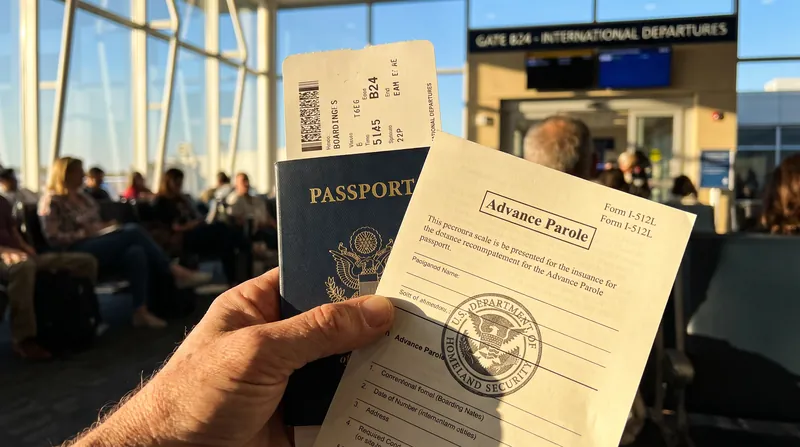
The Mechanics of the Re-Entry Bar: How the BIA's Advance Parole Ruling Reshapes International Travel for Green Card Applicants
6 sources
Visa Policy
The Mechanics of the 39-Nation Restriction: How the US's New Visa and Entry Rules Reshape Global Access
7 sources

Consumer Rights
Why the DOT Scrapped Mandatory Cash Payouts for Flight Delays and Kept Automatic Refunds
3 sources
Airport Infrastructure
The Mechanics of the Final Tranche: How $870 Million in Federal Grants Reshapes Over 300 US Airports
3 sources
Comments
Every angle. Every day.
Get Travel stories with full source coverage and perspective breakdowns, free every day.