
The Mechanics of the Lodge-Hop: How Luxury Hotel Brands Are Reshaping the Tour Operator Model
High-end hospitality brands are increasingly absorbing ground logistics and transport, transforming from static hoteliers into end-to-end tour operators to offer frictionless, multi-property circuits.

- Integrated Hospitality Brands
- Focus on end-to-end service control, maximizing guest capture, and ensuring aesthetic consistency across the entire journey.
- Bespoke Travel Designers
- Value the ability to mix and match brands, warning against the 'walled garden' approach of single-brand circuits.
- Specialized Expedition Operators
- Focus on the logistical execution of complex multi-country journeys, often partnering directly with hotel brands to facilitate movement.
Perspectives this story doesn't cover
- Traditional Destination Management Companies (DMCs)
- Independent Local Guides
Why this matters
By controlling the spaces between properties, luxury brands are eliminating the friction of third-party transfers and disjointed service. For travelers, this means a seamless aesthetic and service experience across entire regions, fundamentally changing how complex itineraries are booked and executed.
Key points
- Luxury hotel brands are shifting from offering single-night stays to curating multi-day, multi-property regional circuits.
- Brands like Six Senses and Aman manage all ground logistics, eliminating the need for third-party Destination Management Companies.
- The model ensures that a guest's dietary preferences, service expectations, and aesthetic experience remain unbroken during transit.
- This shift forces traditional travel advisors to transition from logistical planners to brand matchmakers.
For decades, planning a multi-stop luxury journey meant accepting a certain rhythm of friction. You might wake up in a perfectly appointed suite, but by noon, you were handing your luggage to a third-party driver, navigating a disjointed transfer, and arriving at a new property with a completely different service philosophy. The transition was the price you paid for the itinerary. Now, that friction is vanishing. The world’s most exclusive hospitality brands are quietly absorbing the logistics, transforming themselves from static hoteliers into end-to-end tour operators.[6]
This is the era of the "lodge-hop," a model where a single brand curates your entire movement through a country or region. Instead of booking a room, you are booking a circuit. The appeal for the traveler is immediate: the aesthetic, the service standards, and the dietary preferences you established on day one travel with you seamlessly across valleys, borders, and time zones. You never have to explain your morning coffee order twice, and you never have to wonder who is driving the transfer vehicle.[6]
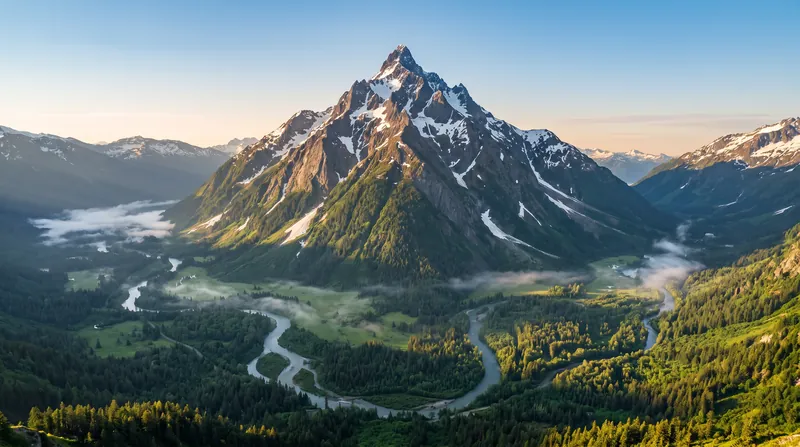
Nowhere is this shift more visible than in the high-altitude valleys of Bhutan. The kingdom’s geography—steep, pine-clad Himalayan ridges and narrow, winding roads—makes logistics inherently challenging. Amankora pioneered the solution here, building five distinct lodges across the Paro, Thimphu, Punakha, Gangtey, and Bumthang valleys. The name itself marries the Sanskrit word for peace with the Bhutanese word for a circular pilgrimage. Guests do not just stay at Amankora; they move through it, with the brand handling every permit, guide, and mountain transfer.[2]
Six Senses has since adopted and expanded on this sequential model in Bhutan. Their own five-lodge circuit is designed to be experienced as a continuous journey rather than a base-camp resort. You might start at the "Palace in the Sky" in Thimphu, adjusting to the 9,040-foot altitude while looking out over apple orchards. A few days later, a Six Senses guide drives you over the 3,100-meter Dochula Pass to the "Flying Farmhouse" in Punakha. The wellness programming, the organic food sourcing, and the biometric assessments travel with you, adapting to the changing altitudes and environments.[1][2]
The mechanics of this model rely on absolute control over the spaces between the properties, ensuring the brand's aesthetic never breaks. Belmond has mastered this integrated approach in Peru by combining its portfolio of historic hotels with its own luxury rail lines. A traveler can begin their journey at the Belmond Miraflores Park in Lima, fly to Cusco to acclimatize at the Monasterio—a former 16th-century seminary—and then board the Belmond Hiram Bingham train. This luxury locomotive takes them directly to the Sanctuary Lodge, the only hotel located immediately at the gates of the ancient citadel of Machu Picchu.[4][5]
The mechanics of this model rely on absolute control over the spaces between the properties, ensuring the brand's aesthetic never breaks.
For those venturing further into the Andes, Belmond operates the Andean Explorer, South America’s first luxury sleeper train. The train itself acts as a rolling hotel, carving a path at 4,800 meters across the Altiplano from Cusco to Lake Titicaca. By owning the rails and the rooms, Belmond eliminates the need for a traditional Destination Management Company (DMC). The brand captures the entire travel spend while guaranteeing the guest a continuous cocoon of old-world elegance and Peruvian cultural immersion.[4][5]
The ultimate expression of the brand-as-operator model takes to the sky. Aman has partnered with ultra-luxe tour operator Remote Lands to launch comprehensive Private Jet Expeditions. These small-group journeys, accommodating just 16 to 18 guests, utilize an Airbus ACJ 319 to connect Aman properties across multiple countries. A 2026 itinerary spanning China’s UNESCO treasures connects four different Aman properties, complete with a specially prepared champagne lunch on the Great Wall.[3]
For the hospitality brands, the financial mechanics are highly attractive. By keeping guests within their own ecosystem for seven, ten, or fourteen days, they maximize revenue and build intense brand loyalty. For the traveler, the value lies in the preservation of peace of mind. When the same brand orchestrates the morning hike, the afternoon spa treatment, the evening meal, and the next day's transit, the cognitive load of travel disappears. You are free to simply experience the destination, knowing the mechanics of the journey are entirely handled.[6]
The implications for traditional travel agents and DMCs are significant. Historically, a luxury travel advisor would piece together a trip by contracting a local DMC to handle the ground logistics, while booking the hotels separately. As brands like Six Senses and Belmond bring those ground operations in-house, the advisor's role shifts from logistical architect to brand matchmaker. They are no longer vetting local drivers; they are helping clients decide whether the minimalist, spiritual aesthetic of an Aman circuit or the heritage-focused, romantic immersion of a Belmond journey better suits their temperament.[4][6]
This evolution also changes how new properties are developed. When a brand plans a new location, it is increasingly looking at how that property fits into a broader regional circuit. A single remote lodge in the Himalayas or the Andes is a logistical hurdle for a guest; a string of three lodges spaced a few hours apart is a compelling, bookable itinerary. The architecture of the trip dictates the architecture of the real estate.[6]
Ultimately, the lodge-hop model redefines what luxury means in modern travel. It is no longer just about high-thread-count sheets or elaborate tasting menus—those are baseline expectations. True luxury is the absence of friction. It is the ability to move through some of the most rugged, remote, and culturally complex landscapes on earth without ever breaking the spell of the experience. By taking on the heavy lifting of the tour operator, these hotel brands are selling the rarest commodity of all: uninterrupted time.[6]
As the lodge-hop model matures, the distinction between a hotel company and a travel agency will continue to blur. Brands are realizing that their most valuable asset is not the physical building, but the trust the guest places in their curation. Whether it is a train winding through the Andes, a private jet crossing the Pacific, or a quiet car ride between Himalayan valleys, the message is the same: once you check in, you don't have to think about the logistics again until it is time to fly home.[6]
Viewpoints in depth
Luxury Hotel Brands
Expanding their footprint to capture the entire guest journey and ensure absolute quality control.
For hospitality groups, the lodge-hop model is a powerful revenue multiplier. By keeping a guest within their ecosystem for a week or more, they capture the entirety of the travel spend—including transport, dining, and excursions—that would otherwise leak to third-party operators. More importantly, controlling the transit phases allows them to guarantee that a service failure by an outside driver or guide does not tarnish the overall brand experience.
Traditional Tour Operators
Facing pressure to adapt as hotels encroach on their logistical territory.
As hotels absorb the mechanics of the journey, traditional Destination Management Companies (DMCs) and tour operators are being forced to pivot. Rather than simply booking transfers and standard tours, the most successful independent operators are focusing on highly bespoke, multi-brand experiences that a single hotel group cannot offer, or they are partnering directly with the hotels to white-label their logistical expertise.
The Luxury Traveler
Prioritizing seamlessness and cognitive ease over piecemeal booking.
For the modern luxury consumer, time and mental bandwidth are the ultimate luxuries. The appeal of the single-brand circuit is the complete removal of decision fatigue. Travelers are increasingly willing to pay a premium for the assurance that they will not have to re-explain their preferences, manage their own luggage, or worry about the reliability of a transfer between remote locations.
Sources
Source coverage
6 outlets
3 viewpoints surfaced






- [1]Six SensesIntegrated Hospitality Brands
Six Senses Bhutan 10-Night Khamsa
Read on Six Senses → - [2]Fly GoldfinchSpecialized Expedition Operators
The Kingdom of Clouds: A Field Guide to Bhutan's Ultra-Luxury Lodges
Read on Fly Goldfinch → - [3]Remote LandsSpecialized Expedition Operators
Luxury Travel Experts Unveil Exclusive Private Jet Journeys
Read on Remote Lands → - [4]Designed TravelBespoke Travel Designers
Belmond Hotels & Trains Guide
Read on Designed Travel → - [5]Machu Travel PeruSpecialized Expedition Operators
Suggested Belmond Peru Itineraries
Read on Machu Travel Peru → - [6]Factlen Editorial TeamIntegrated Hospitality Brands
Synthesis by Factlen editorial team
Read on Factlen Editorial Team →
Comments
More in Travel
See all →Passenger Rights
How EU, US, and Canadian Laws Dictate Compensation for Denied Boarding and Flight Delays
7 sources
Protected Lands
The IUCN Category II Standard: How the Global Community Actually Defines a 'National Park'
6 sources
Maritime Law
The Flag State Principle: How the IMO's SOLAS Convention Dictates the Law and Safety Standards on a Cruise Ship
7 sources
Mountain Geography
The 1,500-Meter Threshold: How Topographic Prominence Actually Defines an Ultra-Prominent Peak
6 sources
Every angle. Every day.
Get Travel stories with full source coverage and perspective breakdowns delivered to your inbox.