
The Landlords of the AI Boom: How Data Center REITs Became 2026's Hottest Real Estate
Data center Real Estate Investment Trusts have surged 22% in early 2026, rebounding from a sluggish 2025 as the massive physical infrastructure and power requirements of the artificial intelligence boom become apparent.
By Factlen Editorial Team
- Infrastructure Bulls
- Argue that the exponential demand for AI compute and severe power scarcity create an unbreakable moat for existing data center operators.
- Yield & Structure Analysts
- Focus on the financial mechanics of the REIT structure, emphasizing dividend generation and Funds From Operations (FFO) growth.
- Market Skeptics
- Warn that massive capital expenditures and rising electricity costs could hurt margins if AI monetization fails to match the infrastructure buildout.
What's not represented
- · Local Municipalities
- · Environmental Advocates
Why this matters
While the stock market fixates on software and microchips, the AI revolution is quietly constrained by physical real estate and electrical grids. Understanding data center REITs offers everyday investors a way to participate in the tech boom through dividend-paying physical assets rather than volatile startup valuations.
Key points
- Data center REITs rebounded from a 14% drop in 2025 to become the top-performing real estate sector in early 2026.
- These companies lease physical space, cooling, and power to tech giants, rather than owning the servers themselves.
- The generative AI boom requires massive GPU clusters, driving unprecedented demand for high-density electrical power.
- Utilities are struggling to provide new grid access, making existing data centers highly valuable assets.
- REITs must distribute 90% of their taxable income as dividends, making them attractive to yield-focused investors.
- The primary risk to the sector is an 'AI bubble' where infrastructure is built but enterprise monetization falls short.
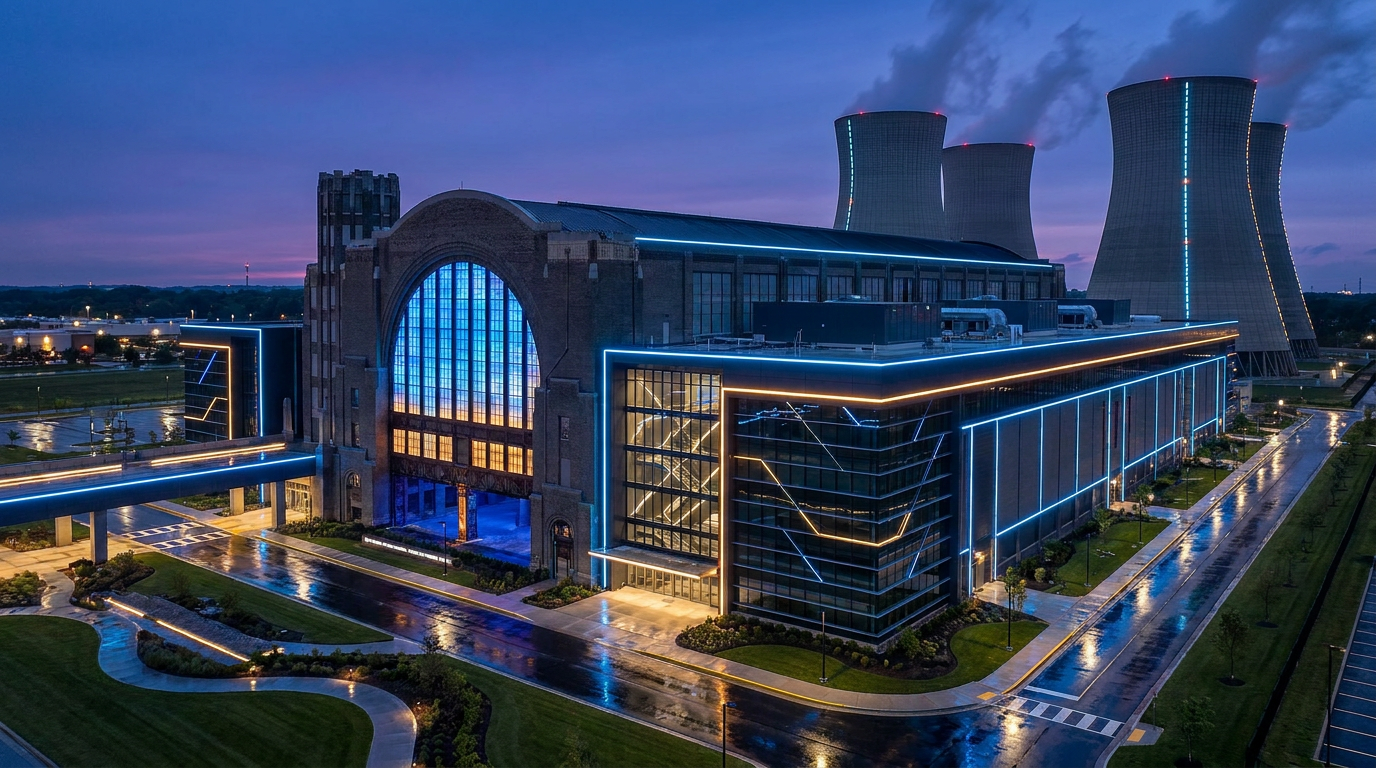
The artificial intelligence revolution is often described in ethereal terms—the "cloud," neural networks, and virtual agents. But the physical reality of the AI boom is anchored in massive, power-hungry concrete fortresses. While retail investors spent the last two years chasing semiconductor manufacturers and software startups, the landlords of the digital age have quietly become some of the most critical players in the global economy. Data center Real Estate Investment Trusts (REITs) are the companies that own, build, and operate the physical infrastructure housing the servers that make the modern internet possible.[2][3]
The sector's recent financial journey has been a rollercoaster. In 2025, data center REITs were the worst-performing real estate sector, plummeting by more than 14% as investors bypassed real estate to get closer to the "end source" of AI profits, pouring capital directly into chipmakers. But by early 2026, the trade flipped dramatically. As the physical bottlenecks of the AI buildout became apparent, data center REITs posted total returns of nearly 22% year-to-date, sharply outpacing the broader stock market and leading the entire real estate sector.[1]
To understand this surge, it helps to understand the financial vehicle itself. Congress created the REIT structure in the 1960s to democratize commercial real estate, allowing everyday investors to buy shares in property portfolios. By law, a REIT must distribute at least 90% of its taxable income to shareholders in the form of dividends. While traditional REITs own shopping malls, office buildings, or apartment complexes, data center REITs apply this income-generating model to the digital economy.[2][3][5]

The business model is remarkably straightforward, even if the technology is complex. Generally, these REITs do not own the actual servers or networking equipment. Instead, they provide the highly specialized shell: the physical space, the industrial-grade cooling systems, the physical security, and, most importantly, the massive electrical power required to run the machines. They lease this capacity to tenants ranging from government agencies to the world's largest tech companies, often locking in stable, recurring revenue through contracts that span five to fifteen years.[2][3][5]
The advent of generative AI fundamentally changed the math for these landlords. Traditional cloud computing was already driving steady growth, but training large language models requires massive clusters of GPUs that draw unprecedented amounts of electricity and generate intense heat. The "big four" hyperscalers—Alphabet, Microsoft, Amazon, and Meta—are projected to spend nearly $700 billion on capital expenditures in 2026 alone, effectively doubling their 2024 spending levels to build out AI infrastructure.[6]
This tidal wave of capital has highlighted the sector's ultimate competitive moat: power scarcity. Building a state-of-the-art data center is no longer just about acquiring land and pouring concrete; it is about securing grid access. Utilities across the globe are struggling to deliver the new substation capacity required to support AI training campuses that demand 100 megawatts or more. Consequently, REITs that already possess existing grid access and locked-in power purchase agreements command massive premium valuations.[5][6]

This tidal wave of capital has highlighted the sector's ultimate competitive moat: power scarcity.
The market is dominated by a few massive players, each with a slightly different strategy. Digital Realty Trust (DLR), one of the largest, focuses heavily on wholesale leases. They build massive, scalable campuses designed to meet the enormous footprint requirements of hyperscalers. In early 2026, Digital Realty reported a massive backlog of $1.8 billion, demonstrating the relentless demand for high-density, AI-ready infrastructure.[2][4]
Equinix (EQIX), another titan in the space, takes a different approach by focusing on retail colocation and interconnection. Rather than just renting massive empty halls to a single tech giant, Equinix operates facilities where thousands of different businesses, networks, and cloud providers physically connect their servers to one another. This creates a powerful "network effect"—once a company's infrastructure is physically wired into its partners and customers inside an Equinix facility, leaving becomes incredibly difficult and expensive.[2][3][4]
Evaluating these companies requires a different financial vocabulary. Because real estate generally appreciates over time, the standard accounting practice of deducting depreciation artificially depresses a REIT's net income. Instead, investors measure success using Funds From Operations (FFO), a metric that adds depreciation back into the equation to provide a more accurate picture of the cash the properties are actually generating.[2][4]
Despite the booming demand, the sector faces significant headwinds, primarily in the form of staggering capital requirements. Building AI-ready facilities is an incredibly expensive endeavor. According to industry forecasts, the average global construction cost for data centers is projected to reach $11.3 million per megawatt in 2026. Because REITs must pay out almost all their income as dividends, they cannot easily fund new construction from their own profits; they must constantly tap the debt and equity markets to raise billions of dollars.[2][6]

Operating costs are also climbing at a swift pace. Data centers have some of the highest operating expenses in commercial real estate, trailing only hospitality and cold storage. As the demand for electricity outpaces the supply of new power generation, the cost of keeping the servers humming—and keeping them cool—is rising, putting pressure on profit margins even as rental rates increase.[5]
The most existential risk, however, is the potential for an AI bubble. The current infrastructure buildout assumes that the massive investments made by hyperscalers will eventually be justified by widespread, profitable enterprise adoption of AI tools. If companies struggle to monetize artificial intelligence, or if end-user demand fails to scale as quickly as the infrastructure implies, the market could face a severe oversupply of capacity.[6]
For now, however, data center REITs represent the ultimate financialization of digital infrastructure. They offer a unique proposition: a way to participate in the explosive growth of artificial intelligence and cloud computing, backed by the tangible security of physical real estate and the steady income of mandated dividends. As long as the world's appetite for data continues to grow, the landlords of the internet will be there to collect the rent.[2][5]
How we got here
1960
The REIT structure is created by the US Congress to allow everyday investors to buy shares in commercial real estate portfolios.
Late 2022
The release of ChatGPT triggers a massive surge in generative AI development, shifting data center demand toward high-density GPU clusters.
2025
Data center REITs suffer a slump, dropping over 14% as investors bypass real estate to invest directly in chipmakers like Nvidia.
Early 2026
The sector rebounds sharply, posting roughly 22% year-to-date returns as the physical bottlenecks of the AI boom become apparent.
Viewpoints in depth
Infrastructure Bulls
Argue that the exponential demand for AI compute and severe power scarcity create an unbreakable moat for existing operators.
Proponents of this view emphasize that the AI revolution is fundamentally constrained by physics. While software can scale infinitely, the GPU clusters required to train large language models require massive amounts of electricity and specialized cooling. Because utility companies cannot build new substations fast enough to meet this demand, data center REITs that already possess grid access and locked-in power purchase agreements hold an insurmountable competitive advantage. Bulls point to the nearly $700 billion in projected 2026 capital expenditures by hyperscalers as proof that demand will outstrip supply for the foreseeable future.
Yield & Structure Analysts
Focus on the financial mechanics of the REIT structure, emphasizing dividend generation and Funds From Operations (FFO) growth.
This perspective looks past the technology hype to focus on the underlying financial plumbing. Analysts in this camp value data center REITs for their mandated 90% dividend payouts and their ability to secure 5-to-15-year leases with investment-grade tenants like Amazon and Microsoft. They measure success not by traditional earnings per share, but by Funds From Operations (FFO), which accounts for the massive depreciation of the physical real estate. For these analysts, data center REITs are less of a tech play and more of a highly reliable, inflation-resistant income vehicle.
Market Skeptics
Warn that massive capital expenditures and rising electricity costs could hurt margins if AI monetization fails to match the infrastructure buildout.
Skeptics caution that the current boom resembles a 'Field of Dreams' scenario—building massive capacity under the assumption that profitable enterprise demand will inevitably follow. They highlight the staggering costs of expansion, with construction now exceeding $11.3 million per megawatt, forcing REITs to constantly take on debt. Furthermore, if everyday businesses fail to successfully monetize AI tools, the hyperscalers could abruptly halt their expansion plans, leaving data center operators with expensive, power-hungry facilities and a sudden lack of tenants.
What we don't know
- Whether enterprise adoption of AI will generate enough revenue to justify the hyperscalers' massive infrastructure investments.
- How quickly utility companies can upgrade regional power grids to alleviate the current bottlenecks in data center construction.
- To what extent future advancements in chip efficiency might reduce the overall power and cooling requirements of AI training clusters.
Key terms
- REIT (Real Estate Investment Trust)
- A corporate structure that owns and operates income-producing real estate, required by law to distribute at least 90% of its taxable income to shareholders.
- Hyperscaler
- Massive cloud service providers like Amazon Web Services, Microsoft Azure, and Google Cloud that require enormous computing infrastructure.
- Colocation
- A data center facility where multiple customers rent space for servers and other computing hardware, sharing power, cooling, and security.
- FFO (Funds From Operations)
- A metric used by real estate companies to define cash flow from their operations, adding depreciation back to earnings to provide a clearer picture of profitability.
- Capex (Capital Expenditure)
- Funds used by a company to acquire, upgrade, and maintain physical assets such as property, buildings, or equipment.
Frequently asked
Do data center REITs own the servers inside the buildings?
Generally, no. The REIT owns the physical building, the cooling systems, and the power infrastructure, while the tenants (like Amazon or enterprise companies) own and operate the actual servers.
Why are data centers suddenly so valuable?
Generative AI requires massive clusters of GPUs, which consume significantly more power and generate more heat than traditional cloud computing, creating a severe shortage of equipped facilities with adequate grid access.
What happens if the AI boom slows down?
If enterprise adoption of AI doesn't match the massive infrastructure buildout, data center operators could face an oversupply of capacity, potentially hurting their pricing power and stock valuations.
Sources
Source coverage
6 outlets
3 viewpoints surfaced






[1]The Real DealMarket Skeptics
Data centers power REIT comeback after 2025 slump
Read on The Real Deal →[2]The Motley FoolInfrastructure Bulls
Best Data Center REITs for 2026 and How to Invest
Read on The Motley Fool →[3]Data Center KnowledgeYield & Structure Analysts
What Is a Data Center REIT?
Read on Data Center Knowledge →[4]Investing.comInfrastructure Bulls
Two real estate investment trusts (REITs) focused on data centers
Read on Investing.com →[5]Hoya CapitalYield & Structure Analysts
Data Center REITs
Read on Hoya Capital →[6]Commercial SearchMarket Skeptics
AI-Driven Hyperscaler Demand Boosts Data Center REITs
Read on Commercial Search →
Every angle. Every day.
Get real estate stories with full source coverage and perspective breakdowns delivered to your inbox.