
The K-12 Fiscal Cliff: How the End of $170 Billion in Federal Aid is Forcing Mass Layoffs and Program Cuts
As the final extension for pandemic-era ESSER funding expires, public school districts are forced to restructure budgets, cut temporary programs, and navigate a return to pre-2020 financial baselines.
By Nabil Faris


- District Administrators
- Focused on long-term operational sustainability and minimizing classroom disruption.
- Education Economists
- Focused on structural deficits and the danger of using one-time funds for recurring costs.
- Taxpayer Advocates
- Focused on budget transparency and protecting local property tax rates.
At a glance
- The final 'late liquidation' deadline for the $190 billion federal ESSER program expired in March 2026.
- Districts are now finalizing their first fully post-pandemic budgets, forcing cuts to programs funded by the temporary aid.
- Declining student enrollment and persistent inflation are compounding the financial strain on local school boards.
- Administrators are pivoting to energy efficiency upgrades and software consolidation to free up operational cash for core academics.
Why it matters now
The expiration of $190 billion in federal aid is forcing nearly every public school district in America to restructure its budget for the 2026-2027 academic year. Understanding the mechanics of this 'fiscal cliff' empowers parents and taxpayers to distinguish between routine program sunsets and genuine financial mismanagement in their local schools.
When a local school board announces a multimillion-dollar budget shortfall and program cuts for the 2026–2027 school year, the immediate public reaction often assumes financial mismanagement. The reality is entirely different. What everyone gets wrong about the current wave of K-12 budget cuts is the assumption that schools are suddenly broke. Instead, districts are hitting a hard, federally mandated expiration date on the largest one-time cash infusion in the history of American public education. The financial turbulence hitting local communities is not an accident; it is the planned, albeit painful, unwinding of a massive emergency relief program that kept the education system afloat during an unprecedented crisis.[5]
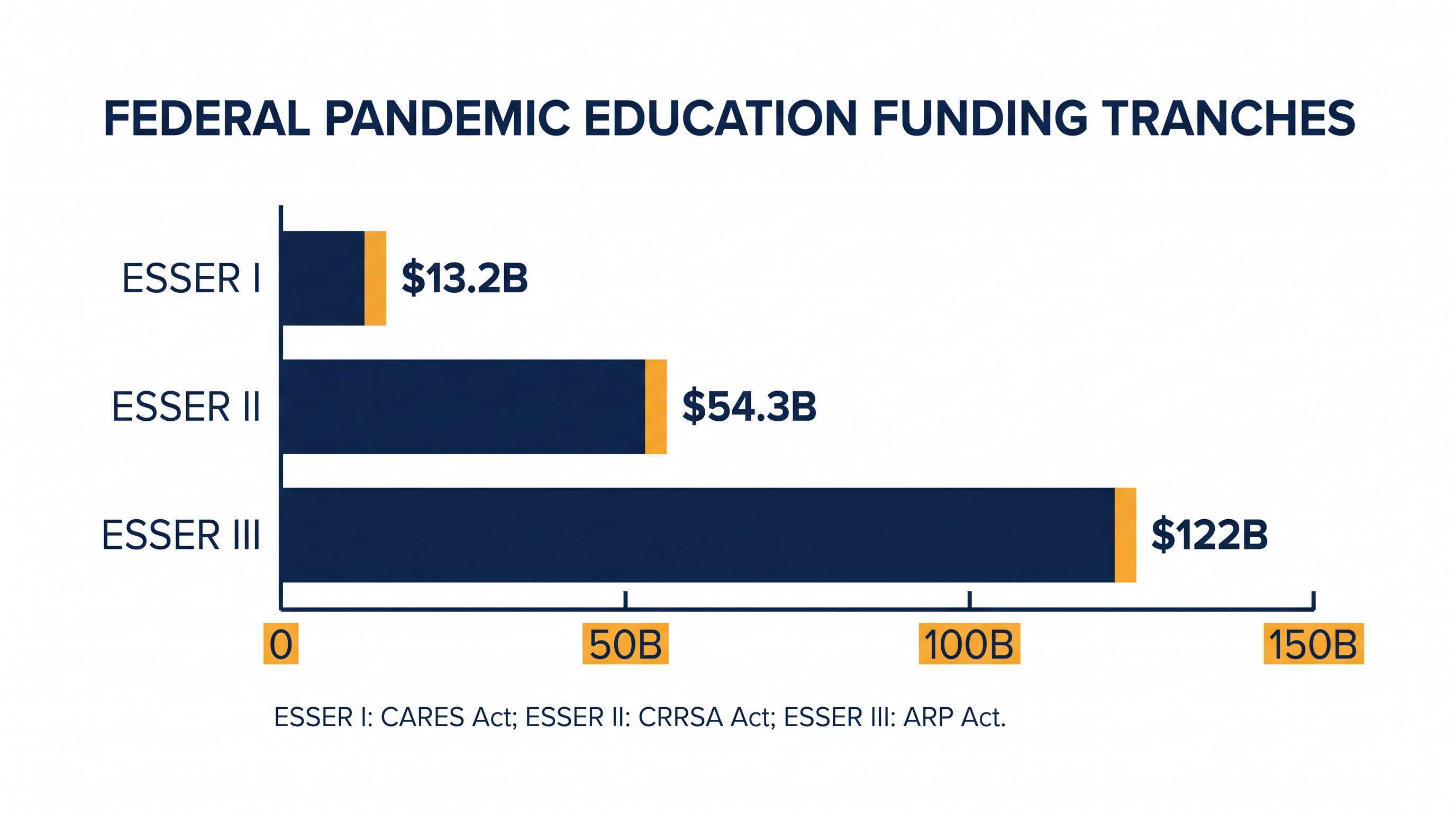
Between 2020 and 2021, Congress authorized a staggering $190 billion in Elementary and Secondary School Emergency Relief (ESSER) funds. This money was distributed across three distinct legislative packages, culminating in the $122 billion ESSER III tranche authorized by the American Rescue Plan. To put that figure into perspective, it represented a historic premium over standard annual budgets, effectively handing local districts a massive, temporary credit line to address remote learning logistics, safely reopen buildings, and combat severe academic learning loss.[1]
However, those federal funds came with a strict, non-negotiable ticking clock. While the initial obligation deadline for the final round of funding was set for September 2024, the Department of Education granted a series of late liquidation extensions to help districts manage supply chain delays and labor shortages. That final grace period officially expired on March 28, 2026. Today, the ESSER era is definitively over, plunging districts into what education economists term the fiscal cliff—a sudden return to pre-pandemic revenue baselines, but saddled with post-pandemic operating costs.[1][2]
The underlying math of the fiscal cliff is unforgiving. During the flush years of the ESSER era, school districts utilized the federal windfall to dramatically expand their services. They hired thousands of reading interventionists, launched comprehensive summer learning academies, purchased cutting-edge educational software, and funded high-dosage tutoring contracts. Because the federal grants were so expansive, schools were able to temporarily inflate their payrolls and service offerings without asking local taxpayers for a single additional cent.[1][2]
Now, those temporary federal funds have evaporated, but the recurring costs have not. A specialized reading teacher hired in 2022 still requires a salary and benefits in 2026. A district-wide software license purchased to boost K-2 literacy still demands an expensive annual renewal fee. District administrators are currently being forced to make agonizing line-item decisions, auditing their pandemic-era additions to determine which programs generated enough verifiable academic return on investment to justify keeping, and which must be unceremoniously cut.[2][4]
Now, those temporary federal funds have evaporated, but the recurring costs have not.
Compounding the expiration of federal aid are two severe structural economic pressures: persistent inflation and declining student enrollment. The cost of basic district operations—from the diesel fuel required to run bus fleets to the utility bills for aging brick-and-mortar buildings—has surged over the past four years. Simultaneously, public school enrollment has trended downward in numerous states. Because state-level education funding is fundamentally tied to per-pupil headcounts, districts with shrinking student bodies are losing state revenue at the exact same moment their federal aid is vanishing.[3][4]
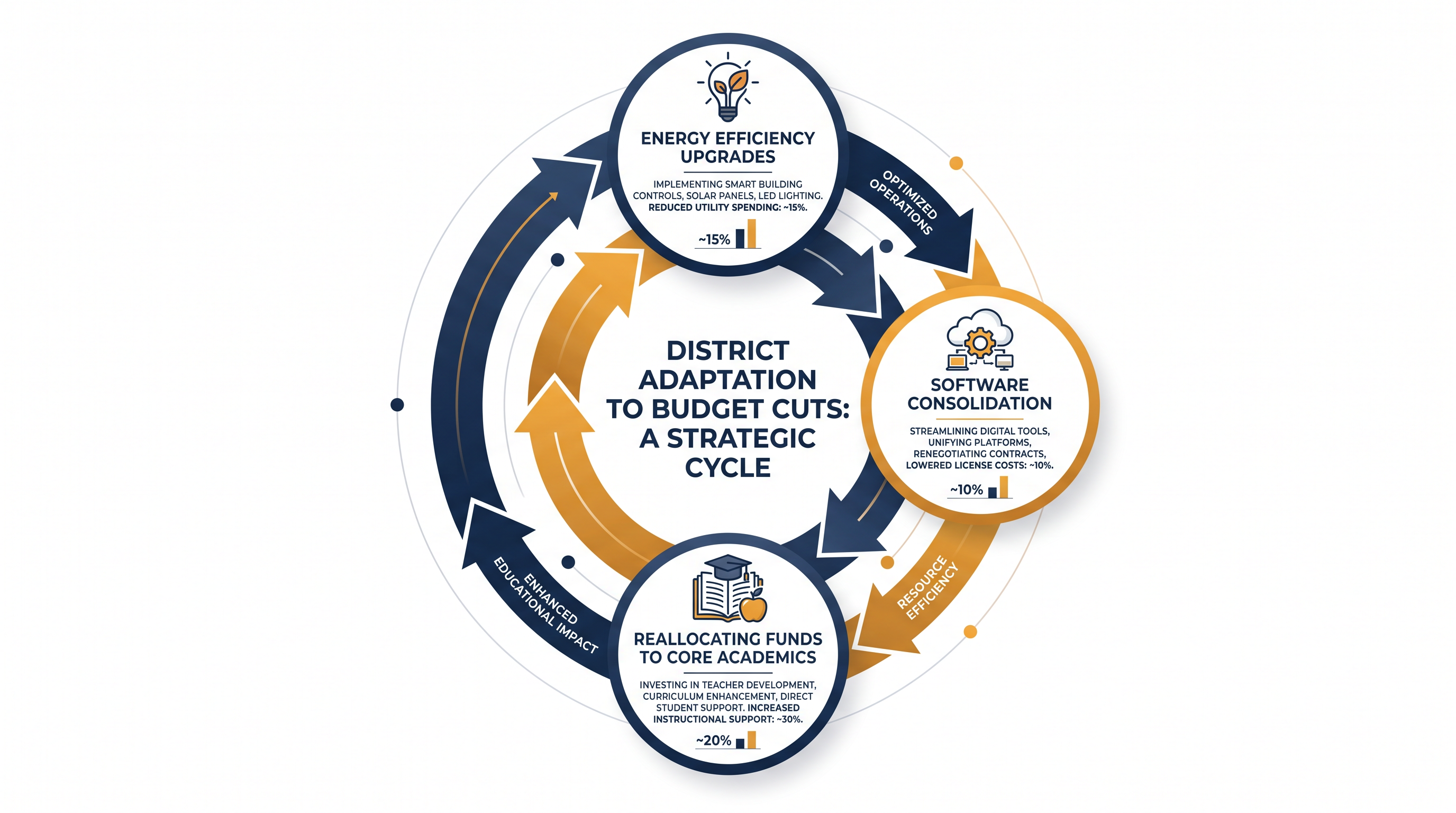
To navigate this fiscal cliff without gutting core academic instruction, savvy school districts are pivoting to alternative, long-term financial strategies. One major area of focus is infrastructure optimization. By utilizing performance contracting and specialized energy efficiency grants, schools are aggressively upgrading outdated HVAC systems, installing LED lighting, and modernizing building envelopes. The resulting reduction in monthly utility costs frees up vital operational cash that can be redirected straight back into the classroom to save teaching positions.[3]
Other districts are conducting aggressive audits of their software ecosystems and vendor contracts. During the chaotic height of remote learning, schools accumulated dozens of overlapping digital tools and subscription services. IT departments are now systematically consolidating these platforms, eliminating redundant licenses, and negotiating better enterprise rates. By trimming the administrative and technological fat, districts can reduce their overall budget footprint without negatively impacting the day-to-day student experience.[4]
For parents, taxpayers, and community stakeholders, the most actionable takeaway is to look closely at how a district communicates its budget cuts. A financially healthy district will transparently separate its core operational deficits from the expiration of temporary programs. If a school announces that it is eliminating a summer tutoring initiative that was explicitly funded by ESSER, that is a planned sunsetting of a temporary grant, not a systemic financial crisis.[2][5]
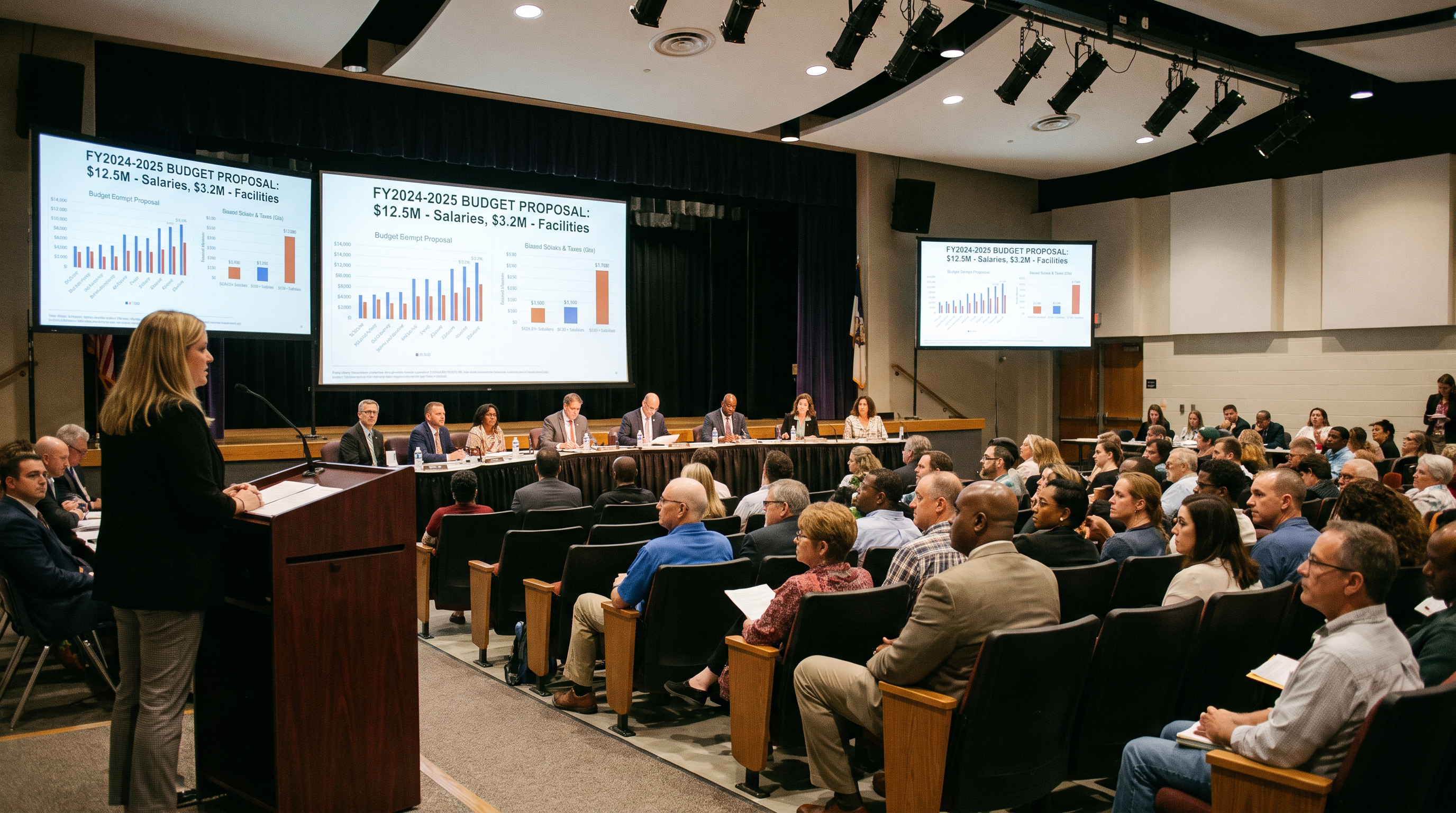
Conversely, if a district is using the ESSER expiration as a convenient catalyst to close neighborhood schools, lay off tenured core faculty, or slash essential arts programs, it often indicates deeper, pre-existing structural deficits that the federal money was merely masking. Engaging directly with local school boards during the budget cycle is critical. By understanding the mechanics of the fiscal cliff, communities can ensure that their remaining resources are fiercely prioritized for direct student instruction rather than administrative bloat.[4][5]
Terms to know
- ESSER
- Elementary and Secondary School Emergency Relief, the federal grant program that provided $190 billion to schools during the pandemic.
- Fiscal Cliff
- A sudden, steep drop in available revenue that occurs when temporary funding expires while operating costs remain high.
- Late Liquidation
- A federal extension that allowed school districts extra time—until March 2026—to spend their final round of pandemic relief funds.
- Obligation Deadline
- The date by which a school district must legally commit to spending grant money, even if the actual payment happens later.
- Per-Pupil Funding
- The primary method states use to fund public schools, allocating a specific dollar amount for every enrolled student.
The backstory
March 2020
Congress passes the CARES Act, creating the first $13.2 billion ESSER I fund.
December 2020
The CRRSA Act adds $54.3 billion in ESSER II funding.
March 2021
The American Rescue Plan authorizes $122 billion for ESSER III, the largest single federal investment in K-12 history.
September 2024
The initial obligation deadline for ESSER III funds passes.
March 2026
The final 'late liquidation' extension expires, officially ending the ESSER era.
August 2026
Districts finalize their first fully post-ESSER budgets for the 2026-2027 school year.
Different angles
District Administrators
Focused on long-term operational sustainability and minimizing classroom disruption.
School leaders argue that the federal government provided massive funding with very few restrictions, encouraging districts to solve immediate pandemic crises. Now, they face the difficult task of unwinding those investments. Administrators emphasize that cutting a program doesn't mean it failed; it simply means the temporary grant that paid for it has legally expired, forcing a return to core operational priorities.
Education Economists
Focused on structural deficits and the danger of using one-time funds for recurring costs.
Financial analysts and researchers point out that many districts ignored best practices by using temporary ESSER dollars to fund permanent salary increases and hire full-time staff. They argue that the severity of the current fiscal cliff in certain districts is a self-inflicted wound caused by poor long-term planning, masking underlying issues like declining enrollment and inefficient facility usage.
Taxpayer Advocates
Focused on budget transparency and protecting local property tax rates.
Community watchdogs emphasize that local taxpayers should not be forced to foot the bill for expiring federal programs. They advocate for aggressive audits of district spending, urging schools to consolidate software licenses, optimize energy efficiency, and reduce administrative overhead rather than passing the deficit onto the community through property tax hikes.
Still unresolved
- How many total teaching and administrative positions will be permanently eliminated nationwide by the end of the 2026-2027 school year.
- Whether the loss of high-dosage tutoring and reading interventionists will cause a secondary dip in standardized test scores.
- Which states might step in with emergency budget supplements for districts facing the most severe shortfalls.
Questions readers ask
Are public schools running out of money?
No. Schools are returning to their standard funding baselines after a temporary, historic $190 billion federal cash infusion expired.
Why are schools laying off teachers if the pandemic is over?
Many districts used temporary federal funds to hire additional staff like reading specialists and tutors; without that funding, those specific positions can no longer be sustained.
Can districts get another extension on ESSER funds?
No. The Department of Education's final late-liquidation extension expired in March 2026, permanently closing the program.
How does declining enrollment affect the budget cuts?
Because state funding is tied to student headcounts, districts with shrinking enrollments are losing state revenue at the exact same time their federal aid is expiring.
Sources
Source coverage
5 outlets
3 viewpoints surfaced





[1]K-12 DiveDistrict Administrators
ESSER III marked the largest one-time federal investment in K-12
Read on K-12 Dive →[2]Khan AcademyTaxpayer Advocates
The Post-ESSER Budget Playbook for Elementary Administrators
Read on Khan Academy →[3]Energy Systems GroupTaxpayer Advocates
The Superintendent's Guide to School Revitalization
Read on Energy Systems Group →[4]Government Finance ReviewDistrict Administrators
School Districts Navigate the ESSER Fiscal Cliff
Read on Government Finance Review →[5]Factlen Editorial TeamEducation Economists
Synthesis by Factlen editorial team
Read on Factlen Editorial Team →
Comments
Every angle. Every day.
Get education stories with full source coverage and perspective breakdowns delivered to your inbox.