
Landmark Study: Positive Mindset Is the Single Biggest Predictor of Physical and Cognitive Gains in Aging
A 12-year longitudinal study reveals that nearly half of older adults experience measurable physical or cognitive improvements, with a positive view of aging acting as the strongest catalyst.
By Baran Demir


- Gerontology Researchers
- Scientists focused on the measurable biological and cognitive markers of the aging process.
- Behavioral Psychologists
- Experts studying how internalized cultural stereotypes directly alter human biology.
- Public Health Advocates
- Professionals treating ageism not just as a social issue, but as a widespread medical crisis.
Look in the mirror, and the cultural narrative of aging stares back at you as a biological inevitability. We are taught from childhood to brace for a slow, unavoidable subtraction of our abilities—a one-way street where memories fade, strides shorten, and our physical worlds inevitably shrink. The medical establishment has long reinforced this view, often treating the aging process as a prolonged exercise in damage control. When a knee aches or a name slips our mind at age 65, the default diagnosis from both society and our own inner critic is simply the passage of time. We assume the body is a machine running out of warranty, and the best we can hope for is a gentle winding down.
But a quiet, profound revolution in gerontology is dismantling that assumption entirely. Researchers are discovering that the trajectory of our later years is not dictated solely by the wear and tear of our cells, our genetic lotteries, or even our baseline physical health. Instead, the single most potent predictor of how well we age might just be how we think about aging. The tension between the biological reality of time and the psychological influence of our mindset has been resolved by a staggering volume of new data. The mind, it turns out, is not just a passenger in the aging body; it is the driver.
The cornerstone of this paradigm shift is a landmark, 12-year longitudinal study out of Yale University that tracked more than 11,000 older Americans. Researchers didn't just look at who survived; they looked at who thrived, measuring cognitive function and physical mobility over more than a decade. The baseline assumption heading into such massive studies is usually that researchers will be tracking the rate of decline. But the data revealed a reality that shocked even seasoned epidemiologists: nearly half of the participants did not decline at all. Instead, they got measurably better.[1][5]
Specifically, 45 percent of the adults in the study demonstrated clinically significant improvements in either cognitive or physical function over the 12-year period. About 32 percent showed marked gains in their memory and executive thinking skills, while 28 percent improved physically, walking faster and moving with greater ease. These were not statistical anomalies or temporary blips; they were sustained, real-world gains in a demographic that society assumes is only capable of heading downhill. The question immediately became: what was the secret ingredient driving this widespread improvement?[1][4]
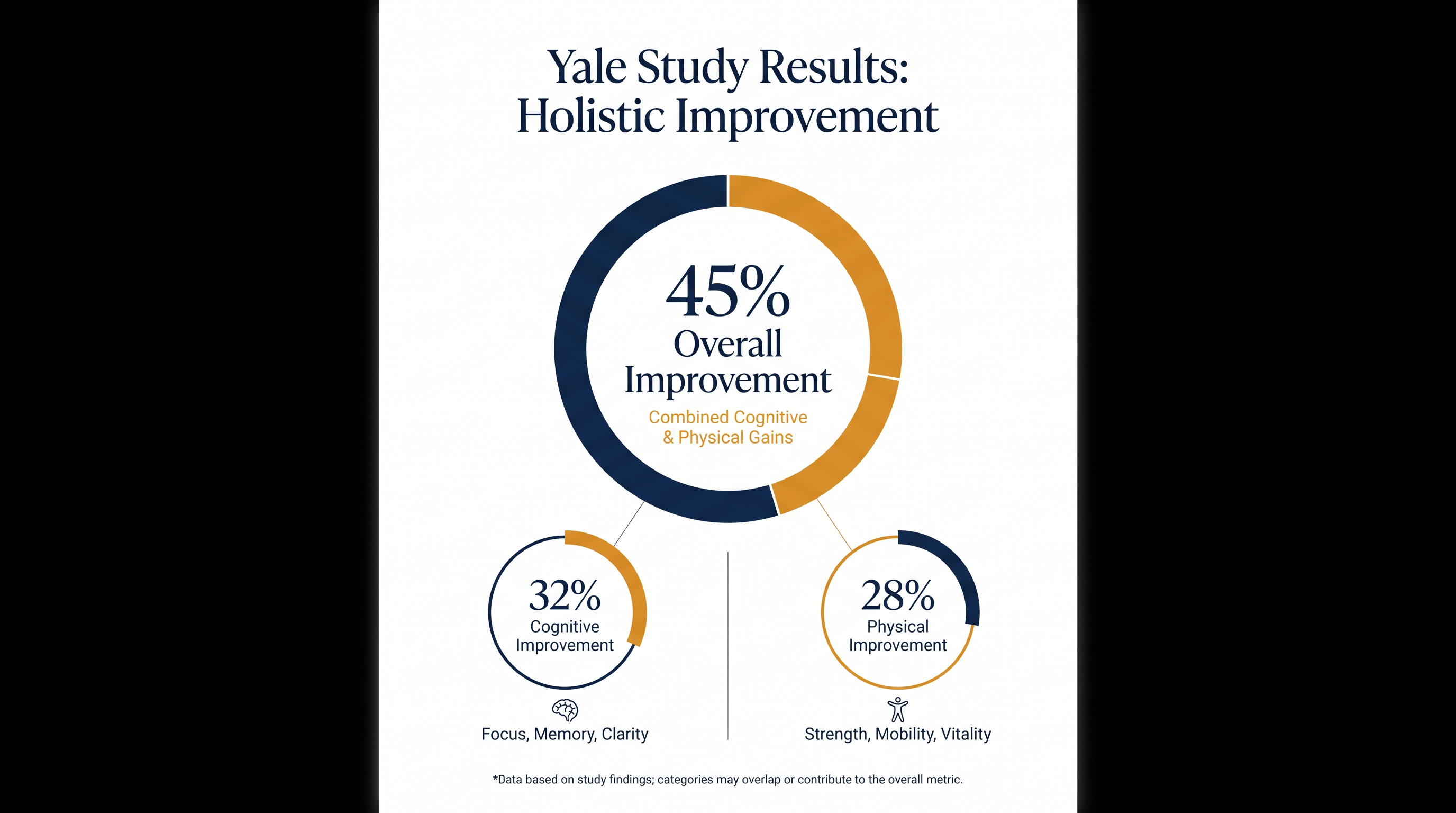
The differentiator was not a new pharmaceutical intervention, a radical change in diet, or a specific exercise regimen, though those factors certainly matter. The most powerful catalyst for improvement was the participants' baseline beliefs about aging. Those who entered the study holding positive views about getting older—seeing it as a time of continued growth, wisdom, and capability—were significantly more likely to experience these physical and cognitive gains. This correlation held firm even after researchers rigorously controlled for age, sex, education level, chronic disease burden, and depression.[1][4][5]
To understand this, we have to define what a "positive age belief" actually feels like in daily life. It is not a forced, toxic positivity that ignores the genuine challenges of getting older. Rather, it is an experiential shift in how you approach your days. It is the difference between waking up and assuming your fatigue is a permanent fixture of your age, versus recognizing you just had a bad night's sleep and planning a brisk morning walk anyway. It is the act of planting a garden with the expectation that you will be strong enough to harvest it, rather than preemptively scaling back your life to avoid potential strain.
The mechanism behind this phenomenon is rooted in what researchers call Stereotype Embodiment Theory. From a very young age, we absorb a relentless barrage of cultural messaging about what it means to grow old. We see the bumbling caricatures in television shows, we hear the self-deprecating jokes about "senior moments," and we internalize the advertising that frames aging purely as a medical crisis to be solved. Over decades, these external stereotypes become internal expectations. When we reach our sixties and seventies, those internalized beliefs become self-fulfilling prophecies.[1][5]
The mechanism behind this phenomenon is rooted in what researchers call Stereotype Embodiment Theory.
When you expect to become frail and forgetful, your body actually responds to the environment differently. Negative age beliefs act as a chronic stressor. If you view a challenging puzzle or a physical task as a threat that will expose your inevitable decline, your nervous system reacts with a spike in cortisol and cardiovascular reactivity. Over time, this chronic stress response drives systemic inflammation, which is a known catalyst for both cognitive decline and cardiovascular disease. You are essentially stressing your body into the exact state of decline you fear.

Conversely, holding positive age beliefs acts as a profound biological shield. When older adults view aging as a phase of continued competence, they approach physical and mental challenges with a buffer of resilience. A forgotten word is just a forgotten word, not a terrifying symptom of impending dementia. This mindset keeps the nervous system calm, reducing the inflammatory markers that accelerate cellular aging. The Yale researchers found that this psychological buffer is so powerful it can even offset the genetic risk factors for Alzheimer's disease, allowing people to maintain sharp cognition despite their biology.[1]
The physical manifestations of this mindset are striking. Consider walking speed, which geriatricians often refer to as the "sixth vital sign" because it so accurately predicts future disability, hospitalization, and mortality. The study found that individuals who embraced positive age beliefs were vastly more likely to maintain or even increase their walking speed over the decade. They moved through their environments with a literal spring in their step, their bodies responding to the subconscious cue that they were still capable, vital participants in the world.[1][4]
Cognitively, the gains were equally profound. Participants with a positive outlook demonstrated enhanced memory recall and better executive functioning—the mental skills required to plan a trip, manage finances, or learn a new hobby. Because they did not view their brains as a depreciating asset, they were more likely to engage in the very activities that build cognitive reserve. They read more, socialized more deeply, and remained curious, creating a virtuous cycle where a positive mindset drives engaging behavior, which in turn physically strengthens the brain's neural networks.
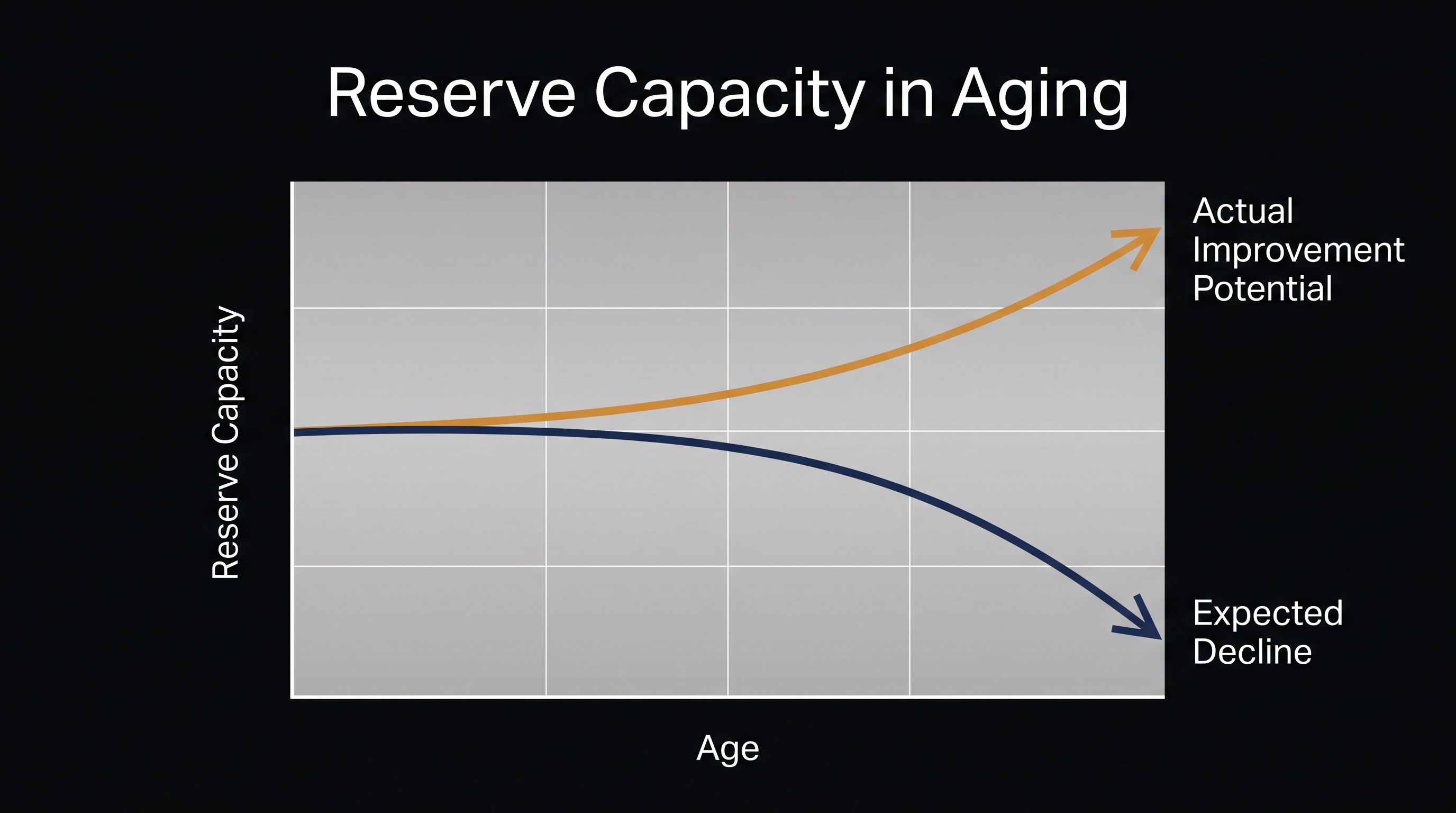
This data forces a radical reassessment of what the medical community calls "reserve capacity." For generations, the assumption has been that older adults have very little reserve—that once a physical or mental ability is lost, it is gone forever. But the fact that 45 percent of participants improved proves that the aging body retains a remarkable, latent capacity to heal, adapt, and grow stronger. The reserve is there; it simply requires the right psychological environment to be unlocked and utilized.[1]
So, how does one actually cultivate this mindset in a culture that remains stubbornly ageist? It begins with a ruthless audit of your media diet and social environment. We have to actively reject the narratives that equate youth with value and age with obsolescence. This means turning away from marketing that preys on the fear of aging and instead seeking out environments and communities that celebrate the depth and texture of later life. It requires surrounding yourself with people who are actively engaged in their own futures.
It also involves a conscious reframing of daily setbacks. When a younger person pulls a muscle, they blame the heavy box they lifted; when an older person does the same, they often blame their age. Breaking the age code means treating your body with the same objective fairness you did in your thirties. An injury is an injury, requiring rest and rehabilitation, not a permanent sentence of frailty. By attributing setbacks to specific, temporary causes rather than a global decline, you maintain the agency required to recover.
The implications of this research extend far beyond individual self-improvement; they represent a massive public health imperative. If a simple shift in mindset can yield a 7.5-year increase in longevity—a figure established by earlier research from the same Yale team—then combating ageism is just as critical as campaigns against smoking or sedentary lifestyles. We are leaving years of vibrant, healthy life on the table simply because we allow a toxic cultural narrative to dictate our biological reality.[2][3]

Ultimately, the science of positive age beliefs invites us to step back into the driver's seat of our own lives. It proves that the calendar is not a countdown clock, and the mirror is not a crystal ball. Aging is not a disease to be managed, but a rich, complex landscape to be navigated with intention and agency. By changing the story we tell ourselves about getting older, we literally change the bodies and minds we will inhabit in the years to come.
The stakes
The cultural narrative that aging is a period of inevitable decline is not just depressing—it is biologically harmful. By actively reframing how we view our later years, we can unlock our body's latent capacity to heal, adapt, and actually improve our physical and cognitive health as we age.
The essentials
- A 12-year longitudinal study of over 11,000 older adults found that 45% experienced measurable improvements in cognitive or physical function.
- Participants who held positive beliefs about aging were significantly more likely to demonstrate these gains.
- Negative age beliefs act as a chronic stressor, increasing cortisol and inflammation, which accelerates cellular aging.
- Positive age beliefs create a psychological buffer that reduces stress and encourages proactive, health-seeking behaviors.
- The findings challenge the medical community's long-held assumption that aging is a one-way street of inevitable decline.
Timeline
2002
Early research establishes that positive self-perceptions of aging can increase longevity by up to 7.5 years.
2012
The Stereotype Embodiment Theory is formalized, explaining how cultural age beliefs become biologically consequential.
2023
Studies reveal that positive age beliefs significantly aid in recovery from mild cognitive impairment.
2026
A landmark 12-year longitudinal study confirms that 45% of older adults experience measurable cognitive or physical improvements, driven largely by mindset.
Perspectives explored
Gerontology Researchers
Scientists focused on the measurable biological and cognitive markers of the aging process.
For decades, the baseline assumption in gerontology was that aging equated to an inevitable, universal decline in function. However, researchers analyzing longitudinal data have been forced to revise this model. By tracking thousands of older adults over a decade, they discovered that nearly half of the participants actually improved in cognitive or physical metrics. This revelation has shifted the scientific focus toward understanding 'reserve capacity'—the latent ability of the aging brain and body to heal, adapt, and build new neural pathways when supported by a positive psychological environment.
Behavioral Psychologists
Experts studying how internalized cultural stereotypes directly alter human biology.
Psychologists view these findings through the lens of Stereotype Embodiment Theory. They argue that the cultural messaging we absorb about aging—that it is a period of frailty and forgetfulness—eventually becomes a self-fulfilling prophecy. When individuals internalize these negative stereotypes, they experience heightened cortisol levels and cardiovascular stress when faced with normal age-related challenges. Conversely, psychologists note that those who actively reject these narratives and maintain positive age beliefs create a psychological buffer that reduces systemic inflammation and promotes proactive, health-seeking behaviors.
Public Health Advocates
Professionals treating ageism not just as a social issue, but as a widespread medical crisis.
From a population health perspective, the data linking mindset to a 7.5-year increase in longevity transforms ageism into a critical public health threat. Advocates argue that the healthcare system's tendency to dismiss older patients' complaints as 'just part of getting older' actively harms patient outcomes. They are pushing for systemic interventions—from rewriting medical school curricula to regulating how older adults are portrayed in advertising—arguing that changing the societal narrative around aging is one of the most cost-effective medical interventions available today.
Sources
Source coverage
7 outlets
3 viewpoints surfaced







[1]Yale School of Public HealthGerontology Researchers
Positive Age Beliefs and Recovery from Disability in Older Persons
Read on Yale School of Public Health →[2]National Institutes of HealthGerontology Researchers
Longevity increased by positive self-perceptions of aging
Read on National Institutes of Health →[3]Psychology TodayBehavioral Psychologists
How Your Beliefs About Aging Can Shape Your Health
Read on Psychology Today →[4]News MedicalGerontology Researchers
Positive beliefs about aging predict physical and cognitive improvement
Read on News Medical →[5]Association of Health Care JournalistsPublic Health Advocates
Yale study challenges assumption that later life means inevitable decline
Read on Association of Health Care Journalists →[6]HealioPublic Health Advocates
Optimism tied to healthier aging trajectories, better cognitive function
Read on Healio →[7]Factlen Editorial TeamBehavioral Psychologists
Synthesis by Factlen editorial team
Read on Factlen Editorial Team →
Comments
Every angle. Every day.
Get lifestyle stories with full source coverage and perspective breakdowns delivered to your inbox.