
How a Colorado City is Using Zoning Laws to Challenge a Federal ICE Facility
Facing federal supremacy, local governments are testing a novel legal strategy: enforcing municipal land-use codes against private landlords who lease to federal agencies.
By Tiago Sousa

- Local Control Advocates
- Focus on the right of municipalities to enforce land-use codes equally and respond to community demands.
- Federal Authority Defenders
- Emphasize the Supremacy Clause and the necessity of unimpeded federal operations.
- Legal Pragmatists
- Analyze the tactical viability of suing private landlords to bypass constitutional preemption.
Perspectives this story doesn't cover
- Federal Agency Officials
- Detained Individuals
Common questions
What is the Supremacy Clause?
The Supremacy Clause is a provision in the U.S. Constitution establishing that federal law takes precedence over conflicting state and local laws.
Why is Glenwood Springs suing the landlord instead of ICE?
Suing the federal government directly would likely result in the case being dismissed under the Supremacy Clause. By suing the private landlord for zoning violations, the city keeps the dispute in state court.
Can ICE still use the Glenwood Springs facility?
If the city wins an injunction, ICE could still use the space for administrative functions allowed under commercial zoning, but it would be barred from holding detainees there.
What is happening in Hudson, Colorado?
Residents and advocacy groups are suing the town of Hudson to force it to apply its industrial zoning codes to a proposed 1,200-bed ICE detention center, arguing the facility is not a permitted use.
The short answer
- Glenwood Springs, Colorado, is suing the private landlord of an ICE facility for violating local zoning codes.
- The city revoked the facility's special use permit in April 2026 after data showed ICE exceeded a 12-hour holding limit.
- By targeting the private landlord in state court, the city aims to avoid a federal Supremacy Clause defense.
- A similar lawsuit in Hudson, Colorado, is attempting to block a 1,200-bed ICE detention center using municipal industrial zoning rules.
The federal government holds the ultimate authority to enforce immigration law, backed by the Supremacy Clause of the U.S. Constitution. But if you want to understand how local communities are successfully pushing back against federal facilities operating in their backyards, you need to look at municipal zoning codes.[3]
The actionable takeaway for local governments is clear: targeting a private landlord over land-use violations is far more effective than challenging a federal agency over policy. On August 7, 2026, the Glenwood Springs, Colorado, city council voted 6-1 to sue the private owner of a building housing a U.S. Immigration and Customs Enforcement (ICE) short-term detention facility.[1]
The strategy is designed to bypass unwinnable constitutional showdowns. Instead of suing the federal government directly—which would almost certainly result in the case being dismissed under federal preemption—the city is taking the property owner to state court. The core argument is simple: the landlord is allowing unauthorized detentions in a commercial zone without a valid city permit.
This dispute centers on a nondescript shopping center where the facility has operated for over two decades. In 2003, the city granted a special use permit allowing ICE to hold individuals for a maximum of 12 hours before transferring them to larger detention centers.
That arrangement collapsed when public records revealed that ICE had exceeded this 12-hour limit multiple times between 2022 and 2025. In response to community pressure, the city's Planning and Zoning Commission revoked the facility's special use permit in April 2026.[1]
Despite the revocation, emergency medical service responses in July confirmed the facility was still actively holding people. This forced the city council to decide exactly how to enforce its local laws against a federal tenant.
City Attorney Karl Hanlon provided the legal roadmap. He advised the council that suing the federal government directly would immediately invite a Supremacy Clause defense. The Supremacy Clause establishes that federal law overrides conflicting state and local laws, making direct confrontation a losing battle.[3]
He advised the council that suing the federal government directly would immediately invite a Supremacy Clause defense.
By focusing strictly on the municipal land-use code and the private landlord, JG Housing Solutions, the city keeps the dispute grounded in local jurisdiction. 'Under the land use code, it doesn't matter who's violating it,' Hanlon explained to the council, emphasizing that the issue is zoning compliance, not immigration enforcement.[1]
Legal experts note that this approach exploits a specific gray area in federal-local relations. Local governments have the most leeway to regulate privately owned and operated facilities, and the least ability to regulate federally owned properties. Federally leased properties, like the one in Glenwood Springs, fall somewhere in the middle.
The practical cost of this lawsuit is relatively low compared to federal litigation, and the potential remedy is highly specific. If successful, the lawsuit would result in an injunction against the detention operation itself, not the broader tenancy. The General Services Administration could still lease the space for administrative functions, which are permitted under the current commercial zoning, but the holding of detainees would be barred.[1]
Glenwood Springs is not the only Colorado community testing this strategy. In Hudson, a town 30 minutes east of Denver, residents and the advocacy group Together Colorado filed a lawsuit in July 2026 to stop the reopening of a private prison as a 1,200-bed ICE detention center.[2]
The Hudson lawsuit argues that the proposed facility, operated by the GEO Group, violates the town's 'Industrial Three' zoning code, which does not explicitly list detention centers as a permitted use. The plaintiffs are demanding that the town enforce its own land-development code and require a new public review process.[2]
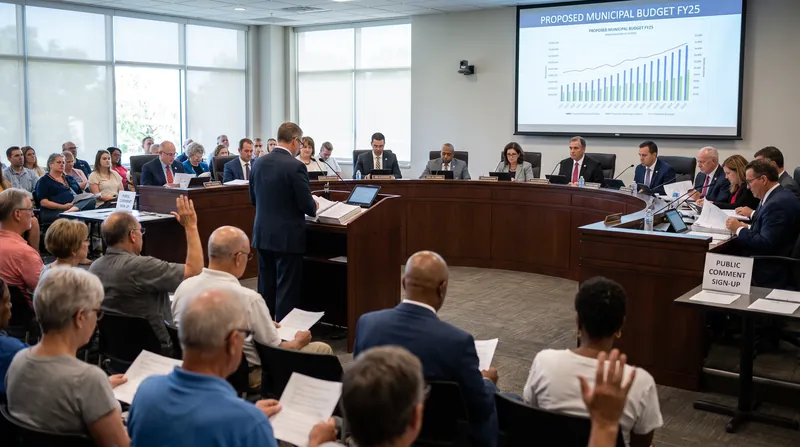
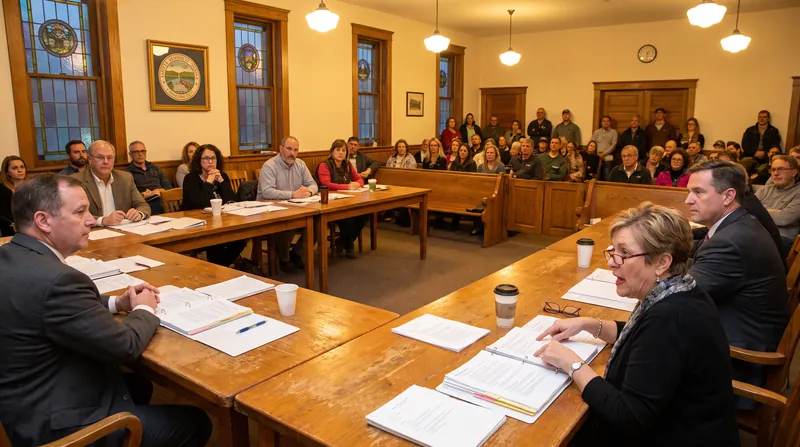
These cases highlight a growing trend where constituents demand their local elected officials use every available municipal regulation to push back against federal policies they oppose. It transforms mundane zoning board meetings into battlegrounds over constitutional authority.
The outcome of these lawsuits will provide a crucial blueprint for other municipalities. If state courts uphold the enforcement of local zoning laws against private landlords leasing to federal agencies, it could empower cities nationwide to exert greater control over the types of federal facilities operating within their borders.
Ultimately, this legal tactic demonstrates how understanding the mechanics of local government can yield significant leverage. By shifting the battlefield from federal immigration policy to local land-use codes, communities are finding practical ways to assert their priorities and challenge federal supremacy.[3]
Why it matters
This legal strategy provides a blueprint for how communities across the country can use mundane municipal codes to challenge federal operations they oppose. If successful, it shifts the balance of power, allowing local governments to exert significant control over federal facilities operating within their borders without triggering unwinnable constitutional battles.
Jargon, explained
- Supremacy Clause
- A clause in Article VI of the U.S. Constitution stating that federal laws and treaties are the supreme law of the land, overriding conflicting state or local laws.
- Zoning Code
- Local municipal laws that dictate how real estate can or cannot be used in certain geographic areas, such as restricting a neighborhood to residential or commercial use.
- Special Use Permit
- An exception granted by a local zoning board allowing a property to be used in a way that is not typically permitted under the standard zoning regulations for that area.
- Injunction
- A court order requiring a person or entity to do or cease doing a specific action.
- Federal Preemption
- The legal doctrine that invalidates state or local laws that conflict with federal law.
Sources
Source coverage
3 outlets
3 viewpoints surfaced



- [1]Aspen JournalismLegal Pragmatists
Glenwood Springs City Council votes to sue ICE facility landlord
Read on Aspen Journalism → - [2]9NewsLegal Pragmatists
Lawsuit accuses Hudson of failing to enforce zoning code against planned ICE facility
Read on 9News → - [3]Legal Information InstituteFederal Authority Defenders
Supremacy Clause Overview
Read on Legal Information Institute →
Comments

More in Community
See all →Urban Poverty
The Five Deprivations That Define a Slum Household in Global Monitoring
8 sources

Municipal Finance
The Three Revenue Pillars That Dictate Municipal Independence
9 sources
Governance Structures
The Distribution of Authority to the Lowest Competent Level of Governance
4 sources
Social Dynamics
The 25% Critical Mass That Causes a Minority Opinion to Overturn a Social Norm
7 sources

Every angle. Every day.
Get Community stories with full source coverage and perspective breakdowns delivered to your inbox.