
NHTSA Proposes Removing Brake Pedal Mandate for Fully Autonomous Vehicles
Federal regulators are moving to eliminate the requirement for manual brake pedals in purpose-built driverless cars. The proposal aims to accelerate the deployment of autonomous vehicles by allowing manufacturers to reimagine car interiors as passenger-only spaces.
By Noor Saidi

Share this story
You step into a neighborhood robotaxi, settling into a rear-facing seat. Suddenly, a dog darts into the street ahead. Your instinct is to slam your foot down on the brake pedal—but your foot hits empty carpet.
This scenario highlights the tension at the heart of a new federal regulatory proposal: the deeply ingrained human desire for a physical emergency override versus the engineering reality that a panicked passenger stomping on a pedal is actually a liability for a fully automated system. For years, this tension has kept autonomous vehicle interiors tethered to traditional, driver-centric floor plans.
That design constraint is now poised to disappear. The National Highway Traffic Safety Administration (NHTSA) has officially proposed amending Federal Motor Vehicle Safety Standard (FMVSS) No. 135, a rule that has governed light vehicle brake systems since 1995. The proposed update would eliminate the mandate for hand- or foot-operated brake controls in vehicles designed exclusively to be driven by automated driving systems.[1][2]
For decades, federal safety standards assumed a human driver would always be present. Automakers and tech companies have been forced to either design around a phantom driver's seat or seek cumbersome, temporary exemptions to put purpose-built robotaxis on public roads. Under the new proposal, NHTSA introduces the concept of a service brake control that operates without human input. Instead of a mechanical pedal, the vehicle's automated driving system sends a direct electronic command to a linear actuator, which applies the physical braking force.[2][6]
Crucially, the rule does not eliminate braking requirements; it simply shifts how they are activated and tested. Vehicles without pedals must still meet the exact same strict stopping-distance performance criteria as traditional cars. They will achieve certification through alternative testing procedures rather than relying on a human tester pressing a pedal. NHTSA has emphasized that the core safety obligation remains unchanged: the vehicle must be able to physically stop when commanded by its software.[1][3]
For the everyday consumer, this regulatory shift fundamentally alters the floor plan of the automobile. Without the need for a steering column, dashboard dials, and foot pedals, the interior of a car can be completely reimagined. It stops being a cockpit and becomes a mobile living room, a rolling office, or a spacious transit pod. This maximizes interior square footage, much like removing a load-bearing wall in a house, allowing for facing seats, tables, and unobstructed legroom.[6]
This architectural shift in vehicle design has real implications for household mobility decisions. For a family weighing whether to purchase a second car, lease a vehicle, or rely on a neighborhood robotaxi subscription, the arrival of purpose-built autonomous vehicles changes the math. Commuters are no longer buying a driving experience; they are renting a private, climate-controlled space for the duration of their trip. The removal of manual controls signals that these lounge-style vehicles are moving from experimental pilot programs to permanent, scalable transit options.[5]
From an engineering perspective, leaving a brake pedal in a fully autonomous vehicle is considered a severe safety risk. A passenger could accidentally kick the pedal while stretching their legs, or intentionally press it out of misplaced panic. Such interference could override the computer's optimized evasive maneuvers, potentially causing a crash that the software would have otherwise avoided. By removing the manual controls, manufacturers ensure the automated system maintains uninterrupted command of the vehicle's safety hardware.[2]
However, the removal of physical fail-safes introduces new concerns for local city planners and safety advocates. If the software freezes, loses sensor visibility, or misinterprets a complex scene—such as failing to recognize a first responder's flashing lights—there is no mechanical backup for the occupant to stop the two-ton machine. Furthermore, if an autonomous vehicle stalls and blocks an intersection, police and fire personnel cannot simply jump into the driver's seat and manually move it out of the way.[4]
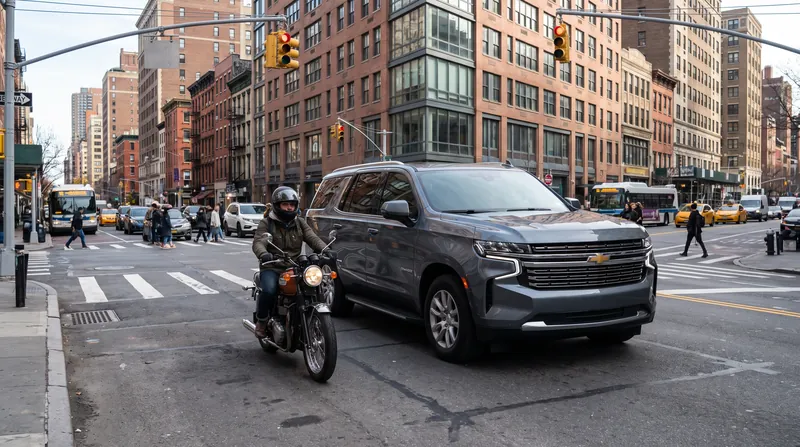
The interaction between pedal-less autonomous vehicles and other vulnerable road users, particularly motorcyclists, remains a focal point of the safety debate. Motorcycles are historically difficult for both human drivers and early-generation sensors to detect due to their narrow profile and rapid acceleration.
While an automated system will never drive distracted or impaired, its ability to execute a flawless emergency stop when a motorcycle unexpectedly cuts into its lane relies entirely on the software's perception stack. Without a human driver to visually confirm the hazard and hit the brakes, the vehicle's algorithms must be perfectly calibrated to recognize and react to two-wheeled traffic.[3][4]
The brake pedal proposal is part of a wider Automated Vehicle Framework championed by federal transportation officials. It follows a steady drumbeat of deregulatory actions in the summer of 2026, including moves to eliminate requirements for manual windshield wipers, rearview mirrors, and transmission shifters in driverless cars. The administration's stated goal is to tear down regulatory barriers that assume a human operator, thereby accelerating American innovation in the autonomous sector.[1][6]
While the industry waits for the final rule on brake pedals, NHTSA is already utilizing its exemption authority to bridge the gap. In late July 2026, the agency granted Zoox the first-ever commercial exemption for a passenger-carrying robotaxi, allowing the company to deploy up to 2,500 purpose-built vehicles annually. This exemption, combined with the proposed changes to the permanent safety standards, indicates a coordinated federal effort to move autonomous vehicles out of the testing phase and into commercial ride-hailing fleets.[5]
The public comment period for the brake standard amendment closed in late July 2026, and the agency is now reviewing feedback before issuing a final rule. If finalized, the updated standard will provide a clear, permanent legal pathway for manufacturers to mass-produce purpose-built robotaxis. For neighborhoods and local infrastructure, the era of the pedal-less vehicle is no longer a distant concept, but an impending reality that will reshape how communities interact with the roads outside their front doors.[2]
Key points
- NHTSA has proposed removing the federal mandate for manual brake pedals in fully autonomous vehicles.
- The rule applies only to vehicles designed exclusively to be driven by automated systems, not traditional passenger cars.
- Vehicles without pedals must still meet existing strict stopping-distance performance requirements.
- The change allows manufacturers to redesign vehicle interiors, maximizing space and removing the risk of passenger interference.
What we don’t know
- It remains unclear how quickly manufacturers will scale production of pedal-less vehicles once the rule is finalized.
- We do not yet know how local municipalities will adapt emergency response protocols for stalled vehicles that lack manual controls.
- The exact timeline for NHTSA to issue the final, binding rule following the July 2026 public comment period has not been announced.
How we got here
March 2020
NHTSA issues initial rules allowing automated vehicles to meet crash standards without manual driving controls.
September 2025
Jonathan Morrison is confirmed as NHTSA Administrator, accelerating the agency's autonomous vehicle rulemaking.
June 26, 2026
NHTSA officially publishes the Notice of Proposed Rulemaking to amend FMVSS No. 135, targeting the brake pedal mandate.
July 27, 2026
The public comment period for the brake pedal proposal officially closes.
July 30, 2026
NHTSA grants Zoox the first commercial exemption to deploy up to 2,500 purpose-built robotaxis annually.
- Automakers and Fleet Operators
- View manual controls as an unnecessary safety risk and a barrier to innovative interior design.
- Federal Regulators
- Aim to modernize decades-old safety standards to accelerate the commercial deployment of autonomous technology.
- Safety Advocates and Municipalities
- Worry about the loss of physical fail-safes and the ability of first responders to manually move stalled vehicles.
Perspectives this story doesn't cover
- Disability advocates evaluating how pedal-less, spacious interiors improve accessibility.
- Insurance actuaries assessing the liability shift from human drivers to software developers.
Sources
Source coverage
6 outlets
3 viewpoints surfaced






- [1]NHTSAFederal Regulators
Trump's Transportation Department Launches Commonsense Updates to Brake Pedal Requirements for AVs
Read on NHTSA → - [2]Crowell & MoringAutomakers and Fleet Operators
NHTSA Proposes Significant Updates to FMVSS No. 135 for Autonomous Vehicles
Read on Crowell & Moring → - [3]J.J. KellerSafety Advocates and Municipalities
Commonsense update to AV brake pedal requirements
Read on J.J. Keller → - [4]Claims JournalSafety Advocates and Municipalities
NHTSA Dropping Manual Brake Pedal Requirement for Fully Automated Vehicles
Read on Claims Journal → - [5]Eno Center for TransportationSafety Advocates and Municipalities
Autonomous Vehicles Regulatory Landscape Update
- [6]BaseNorFederal Regulators
NHTSA systematically stripping out human-operator assumptions
Read on BaseNor →
More in Automotive & Transportation
See all →Engine Tech
Why Dual Injection Combines Port and Direct Systems to Prevent Carbon Buildup
5 sources
Powertrain Tech
Turbos, Superchargers, and Electric Compressors: How Forced Induction Powers Downsized Engines
7 sources
Final Drives
Motorcycle Final Drives: How Chain, Belt, and Shaft Systems Dictate Upkeep Costs
3 sources
Vehicle Safety Policy
Congress Advances Motor Vehicle Modernization Act to Overhaul NHTSA Safety and Recall Framework
6 sources
Comments
Every angle. Every day.
Get Automotive & Transportation stories with full source coverage and perspective breakdowns, free every day.