
Electric vs. Gas Cars: The True Total Cost of Ownership in 2026
With the expiration of federal tax credits and shifting depreciation curves, the financial math between electric and gas vehicles has fundamentally changed for 2026 buyers.

In short
- The average new EV costs roughly $5,800 more upfront than a comparable gas car in 2026.
- EV owners save between $700 and $1,000 annually on fuel when charging at home.
- Electric vehicles cost 42% more to insure and depreciate faster over a five-year period.
The question of whether an electric vehicle saves money compared to a gas-powered car has finally reached a point of hard data in 2026. For years, the math was heavily subsidized by government incentives and skewed by early-adopter pricing. Now, with the expiration of the $7,500 federal EV tax credit in late 2025, the market has entered a new phase of raw, unsubsidized economics.
The answer to the total cost of ownership debate is no longer a simple binary choice—it is a complex equation that depends entirely on how long you keep the car, where you charge it, and what segment of vehicle you buy.[5]
At the dealership lot, internal combustion engine vehicles still hold a clear advantage. Despite years of battery cost reductions and manufacturing efficiencies, electric vehicles carry a noticeable purchase premium. In early 2026, the average transaction price for a new EV sits at approximately $55,544, compared to $49,740 for a comparable gas-powered vehicle. Without the federal tax credit to act as an immediate equalizer, buyers are forced to finance a larger upfront sum, which in turn increases the total interest paid over the life of an auto loan.[1]
However, the moment the vehicle leaves the lot, the financial momentum begins to shift toward the electric vehicle. Fuel costs remain the most significant and predictable advantage for EV owners. According to recent data from AAA, the average gas car costs roughly $1,320 to $1,669 annually to fuel, assuming 12,000 to 15,000 miles driven at average national gas prices.
In contrast, charging an EV at home costs between $550 and $729 for the same distance. This translates to an annual savings of roughly $700 to $1,000, a margin that provides a reliable buffer against the volatility of global oil markets.[2]
Maintenance is the second pillar of the EV savings argument. Electric powertrains are mechanically simple, lacking the complex array of moving parts found in a gas engine. There are no oil changes, no spark plugs to replace, no transmission fluid to flush, and no exhaust systems to rust. Furthermore, regenerative braking systems handle the majority of deceleration, meaning EV brake pads can last two to three times longer than those on a gas car. Overall, EV owners spend 30% to 50% less on routine maintenance and repairs.
Yet, the maintenance ledger is not entirely one-sided. The sheer weight of electric vehicles—driven by massive lithium-ion battery packs—accelerates tire wear significantly. The instant torque delivered by electric motors further compounds the issue, meaning EV owners often find themselves replacing tires every 20,000 to 30,000 miles, compared to the 40,000 to 50,000 miles typical for gas cars. This added expense eats into the broader maintenance savings, though EVs still come out ahead on overall service costs.
Where the electric vehicle math begins to struggle is in the realm of insurance. A 2026 analysis reveals that EVs cost an average of 42% more to insure than their gas-powered counterparts. The average annual premium for an EV sits at $3,159, compared to $2,218 for a gas vehicle.
This premium is driven by the specialized nature of EV repairs; battery packs are expensive to replace after a collision, and there is a shortage of certified technicians qualified to work on high-voltage systems. While the gap shrinks to 18% for the newest models equipped with advanced driver-assistance systems, insurance remains a structural headwind.
The most decisive factor in the 2026 cost comparison, however, is depreciation. Electric vehicles are currently experiencing the steepest depreciation curve in the automotive market. Over a five-year period, the average EV loses 58.8% of its value, compared to an industry average of 45.6% for gas cars. On a $55,000 vehicle, that translates to over $32,000 in lost value. For buyers who trade in their vehicles every three to five years, this depreciation penalty entirely wipes out the savings accrued from cheaper fuel and maintenance.[3]
When all these factors—purchase price, fuel, maintenance, insurance, and depreciation—are combined into a five-year total cost of ownership model, the results vary wildly by vehicle segment. In the compact and medium SUV segments, the race is virtually a dead heat. Data shows that an electric mid-size SUV might cost just $100 to $200 more per year to own than a gas equivalent. However, in the sedan segment, the gas vehicle often wins the five-year window decisively, driven by the EV's higher insurance and steeper depreciation.[4]
Extend the timeline to seven, ten, or fifteen years, and the electric vehicle emerges as the undisputed financial winner. Over a 10-year horizon, the upfront depreciation hit flattens out, while the annual fuel and maintenance savings continue to compound. Long-term models consistently show EVs saving owners between $6,000 and $12,000 over a 10-to-15-year lifespan. For the buy-and-hold consumer, the electric vehicle is a highly lucrative investment.[4][5]
The charging environment also dictates the viability of these savings. The economic case for an EV relies almost entirely on access to residential charging. Home electricity rates, particularly off-peak overnight tariffs, allow drivers to fuel their cars for pennies on the dollar. Conversely, drivers who rely on public fast-charging networks face rates that can rival or even exceed the cost of gasoline, completely neutralizing the EV's primary financial advantage.[5]
For buyers seeking the lowest possible ownership costs in 2026, the used market presents a compelling loophole. Because new EVs depreciate so rapidly in their first three years, a flood of off-lease models has hit the market at highly competitive prices. A used EV allows the second owner to bypass the brutal initial depreciation curve while still reaping the long-term benefits of low fuel and maintenance costs, making it one of the most cost-effective transportation options available today.[1][3]
Meanwhile, conventional hybrids have emerged as the pragmatic middle ground for the 2026 consumer. Consumer data indicates that hybrids currently offer the highest owner satisfaction and reliability scores in the industry. By delivering 40 to 50 miles per gallon without the EV premium, insurance hike, or steep depreciation, hybrids offer immediate financial returns. They require no home charging infrastructure and provide a hedge against volatile gas prices, making them the safest financial bet for the average five-year owner.[1]
Ultimately, the 2026 landscape requires consumers to be brutally honest about their driving habits and financial timelines. The electric vehicle is the superior choice for high-mileage drivers who can charge at home and plan to keep their vehicle for a decade. The gas car remains the safer financial harbor for low-mileage drivers, those who rely on street parking, or buyers who upgrade their vehicles every few years. There is no longer a universal winner—only the right vehicle for a specific set of conditions.[5]
Terms to know
- Total Cost of Ownership (TCO)
- The comprehensive financial cost of a vehicle over its lifespan, including purchase price, fuel, maintenance, insurance, and depreciation.
- Depreciation
- The rate at which a vehicle loses its financial value over time, heavily impacting owners who sell or trade in within five years.
- Regenerative Braking
- A system in electric and hybrid vehicles that captures energy during deceleration to recharge the battery, significantly reducing wear on traditional brake pads.
- Level 2 Charging
- A 240-volt home or public charging station that can fully recharge an electric vehicle overnight, offering the most cost-effective way to fuel an EV.
Questions readers ask
Is it cheaper to charge an EV or buy gas?
Charging an EV at home is significantly cheaper, saving the average driver $700 to $1,000 annually. However, relying exclusively on public fast chargers can cost as much as, or more than, gasoline.
Why do electric cars depreciate so fast?
EVs depreciate quickly due to rapid advancements in battery technology making older models less desirable, combined with a market correction from the artificially high prices seen in previous years.
Do electric cars really cost less to maintain?
Yes. Because they lack oil, spark plugs, and complex transmissions, EVs cost 30% to 50% less in routine maintenance, though they do require more frequent tire replacements due to their weight.
Should I buy a hybrid instead of an EV?
If you cannot charge at home, or if you plan to sell the car within five years, a hybrid is often the safer financial choice, offering excellent fuel economy without the EV depreciation penalty.
Different angles
Long-Term EV Advocates
Focuses on the compounding financial and environmental benefits over a 10-to-15-year horizon.
This camp argues that focusing on the five-year depreciation curve misses the fundamental value proposition of electric vehicles. Because EVs have fewer moving parts, their drivetrains can easily outlast internal combustion engines with minimal maintenance. Over a 10-to-15-year lifespan, the compounding savings from avoiding gasoline and major mechanical repairs (like transmissions and exhaust systems) dwarf the initial purchase premium. Furthermore, they emphasize that as the grid gets cleaner, the long-term environmental dividends of an EV are unmatched.
Pragmatic Consumers
Prioritizes immediate budget impacts, five-year ownership cycles, and hybrid alternatives.
For the average buyer who trades in their car every four to five years, this perspective highlights that EVs are currently a financial risk. The combination of high insurance premiums, rapid depreciation, and the expiration of federal tax credits makes a new EV more expensive to own in the short term. This camp heavily favors conventional hybrids, arguing they offer the best of both worlds: immediate fuel savings without the range anxiety, home-charging requirements, or steep residual value drops associated with pure electrics.
Automotive Market Analysts
Analyzes the structural market forces, including insurance rates and used-market dynamics.
Industry analysts point out that the EV market is undergoing a painful but necessary normalization phase. The steep depreciation is largely a correction from the artificially inflated prices of the early 2020s. They note that the high insurance costs are a temporary structural issue that will resolve as more independent repair shops become certified to work on high-voltage systems and replacement parts become commoditized. In the meantime, they view the used EV market as the most financially sound entry point for consumers.
- Pragmatic Consumers
- Prioritizes immediate budget impacts, five-year ownership cycles, and hybrid alternatives.
- Long-Term EV Advocates
- Focuses on the compounding financial and environmental benefits over a 10-to-15-year horizon.
- Automotive Market Analysts
- Analyzes the structural market forces, including insurance rates and used-market dynamics.
Perspectives this story doesn't cover
- Apartment renters who lack access to overnight home charging
- Rural drivers with extreme commutes and limited charging infrastructure
Sources
Source coverage
5 outlets
3 viewpoints surfaced





- [1]Kelley Blue BookPragmatic Consumers
EV vs. Gas in 2026: When the Better MPG Starts Paying You Back
Read on Kelley Blue Book → - [2]AAAPragmatic Consumers
AAA Your Driving Costs 2026: EV vs. Gas
Read on AAA → - [3]iSeeCarsAutomotive Market Analysts
5-Year Vehicle Depreciation: EVs Lose 58.8% of Value
Read on iSeeCars → - [4]Atlas Public PolicyLong-Term EV Advocates
Comparing the Total Cost of Ownership of the Most Popular Vehicles in the United States: 2026 Update
Read on Atlas Public Policy → - [5]Factlen Editorial TeamAutomotive Market Analysts
Synthesis by Factlen editorial team
Read on Factlen Editorial Team →

More in Automotive & Transportation
See all →Battery Chemistry
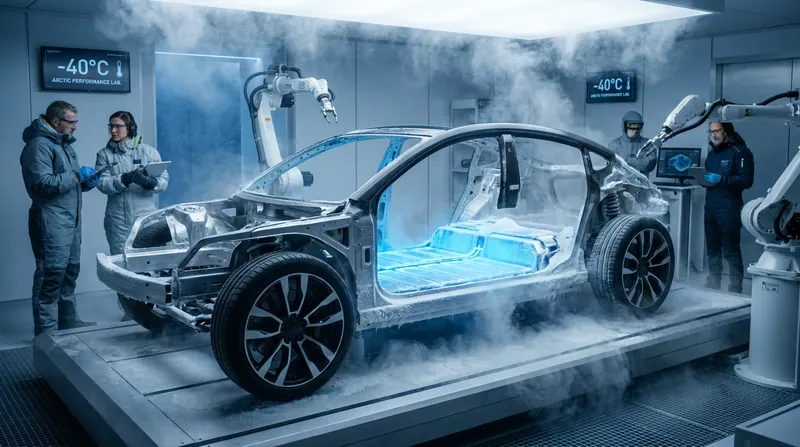
CATL Begins Mass Production of Sodium-Ion EV Batteries, Targeting Cost and Extreme Cold Performance
3 sources
Battery Tech
World's Largest EV Battery Repurposing Facility Opens to Tackle Grid Storage and E-Waste
4 sources

EV Market Forecast
BNEF Lowers Global EV Forecast, Projects 19% US Sales Drop Due to Federal Policy Rollback
3 sources
EV Trade War
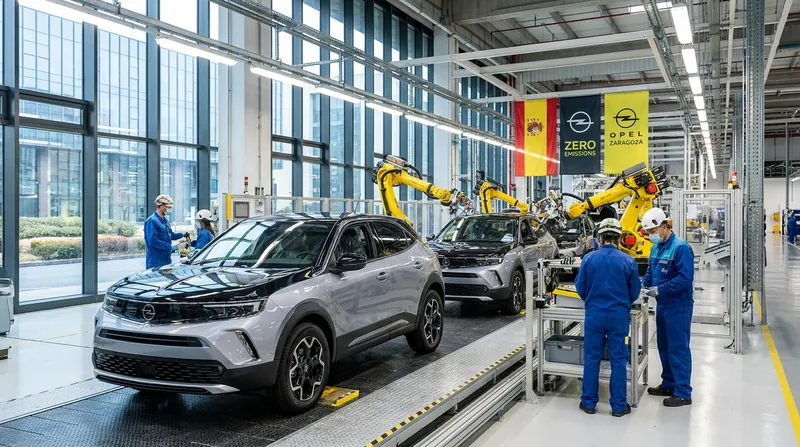
Stellantis to Build Chinese EVs in Europe to Offset Tariffs and Underused Factory Capacity
2 sources
Comments
Every angle. Every day.
Get Automotive & Transportation stories with full source coverage and perspective breakdowns, free every day.