
How Waymo is Scaling Its Robotaxi Fleet Despite 120% Tariffs on Zeekr Vehicles
Alphabet's self-driving unit is importing thousands of purpose-built electric vans from China, absorbing massive trade duties to rapidly expand its driverless ride-hailing service across major U.S. cities.
By Dev Anand

It is a common assumption that the steep 100% tariffs on Chinese electric vehicles, combined with strict federal bans on Chinese connected-car software, have effectively walled off American roads from the world's largest EV manufacturing hub. For the everyday car buyer looking for an affordable electric commuter, that assumption holds true.
But for the future of autonomous ride-hailing, the reality looks entirely different. Alphabet’s self-driving unit, Waymo, is currently scaling its next-generation robotaxi fleet by importing thousands of purpose-built electric vans manufactured by China’s Zeekr. By absorbing the massive import duties and stripping the vehicles of any foreign connectivity hardware, Waymo has found a regulatory and economic pathway to rapidly expand its service.[1]
For residents in cities where Waymo operates—such as Phoenix, San Francisco, Los Angeles, and recently Seattle—this development directly impacts how they get around. The bottleneck for robotaxi adoption is no longer just the software’s ability to navigate complex streets; it is the physical supply of vehicles. Shipping records reveal that more than 3,200 units of the Zeekr-built van, known internally as the CM1e, have arrived at the Port of Los Angeles since 2024.
With hundreds of these vehicles recently spotted staging in a Mesa, Arizona, parking lot, the pipeline is primed for a massive expansion of driverless ride availability. More vehicles on the road mean shorter wait times, wider service areas, and a faster transition from a novelty tech demo to a reliable daily transit option.[1][2]
The vehicle at the center of this expansion is officially named the Waymo Ojai. Designed at Geely’s research center in Gothenburg, Sweden, and manufactured in Ningbo, China, the Ojai is a departure from the retrofitted Jaguar I-Pace SUVs that currently make up the bulk of Waymo’s fleet.
It is a purpose-built robotaxi featuring a capsule-style design, a low step-in height, and no B-pillar, creating what the company describes as a "living room on wheels." The spacious interior is designed purely for passenger comfort, acknowledging that the rider’s experience is the ultimate product.[2][3]
Deploying a Chinese-built vehicle in the United States requires navigating a labyrinth of recent trade and security regulations. The U.S. Commerce Department’s Connected Car Rule prohibits the import or sale of vehicles that use connectivity hardware or driver-assist software sourced from China, citing national security concerns. Waymo circumvents this by ensuring the Ojai arrives as a disconnected shell. According to the company, Zeekr ships the base vans completely stripped of any connectivity hardware or sensors. The vehicles are essentially blank slates when they roll off the cargo ships in California.
The transformation from a basic electric van into an autonomous robotaxi happens entirely on American soil. At a facility in Mesa, Arizona, operated jointly by Waymo and Tier 1 supplier Magna International, the vehicles are outfitted with the "Waymo Driver" system. This proprietary suite of compute hardware, software, and sensors is designed in the U.S. and produced at compliant plants. By strictly bifurcating the foreign-built chassis from the domestic "brain" of the vehicle, Waymo satisfies federal security mandates while still leveraging Zeekr’s manufacturing scale.[1]
The financial mechanics of this strategy highlight the unique economics of commercial fleet operators. The U.S. currently imposes a 100% Section 301 tariff on Chinese EVs, which, when combined with standard duties, brings the total import tax to roughly 127.5%.
If the base Zeekr vehicle costs around $39,000 in its domestic market, the tariffs drive the landed cost up to nearly $89,000 before a single autonomous sensor is attached. For a retail consumer, that markup would be fatal. But for a commercial operator amortizing the cost of the vehicle over hundreds of thousands of high-revenue miles, the math still works.[1]
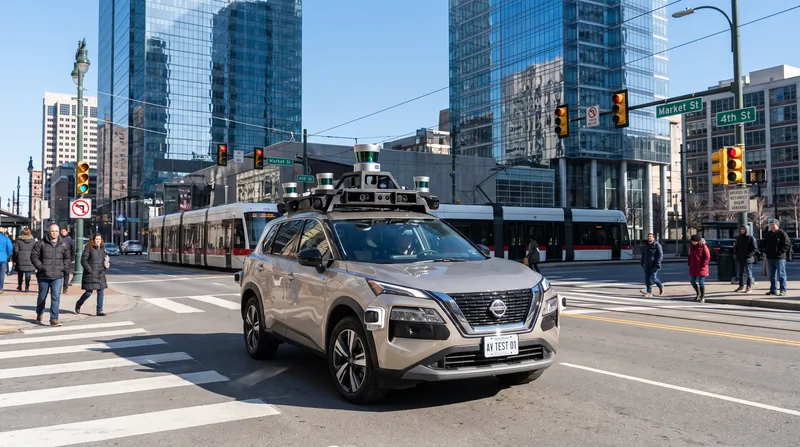
Offsetting the sting of these tariffs is Waymo’s new sixth-generation hardware stack, which makes its debut on the Ojai. The updated sensor array is significantly more streamlined than previous iterations. It reduces the number of expensive lidar sensors from five to four and cuts the camera count from 29 down to 13, relying more heavily on advanced artificial intelligence and high-resolution imaging to interpret the environment. This reduction in hardware complexity lowers the cost of outfitting each vehicle, helping to balance out the inflated price of the imported chassis.[2]
The Ojai’s deployment is already visible on the streets. After initial testing, the periwinkle-blue vans began carrying passengers in San Francisco and Los Angeles in May 2026. Recently, the vehicles have also been spotted mapping neighborhoods in Seattle, signaling the next phase of Waymo’s geographic expansion. As the company pushes toward a stated goal of one million paid rides per week, the sheer volume of the Zeekr imports provides the necessary capacity to meet growing consumer demand.[1][3]
However, Waymo is not relying entirely on a single, tariff-heavy supply chain. Recognizing the geopolitical risks of depending on Chinese manufacturing, the company is simultaneously developing a second vehicle platform. Waymo is preparing to integrate modified versions of the Hyundai Ioniq 5, which will be built at the South Korean automaker’s new manufacturing plant in Georgia. This dual-path strategy ensures that if trade barriers become insurmountable, the robotaxi rollout will not stall for lack of vehicles.[1]
The technical leap of the sixth-generation Waymo Driver goes beyond just reducing sensor counts. The new system incorporates external audio receivers designed to detect and classify sounds on the road, such as the sirens of approaching emergency vehicles, long before they enter the cameras' field of view. By fusing this acoustic data with high-resolution radar and lidar, the Ojai can make more nuanced predictive decisions in dense urban environments. This capability is crucial for scaling into complex cities where unpredictable human behavior and dense traffic are the norm.[2]
For city planners and urban residents, the rapid influx of these purpose-built vehicles represents a shift in how street space might be utilized. Unlike personal cars that sit parked for the vast majority of their lifespan, a fleet of Ojais operates nearly continuously, returning to depots only for charging and maintenance.
This high utilization rate means that a relatively small number of robotaxis can serve a large portion of a city's mobility needs. As Waymo continues to absorb the upfront costs of tariffs and hardware, the long-term dividend for the public is a more robust, accessible, and shared transportation network.[3]
Ultimately, the Ojai fleet expansion illustrates a fascinating divergence in the automotive market. While trade policies successfully insulate the domestic consumer market from foreign competition, commercial tech giants possess the capital and the specific use-cases to tunnel through those barriers.
For the everyday rider hailing a driverless car to get to work or the grocery store, the complex international supply chain fades into the background. What remains is a quiet, spacious vehicle that arrives on demand, proving that the autonomous future is scaling up faster than the regulatory hurdles can slow it down.[1]
Key points
- Waymo is importing thousands of Zeekr-built electric vans to rapidly scale its U.S. robotaxi fleet.
- The company is absorbing a 127.5% total import tariff, as the commercial ride-hailing model makes the high upfront cost viable.
- To comply with U.S. security rules, the vehicles are imported without sensors or connectivity hardware.
- Waymo installs its proprietary, U.S.-developed autonomous driving system at a facility in Mesa, Arizona.
Open questions
- Whether the U.S. government will eventually close the commercial fleet loophole that allows these imports.
- The exact landed cost of the Zeekr vehicles after bulk pricing and tariffs are fully calculated.
- How quickly Waymo will transition to its secondary, U.S.-built Hyundai Ioniq 5 platform if trade tensions escalate further.
Timeline
Dec 2021
Waymo and Zeekr announce a collaboration to build a custom electric robotaxi.
Nov 2022
Zeekr unveils the M-Vision concept car, previewing the design of the future Waymo vehicle.
2024
The U.S. government raises Section 301 tariffs on Chinese electric vehicles to 100%.
Feb 2026
Waymo officially launches its sixth-generation autonomous driving system.
May 2026
The Waymo Ojai begins carrying early-access passengers in San Francisco and Los Angeles.
Aug 2026
Shipping records reveal Waymo has imported over 3,200 Zeekr vehicles to scale its fleet.
- Autonomous Fleet Operators
- Prioritize rapid scaling and hardware amortization over upfront vehicle costs.
- Regulatory & Security Analysts
- Focus on the strict separation of foreign hardware from domestic software.
- Urban Mobility Watchers
- Focus on the passenger experience and the impact on city transit.
Perspectives this story doesn't cover
- Domestic Automakers
- Labor Unions
Sources
Source coverage
3 outlets
3 viewpoints surfaced



- [1]ForbesAutonomous Fleet Operators
Americans Can't Buy Chinese EVs. Waymo Is Importing Thousands.
Read on Forbes → - [2]AutoEvolutionAutonomous Fleet Operators
Waymo Prepares to Vastly Expand Ojai Fleet With Hundreds of Zeekr Robotaxis
Read on AutoEvolution → - [3]WikipediaUrban Mobility Watchers
Waymo Ojai
Read on Wikipedia →
More in Automotive & Transportation
See all →AV Ethics
The Mechanics of the Trolley Problem in Autonomous Vehicles: Comparing Utilitarian, Deontological, and Regulatory Approaches
7 sources
Safety Frameworks
The Mechanics of ODD and Safety Cases: How Autonomous Vehicles Define Their Operating Domain and Prove Safety
6 sources
Sensor Tech
Lidar vs. Radar vs. Camera: The Definitive Comparison of Autonomous Vehicle Sensor Suites
4 sources

Autonomous Trucking
Gatik Secures $200 Million to Scale Driverless Middle-Mile Truck Fleet
7 sources
Comments
Every angle. Every day.
Get Automotive & Transportation stories with full source coverage and perspective breakdowns, free every day.