
SAE J3016 Explained: The Definitive Guide to the Six Levels of Driving Automation
The automotive industry relies on a strict six-level taxonomy to define self-driving capabilities, separating systems that assist a human from those that replace one. Understanding these boundaries is critical for buyers navigating the gap between marketing claims and actual vehicle capabilities.
By Noor Saidi

Share this story
In short
- SAE J3016 divides driving automation into six levels, from zero automation to full autonomy.
- The critical liability shift occurs between Level 2 (driver support) and Level 3 (automated driving).
- Level 2 systems require constant human supervision, despite marketing terms suggesting otherwise.
In 2014, the Society of Automotive Engineers (SAE) published a 30-page document that would become the most heavily scrutinized standard in modern transportation. SAE J3016 was designed to give engineers a common language for automated driving systems, but it has since become the legal boundary line for liability, insurance, and consumer safety.[1]
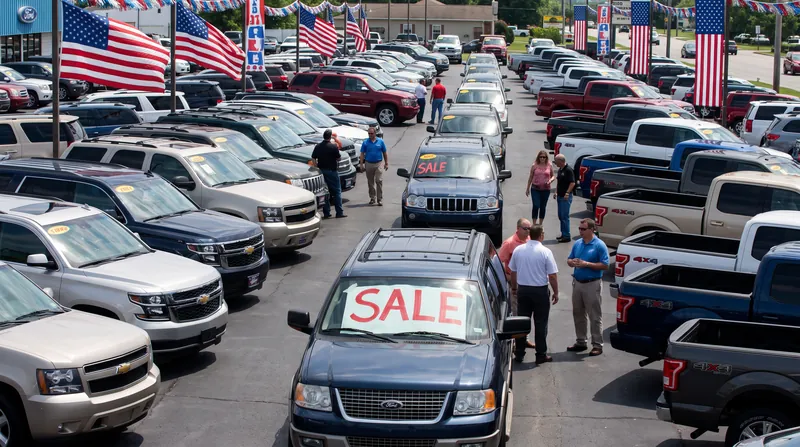
For a buyer standing on a dealership lot today, the difference between a car that helps you drive and a car that drives itself is often obscured by marketing terms like "Autopilot," "BlueCruise," or "ProPilot." Beneath the branding, however, lies this definitive framework, which divides vehicle automation into six rigid tiers—from Level 0 (no automation) to Level 5 (full automation).[1][2]
The entire taxonomy hinges on a single, critical threshold: the fallback performance of the dynamic driving task. In plain terms, if the system encounters a situation it cannot handle, who is legally and physically responsible for keeping the car on the road? The answer to this question completely changes the hardware requirements, the legal liability, and the driver's daily experience.
The dividing line sits squarely between Level 2 and Level 3. For Levels 0 through 2, the human driver is always the fallback. You are driving, even if your feet are off the pedals and your hands are temporarily off the wheel. For Levels 3 through 5, the machine assumes the liability of driving, at least within specific, pre-defined conditions.[1][3]
This distinction is not merely academic. The National Highway Traffic Safety Administration (NHTSA) has increasingly focused its regulatory power on the gap between what Level 2 systems can actually do and what drivers believe they can do. When a driver treats a Level 2 support feature as a Level 4 autonomous chauffeur, the results are frequently catastrophic, prompting federal investigations into automation complacency.[3][4]
To clarify these boundaries, the SAE updated the J3016 standard in 2021, refining the language to emphasize that Level 1 and Level 2 are "driver support systems," explicitly stripping the word "automated" from their consumer-facing descriptions. This was a direct response to rising crash rates linked to drivers tuning out while their vehicles were only equipped to assist, not replace, them.[2][4]
Furthermore, researchers have begun mapping these SAE levels against Operational Design Domains (ODDs)—the specific environmental, geographic, and time-of-day conditions under which a system is designed to function. A vehicle might be Level 4 capable on a sunny, mapped highway, but instantly revert to requiring human intervention in a sudden snowstorm or an unmapped construction zone.[5]
As consumers weigh the premium costs of advanced driver assistance systems against the promise of a hands-free commute, understanding the trade-offs of each tier is essential. The following comparison breaks down the three most relevant tiers for the next decade of mobility, detailing the case for and against each, and exactly when they fit a buyer's needs.[6]
Analysis by camp
Level 2: Driver Support Systems
Simultaneous steering and brake/acceleration support where the human remains fully liable.
FOR: Level 2 systems are cheap to deploy, widely available today, and significantly reduce driver fatigue on long highway stretches. They rely on standard camera and radar suites without requiring expensive LiDAR. AGAINST: They invite dangerous 'automation complacency.' Because the car handles 95% of the driving task flawlessly, humans naturally tune out, making them unprepared for the 5% of edge cases where the system abruptly disengages. EVIDENCE: NHTSA data shows the vast majority of advanced-tech crashes occur when Level 2 drivers fail to retake control in time. FITS WELL WHEN: You want a stress-reducing highway cruiser and are willing to keep your eyes glued to the road. DOES NOT FIT WHEN: You want to read emails, sleep, or legally shift liability away from yourself.
Level 3: Conditional Automation
The system drives the vehicle under specific conditions, but the human must be ready to take over when prompted.
FOR: This is the first tier where you are legally not driving. You can take your eyes off the road to watch a movie or read, provided you are in the system's Operational Design Domain (ODD)—typically a traffic jam on a mapped highway under 40 mph. AGAINST: The 'handoff problem' is notoriously difficult to engineer. If the system encounters an unmapped construction zone, it gives the driver a few seconds to transition from complete distraction to full situational awareness. Many automakers have skipped Level 3 entirely because of this liability nightmare. EVIDENCE: Only a handful of manufacturers have accepted the legal liability to deploy Level 3 systems, and only in highly restricted geofences. FITS WELL WHEN: You face grueling, low-speed daily commutes on major highways and want to reclaim that time. DOES NOT FIT WHEN: You expect the car to handle high-speed maneuvers or navigate complex urban grids.
Level 4: High Automation
The vehicle drives itself entirely without human intervention, but only within a strictly defined geographic and environmental boundary.
FOR: True autonomy. The vehicle does not even need a steering wheel or pedals. If the system fails, it is programmed to achieve a minimal risk condition (like pulling over safely) without ever asking a human for help. AGAINST: The ODD is rigidly locked. A Level 4 robotaxi might navigate flawlessly in downtown Phoenix but refuse to operate in heavy rain or outside its mapped zone. The sensor suites (LiDAR, redundant compute) are currently too expensive for personal vehicle ownership, restricting this to commercial fleet operations. EVIDENCE: Companies operate Level 4 fleets today, but scaling them requires massive capital and hyper-detailed local mapping. FITS WELL WHEN: You are hailing a robotaxi in a supported city or operating a fixed-route commercial logistics fleet. DOES NOT FIT WHEN: You want to buy a personal car that can drive you anywhere, in any weather, at any time.
- Automotive Engineers & Regulators
- Focuses on strict adherence to the J3016 definitions to ensure safety and clear liability boundaries.
- Commercial Fleet Operators
- Values Level 4 geofenced autonomy to remove human labor costs from logistics and ride-hailing.
- Consumer Safety Advocates
- Argues that Level 2 systems are inherently dangerous because they invite human complacency.
Perspectives this story doesn't cover
- Insurance Underwriters
- Independent Repair Shops
Sources
Source coverage
6 outlets
3 viewpoints surfaced




- [1]SAE InternationalAutomotive Engineers & Regulators
J3016_202104: Taxonomy and Definitions for Terms Related to Driving Automation Systems for On-Road Motor Vehicles - Recommended Practice
Read on SAE International → - [2]SAE InternationalAutomotive Engineers & Regulators
SAE Levels of Driving Automation™ Refined for Clarity and International Audience
Read on SAE International → - [3]NHTSAAutomotive Engineers & Regulators
Automated Driving Systems
Read on NHTSA → - [4]NHTSAAutomotive Engineers & Regulators
NHTSA Releases Initial Data on Safety Performance of Advanced Vehicle Technologies
Read on NHTSA → - [5]arXivConsumer Safety Advocates
A new Taxonomy for Automated Driving: Structuring Applications based on their Operational Design Domain, Level of Automation and Automation Readiness
Read on arXiv → - [6]Factlen Editorial TeamCommercial Fleet Operators
Synthesis by Factlen editorial team
Read on Factlen Editorial Team →
More in Automotive & Transportation
See all →Sensor Tech
The Lidar Wavelength Divide: Why Autonomous Vehicles Must Choose Between 905 nm Cost and 1550 nm Range
8 sources
Steering Geometry
The Ackermann Angle: How the Steering Trapezoid Ensures All Four Wheels Roll Without Scrubbing
3 sources
Autonomous Freight
Germany Grants First Permit for Cab-Less Level 4 Autonomous Truck in Daily Commercial Operation
4 sources
EV Range Debate
The 2026 EV Battery Trade-Off: Why 220 Miles Is the New Battleground
8 sources
Comments
Every angle. Every day.
Get Automotive & Transportation stories with full source coverage and perspective breakdowns, free every day.