
Germany Grants First Permit for Cab-Less Level 4 Autonomous Truck in Daily Commercial Operation
Swedish freight technology company Einride and grocery retailer Lidl have deployed a cab-less autonomous truck on public roads in Germany. The Level 4 vehicle operates without a safety driver under a first-of-its-kind permit from the Federal Motor Transport Authority.
By Noor Saidi

- Retail Logistics Operators
- Focuses on integrating autonomous technology to solve driver shortages and improve supply chain resilience.
- Autonomous Freight Developers
- Views the permit as a crucial validation of their technology's safety and a foundation for commercial scaling.
- Regulatory Authorities
- Prioritizes strict safety validation and controlled, step-by-step deployment of advanced mobility technologies on public roads.
Perspectives this story doesn't cover
- Labor Unions Representing Commercial Drivers
- Local Municipal Authorities in Edermünde
Why it matters
For logistics operators and retailers, the barrier to autonomous freight has shifted from software capability to legal permission. Germany's approval of a cab-less truck on public roads provides a regulatory blueprint that other European markets can follow, potentially easing severe driver shortages and lowering operational costs for short-haul distribution.
The binding constraint for autonomous freight is not the sensor suite or the software stack; it is the legal permission to remove the human backup driver from a public road. In Germany, that constraint has just been lifted. Under a first-of-its-kind permit from the Federal Motor Transport Authority (KBA), Swedish freight technology company Einride and grocery retailer Lidl have deployed a cab-less, SAE Level 4 autonomous truck into daily commercial service.[1][2][5]
The electric vehicle, which lacks a driver's cab entirely, is now transporting dry goods between a Lidl warehouse and a nearby retail store in Edermünde, Hesse. It operates without a safety operator on board, relying instead on a remote operator who monitors the vehicle and can intervene at speeds up to six kilometers per hour to handle docking and edge cases.[3]
The route itself is modest—measuring less than a mile—and the permit caps the truck's speed at 25 kilometers per hour (15 mph). During this initial phase, the KBA requires a driven escort vehicle to follow the autonomous truck, and a local operator handles the physical loading and unloading of the 15 Euro-pallets the truck carries per trip.[3][5]
Despite the short distance, the regulatory milestone is significant. Germany, Europe's largest road transport market, possesses some of the world's strictest road safety regulations. Achieving a Level 4 operating permit under its 2021 Road Traffic Act framework sets a commercial benchmark for autonomous logistics. Einride Chief Executive Roozbeh Charli noted the stakes, stating, "Germany's approval process is among the toughest in the world, and obtaining clearance there gives us a foundation to scale with confidence."[1][3][5]
Despite the short distance, the regulatory milestone is significant.
The pilot program is scheduled to run for four months, with the truck completing up to three trips a day, five days a week. Over the course of the trial, Einride and Lidl expect the vehicle to move more than 3,000 pallets, fully covering the dry-goods deliveries for that specific route.[5]
For a warehouse manager or logistics coordinator, the implications are highly practical. The European transport sector is facing a chronic shortage of commercial drivers. By proving that a cab-less truck can reliably execute a fixed distribution-center-to-store route, Lidl is testing a solution that could secure supply chain continuity and insulate operations from labor bottlenecks. Thomas Dangelmayer, head of operational logistics at Lidl Germany, explained, "With this innovative project, we are testing a technological milestone step by step and safely in real-world operations to examine how future-proof solutions can be optimally integrated into our site logistics."[1][5]
The hardware enabling this operation includes nine cameras, six radars, and four lidar units mounted on the Einride vehicle, which is assembled by a contract manufacturer in the Netherlands. The remote technical supervisor oversees the operation, satisfying the KBA's requirement for a designated natural person to monitor the Level 4 system. Christian Hirte, parliamentary state secretary to the Federal Minister of Transport, framed the deployment as a national priority: "We are committed to establishing Germany as a pioneer in the testing and deployment of advanced mobility technologies."[3][5]
Looking ahead, Einride and Lidl plan to expand the operation from a simple point-to-point route into a multi-stop "milk run" serving several Lidl locations. If the Edermünde deployment proves successful, the Schwarz Group—Lidl's parent company and Europe's largest retailer, which reported €185.6 billion in sales for fiscal 2025—is already discussing further rollouts across its logistics network.[1][3][5]
What to know
- Einride and Lidl have deployed a cab-less, SAE Level 4 autonomous truck on a public road in Edermünde, Germany.
- The vehicle operates without a safety driver on board, relying on a remote technical supervisor and a suite of sensors.
- Germany's Federal Motor Transport Authority (KBA) granted the first-of-its-kind permit under its strict 2021 Road Traffic Act framework.
- The four-month pilot covers a route of less than a mile, with the truck capped at 25 kilometers per hour.
- Lidl plans to use the trial to evaluate autonomous freight as a solution to commercial driver shortages and supply chain bottlenecks.
Where opinion splits
Lidl and Schwarz Group's Strategy
Testing autonomous freight as a practical solution to labor shortages.
For Lidl and its parent company, the Schwarz Group, the deployment in Edermünde is less about the novelty of driverless technology and more about securing future supply chain continuity. The European logistics sector is grappling with a severe shortage of commercial drivers, threatening the reliable flow of goods. By integrating Einride's Level 4 trucks into daily operations, Lidl aims to prove that autonomous vehicles can handle routine, repetitive routes—like a fixed distribution-center-to-store run—freeing up human drivers for more complex logistics tasks.
Einride's Commercial Milestone
Using Germany's strict regulatory approval as a benchmark for global scaling.
Einride views the KBA permit as a critical validation of its Freight-Capacity-as-a-Service model. Because Germany possesses some of the most stringent road safety regulations in the world, clearing this regulatory hurdle serves as a powerful proof of concept for other markets. The company's strategy relies on demonstrating that its cab-less trucks can operate safely in real-world, mixed-traffic environments, moving beyond closed-course pilots to actual commercial deployments that generate revenue.
The Regulatory Approach
Balancing innovation with strict safety constraints and incremental expansion.
Germany's Federal Motor Transport Authority (KBA) is managing the introduction of autonomous heavy-duty vehicles through a highly controlled, step-by-step framework established by the 2021 Road Traffic Act. The current permit is strictly geofenced to a specific route of less than a mile, caps the vehicle's speed at 25 kilometers per hour, and requires both a remote technical supervisor and a physical escort vehicle. This cautious approach allows regulators to gather real-world safety data before approving more complex operations, such as multi-stop routes or higher-speed highway driving.
Sources
Source coverage
5 outlets
3 viewpoints surfaced




- [1]Einride ABAutonomous Freight Developers
Einride and Lidl Launch First Autonomous Cab-less Truck on German Public Road
Read on Einride AB → - [2]Trans.INFORetail Logistics Operators
Lidl puts Einride's cab-less autonomous truck on German roads
Read on Trans.INFO → - [3]Eletric-vehicles.comAutonomous Freight Developers
Lidl Runs Germany's First Cab-less Truck on a Quarter Mile of Road
Read on Eletric-vehicles.com → - [4]hyperight.comRegulatory Authorities
Germany Grants First Public Road Permit for Einride and Lidl's Cab-Less Autonomous Truck
Read on hyperight.com → - [5]Logistics ManagerRetail Logistics Operators
Lidl deploys Level 4 autonomous truck for logistics
Read on Logistics Manager →
Comments
More in Automotive & Transportation
See all →EV Safety Recalls
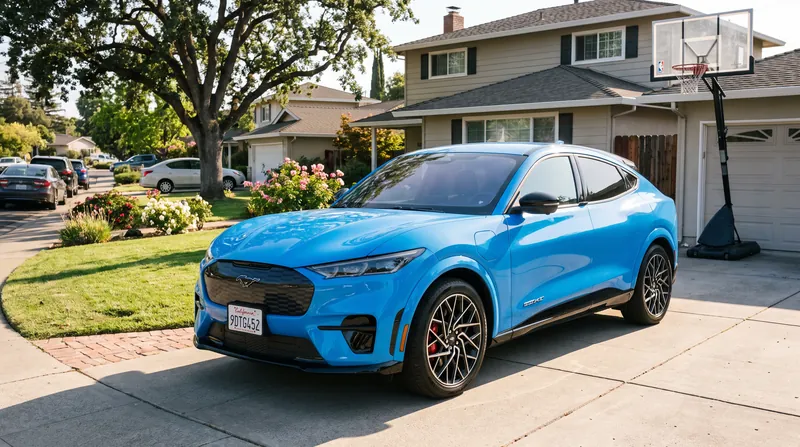
Ford Recalls 86 Mustang Mach-E EVs Over Battery Software Fire Risk
6 sources
Auto Industry
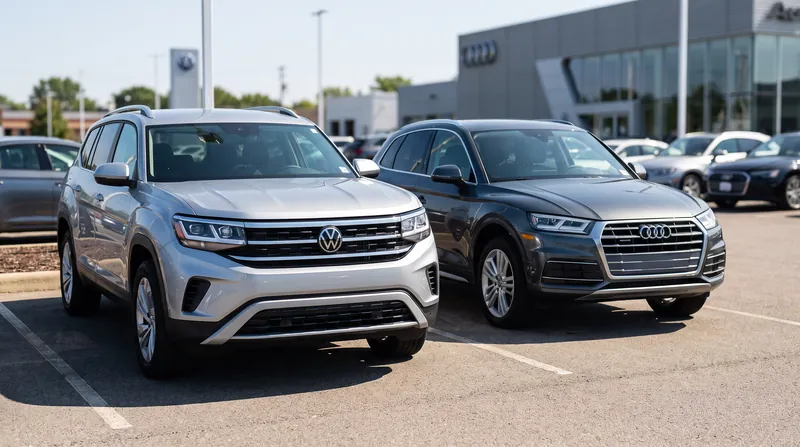
Volkswagen Takes €6 Billion Writedown on Porsche Stake Amid Sales and Margin Declines
4 sources
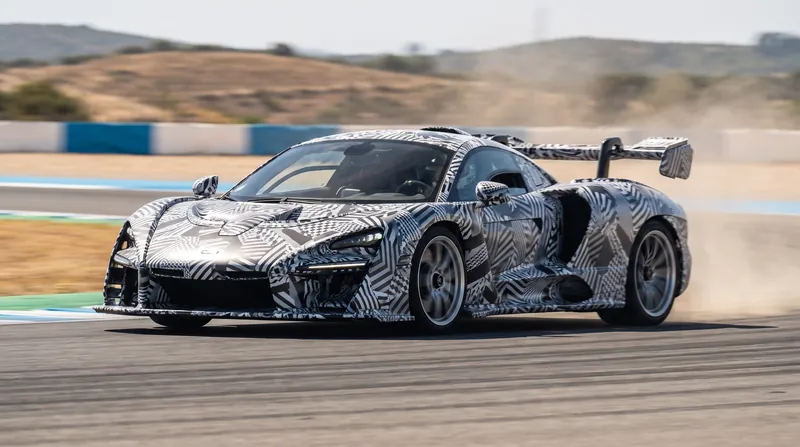
Hypercar Development
F1 Champion Lando Norris Tests McLaren MCL-HY Hypercar Prototype at Portimão
5 sources
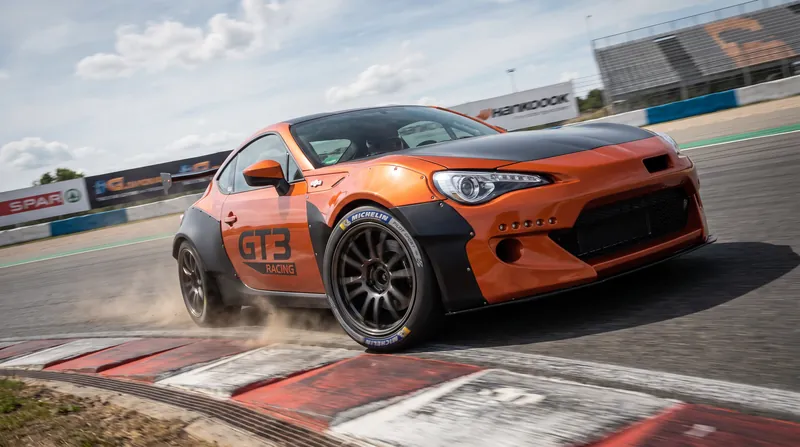
Vehicle Dynamics
The Slip Angle and the Cornering Force: How the Difference Between Front and Rear Tire Angles Dictates Understeer and Oversteer
5 sources
Every angle. Every day.
Get Automotive & Transportation stories with full source coverage and perspective breakdowns delivered to your inbox.