
Solid-State Batteries Reach Commercialization: How the 'Holy Grail' of EVs Actually Works
After decades of research, solid-state batteries are moving from the lab to production lines in 2026. By replacing flammable liquid electrolytes with solid materials, the technology promises to double EV range, slash charging times, and virtually eliminate battery fire risks.

For years, the solid-state battery has been the automotive industry's white whale—a theoretical "holy grail" that promised to solve every major limitation of electric vehicles. But in 2026, the narrative has definitively shifted from laboratory science fiction to industrial reality.[3]
Major manufacturers are no longer just publishing research papers; they are rolling "A-sample" battery cells off pilot production lines. These early production units are successfully passing rigorous safety evaluations, including needle penetration and thermal shock tests, without catching fire or exploding.
The stakes for this transition are monumental. By fundamentally altering the chemistry of energy storage, automakers are targeting vehicles that can travel over 600 miles on a single charge, recharge in the time it takes to pump a tank of gas, and operate safely for decades.[3]
To understand why this is a generational leap, one must look inside the conventional lithium-ion batteries that power today's world. Standard batteries rely on a liquid or gel electrolyte—a chemical medium that allows lithium ions to shuttle back and forth between the cathode and the anode during charging and discharging.
While effective, this liquid architecture has inherent vulnerabilities. The organic solvents used in liquid electrolytes are highly flammable. If the battery is punctured in a crash, overcharged, or exposed to extreme heat, it can trigger a chain reaction known as thermal runaway.[2]
Solid-state technology solves this by replacing the volatile liquid with a stable, non-flammable solid material—typically a specialized ceramic, polymer, or sulfide glass. Because the solid electrolyte itself acts as a physical barrier, these batteries completely eliminate the need for the porous plastic separator membrane found in traditional cells.
The safety implications are profound. Comparative testing demonstrates that while conventional lithium-ion cells can begin to experience thermal runaway at temperatures as low as 90 degrees Celsius, solid-state systems remain stable up to roughly 247 degrees Celsius. Even if a thermal event does occur, the heat generation is only a fraction of what a liquid battery produces.[2][3]
But safety is only half the equation; the true prize is energy density. Because solid electrolytes are physically rigid, they unlock the ability to use a pure lithium-metal anode instead of the bulky graphite anodes used today.[2]
Graphite is heavy and takes up significant physical space just to host the lithium ions. By stripping away the graphite and using pure metallic lithium, engineers can pack vastly more energy into the exact same physical footprint.[2][3]
The numbers illustrate the scale of this breakthrough. Today's best commercial lithium-ion batteries max out at an energy density of roughly 200 to 300 watt-hours per kilogram (Wh/kg). The solid-state cells currently entering pilot production are consistently hitting 400 to 500 Wh/kg.
For the consumer, this translates directly to the end of range anxiety. Vehicles equipped with these next-generation packs are projected to deliver driving ranges of 600 to over 800 miles (roughly 1,000 kilometers) without increasing the weight of the car.[1][3]
Furthermore, the solid-state architecture dramatically accelerates charging times. The combination of a solid electrolyte and a lithium-metal anode allows for rapid ion transfer, enabling a 10% to 80% charge in just 10 to 15 minutes.[3]
The technology also promises to solve one of the most frustrating aspects of modern EV ownership: cold-weather range loss. While traditional liquid electrolytes become sluggish and lose efficiency in freezing temperatures, solid-state materials maintain their conductive properties much more consistently in harsh climates.
The race to commercialize these benefits has triggered a massive mobilization of capital across the globe. Chinese manufacturers are currently setting the most aggressive timelines, with companies like GAC Group announcing plans to achieve gigawatt-hour-level mass production for in-vehicle use as early as late 2026.
Meanwhile, legacy automotive giants are taking a slightly longer, but heavily funded, approach. Toyota, which holds over 1,000 patents related to the technology, is focusing on sulfide-based electrolytes and targeting the 2027 to 2028 window for its first commercial solid-state vehicles.[1][3]
In the West, heavily backed startups like QuantumScape—partnered with Volkswagen—are pioneering proprietary ceramic separator technologies. Their primary focus has been solving the most notorious engineering hurdle in solid-state development: dendrites.[1][3]
Dendrites are microscopic, needle-like structures of lithium metal that can grow through the battery during repeated fast-charging cycles. In early solid-state prototypes, these metallic whiskers would eventually pierce the electrolyte and cause a short circuit, destroying the battery.[3]
Recent breakthroughs in material science, however, have yielded specialized organic-inorganic composite electrolytes that successfully suppress dendrite formation. These innovations are allowing test cells to endure thousands of charge and discharge cycles with minimal degradation, pointing toward battery lifespans that could outlast the vehicles themselves.[3]
Despite the rapid progress, the industry still faces the daunting challenge of manufacturing scale. Producing solid-state cells requires entirely new factory equipment, precise thin-film deposition techniques, and, in the case of sulfide batteries, highly controlled environments to prevent toxic off-gassing during assembly.[1]
As a result, the rollout will be gradual. The first solid-state batteries will likely debut in premium, high-margin electric vehicles where the initial cost premium can be absorbed. But as manufacturing matures and economies of scale take hold over the next decade, this technology is poised to fundamentally rewrite the rules of global transportation.[1][3]
Key points
- Solid-state batteries replace flammable liquid electrolytes with stable solid materials, drastically reducing fire risks.
- The technology allows for pure lithium-metal anodes, pushing energy density to 400–500 Wh/kg.
- Next-generation EVs equipped with these batteries are projected to exceed 600 miles of range on a single charge.
- Charging times could drop to just 10 to 15 minutes, effectively matching the convenience of gas stations.
What we don’t know
- The exact price premium of the first commercial solid-state EVs.
- How quickly manufacturing yields can scale to match current lithium-ion gigafactories.
- Which specific electrolyte chemistry (sulfide, polymer, or ceramic) will ultimately dominate the mass market.
How we got here
19th Century
The foundational principles of solid electrolytes are first discovered by scientists.
Late 2010s
Major automakers and startups begin pouring billions into solid-state research to overcome lithium-ion limits.
2020
Battery startup QuantumScape goes public, securing massive capital to scale its ceramic separator technology.
Early 2026
First A-sample solid-state cells successfully pass rigorous needle penetration and thermal shock tests.
Late 2026
Leading Chinese battery manufacturers target the initiation of gigawatt-hour-level mass production.
2027–2028
Legacy automakers like Toyota plan to debut the first commercial solid-state batteries in premium vehicles.
- Asian Battery Manufacturers
- Aggressively pushing for rapid commercialization and mass production as early as late 2026.
- Legacy Automakers
- Focusing on integrating the technology into premium models by 2027-2028 to ensure absolute safety and reliability.
- Materials Scientists
- Focused on the fundamental physics of the technology, prioritizing the suppression of dendrites and interfacial stability.
- Industry Analysts
- Evaluating the broader market impact, supply chain readiness, and the timeline for cost parity with current batteries.
Perspectives this story doesn't cover
- Lithium-ion gigafactory operators facing retooling costs
- Raw material mining sector
Sources
Source coverage
3 outlets
4 viewpoints surfaced



- [1]MDPILegacy Automakers
Solid-State Battery Technology for Next-Generation Electric Vehicles
Read on MDPI → - [2]WikipediaMaterials Scientists
Solid-state battery
Read on Wikipedia → - [3]Auto Tech InsightsIndustry Analysts
Inside the Race to Build the World's First Commercial Solid-State Battery in 2026
Read on Auto Tech Insights →
More in Automotive & Transportation
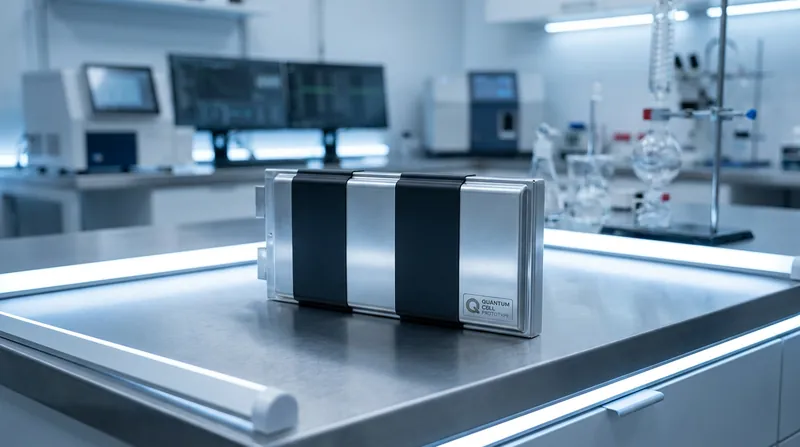
See all →Solid-State Tech
The Evidence Pack: Unpacking the 'Donut Battery' Solid-State Claims and the Push for Independent Verification
7 sources
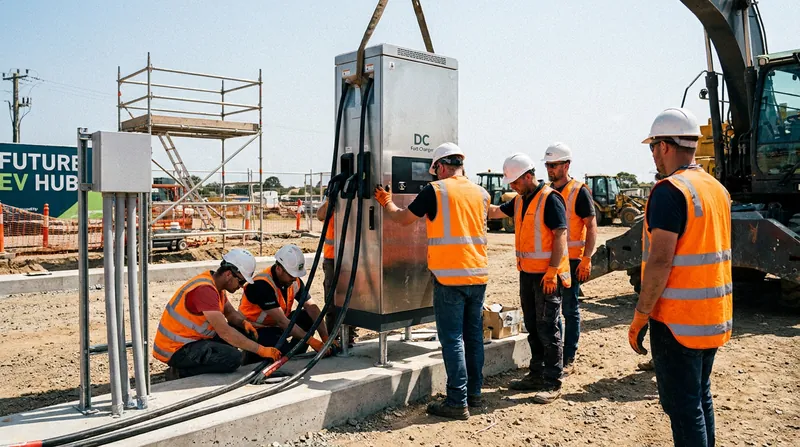
EV Infrastructure
The End of the Cable: How Wireless Charging and Electrified Roads Are Rewriting the EV Experience
4 sources
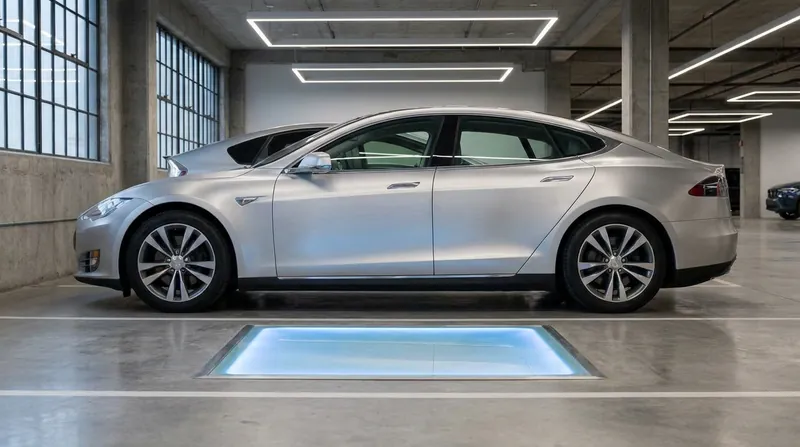
Battery Tech
MG Launches $22K Semi-Solid-State EV Coupe With 522-Mile Range and 800V Architecture
5 sources
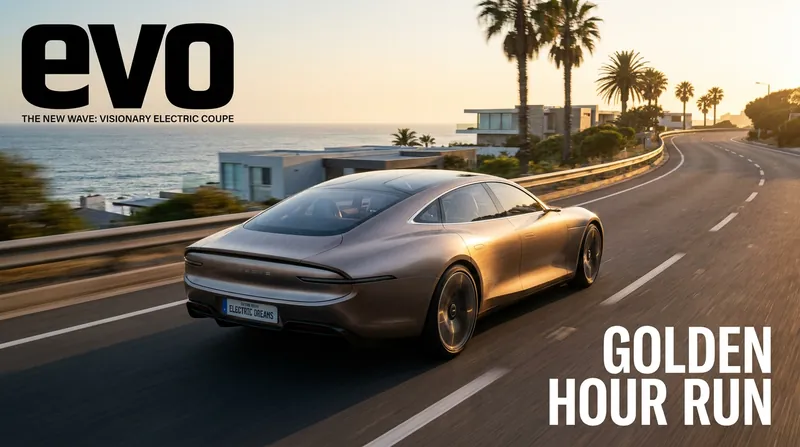
Grid Tech
How Millions of Parked EVs Are Becoming the Grid's Ultimate Backup Battery
2 sources
Comments
Every angle. Every day.
Get Automotive & Transportation stories with full source coverage and perspective breakdowns, free every day.