
The 2026 EV Battery Trade-Off: Why 220 Miles Is the New Battleground
Jeep's announcement of a 222-mile range for the $65,000 Recon SUV has ignited a fierce debate over whether buyers should pay a premium for massive 400-mile batteries or embrace right-sized packs for daily commuting.

- Right-Sized Advocates
- Argue that smaller battery packs lower purchase prices and cover the vast majority of daily driving needs.
- Max-Range Demanders
- Prioritize absolute capability and road-trip peace of mind, accepting the higher costs of massive batteries.
- Cost-Conscious Commuters
- Focus on the total cost of ownership, weighing high gas prices against the upfront premium of EVs and home charging upgrades.
Perspectives this story doesn't cover
- Apartment renters without access to dedicated home charging
- Rural drivers in cold-weather climates where range drops significantly
Why this matters
Choosing the wrong battery size can either leave a driver stranded on a road trip or force them to pay a $15,000 premium for capacity they never use. Understanding the trade-off between daily efficiency and maximum range is the single most expensive decision an EV buyer makes.
On September 9, 2026, Jeep confirmed that its highly anticipated electric Recon SUV will launch with an EPA-estimated range of 222 miles and a starting price near $65,000. That single specification immediately ignited a fierce debate among prospective buyers, many of whom have come to expect 300 miles as the absolute floor for a modern electric vehicle.[1][2]
The backlash over the Recon's range highlights a broader shift happening in the automotive market this fall. After years of automakers racing to pack the largest possible batteries into their chassis, the industry is fracturing into two distinct philosophies. Buyers are now forced to choose between paying a premium for massive, max-range battery packs, or accepting smaller, right-sized batteries that trade road-trip padding for lower daily costs.[1][3]
For a local buyer looking to park an EV in their driveway, the math has fundamentally changed. With 56 percent of drivers now expressing interest in electric vehicles due to sustained high gasoline prices, the upfront purchase price remains the primary barrier to entry.[6]
According to 2026 data from MotiveGrid, the median EPA range across all new electric models has climbed to 319 miles, with vehicles like the Lucid Gravity pushing past 450 miles. But carrying that much energy requires a physically massive battery pack, which drives up the sticker price and alters the home charging equation.[3][4]
"People want more range for less money without sacrificing any capabilities," noted InsideEVs in a September 13 analysis of the Recon backlash. "That's not how this business works." The reality of a 400-mile battery is that it takes significantly more electricity to refill.[1]
"People want more range for less money without sacrificing any capabilities," noted InsideEVs in a September 13 analysis of the Recon backlash.
A vehicle like the 2026 GMC Sierra EV AT4 boasts an impressive 478 miles of range, but its battery is so large that a full charge on a standard household outlet would take several days. Even on a standard Level 2 home charger, replenishing a pack of that size requires a heavy-duty 48-amp or 80-amp electrical circuit, which often means paying an electrician thousands of dollars to upgrade the home's main breaker panel.[5]
Conversely, the push for "right-sized" batteries targets the actual daily habits of most drivers. Federal driving data indicates that one-vehicle households average roughly 50 miles per day. For these drivers, a 220-mile to 250-mile range covers routine life comfortably, allowing automakers to lower the purchase price and make the vehicle lighter.[3]
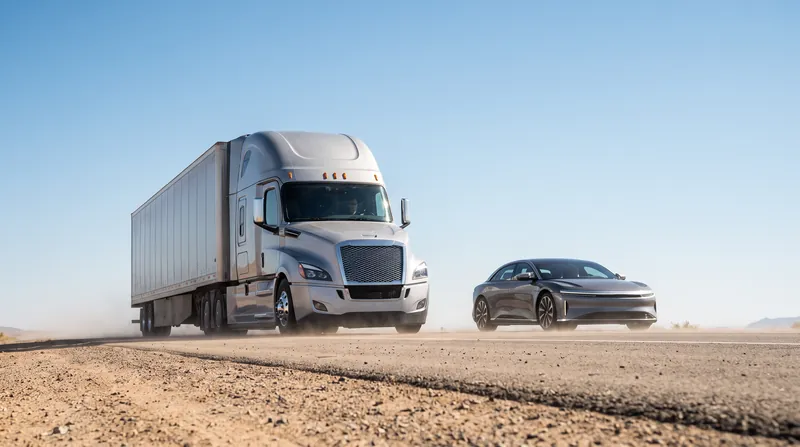
This trade-off is not limited to passenger cars. In the commercial sector, the European launch of the Tesla Semi explicitly trades maximum range for higher payload capacity, acknowledging that hauling more freight on a shorter, predictable route is often more profitable than carrying a massive, heavy battery.[7]
However, the Jeep Recon itself represents a unique anomaly in this efficiency equation. It achieves its underwhelming 222-mile range not by using a small, affordable battery, but by pairing a massive 100.5-kilowatt-hour pack with the aerodynamic profile of a brick.[2]
The Recon's boxy design, removable doors, and 33-inch all-terrain tires consume electricity at a staggering rate of 48 kilowatt-hours per 100 miles. For comparison, the Rivian R2 traveled 304 miles in recent testing using a significantly smaller 88-kilowatt-hour battery, largely because it utilizes more efficient all-season tires and a slightly sleeker profile.[2]
Furthermore, as the EPA prepares to announce policies that could shift $120 billion in long-term energy and health costs, the price of electricity itself is under scrutiny, making the efficiency of the vehicle—not just its battery size—a critical financial metric for households.[8]
If the vehicle will serve as a dedicated local commuter, paying a $15,000 premium for a 400-mile battery that only gets fully drained twice a year makes little financial sense. But for households that regularly tow trailers to the lake or drive hundreds of miles across rural corridors with sparse public charging, that massive battery remains a necessary, albeit expensive, utility.
Viewpoints in depth
The 'Right-Sized' Battery Case (200–250 Miles)
Prioritizing lower purchase price, faster home charging, and daily practicality over road-trip padding.
The case for this approach rests on driveway economics: smaller packs lower the vehicle's purchase price and easily recharge overnight on a basic 30-amp home setup. The case against it is the friction introduced during long-distance travel or winter weather, where a 220-mile nominal range can drop below 160 miles. Evidence from federal driving data shows one-vehicle households average roughly 50 miles per day, leaving a 200-mile pack with ample daily buffer. This option fits well when the vehicle is used primarily for commuting, school runs, and local errands with reliable home charging. It does not fit when the owner frequently drives cross-country, tows heavy loads, or relies exclusively on public fast-charging infrastructure.
The 'Max-Range' Battery Case (350+ Miles)
Paying a premium for massive battery packs to eliminate road-trip anxiety and support heavy towing.
The case for max-range vehicles, like the 478-mile GMC Sierra EV, is absolute capability: they can tow trailers, endure freezing temperatures, and cross rural charging deserts without stranding the driver. The case against them is the immense cost and weight; buyers pay a steep premium for capacity they rarely use, and the massive packs require expensive 48-amp or 80-amp home electrical upgrades to charge overnight. Evidence from the market shows these vehicles often exceed 8,500 pounds and push past the $80,000 mark. This option fits well when the vehicle is the household's only car for long road trips, or when the owner regularly hauls heavy payloads. It does not fit when the vehicle is a secondary commuter car or when the home's electrical panel cannot support high-amperage charging.
The Efficiency Variable (The Jeep Recon Anomaly)
Why battery size does not always guarantee long range.
The case for prioritizing efficiency over raw battery size is that aerodynamic, lighter vehicles get more miles out of every kilowatt-hour, saving money on both the purchase price and the monthly electric bill. The case against relying solely on efficiency is that it often forces buyers into teardrop-shaped sedans, sacrificing the boxy utility and off-road capability of traditional SUVs. Evidence of this trade-off is stark in the Jeep Recon: despite carrying a massive 100.5-kilowatt-hour battery, its brick-like aerodynamics and 33-inch all-terrain tires limit it to just 222 miles of range, consuming a heavy 48 kilowatt-hours per 100 miles. This approach fits well when a buyer demands uncompromising off-road hardware and removable doors, accepting the high energy costs. It does not fit when the buyer wants a cost-effective, long-range highway cruiser.
Key points
- Jeep's announcement of a 222-mile range for the $65,000 Recon SUV has sparked a debate over how much battery capacity drivers actually need.
- The automotive industry is splitting between expensive, max-range vehicles and more affordable, right-sized options.
- Massive battery packs eliminate road-trip anxiety but drastically increase purchase prices and require expensive home electrical upgrades.
- Federal data shows most drivers average 50 miles per day, meaning a 200-mile battery covers routine life with a comfortable buffer.
- The Jeep Recon is an anomaly, achieving low range despite a massive 100.5-kWh battery due to its boxy, off-road-focused aerodynamics.
Sources
Source coverage
8 outlets
3 viewpoints surfaced







- [1]InsideEVsRight-Sized Advocates
People Are Mad About The Jeep Recon's 222-Mile Range. Here's What They're Missing
Read on InsideEVs → - [2]EdmundsMax-Range Demanders
2026 Jeep Recon First Drive Review: Great Electric Wrangler, Not-So-Great EV
Read on Edmunds → - [3]GreenCarsRight-Sized Advocates
Why 'Enough Range' Might Win in 2026
Read on GreenCars → - [4]MotiveGridCost-Conscious Commuters
EV Range Chart 2026: Every Electric Car by EPA Range
Read on MotiveGrid → - [5]Kelley Blue BookMax-Range Demanders
The GMC Sierra EV AT4 Solves Range Anxiety
Read on Kelley Blue Book → - [6]The DriveCost-Conscious Commuters
Suddenly 56% of Drivers Say High Gas Prices Have Them Interested in EVs
Read on The Drive → - [7]InsideEVsRight-Sized Advocates
Tesla Semi Is Heading To Europe With One Big Advantage—And One Major Weakness
Read on InsideEVs → - [8]ElectrekCost-Conscious Commuters
EPA plans to raise your energy costs by $120B on Monday
Read on Electrek →
Comments
More in Automotive & Transportation
See all →Hypercar Tech
How Tesla's 10,000-PSI SpaceX Thruster Package Changes the Roadster Ownership Reality
6 sources
Locomotive Engineering
How the Diesel Engine Acts as a Generator to Power a Locomotive's Traction Motors
4 sources

Hybrid Powertrains
How Power-Split Devices Blend Series and Parallel Hybrid Architectures for Maximum Efficiency
8 sources
Auto Supply Chain
US Senate Committee Advances Bill to Ban Chinese Connected Vehicles and Components
3 sources
Every angle. Every day.
Get Automotive & Transportation stories with full source coverage and perspective breakdowns delivered to your inbox.