
Gatik Secures $200 Million to Scale Driverless Middle-Mile Truck Fleet
Autonomous trucking company Gatik has raised $200 million to expand its driverless fleet, backed by $600 million in contracted revenue from major retailers.

Share this story
The autonomous trucking industry is quietly crossing the threshold from science project to commercial reality. Gatik, a Mountain View-based driverless truck operator, has closed a $200 million Series D funding round led by the Qatar Investment Authority and Koch Disruptive Technologies.[1][2]
But the capital injection is the secondary story. The primary signal is the $600 million in contracted revenue Gatik has secured on its books. That figure represents hard commitments from Fortune 50 retailers to move their freight using trucks with no human in the cab.[3][4]
To date, Gatik has completed 85,000 fully driverless orders across North America, maintaining a 99% on-time delivery rate. The company currently operates dozens of driverless box trucks in Texas, Arkansas, Arizona, and Ontario, Canada, and plans to scale that fleet into the thousands over the coming years.[1][7]
The secret to this scale lies in the specific operational design domain Gatik targets: the "middle mile." Unlike robotaxis that must navigate unpredictable urban downtowns, or long-haul autonomous trucks that spend days on the open interstate, Gatik focuses on high-frequency, repeatable regional routes.[2][3]
For a local grocery manager or regional logistics director, the middle mile is the essential link between a massive distribution center and the retail storefront. These routes are typically under 400 miles, highly structured, and operationally complex, requiring precise timing to keep shelves stocked.[2][4]
Gatik uses medium-duty Isuzu box trucks equipped with its proprietary AI system, Gatik Driver. The trucks rely on a redundant suite of sensors—cameras, radar, and lidar—to navigate both highways and surface streets day and night without a safety driver on board.[2][6]
By removing the human driver, retailers can operate these trucks nearly around the clock, bypassing the strict 11-hour daily driving limits imposed on human operators. This allows companies like Walmart, Kroger, Tyson Foods, and PepsiCo to dynamically adjust their supply chains, adding capacity exactly when a distribution center needs to clear a backlog.[1][3]
Taking the safety driver out of an 18,000-pound commercial vehicle requires extensive validation. Gatik has subjected its systems to third-party audits by evaluators like TÜV SÜD America, measuring its technology against the UL4600 safety standard for autonomous products to build public and customer trust.[7]
However, the rapid deployment of driverless trucks is facing fierce resistance from organized labor and safety advocates. The International Brotherhood of Teamsters views the technology as a direct threat to the livelihoods of hundreds of thousands of commercial drivers.[5][6]
The Teamsters are actively fighting the rollout on two fronts. At the negotiating table, they are pushing for contract language that mandates a trained union operator be present in any autonomous truck used by a company, recently securing such terms for drivers in Texas.[5]
In statehouses, labor groups are backing "driver-in" bills that would legally require human oversight in commercial vehicles over 10,000 pounds. Safety advocates also point to the lack of a comprehensive federal regulatory framework, arguing that a patchwork of state laws and voluntary self-reporting is insufficient for heavy machinery on public roads.[6]
For the communities where these trucks operate, the transition is largely invisible until it isn't. A driverless box truck pulling into a local supermarket loading dock at 3:00 AM ensures shelves are stocked by morning, insulating the store from regional driver shortages and fluctuating freight costs.[4][5]
With $200 million in fresh capital, Gatik is moving to mass-produce its autonomous trucks in partnership with Isuzu, targeting a massive expansion by the end of 2026. As the technology proves its reliability on the balance sheet, the battle will increasingly shift from engineering challenges to regulatory and labor disputes.[1][2]
Viewpoints in depth
Autonomous Fleet Operators
Focus on scaling reliable, driverless capacity for repetitive regional routes.
Companies like Gatik argue that the middle mile is the perfect proving ground for autonomy. By operating on fixed, repeatable routes, they can map every inch of the journey and eliminate the unpredictability that plagues urban robotaxis. They point to their 99% on-time delivery rate and zero-incident safety record as proof that the technology is ready to solve chronic driver shortages in the logistics sector.
Organized Labor
View autonomous trucks as an existential threat to middle-class driving jobs and public safety.
The Teamsters and other labor unions argue that the push for driverless trucks is driven by corporate profit rather than safety or efficiency. They highlight the dangers of deploying 18,000-pound vehicles on public highways without a human operator to intervene during system failures or unpredictable road conditions. In response, unions are aggressively lobbying for state-level 'driver-in' mandates and negotiating contract clauses that require a human operator in every autonomous vehicle.
Retail Supply Chain Executives
Prioritize 24/7 delivery capacity and supply chain resilience.
For major retailers like Walmart, Kroger, and PepsiCo, autonomous trucks offer a way to decouple their supply chains from the limitations of human labor. Without the constraints of 11-hour daily driving limits, retailers can run freight between distribution centers and stores around the clock. This dynamic routing allows them to respond instantly to inventory shortages, ensuring that local supermarket shelves remain stocked regardless of broader labor market fluctuations.
Key points
- Gatik raised $200 million in Series D funding to expand its driverless truck fleet.
- The company has secured over $600 million in contracted revenue from Fortune 50 retailers.
- Operations focus on the 'middle mile,' moving goods between distribution centers and stores.
- The Teamsters union is actively fighting the deployment, citing job losses and safety concerns.
What we don’t know
- Whether state-by-state 'driver-in' legislative efforts by labor unions will successfully halt fully driverless operations in key logistics hubs.
- How the autonomous systems will perform at a scale of thousands of trucks across more diverse weather conditions.
- When or if the federal government will implement a unified regulatory framework for heavy-duty autonomous vehicles.
How we got here
2020
Gatik and Loblaw begin autonomous deliveries in Canada with safety drivers on board.
2022
Gatik removes the human safety driver from its commercial routes for Loblaw.
June 2026
PepsiCo expands its multi-year strategic partnership with Gatik across multiple states.
August 2026
Gatik secures $200 million in Series D funding to scale its driverless fleet to thousands of vehicles.
- Autonomous Fleet Operators
- Focus on scaling reliable, driverless capacity for repetitive regional routes.
- Supply Chain Executives
- Prioritize 24/7 delivery capacity and supply chain resilience.
- Organized Labor
- View autonomous trucks as an existential threat to middle-class driving jobs and public safety.
Perspectives this story doesn't cover
- Local municipal traffic planners
- Independent owner-operator truck drivers
Sources
Source coverage
7 outlets
3 viewpoints surfaced







- [1]ForbesSupply Chain Executives
Autonomous tech company Gatik has scored a new $200 million round of funding
Read on Forbes → - [2]FreightWavesSupply Chain Executives
Gatik raises $200M to scale driverless freight to thousands
Read on FreightWaves → - [3]FleetOwnerSupply Chain Executives
Gatik secures $200M to scale driverless middle-mile operations
Read on FleetOwner → - [4]The Robot ReportAutonomous Fleet Operators
Gatik brings in $200M to continue expanding autonomous trucking operations
Read on The Robot Report → - [5]Supermarket NewsOrganized Labor
Teamsters seek to place drivers in autonomous trucks
Read on Supermarket News → - [6]Transport TopicsOrganized Labor
Driverless trucks with no humans on board will soon cruise Texas highways
Read on Transport Topics → - [7]GatikAutonomous Fleet Operators
Gatik Becomes First U.S. Company to Operate Fully Driverless Trucks at Scale for Commercial Deliveries
Read on Gatik →
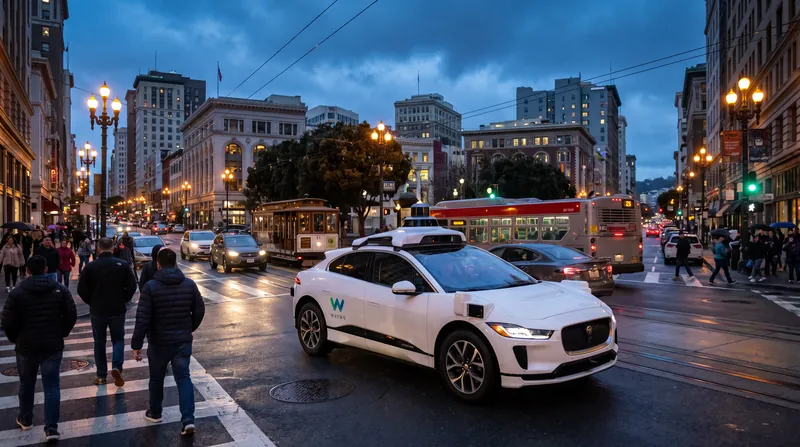
More in Automotive & Transportation
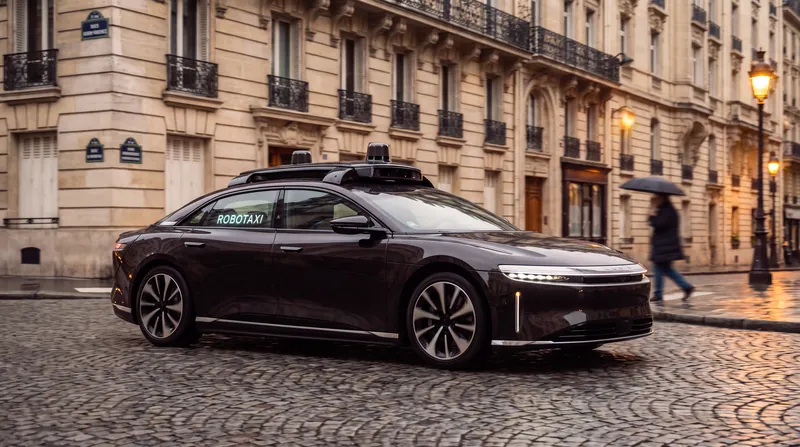
See all →Robotaxi Fleets
Lucid and Bolt Partner to Deploy 25,000 Robotaxis Across Europe
7 sources
Autonomous Safety
The 10-90 Percent Rule: How the ODD-EVE Framework Quantifies the Safety Gap Between Autonomous and Human Driving
8 sources
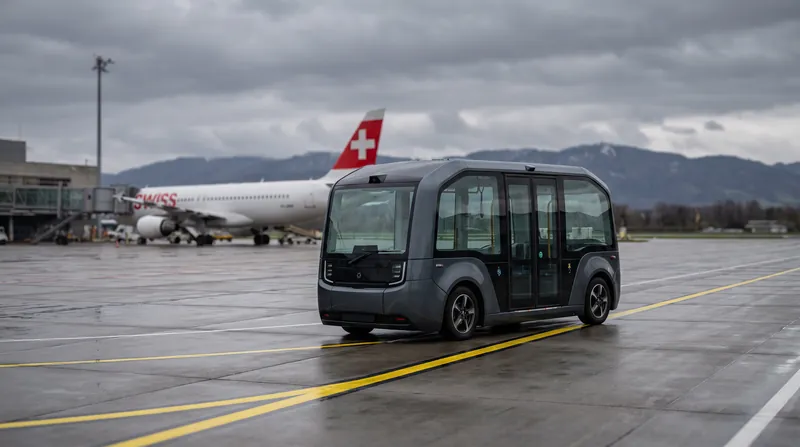
Airport Automation
Zurich Airport Deploys Level 4 Autonomous Shuttles Without Onboard Safety Drivers
6 sources
Sensor Tech
How Lidar, Radar, and Camera Sensor Fusion Overcomes the Limitations of Each for Autonomous Driving
6 sources
Comments
Every angle. Every day.
Get Automotive & Transportation stories with full source coverage and perspective breakdowns, free every day.