
Capital One Completes $35.3 Billion Acquisition of Discover, Creating Largest U.S. Credit Card Issuer
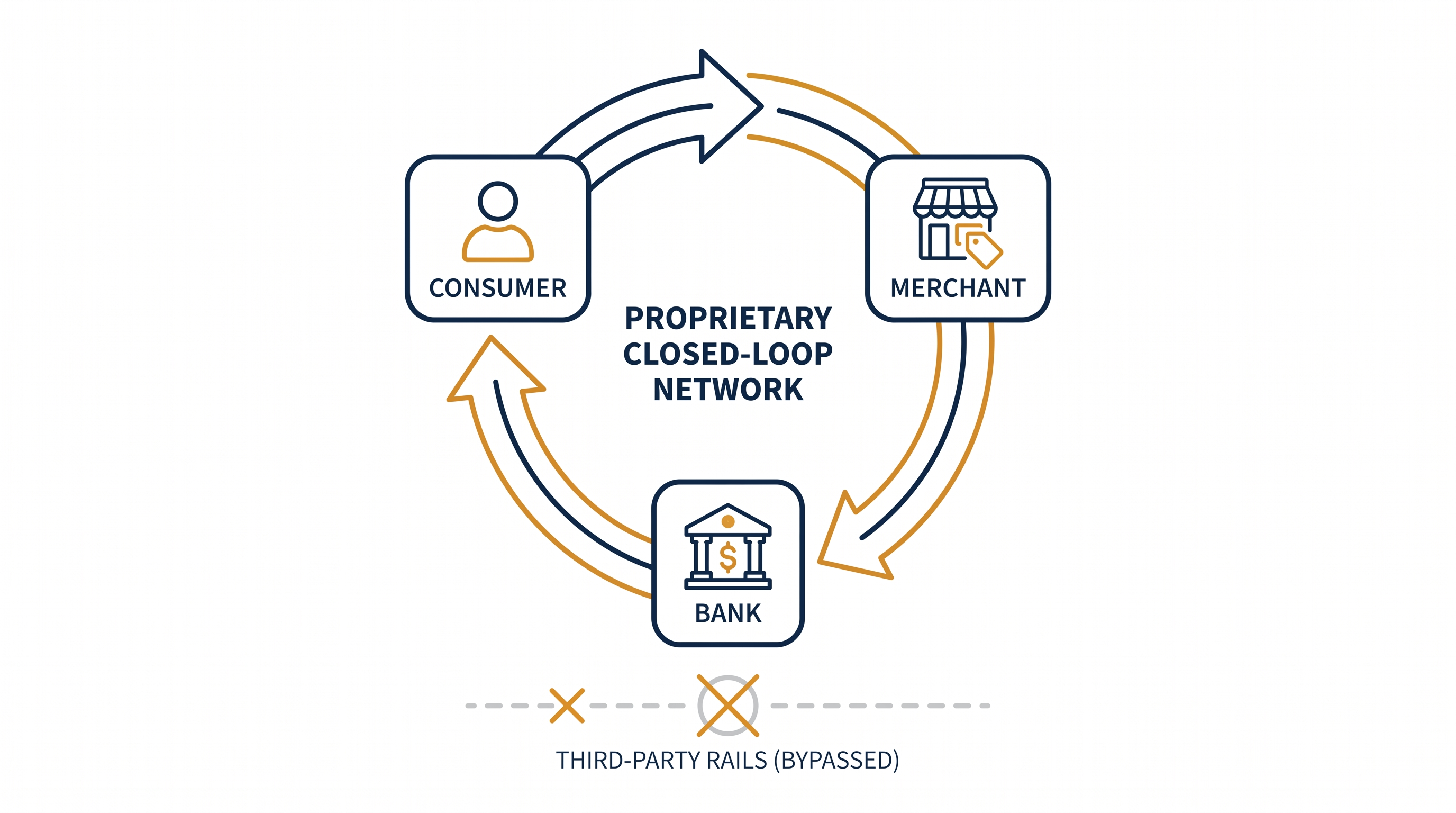
Capital One has begun migrating 50 million Discover accounts onto its proprietary banking platform, marking the operational completion of its $35.3 billion mega-merger. The integration creates a closed-loop financial behemoth capable of challenging the Visa and Mastercard payment duopoly.


- Strategic Consolidators
- Proponents argue the merger is the only viable way to challenge the Visa and Mastercard duopoly.
- Regulatory Overseers
- Regulators focused heavily on mitigating systemic risk and mandating strict remediation for legacy fee errors.
- Consumer Analysts
- Consumer advocates are closely monitoring the execution risks of the massive account migration.
How we got here
Feb 2024
Capital One announces its intent to acquire Discover in a $35.3 billion all-stock transaction.
Dec 2024
The Delaware State Bank Commissioner grants initial regulatory approval for the merger.
Apr 2025
The Federal Reserve and OCC formally approve the deal, while the FDIC issues a $100 million penalty for Discover's past fee errors.
May 2025
The acquisition officially closes, legally merging Discover Bank into Capital One.
Jul 2026
Capital One begins the multi-year process of migrating 50 million Discover accounts onto its proprietary banking platform.
Why it matters
By acquiring Discover, Capital One has bypassed the Visa and Mastercard duopoly to own its own payment network, fundamentally changing the economics of how credit cards operate. For the 50 million Discover cardholders migrating to Capital One's platform this month, the move dictates the future of their rewards, interest rates, and customer service.
The final operational hurdle of a $35.3 billion financial mega-merger is quietly unfolding across millions of smartphones this month. As of August 2026, Capital One has begun migrating Discover's 50 million cardholders onto its proprietary digital banking platform, marking the functional completion of the largest credit card acquisition in United States history. The integration transforms Capital One from a traditional card issuer reliant on third-party rails into a closed-loop payments behemoth, controlling both the credit issued to consumers and the network that processes their transactions. For everyday cardholders, the shift represents the culmination of a multi-year corporate maneuver that is fundamentally redrawing the architecture of American consumer finance.[4][6]
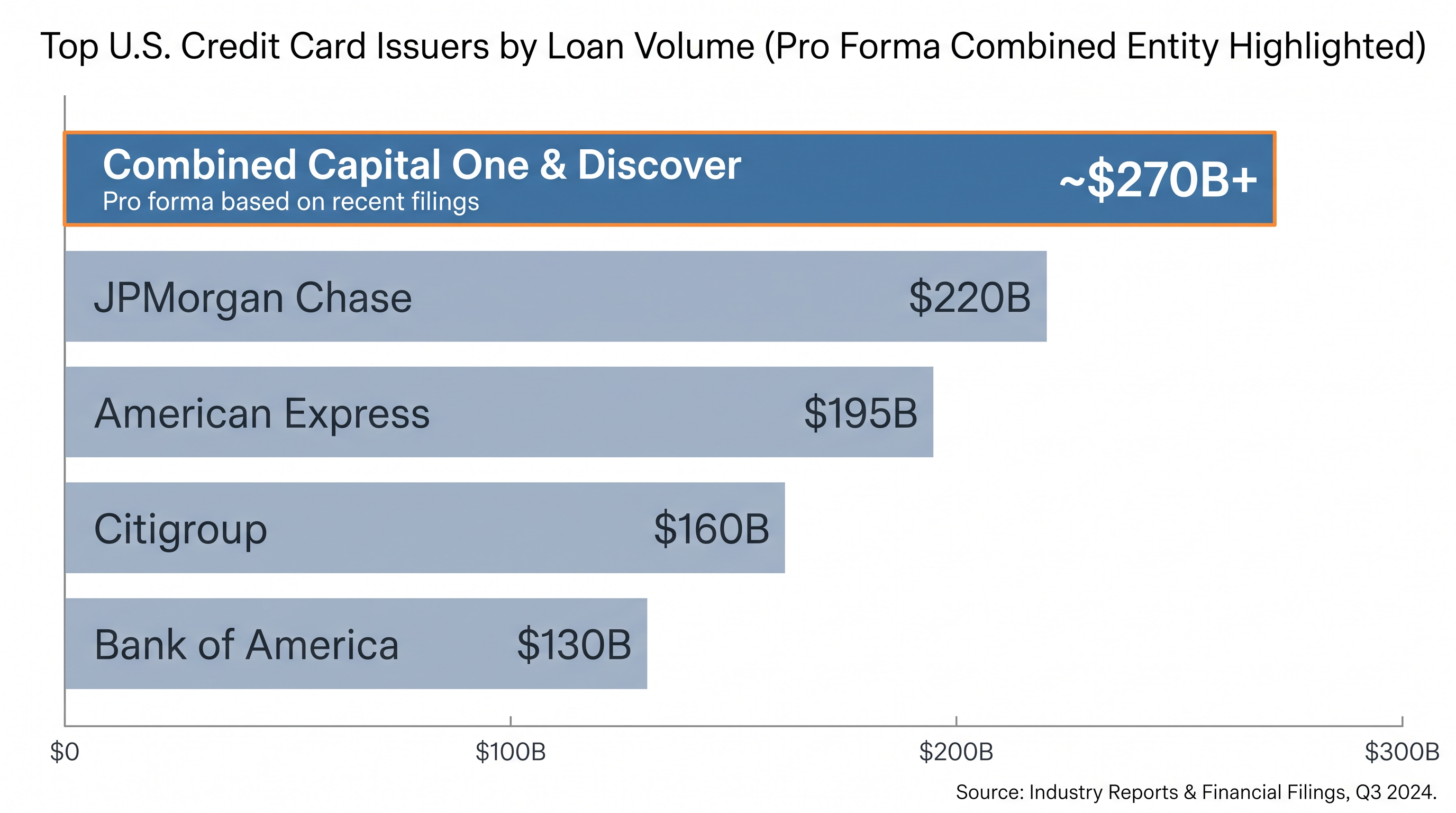
The stakes for the consumer banking sector are immense. By absorbing Discover Financial Services, Capital One now commands over $637 billion in consolidated assets and stands as the largest credit card issuer in the United States by loan volume. For decades, the American credit card market has been functionally bifurcated: banks like Chase and Citi issue the debt and manage the consumer relationship, while networks like Visa and Mastercard charge interchange fees to route the payments between merchants and banks. This acquisition shatters that paradigm, giving Capital One direct ownership of the Discover network, the PULSE debit network, and Diners Club International.[3][5]
The mechanics of this integration are deliberately phased to prevent systemic disruptions to the broader economy. Capital One initiated the first wave of account migrations on July 27, 2026, transitioning Discover cardholders' digital interfaces, billing cycles, and reward portals into the Capital One ecosystem. The process is scheduled to continue in rolling tranches through the end of 2027, ensuring that customer service centers are not overwhelmed by sudden changes. For the immediate future, Discover-branded cards will continue to function seamlessly at points of sale, and Capital One has committed to maintaining the Discover brand alongside its existing portfolio of Visa and Mastercard products.[3][4]
To understand why Capital One pursued this $35.3 billion all-stock transaction, one must look at the underlying economics of "interchange"—the swipe fees merchants pay to process credit card transactions. Historically, Capital One paid a fraction of these fees to Visa and Mastercard for routing its customers' purchases across the globe. By routing future transaction volume through the in-house Discover network, Capital One captures the entire margin of the transaction. This closed-loop model, previously dominated only by American Express and Discover itself, provides a massive structural advantage in pricing, profitability, and merchant negotiation.[5][6]
The path to this operational merger was fraught with intense regulatory friction. When the deal was first announced in February 2024, antitrust advocates and several lawmakers warned that consolidating two of the nation's largest credit card issuers would reduce competition and harm consumers. The Federal Reserve and the Office of the Comptroller of the Currency subjected the proposal to an extended 119-day public comment period, receiving over 6,000 comments—the vast majority of which were form letters opposing the consolidation on the grounds of market concentration.[3]
Despite the fierce pushback, the regulatory environment ultimately favored the merger's core strategic argument: that a stronger, better-funded Discover network is the only viable way to introduce genuine competition against the Visa-Mastercard duopoly. The Federal Reserve and the Office of the Comptroller of the Currency formally approved the transaction on April 18, 2025. In its approval order, the Federal Reserve noted that the combined entity would possess the scale and financial resources necessary to invest in Discover's aging technological infrastructure, potentially lowering costs for merchants and consumers in the long run.[1]
The Federal Reserve and the Office of the Comptroller of the Currency formally approved the transaction on April 18, 2025.
However, the regulatory approval came with strict and immediate conditions that highlighted the target company's internal struggles. On the exact same day the Federal Reserve greenlit the merger, the Federal Deposit Insurance Corporation issued an Amended Consent Order against Discover Bank, assessing a staggering $100 million penalty. The enforcement action addressed a 17-year systemic error in which Discover misclassified millions of consumer credit cards as commercial cards, resulting in merchants being overcharged by more than $1 billion in interchange fees. This massive compliance failure underscored why Discover was vulnerable to an acquisition in the first place.[3][6]
As a condition of the merger, the Office of the Comptroller of the Currency required Capital One to implement comprehensive corrective actions to resolve Discover's outstanding compliance failures. Capital One's management, led by Chief Executive Officer Richard Fairbank, argued that the bank's advanced technological infrastructure and robust compliance frameworks were precisely what Discover needed to remediate these legacy issues. The legal closing of the deal occurred exactly one month later, on May 18, 2025, setting the stage for the massive technological migration that is currently underway.[2]
For the everyday consumer, the immediate practical stakes revolve around rewards programs and customer service continuity. Discover built its reputation on a U.S.-based customer service model and a highly popular rotating cash-back rewards structure that fostered deep brand loyalty. Capital One has signaled its clear intent to preserve these features, recognizing that Discover's high customer satisfaction ratings are a core component of the acquired brand's underlying value. Cardholders migrating this month are retaining their existing cash-back balances and interest rates, though the backend processing is now entirely managed by Capital One's servers.[4][6]
The longer-term consumer impact depends entirely on how Capital One leverages its newly acquired payment network. By operating its own proprietary rails, Capital One has the margin flexibility to offer more aggressive rewards or lower interest rates than competitors who must split their revenue with Visa or Mastercard. Furthermore, Capital One has committed to a $265 billion Community Benefits Plan, developed in partnership with various community organizations, which is aimed at expanding lending and investment in underserved geographic areas over the next several years.[3][6]
The broader financial industry is watching closely to see if Capital One will begin shifting its existing portfolio of Visa and Mastercard products onto the Discover network. While Capital One currently issues tens of millions of cards on those competing networks, migrating its own massive transaction volume to Discover would instantly supercharge the network's market share. Such a move would represent a seismic shift in the balance of power within the global payments ecosystem, forcing Visa and Mastercard to aggressively defend their dominance for the first time in decades.[3][6]
Yet, significant uncertainties and operational hurdles remain. Discover's network, while expansive in the United States, still lags significantly behind Visa and Mastercard in international merchant acceptance. Capital One will need to invest heavily in global merchant acquisition if it hopes to make Discover a truly universal payment option for international travelers. Additionally, the integration of two massive, legacy banking systems carries inherent execution risks, as evidenced by the multi-year timeline required just to migrate the initial wave of customer accounts without triggering service outages.[4][5][6]
Ultimately, the completion of this $35.3 billion acquisition redefines the fundamental architecture of American consumer finance. By fusing a massive lending portfolio with a proprietary payment network, Capital One has built a financial engine capable of challenging the industry's most entrenched monopolies. As millions of Discover accounts transition to their new digital home this month, the theoretical promises of the merger—lower fees, better rewards, and enhanced competition—will finally be tested against the unforgiving realities of the consumer market.[4][6]
What to know
- Capital One has initiated the multi-year migration of 50 million Discover accounts onto its digital banking platform.
- The $35.3 billion acquisition makes Capital One the largest credit card issuer in the U.S. by loan volume.
- By owning the Discover network, Capital One captures interchange fees previously paid to Visa and Mastercard.
- Regulators approved the deal on the condition that Capital One remediate Discover's legacy compliance failures.
- Discover-branded cards will continue to function normally, and Capital One plans to preserve the brand's popular cash-back rewards.
Where opinion splits
The Strategic Consolidators
Proponents argue the merger is the only viable way to challenge the Visa and Mastercard duopoly.
For Capital One and industry proponents, the acquisition is fundamentally about vertical integration. By owning the payment rails, Capital One eliminates the middleman, capturing the interchange fees it previously paid to third-party networks. Executives argue this enhanced profitability will allow the combined entity to invest heavily in Discover's aging infrastructure, ultimately creating a robust third competitor to Visa and Mastercard that could drive down costs for merchants and improve rewards for consumers.
The Regulatory Overseers
Regulators focused heavily on compliance remediation and systemic risk during the approval process.
The regulatory green light was far from guaranteed, given the intense antitrust scrutiny surrounding bank consolidation. The Federal Reserve and OCC ultimately determined that the merger's benefits outweighed the risks, but they attached severe conditions. Regulators mandated that Capital One use its superior compliance infrastructure to clean up Discover's legacy errors, most notably a 17-year misclassification issue that overcharged merchants by over $1 billion. For regulators, the deal was as much a rescue of Discover's compliance failures as it was a market expansion.
The Consumer Analysts
Consumer advocates are closely monitoring the execution risks of the massive account migration.
While the boardroom strategy is clear, consumer analysts emphasize the immense logistical challenge of migrating 50 million accounts without disrupting daily financial lives. Discover built intense brand loyalty through its U.S.-based customer service and transparent rewards. Analysts warn that if Capital One's phased migration—which began in July 2026—results in technical glitches, lost rewards, or degraded service, the anticipated value of the acquisition could rapidly erode. The true test of the merger is currently playing out on the smartphones of millions of cardholders.
Key terms
- Interchange Fee
- The fee paid by a merchant to a card-issuing bank and payment network for processing a credit card transaction.
- Closed-Loop Network
- A payment system where the same company acts as both the card issuer and the payment network, capturing all transaction fees.
- Duopoly
- A market structure dominated by two major players, in this case referring to the dominance of Visa and Mastercard in payment routing.
- Consent Order
- A formal, legally binding agreement between a regulatory agency and a bank outlining required corrective actions for compliance failures.
Unanswered questions
- Whether Capital One will eventually migrate its existing Visa and Mastercard portfolios onto the Discover network.
- How quickly Capital One can expand Discover's international merchant acceptance to match its larger rivals.
- If the promised cost savings from the merger will actually be passed down to consumers in the form of lower fees or higher rewards.
Reader questions
Will my Discover card stop working?
No. Discover cards will continue to function normally at all points of sale, and Capital One plans to maintain the Discover brand.
Are Discover's cash-back rewards changing?
Capital One has stated it intends to preserve Discover's popular rotating cash-back rewards and U.S.-based customer service model.
Why is Capital One migrating accounts now?
While the deal legally closed in 2025, integrating the massive backend technology systems of both banks is a phased process extending through 2027.
Will Capital One cards now run on the Discover network?
Capital One has not yet migrated its existing Visa and Mastercard portfolios to the Discover network, but analysts expect this shift in the future.
Sources
Source coverage
6 outlets
3 viewpoints surfaced





[1]Federal Reserve BoardRegulatory Overseers
Federal Reserve Board announces approval of application by Capital One Financial Corporation to acquire Discover Financial Services
Read on Federal Reserve Board →[2]Capital OneStrategic Consolidators
Capital One Completes Acquisition of Discover
Read on Capital One →[3]FSTechStrategic Consolidators
Capital One completes $35.3 billion acquisition of Discover Financial Services
Read on FSTech →[4]AwardWalletConsumer Analysts
Capital One Begins Migrating Discover Accounts — Here's What Discover Cardholders Need to Do Now
Read on AwardWallet →[5]WikipediaConsumer Analysts
Discover Financial Services
Read on Wikipedia →[6]Factlen Editorial TeamConsumer Analysts
Synthesis by Factlen editorial team
Read on Factlen Editorial Team →
Comments
Every angle. Every day.
Get finance stories with full source coverage and perspective breakdowns delivered to your inbox.