
The Heat Pump Revolution: How the Technology Works and Why It Is Replacing Traditional HVAC
Modern heat pumps are transforming home improvement by delivering 300 percent efficiency and dual heating-and-cooling capabilities. Driven by advanced inverter technology and massive state rebates, the systems are rapidly replacing traditional gas furnaces.
By Factlen Editorial Team
- Electrification Advocates
- This camp views heat pumps as an essential tool for eliminating residential fossil fuel use and maximizing energy efficiency.
- Cost-Conscious Homeowners
- This group is primarily concerned with the high upfront installation costs and the variable monthly ROI based on utility rates.
- HVAC Industry Professionals
- Installers and manufacturers emphasize the technical leaps in cold-climate performance and the importance of proper system design.
What's not represented
- · Renters who are unable to upgrade their building's HVAC systems
- · Natural gas utility companies facing long-term residential demand reduction
Why this matters
Heating and cooling account for nearly half of the average home's energy bill. Understanding how heat pumps work and how to navigate 2026's state-level rebate programs can save homeowners thousands of dollars on installation and drastically reduce their long-term utility costs.
Key points
- Heating and cooling account for roughly 45 percent of a typical home's energy consumption.
- Heat pumps transfer ambient heat rather than generating it, allowing them to achieve 300 to 400 percent efficiency.
- Modern variable-speed inverter compressors enable heat pumps to extract warmth even in sub-zero temperatures.
- While federal tax credits expired in 2025, 2026 state-level rebates offer up to $8,000 for income-qualified installations.
Heating and cooling account for roughly 45 percent of the energy bill in a typical American home, making climate control the single largest driver of residential energy costs. For decades, the standard approach to winter warmth has been straightforward: burn a fossil fuel to create heat. But in 2026, the traditional gas furnace is facing an existential threat from a technology that does not actually generate heat at all.[1][4]
The heat pump has become the defining home improvement upgrade of the decade. While the name implies a heating-only appliance, these systems are actually two-in-one climate control machines that provide both winter warmth and summer air conditioning. By consolidating two massive appliances into a single highly efficient unit, heat pumps are fundamentally altering the economics of homeownership.[8]
To understand why heat pumps are displacing traditional HVAC systems, it helps to look at the physics of conventional heating. A gas furnace burns combustible fuel—usually natural gas or propane—to create heat, which a blower fan then pushes through the home's ductwork. The absolute best modern furnaces top out at about 98.5 percent efficiency, meaning 98.5 cents of every dollar spent on gas is converted into usable warmth, while the rest escapes as exhaust.[4]
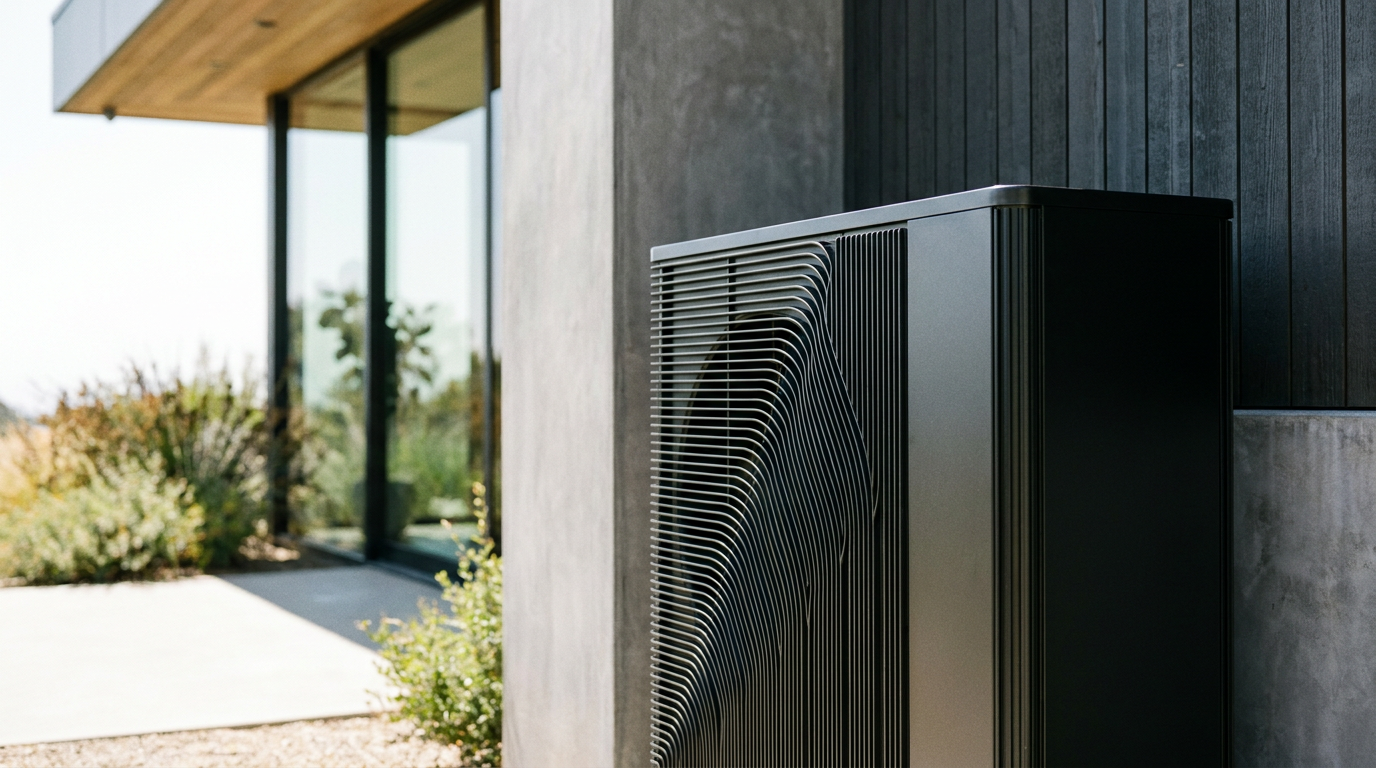
Heat pumps operate on an entirely different scientific principle: heat transfer. Instead of burning fuel to create new heat, they use electricity to power a mechanical refrigeration cycle that moves existing ambient heat from one place to another. It is essentially a household refrigerator running in reverse, harvesting thermal energy from the outdoors and pumping it inside.[2][5]

The mechanism relies on a chemical refrigerant circulating through a closed loop. In the winter, the outdoor unit's fan pulls in ambient air. Even when it feels freezing outside to human skin, there is still abundant thermal energy present in the air. The liquid refrigerant absorbs this ambient heat and evaporates into a low-pressure gas.[5]
This low-pressure gas then travels to an electrically powered compressor. As the gas is compressed, its pressure and temperature skyrocket. This superheated gas is pumped indoors, where a heat exchanger transfers the intense warmth into the home's ductwork or hydronic radiator system, raising the indoor temperature.[2][5]
Finally, the refrigerant passes through an expansion valve, rapidly decompressing and cooling back into a liquid state before returning outside to repeat the cycle. In the summer, a reversing valve flips the entire process, pulling heat out of the indoor air and dumping it outside, functioning exactly like a traditional central air conditioner.[5]
Finally, the refrigerant passes through an expansion valve, rapidly decompressing and cooling back into a liquid state before returning outside to repeat the cycle.
Because they are moving heat rather than creating it from scratch, heat pumps achieve staggering efficiency numbers. The metric used by the industry is the Coefficient of Performance (COP). A typical modern heat pump operates at a COP of 3.0 to 4.0, meaning it delivers three to four units of thermal energy for every one unit of electricity it consumes. In percentage terms, that translates to 300 to 400 percent efficiency—vastly outperforming the physical limits of combustion.[2][4]

For years, the primary argument against heat pumps was their performance in freezing temperatures. Older models struggled to extract enough heat when the mercury plummeted, forcing homeowners to rely on expensive electric resistance backup heaters. That historical limitation earned the technology a reputation as a mild-climate-only solution, but modern engineering has fundamentally solved the problem.[3]
Today's cold-climate heat pumps utilize variable-speed inverter compressors. Unlike older systems that simply clicked on or off at full blast, inverters act like a car's accelerator pedal, continuously adjusting their speed to draw exactly the right amount of energy needed. This allows them to extract usable heat efficiently even when outdoor temperatures drop well below zero Fahrenheit, breaking the old geographic limitations.[3]
Despite the technological triumphs, the financial calculus for homeowners in 2026 remains complex. The upfront cost is undeniably steep. A whole-home ducted heat pump installation typically ranges from $9,500 to $17,000, with premium inverter systems sometimes pushing $20,000 depending on the home's ductwork condition and electrical panel capacity.[3]
However, that price tag represents both a heating and cooling system. Homeowners replacing both an aging furnace and a failing central air conditioner often find that the combined cost of traditional replacements rivals or exceeds the price of a single heat pump. The math heavily favors homeowners who are already facing a total HVAC overhaul.[3][8]
Furthermore, the incentive landscape has shifted dramatically in 2026. While the federal 25C tax credits expired at the end of 2025, state-administered programs funded by the Inflation Reduction Act have finally come online in full force. Programs like HEAR (Home Electrification and Appliance Rebates) and HOMES have replaced tax season deductions with massive point-of-sale discounts.[6]
Depending on the state and household income, these rebates can slash the upfront cost by anywhere from $4,000 to over $10,000. In states like New York and Wisconsin, low- and moderate-income households can often cover the vast majority of the installation cost through these stacked state and utility incentives, turning a luxury upgrade into an accessible necessity.[6][7]

The long-term return on investment depends heavily on local utility rates. In regions where electricity is relatively cheap and natural gas or heating oil is expensive, a heat pump pays for itself rapidly through lower monthly bills. Conversely, in areas with rock-bottom natural gas prices and high electricity rates, the monthly operational savings may be thinner, requiring a longer payback period.[4]
Ultimately, the transition to heat pumps represents a broader shift toward residential electrification. As the electrical grid incorporates more renewable energy, homes powered by heat pumps will see their carbon footprints shrink automatically. By combining unprecedented efficiency with dual-season utility, the heat pump has cemented its status as a cornerstone of modern, future-proof home improvement.[1][8]
How we got here
Pre-2010s
Early air-source heat pumps struggle in freezing temperatures, earning a reputation as a mild-climate-only solution.
2010s
The widespread adoption of variable-speed inverter technology allows heat pumps to operate efficiently in sub-zero weather.
August 2022
The Inflation Reduction Act is signed, allocating billions for residential electrification and heat pump incentives.
December 2025
The federal 25C tax credit for energy-efficient home improvements expires.
2026
State-administered HEAR and HOMES rebate programs roll out nationwide, shifting incentives to massive point-of-sale discounts.
Viewpoints in depth
Electrification Advocates
This camp views heat pumps as an essential tool for eliminating residential fossil fuel use.
By transitioning homes away from combustible fuels like natural gas and heating oil, electrification advocates argue that heat pumps drastically reduce a household's carbon footprint. Because the technology runs on electricity, its environmental impact improves automatically as the broader power grid shifts toward renewable energy sources like wind and solar. For this group, the 300 percent efficiency rating is proof that combustion heating is technologically obsolete.
Cost-Conscious Homeowners
This group is primarily concerned with the high upfront installation costs and the variable monthly ROI.
While acknowledging the efficiency gains, cost-conscious consumers point out that a $15,000 installation is a massive financial hurdle, even with state rebates. Furthermore, they note that the monthly savings are highly dependent on local utility rates. In regions where electricity is expensive and natural gas is cheap, the promised financial payback may take over a decade to materialize, making the switch harder to justify purely on economics.
HVAC Industry Professionals
Installers and manufacturers emphasize the technical leaps in cold-climate performance and the importance of proper system design.
Industry experts stress that modern inverter-driven heat pumps are fundamentally different from the struggling units of the 2010s. However, they caution that proper installation is critical to achieving the advertised efficiency. A heat pump must be meticulously sized for the home's specific thermal envelope, and older homes may require significant weatherization and ductwork modifications to realize the technology's full potential.
What we don't know
- How quickly the remaining states that have delayed their IRA funding will launch their HEAR and HOMES rebate programs.
- Whether future electricity rate hikes will outpace natural gas prices, potentially altering the long-term return on investment in certain regions.
Key terms
- Coefficient of Performance (COP)
- A metric measuring a heat pump's efficiency, representing the ratio of thermal energy output to electrical energy input.
- Inverter Compressor
- A variable-speed motor that allows a heat pump to continuously adjust its power output, improving efficiency and cold-weather performance.
- Refrigeration Cycle
- The continuous physical process of evaporating, compressing, condensing, and expanding a chemical refrigerant to transfer heat.
- HEAR Program
- The Home Electrification and Appliance Rebates program, a state-administered initiative providing upfront discounts for energy-efficient upgrades.
Frequently asked
Do heat pumps work in freezing weather?
Yes. Modern cold-climate heat pumps use variable-speed inverter compressors that can extract usable heat from the air even when temperatures drop well below zero Fahrenheit.
Do I still need an air conditioner if I buy a heat pump?
No. A heat pump is a two-in-one system that provides both heating in the winter and air conditioning in the summer by reversing its refrigeration cycle.
Are federal tax credits for heat pumps still available in 2026?
The federal 25C tax credit expired at the end of 2025. However, state-administered IRA programs like HEAR and HOMES now offer substantial upfront point-of-sale rebates.
Is a heat pump cheaper to run than a gas furnace?
It depends on local utility rates. In areas with average electricity costs, heat pumps are usually cheaper to run due to their extreme efficiency. In regions with very cheap natural gas, a furnace might cost less monthly.
Sources
Source coverage
8 outlets
3 viewpoints surfaced








[1]U.S. Department of EnergyElectrification Advocates
Heat Pump Systems
Read on U.S. Department of Energy →[2]International Energy AgencyElectrification Advocates
How a heat pump works
Read on International Energy Agency →[3]Fox Sell FasterCost-Conscious Homeowners
Heat Pump vs Traditional HVAC in 2026: Cost, Savings, and ROI Guide
Read on Fox Sell Faster →[4]FilterbuyCost-Conscious Homeowners
Heat Pump Vs Gas Furnace: Which Is Right For Your Home?
Read on Filterbuy →[5]BoschHVAC Industry Professionals
How heat pumps work: Sustainable heating for your home
Read on Bosch →[6]Home Energy BasicsHVAC Industry Professionals
The 10 Best States for Heat Pump Rebates in 2026
Read on Home Energy Basics →[7]New York StateElectrification Advocates
Inflation Reduction Act Rebates
Read on New York State →[8]Factlen Editorial TeamHVAC Industry Professionals
Synthesis by Factlen editorial team
Read on Factlen Editorial Team →


Every angle. Every day.
Get home stories with full source coverage and perspective breakdowns delivered to your inbox.