
The Green-Collar Boom: How Vocational Training is Racing to Staff the Clean Energy Transition
As wind and solar jobs become the fastest-growing occupations in the U.S., a surge in apprenticeships and vocational programs is attempting to close a critical skills gap.
By Factlen Editorial Team
- Vocational Educators
- Advocate for competency-based apprenticeships as a debt-free alternative to traditional four-year degrees.
- Clean Energy Industry
- Focus on the urgent need to close the skills gap to ensure infrastructure projects are completed on time.
- Labor Advocates
- Highlight the importance of competitive wages, safety standards, and long-term career sustainability for green-collar workers.
What's not represented
- · Rural community planners
- · Fossil fuel workers transitioning to new roles
Why this matters
The transition to renewable energy cannot happen without a massive influx of skilled tradespeople. For workers, this boom offers a lucrative, debt-free pathway into the middle class, fundamentally changing the calculus of post-secondary education.
Key points
- Wind turbine technicians and solar installers are projected to be the fastest-growing occupations in the U.S. over the next decade.
- The energy industry is increasingly relying on 'earn and learn' registered apprenticeships to bypass the need for four-year degrees.
- Energy sector apprenticeships have surged by 53 percent over the past five years, reaching over 29,000 participants in 2025.
- State and federal governments are investing hundreds of millions of dollars to build local talent pipelines and standardize safety certifications.
The energy transition has a blue-collar bottleneck. Across the United States, billions of dollars in federal and private capital are flowing into wind farms, solar arrays, and grid modernization projects. Yet, the physical realization of this infrastructure relies on a workforce that is currently stretched dangerously thin. The demand for skilled labor has birthed a new era of "green-collar" jobs, fundamentally reshaping the landscape of vocational education and offering a lucrative alternative to traditional four-year degrees.[8]
The numbers underscore the sheer scale of the shift. According to the U.S. Bureau of Labor Statistics, wind turbine service technicians and solar photovoltaic installers are projected to be the fastest-growing occupations in the country over the next decade. Employment for wind technicians alone is expected to surge by roughly 60 percent between 2023 and 2033, a rate that dwarfs the 3 percent average growth projected for the broader U.S. economy.[1]
This explosive growth is not merely a forecast; it is an active scramble. The Department of Energy’s 2024 U.S. Energy and Employment Report highlighted rapid employment expansion across renewable sectors, driven by the Bipartisan Infrastructure Law and the Inflation Reduction Act. However, as solar panels are manufactured and wind turbines are shipped, industry leaders warn that projects risk stalling simply because there are not enough trained hands to install, wire, and maintain them.[3][5]

To bridge this critical skills gap, the energy sector is leaning heavily into a time-tested vocational model: the registered apprenticeship. Unlike traditional university pathways, which often saddle students with debt before they enter the workforce, apprenticeships offer an "earn and learn" structure. Trainees receive paid, on-the-job experience coupled with structured classroom instruction, allowing them to build financial security while mastering complex technical skills.[2]
The pivot toward apprenticeships is yielding measurable results. Data from the Department of Labor indicates that in 2025, more than 29,000 registered apprentices were served within the energy industry. This represents a 53 percent increase over the preceding five years, signaling a robust resurgence in vocational training tailored specifically for the climate economy.[2]
The appeal of these green-collar roles extends beyond job security; they offer highly competitive compensation for workers without a bachelor's degree. In 2024, the median annual salary for a wind turbine technician reached $62,580, which sits nearly $13,000 above the national average for all workers. Experienced technicians, particularly those specializing in offshore wind or complex grid integration, can see their earnings scale well past $88,000 annually.[4]
The appeal of these green-collar roles extends beyond job security; they offer highly competitive compensation for workers without a bachelor's degree.
However, the transition from a novice to a fully qualified technician requires rigorous, specialized training. Working hundreds of feet in the air or handling high-voltage solar arrays demands strict adherence to safety and technical standards. Consequently, vocational programs are standardizing around globally recognized credentials, such as the Global Wind Organisation (GWO) Basic Safety Training and the North American Board of Certified Energy Practitioners (NABCEP) certification for solar professionals.[5]

To accelerate the deployment of these training programs, organizations like the Urban Institute are developing "competency-based occupational frameworks." Rather than requiring apprentices to log a rigid number of hours, these frameworks allow workers to advance as soon as they demonstrate mastery of specific skills. This flexibility is crucial for older workers transitioning out of legacy fossil fuel industries, enabling them to leverage their existing mechanical expertise to fast-track their green-collar certifications.[6]
State governments are also intervening aggressively to build local talent pipelines. In New York, the state energy research and development authority (NYSERDA) has committed $320 million to clean energy workforce development. This funding supports career pathway programs, technical upskilling, and reskilling initiatives designed to ensure that the economic benefits of the energy transition flow directly to local communities and working-class families.[7]
Similarly, California, which boasts some of the nation's most ambitious climate targets, is heavily reliant on this emerging workforce. With hundreds of wind technicians already deployed across the state, vocational academies and community colleges are expanding their curricula to include advanced energy storage systems and electric vehicle infrastructure maintenance, ensuring graduates remain versatile in a rapidly evolving technological landscape.[4]
Despite the momentum, the green-collar boom faces structural headwinds. One significant challenge is geographic mismatch. The most intensive utility-scale wind and solar projects are frequently located in rural or remote areas, while the largest pools of potential vocational students reside in urban centers. Bridging this spatial divide requires training programs to offer housing stipends, travel support, or localized mobile training facilities to reach the communities where the infrastructure is actually being built.[5][8]

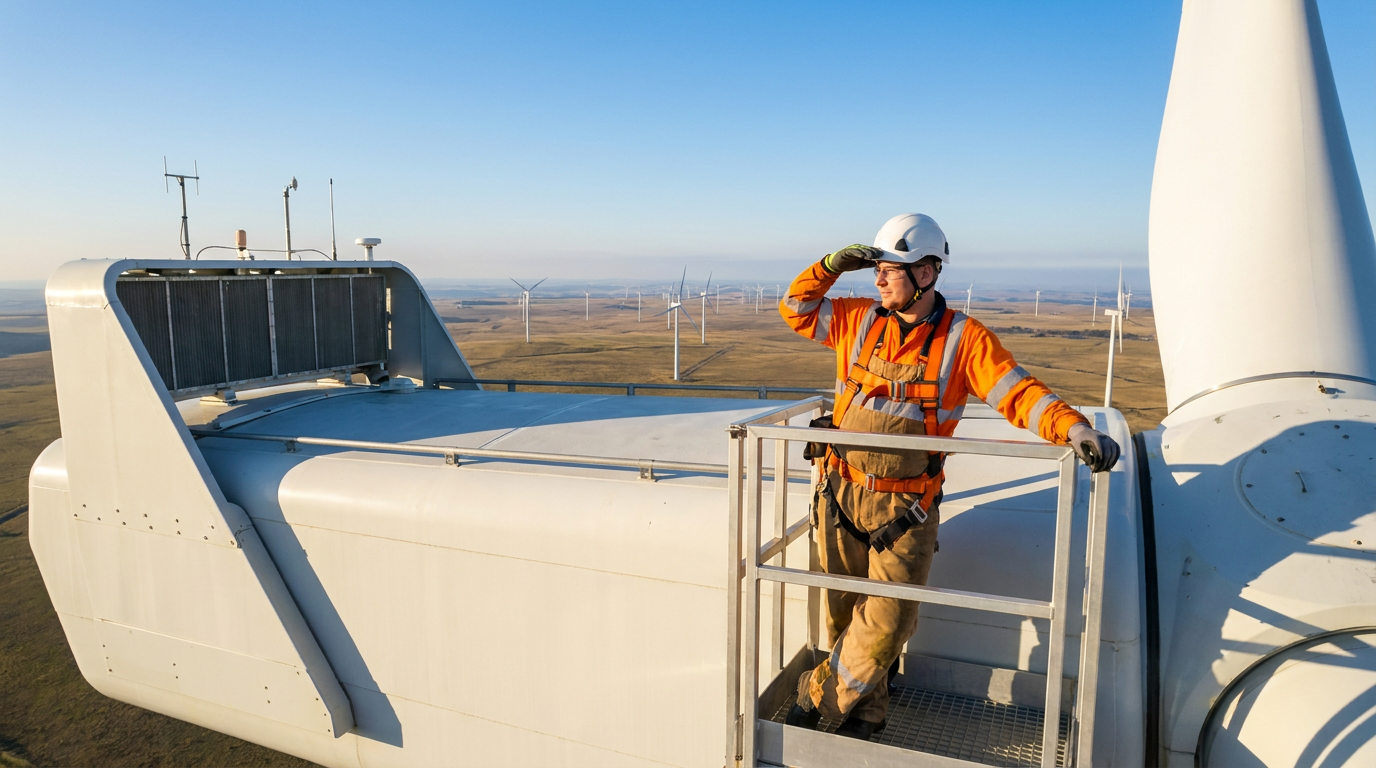
Furthermore, the retention of these workers remains an open question. The physical demands of the job are immense. Wind technicians must routinely climb 250-foot ladders in extreme weather conditions, while solar installers spend hours on steeply pitched roofs under the summer sun. Ensuring that these roles offer long-term career sustainability—such as pathways into site management, system engineering, or safety inspection—is vital to preventing burnout and turnover.[1][8]
Labor advocates also stress that the "green" label does not automatically guarantee a "good" job. While utility-scale projects often feature strong union representation and prevailing wage standards, the residential solar sector has historically been more fragmented, with variable pay and fewer worker protections. Ensuring consistent job quality across all tiers of the renewable energy market is a central focus for policymakers and labor unions alike.[6][8]
Ultimately, the success of the global energy transition hinges on human capital. The rapid expansion of vocational training and registered apprenticeships represents a fundamental realignment of the American workforce, elevating skilled trades to the forefront of the climate fight. By investing in the technicians, electricians, and installers who will physically wire the future, the green-collar boom is proving that the path to a sustainable economy is built by skilled hands.[8]
How we got here
2021
The Bipartisan Infrastructure Law is passed, injecting billions into grid modernization and creating a surge in demand for energy workers.
2022
The Inflation Reduction Act commits $370 billion to clean energy, further accelerating the need for skilled tradespeople.
2024
The median annual wage for wind turbine technicians reaches $62,580, highlighting the financial viability of green-collar careers.
2025
The Department of Labor reports a 53% increase over five years in registered apprenticeships within the energy industry.
2026
Wind turbine technicians and solar installers are officially projected by the BLS to be the fastest-growing occupations in the U.S. through the next decade.
Viewpoints in depth
Vocational Educators' view
Argue that the traditional four-year college pathway is insufficient for the physical demands of the energy transition.
Educators advocate for competency-based apprenticeships that allow workers to earn wages immediately while mastering specific technical skills. By shifting the focus away from classroom hours and toward practical mastery, these programs reduce student debt and accelerate workforce entry for individuals who might otherwise be priced out of higher education.
Clean Energy Industry's view
Focus on the operational risks of a severe labor shortage in the renewable sector.
With billions in federal funding accelerating project timelines, industry leaders warn that without a massive influx of trained technicians, the deployment of wind and solar farms will stall. They prioritize rapid, standardized certification programs like GWO and NABCEP to ensure that workers can be deployed safely and efficiently across state lines.
Labor Advocates' view
Stress that 'green' jobs must also be 'good' jobs with strong worker protections.
Advocates push for prevailing wage standards, union representation, and clear avenues for career advancement. They argue that ensuring workers who take on the physical risks of climbing turbines or installing high-voltage panels are fairly compensated is the only way to prevent burnout and maintain a sustainable workforce over the long term.
What we don't know
- Whether training programs can scale fast enough in the rural areas where the majority of utility-scale wind and solar projects are located.
- How the physical toll of these jobs will affect long-term retention rates as the current cohort of technicians ages.
- To what extent workers transitioning out of legacy fossil fuel industries will successfully adopt the new competency-based frameworks.
Key terms
- Registered Apprenticeship
- A structured training program validated by the Department of Labor that combines paid, on-the-job learning with classroom instruction.
- Competency-Based Framework
- A training model where apprentices advance by demonstrating mastery of specific skills rather than simply completing a set number of hours.
- GWO Basic Safety Training
- A globally recognized safety certification required for workers in the wind energy industry, covering first aid, manual handling, fire awareness, and working at heights.
- NABCEP Certification
- A professional credential offered by the North America Board of Certified Energy Practitioners, widely considered the gold standard for solar photovoltaic installers.
- Green-Collar Worker
- A professional employed in the environmental sectors of the economy, particularly in renewable energy, energy efficiency, and sustainability infrastructure.
Frequently asked
What is a green-collar job?
A green-collar job is a role directly involved in the environmental or clean energy sectors, such as a wind turbine technician, solar panel installer, or electric vehicle mechanic.
Do I need a college degree to become a wind turbine technician?
No. Most wind turbine technicians enter the field through vocational training programs, community college certificates, or registered apprenticeships rather than four-year university degrees.
How much do renewable energy technicians make?
In 2024, the median annual salary for a wind turbine technician was $62,580, with experienced workers earning over $88,000, which is significantly higher than the national average for all occupations.
What certifications are required for these jobs?
Industry standards often require specialized safety and technical credentials, such as the Global Wind Organisation (GWO) Basic Safety Training for wind technicians and the NABCEP certification for solar professionals.
Sources
Source coverage
8 outlets
3 viewpoints surfaced







[1]U.S. Bureau of Labor StatisticsLabor Advocates
Fastest Growing Occupations: Wind turbine service technicians and solar photovoltaic installers
Read on U.S. Bureau of Labor Statistics →[2]Apprenticeship.govVocational Educators
Registered Apprenticeship in the Energy Industry
Read on Apprenticeship.gov →[3]Department of EnergyClean Energy Industry
Report Highlights Rapid Growth in the Renewable Energy Workforce
Read on Department of Energy →[4]California TodayLabor Advocates
Wind turbine technicians are entering the spotlight as one of America's fastest-growing green careers
Read on California Today →[5]Green Fuel JournalClean Energy Industry
Closing the Renewable Energy Skills Gap: Pathways & Certifications
Read on Green Fuel Journal →[6]Urban InstituteVocational Educators
The Energy and Climate Workforce: Trends and Apprenticeship Opportunities
Read on Urban Institute →[7]New York State GovernmentLabor Advocates
Governor Hochul Announces Expansion of $320 Million Clean Energy Workforce Commitment
Read on New York State Government →[8]Factlen Editorial Team
Synthesis by Factlen editorial team
Read on Factlen Editorial Team →
Every angle. Every day.
Get education stories with full source coverage and perspective breakdowns delivered to your inbox.