
The Evidence Driving the 2026 Right to Repair Mandates
As the EU's Right to Repair Directive takes effect in July 2026 alongside advancing US legislation, policymakers are relying on robust environmental and economic data to dismantle manufacturer monopolies.
By Factlen Editorial Team
- Independent Repairers and Consumers
- Advocates argue that manufacturers artificially restrict repair to monopolize service revenue and force new purchases.
- Environmental and Policy Advocates
- Sustainability groups focus on the urgent need to transition to a circular economy to mitigate the climate impact of e-waste.
- Original Equipment Manufacturers
- Tech and automotive companies warn that unrestricted access to device software poses severe cybersecurity and safety risks.
- Independent Analysts
- Observers evaluating the logistical and legal execution of the new mandates.
What's not represented
- · Small-scale electronics recyclers who rely on discarded devices for raw materials.
- · Software engineers tasked with designing secure diagnostic gateways that comply with the new open-access mandates.
Why this matters
These new laws fundamentally change what it means to own technology. By forcing manufacturers to provide spare parts and diagnostic tools, consumers will save money, local repair economies will grow, and millions of tonnes of electronic waste will be diverted from landfills.
Key points
- The EU's Right to Repair Directive becomes fully enforceable on July 31, 2026, mandating post-warranty repairs and 10-year spare part availability.
- Consumers who choose to repair a defective product under warranty will automatically receive a 12-month extension on their legal guarantee.
- The US REPAIR Act is advancing through Congress, aiming to guarantee independent mechanics access to vehicle diagnostic data.
- Environmental data shows that premature disposal of repairable goods generates 35 million tonnes of waste and 261 million tonnes of emissions annually.
The era of disposable technology is facing its most significant legal challenge to date as sweeping "Right to Repair" mandates take effect globally. On July 31, 2026, the European Union's landmark Repair Directive (2024/1799) officially becomes enforceable across all member states, fundamentally altering the obligations of consumer electronics and appliance manufacturers. Simultaneously in the United States, the House Energy and Commerce Committee has advanced an amended version of the REPAIR Act, signaling a bipartisan consensus that the automotive and technology sectors must open their ecosystems. These legislative milestones represent a structural shift away from a disposable economy, aiming to restore ownership rights to consumers while mitigating the severe environmental toll of electronic waste.[1][4]
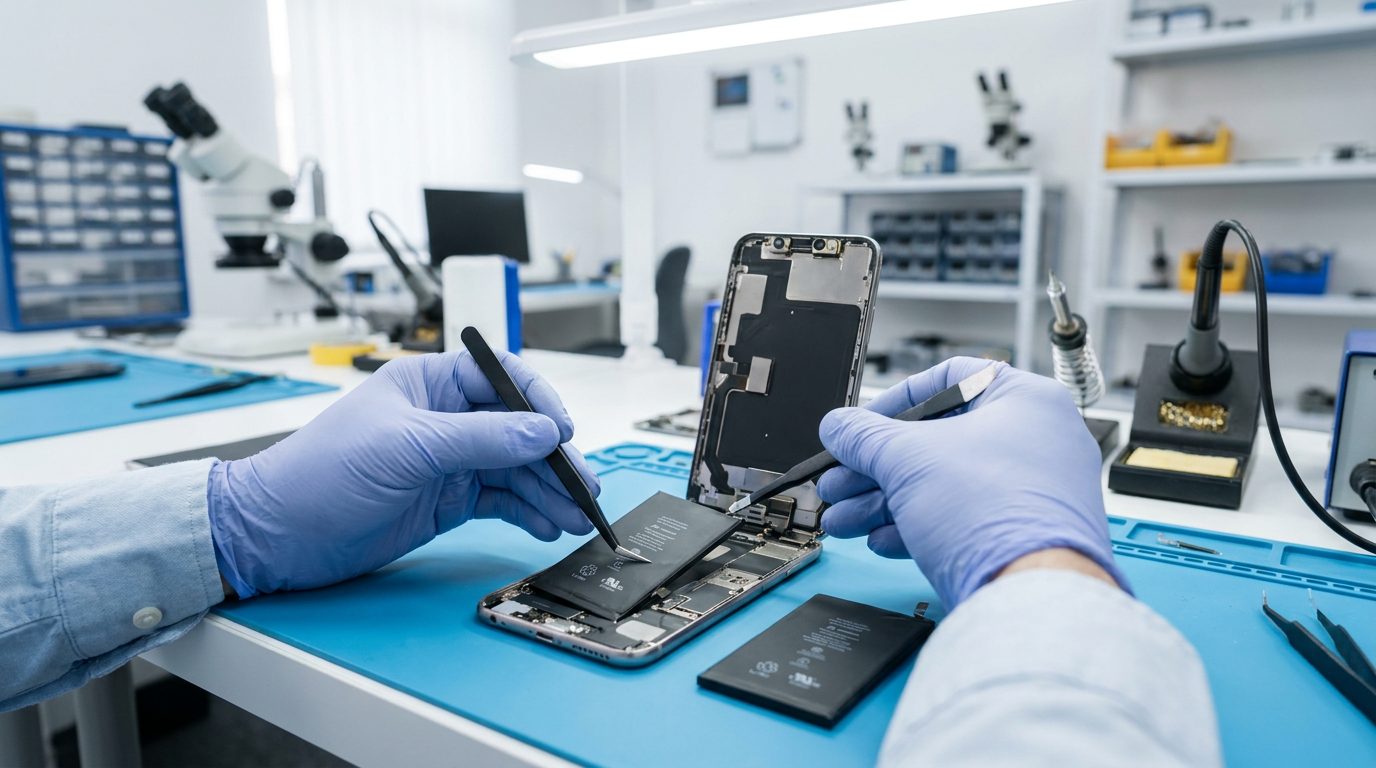
For decades, the balance of power in the consumer market has tilted heavily toward Original Equipment Manufacturers (OEMs). Through a combination of proprietary screws, encrypted software locks, and restrictive warranty terms, fixing a cracked smartphone screen or a failing car battery became artificially difficult for the average consumer. Manufacturers effectively monopolized the repair ecosystem, forcing users to rely exclusively on official service centers or, more frequently, to simply discard the malfunctioning device and purchase a new one. This closed-loop system maximized corporate hardware sales but left consumers with fewer choices and higher long-term costs.[2]
The new legislative wave fundamentally rewrites this social contract by legally mandating repairability. Under the EU directive, manufacturers are now required to offer post-warranty repairs for covered goods—ranging from smartphones and tablets to washing machines and refrigerators—at a "reasonable price." Furthermore, brands must ensure that spare parts and technical documentation remain available to both consumers and independent repair shops for up to ten years after a product is placed on the market. This ensures that a device's lifespan is dictated by its physical durability, not by the manufacturer's arbitrary software support window.[1][6]
The primary driver behind the European legislation is environmental, anchored by robust evidence regarding the sheer scale of electronic waste. State agencies and environmental organizations have heavily quantified the toll of the disposable economy, arguing that the constant cycle of manufacturing, shipping, and discarding electronics is fundamentally unsustainable. The evidence pack supporting the EU directive highlights that the vast majority of a consumer device's carbon footprint is generated during the initial extraction of rare earth metals and the energy-intensive manufacturing process, rather than during its operational life in a consumer's home.[3]
According to data compiled by the European Council, the premature disposal of repairable consumer goods generates an astonishing 35 million tonnes of waste annually across the bloc alone. This mountain of discarded appliances and electronics frequently overwhelms municipal recycling facilities and leads to toxic heavy metals leaching into landfills. The sheer volume of this waste stream has forced policymakers to recognize that voluntary corporate sustainability pledges are completely insufficient, necessitating hard legal mandates to force a reduction in material throughput.[3]

Furthermore, manufacturing replacements for these prematurely discarded items produces an estimated 261 million tonnes of greenhouse gas emissions each year. Extending a product's lifespan by just one or two years drastically reduces its lifetime carbon footprint by amortizing the initial manufacturing emissions over a much longer period of utility. By keeping existing devices in circulation rather than constantly replacing them, the Right to Repair movement directly contributes to the European Union's broader climate goals and significantly reduces the continent's reliance on imported raw materials and vulnerable global supply chains.[3]
To actively incentivize this shift in consumer behavior, the EU directive introduces a novel behavioral nudge regarding legal guarantees. Consumers who choose to have a defective product repaired under warranty, rather than demanding a full replacement, automatically receive a 12-month extension on their legal guarantee from the date the repair is completed. This provision fundamentally changes the math for consumers, making repair the more attractive and secure option, while simultaneously forcing manufacturers to build products that are actually worth fixing.[1][6]
Beyond environmental concerns, the economic burden on consumers has driven bipartisan support for repair laws in the United States, where the financial impact of manufacturer monopolies is starkly evident. As modern vehicles have evolved into highly complex computers on wheels, independent mechanics have increasingly found themselves locked out of the digital diagnostic tools required to perform even basic maintenance. This lack of competition artificially inflates prices and disproportionately impacts lower-income consumers who rely on older vehicles for daily transportation.[2][5]
This lack of competition artificially inflates prices and disproportionately impacts lower-income consumers who rely on older vehicles for daily transportation.
Data from the Auto Care Association (ACA) highlights the severe financial disparity created by these closed ecosystems. When independent mechanics are unable to access a vehicle's diagnostic software, consumers are forced to take their cars back to franchised dealerships. According to the ACA, repairs conducted at these official dealerships cost an average of 36% more than the exact same work performed at an independent auto shop. This premium represents a direct wealth transfer from consumers to manufacturers, enabled entirely by software restrictions.[2]

Modern vehicles and consumer electronics increasingly utilize "gateways" and parts-pairing—sophisticated software checks that reject third-party components even if they are physically identical to the original equipment. For example, replacing a failing car battery or a shattered smartphone screen often requires a proprietary software handshake to authenticate the new part. Without access to the manufacturer's calibration tools, an independent repair shop cannot complete the job, effectively rendering their physical mechanical skills useless in the face of digital locks.[2][5]
While original equipment manufacturers frequently warn of lost service revenue, macroeconomic projections suggest a highly positive net outcome for local economies. The European Union estimates that the new repair directive will generate €4.8 billion in economic growth and investment over the coming years. This capital will primarily flow directly into local communities, benefiting small and medium-sized independent repair businesses, creating specialized technical jobs, and fostering a robust secondary market for refurbished electronics and salvaged spare parts that would otherwise be destroyed.[3]
The primary counter-argument from manufacturers centers on cybersecurity and physical safety. Industry lobbying groups argue that modern devices are not simply mechanical tools, but highly connected computers that manage sensitive personal data and critical safety functions. Automakers, in particular, have strongly opposed broad right-to-repair proposals, arguing that unrestricted access to a vehicle's core software architecture could have disastrous consequences. They warn that opening these systems to unregulated third parties could allow malicious actors to exploit vulnerabilities, potentially compromising user privacy or even taking remote control of a vehicle.[4]
Automakers and tech giants argue that providing broad, unregulated access to vehicle telematics or device root code strips away essential security layers. They contend that while independent mechanics may have good intentions, the proliferation of diagnostic access points increases the overall attack surface for hackers. Furthermore, manufacturers warn that improper repairs utilizing substandard aftermarket parts—especially in critical systems like advanced driver-assistance sensors or lithium-ion batteries—could compromise the physical safety of the user and degrade the overall reliability of the product.[2][4]
The evidence for this security risk is taken seriously by lawmakers, leading to significant legislative compromises. In the United States, the House Energy and Commerce Committee recently amended the REPAIR Act to strip out broader provisions regarding direct wireless data access and telematics. By intentionally narrowing the scope of the bill, lawmakers aimed to strike a delicate balance between empowering independent repair shops and maintaining the secure, closed-loop nature of over-the-air software updates and remote vehicle management systems that automakers rely on for fleet security.[4]

This legislative compromise relies heavily on a 'parity model' for diagnostics. Under this framework, independent shops are guaranteed the exact same diagnostic access and repair information as franchised dealers, utilizing standardized, secure physical interfaces. This ensures that a local mechanic can read error codes, calibrate new parts, and clear maintenance lights without ever needing to access the vehicle's underlying telematics architecture or wireless communication arrays. By matching the access levels of official dealerships, the parity model effectively neutralizes the manufacturer's primary cybersecurity argument while restoring consumer choice.[2][4]
Despite the robust legislative framework now in place, transparent uncertainty remains regarding the logistical execution of these sweeping mandates. It is entirely unclear if global supply chains can efficiently warehouse, track, and distribute obscure spare parts for a full decade without passing significant inventory management costs onto consumers. Maintaining a physical inventory of components for rapidly obsolete consumer electronics presents a massive operational challenge that most technology companies have never previously attempted at scale, potentially leading to bottlenecks in the repair process.[6][7]
Furthermore, the definition of a "reasonable price" for post-warranty repairs under the EU directive is intentionally vague, leaving significant room for interpretation. Manufacturers could theoretically comply with the letter of the law by offering repairs, but price the service or the spare parts just high enough to make purchasing a new device the more logical economic choice. This ambiguity guarantees that consumer rights organizations and corporate legal teams will spend the next several years battling in European courts to establish concrete pricing precedents.[1][7]
Despite these logistical and legal uncertainties, the 2026 mandates represent a definitive structural shift in the global economy. By systematically dismantling the artificial barriers to repair, policymakers are forcing the technology and automotive sectors to compete on the actual quality and durability of their products, rather than the exclusivity of their service networks. As the July deadline approaches, the era of forced obsolescence is giving way to a new paradigm where ownership rights are legally restored to the consumer.[5][7]
How we got here
March 2023
The European Commission submits the initial proposal for the Right to Repair Directive.
June 2024
The EU officially adopts Directive 2024/1799, setting a two-year implementation clock.
February 2026
The US House Energy and Commerce Committee advances an amended version of the REPAIR Act.
July 31, 2026
The deadline for all EU member states to enforce the Right to Repair Directive.
July 2027
A centralized European online repair platform is scheduled to become fully operational.
Viewpoints in depth
Independent Repairers and Consumers
Advocates argue that manufacturers artificially restrict repair to monopolize service revenue and force new purchases.
This coalition points to practices like 'parts-pairing'—where software rejects third-party components even if they are physically identical to the original—as evidence of anti-competitive behavior. They argue that consumers who purchase a device should have the ultimate authority over who fixes it, and that independent mechanics are fully capable of handling complex diagnostics if given access to the same software tools as franchised dealerships.
Original Equipment Manufacturers (OEMs)
Tech and automotive companies warn that unrestricted access to device software poses severe cybersecurity and safety risks.
Manufacturers argue that modern vehicles and electronics are highly complex, connected networks. They contend that opening up direct wireless data access or core telematics to unregulated third parties could allow malicious actors to exploit vulnerabilities. Furthermore, they warn that improper repairs using substandard aftermarket parts could compromise the physical safety of the user and degrade the overall reliability of the product.
Environmental and Policy Advocates
Sustainability groups focus on the urgent need to transition to a circular economy to mitigate the climate impact of e-waste.
For this camp, the right to repair is fundamentally a climate issue. They emphasize that the vast majority of a consumer electronic device's carbon footprint is generated during the manufacturing process, not during its operational life. By legally mandating the availability of spare parts and incentivizing repair through warranty extensions, they believe society can drastically reduce the millions of tonnes of electronic waste and greenhouse gas emissions generated annually by premature disposal.
What we don't know
- Whether global supply chains can efficiently warehouse and distribute spare parts for a decade without passing significant inventory costs onto consumers.
- How European courts will legally interpret the requirement that manufacturers must offer post-warranty repairs at a 'reasonable price'.
- Whether the US Senate will take up the REPAIR Act before the end of the 2026 legislative session.
Key terms
- Parts-pairing
- A practice where manufacturers use software to link specific components to a device, causing it to malfunction or display errors if an unauthorized replacement part is installed.
- Telematics
- The integrated use of telecommunications and informatics, often referring to the systems in modern vehicles that transmit diagnostic data, location, and performance metrics wirelessly.
- Circular economy
- An economic model focused on minimizing waste and making the most of resources by repairing, reusing, and recycling products rather than discarding them.
- Parity model
- A regulatory approach ensuring that independent repair shops receive the exact same level of access to diagnostic tools and repair information as a manufacturer's official dealerships.
Frequently asked
When does the EU Right to Repair Directive take effect?
Member states must transpose the directive into national law and begin applying it by July 31, 2026.
What products are covered under the new EU rules?
The directive covers consumer goods with existing EU Ecodesign repairability requirements, including smartphones, tablets, washing machines, refrigerators, and vacuum cleaners.
How does the warranty extension work?
If a consumer chooses to have a defective product repaired rather than replaced during the legal guarantee period, the seller's liability period is automatically extended by 12 months.
What is the US REPAIR Act?
The REPAIR Act is a proposed federal law that would require automakers to provide independent repair shops with the same diagnostic data and tools that they provide to their franchised dealerships.
Sources
Source coverage
7 outlets
4 viewpoints surfaced







[1]European CommissionEnvironmental and Policy Advocates
Directive on common rules promoting the repair of goods
Read on European Commission →[2]Business InsiderIndependent Repairers and Consumers
Your new car is getting harder and more expensive to fix. This bill could help.
Read on Business Insider →[3]EcomondoEnvironmental and Policy Advocates
Right to Repair: the EU directive for a circular economy
Read on Ecomondo →[4]CBT NewsOriginal Equipment Manufacturers
House committee advances amended REPAIR Act
Read on CBT News →[5]Waste DiveIndependent Repairers and Consumers
Right-to-repair bills make a comeback in 2026
Read on Waste Dive →[6]ClaimlaneEnvironmental and Policy Advocates
EU Right to Repair Directive: What Ecommerce Brands Need to Know
Read on Claimlane →[7]Factlen Editorial TeamIndependent Analysts
Synthesis by Factlen editorial team
Read on Factlen Editorial Team →

More in technology
See all 5 stories →


Every angle. Every day.
Get technology stories with full source coverage and perspective breakdowns delivered to your inbox.