
The Evidence Behind Wearables: How Smartwatches Are Shifting Preventative Medicine
Continuous biometric monitoring is transitioning from a fitness novelty to a clinical tool, showing measurable promise in detecting hypertension and improving long-term health habits.
By Factlen Editorial Team
- Clinical Optimists
- Advocates who see continuous biometric data as a paradigm shift in early disease detection.
- Evidence-Based Skeptics
- Medical professionals emphasizing the limitations, false negatives, and need for traditional clinical validation.
- Behavioral Researchers
- Experts focused on how wearables drive long-term habit formation and patient compliance.
What's not represented
- · Low-income patients priced out of premium wearable technology
- · Primary care physicians overwhelmed by unstandardized patient data
Why this matters
As smartwatches gain FDA clearance for clinical screening, understanding their true efficacy allows consumers to leverage their own data to catch chronic diseases early, while avoiding the pitfalls of false reassurance.
Key points
- Smartwatches are transitioning from fitness trackers to FDA-cleared clinical screening tools.
- Hypertension alerts significantly increase detection probability, though false negatives remain high at 59%.
- New metrics like Daily Heart Rate Per Step (DHRPS) predict cardiovascular disease better than raw step counts.
- Longitudinal data shows median user engagement with wearables has increased from 7 to 18 months.
The era of the simple step counter has quietly closed. Over the past year, consumer wearable technology has crossed a critical threshold, transitioning from a fitness novelty to a tool for clinical-grade preventative medicine. Devices worn on the wrist or finger are now continuously harvesting billions of data points—from blood oxygen saturation to electrocardiogram rhythms—creating an unprecedented longitudinal map of human health.[4][5]
This deluge of biometric data is fundamentally altering the traditional healthcare model. Instead of relying on episodic, point-in-time measurements taken during annual physicals, clinicians are beginning to leverage minute-by-minute physiological monitoring. The promise is a shift from reactive treatment to proactive intervention, catching the earliest whispers of chronic disease before they manifest as acute emergencies.[4][8]
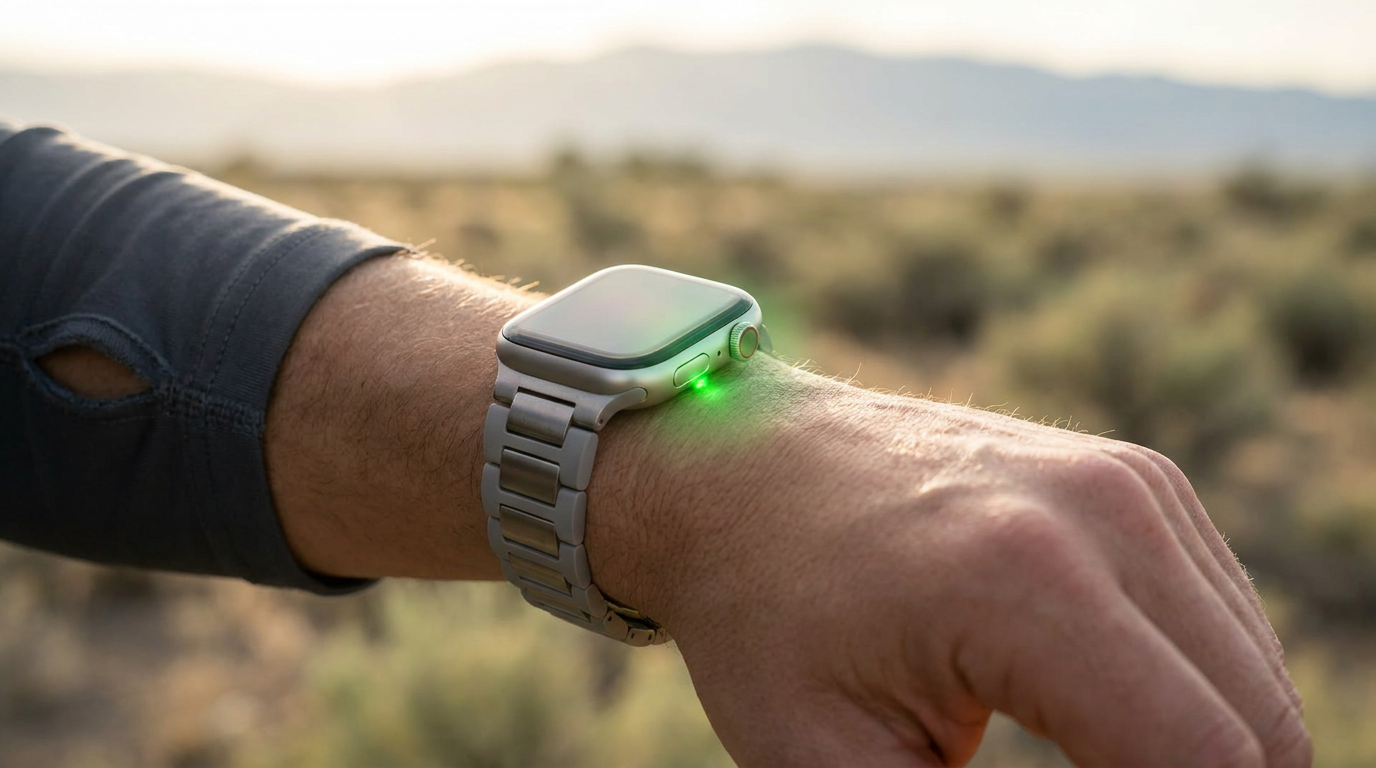
A watershed moment in this transition occurred in late 2025, when the U.S. Food and Drug Administration cleared the Apple Watch's Hypertension Notifications Feature. Utilizing advanced optical sensors, the cuffless tool analyzes blood flow patterns to alert users when their cardiovascular data suggests the presence of high blood pressure.[1][6]
Hypertension is notoriously dubbed the "silent killer" because it typically presents without noticeable symptoms, leaving millions unaware of their elevated risk for heart disease and stroke. By integrating screening into a device already worn by an estimated 30 million Americans, public health officials see a massive opportunity for population-level early detection.[1][6]
However, the real-world efficacy of this technology requires nuanced interpretation. A comprehensive February 2026 analysis published in the Journal of the American Medical Association (JAMA), led by researchers at the University of Utah and the University of Pennsylvania, modeled the impact of deploying these alerts across the U.S. adult demographic.[1]
The JAMA study revealed that the predictive value of a smartwatch alert shifts dramatically depending on the user's age. For adults under 30, receiving a hypertension alert increases the statistical probability of actually having the condition from a baseline of 14 percent to 47 percent.[1][6]
Conversely, for adults aged 60 and older—a demographic with a much higher baseline prevalence of high blood pressure—an alert spikes the probability of true hypertension to a staggering 81 percent. Yet, the absence of an alert in this older cohort only reduces the probability to 34 percent, meaning a "clear" reading is far less reassuring for seniors than it is for younger users.[1][6]
The technology is also far from infallible. Validation data indicates that approximately 59 percent of individuals with undiagnosed hypertension would fail to receive an alert from the smartwatch, resulting in a high rate of false negatives. Furthermore, about 8 percent of healthy users would receive erroneous notifications, potentially triggering unnecessary anxiety and clinical visits.[1][6]

Because of these limitations, researchers emphasize that wearables are screening tools, not diagnostic replacements. Current clinical guidelines still mandate that a hypertension diagnosis be confirmed using both traditional office-based measurements and out-of-office cuffed devices.[6]
Because of these limitations, researchers emphasize that wearables are screening tools, not diagnostic replacements.
Beyond blood pressure, researchers are developing entirely new biometric indicators that are only possible through continuous wearable monitoring. At the American College of Cardiology's 2025 Annual Scientific Session, investigators from Northwestern University introduced a novel metric: Daily Heart Rate Per Step (DHRPS).[2]
By dividing a user's average daily heart rate by their total step count, DHRPS measures how the cardiovascular system responds to the stress of daily physical activity. Analyzing data from nearly 7,000 U.S. adults encompassing 51 billion steps, the researchers found that DHRPS is a significantly stronger predictor of cardiovascular disease diagnoses than either daily heart rate or raw step counts alone.[2]

The clinical benefits of continuous monitoring extend well beyond cardiovascular screening. A recent systematic review of wearable health technology highlighted substantial gains in the management of chronic conditions. For instance, the integration of artificial intelligence with fitness trackers was associated with an 18 percent decrease in the risk of metabolic syndrome over a six-month period among users in a Korean cohort.[4]
Similarly, the use of ECG-enabled wearables has been shown to actively facilitate patient compliance. Hypertensive patients utilizing these devices demonstrated a 26 percent improvement in medication adherence and a 40 percent increase in daily self-monitoring behaviors.[4]
These outcomes underscore the psychological power of real-time feedback. Wearables utilize established behavior change techniques—such as goal setting, social comparison, and immediate performance feedback—to encourage users to adopt healthier habits. By making invisible physiological processes visible, the devices foster a heightened sense of personal accountability.[7]

Sustaining this behavior change, however, has historically been a challenge for the industry. Early iterations of fitness trackers suffered from high abandonment rates, with many users relegating the devices to a drawer after the initial novelty wore off. But recent longitudinal data suggests the tide is turning.[3][5]
A 2025 study published in the Journal of Medical Internet Research tracked user engagement from 2016 to 2023. The researchers found that the median usage duration for wearable activity trackers has more than doubled, jumping from 7 months in 2016 to 18 months in 2023.[3]
This increased longevity is accompanied by a shift in user motivations. While early adopters primarily used wearables to passively monitor their activity patterns, modern users are increasingly driven by specific clinical goals, such as improving cardiovascular fitness and actively managing chronic health conditions.[3]

Despite these encouraging trends, significant hurdles remain before wearables can be seamlessly integrated into standard medical practice. The "digital divide" poses a major equity concern, as the cost of premium smartwatches limits access for lower-income populations who often bear the highest burden of chronic disease.[4]
Furthermore, the JAMA analysis highlighted troubling disparities in the predictive power of the devices across different racial and ethnic groups, reflecting broader systemic inequalities in cardiovascular health and social determinants of health.[6]
Finally, the sheer volume of unstandardized data generated by millions of consumer devices threatens to overwhelm healthcare providers. Without robust regulatory frameworks, standardized interoperability, and AI-driven triage systems to filter the noise, the promise of wearable preventative medicine risks becoming a burden rather than a breakthrough.[4][8]
How we got here
2016
Median usage of wearable activity trackers sits at just 7 months, with high abandonment rates.
2023
Wearable usage matures, with median engagement extending to 18 months as users shift focus to clinical health goals.
March 2025
Researchers introduce DHRPS, a novel wearable metric that predicts cardiovascular disease better than raw step counts.
September 2025
The FDA clears the Apple Watch Hypertension Notifications Feature for cuffless blood pressure screening.
February 2026
JAMA publishes a comprehensive analysis detailing the real-world efficacy and limitations of smartwatch hypertension alerts.
Viewpoints in depth
Clinical Optimists
Advocates who see continuous biometric data as a paradigm shift in early disease detection.
This camp argues that the sheer volume of data collected by wearables—millions of person-days and billions of steps—provides a longitudinal view of patient health that traditional medicine simply cannot match. By utilizing AI to analyze minute-by-minute physiological changes, they believe we can identify the earliest markers of cardiovascular and metabolic diseases long before acute symptoms appear. For these optimists, the introduction of novel metrics like DHRPS proves that consumer devices are evolving into indispensable clinical tools.
Evidence-Based Skeptics
Medical professionals emphasizing the limitations, false negatives, and need for traditional clinical validation.
Skeptics caution against over-relying on consumer technology for serious medical screening. They point to the high false-negative rates—such as the 59 percent of undiagnosed hypertension cases missed by smartwatch alerts—as evidence that these devices provide a false sense of security. This group stresses that wearables must remain supplementary tools, and that any algorithmic alert must be rigorously confirmed by standard, office-based medical equipment to prevent both missed diagnoses and unnecessary clinical panic.
Behavioral Researchers
Experts focused on how wearables drive long-term habit formation and patient compliance.
For behavioral scientists, the true value of a smartwatch isn't just in its diagnostic accuracy, but in its psychological impact. They highlight data showing that real-time feedback loops significantly improve medication adherence and physical activity. This camp is particularly encouraged by recent longitudinal studies showing that user engagement has more than doubled over the last decade, suggesting that wearables are successfully transitioning from temporary fitness novelties into permanent lifestyle management tools.
What we don't know
- Whether the long-term use of smartwatches definitively reduces all-cause mortality at a population level.
- How healthcare systems will standardize and reimburse the clinical analysis of continuous wearable data.
- The exact mechanisms by which AI algorithms in proprietary devices calculate cardiovascular risk, as much of the software remains closed-source.
Key terms
- Hypertension
- Chronically high blood pressure, often called the 'silent killer' because it typically presents without symptoms.
- False Negative
- A test result that incorrectly indicates that a particular condition or attribute is absent.
- DHRPS (Daily Heart Rate Per Step)
- A novel biometric metric that measures how the cardiovascular system responds to the stress of daily physical activity.
- Metabolic Syndrome
- A cluster of conditions—including increased blood pressure, high blood sugar, and abnormal cholesterol—that occur together, increasing the risk of heart disease and stroke.
Frequently asked
Can a smartwatch officially diagnose high blood pressure?
No. Smartwatches are cleared as screening tools; a formal diagnosis still requires confirmation using traditional cuffed blood pressure monitors.
How accurate are smartwatch hypertension alerts?
While they significantly increase the probability of detecting the condition, validation studies show they miss about 59 percent of undiagnosed cases.
Do fitness trackers actually change people's behavior?
Yes. Evidence shows that the real-time feedback provided by wearables improves medication adherence, increases physical activity, and extends long-term user engagement.
What is DHRPS?
Daily Heart Rate Per Step is a new metric that divides average heart rate by step count, offering a more reliable indicator of cardiovascular fitness than steps alone.
Sources
Source coverage
8 outlets
3 viewpoints surfaced







[1]JAMAEvidence-Based Skeptics
Impact of a Smartwatch Hypertension Notification Feature for Population Screening
Read on JAMA →[2]American College of CardiologyClinical Optimists
Daily Heart Rate Per Step (DHRPS) as a New Wearables Metric Associated with Cardiovascular Disease
Read on American College of Cardiology →[3]Journal of Medical Internet ResearchBehavioral Researchers
Changes in User Experiences, Preferences, and Perceived Impacts of Wearable Activity Trackers
Read on Journal of Medical Internet Research →[4]E3S Web of ConferencesBehavioral Researchers
Wearable health technology in precision medicine and personalized healthcare
Read on E3S Web of Conferences →[5]Factlen Editorial Team
Synthesis by Factlen editorial team
Read on Factlen Editorial Team →[6]University of Utah HealthEvidence-Based Skeptics
How Smartwatches Detect—Or Miss—High Blood Pressure
Read on University of Utah Health →[7]MDPI SensorsBehavioral Researchers
Benefits Consumers Want Their Wearable Devices to Have
Read on MDPI Sensors →[8]NBC4 ColumbusClinical Optimists
Could a common piece of tech help predict your heart health?
Read on NBC4 Columbus →
More in data analysis
See all 17 stories →Synthetic Data
The Efficacy of Synthetic Data: Can AI-Generated Datasets Solve the Privacy and 'Data Wall' Crises?
8 sources

Synthetic Data
The Synthetic Data Revolution: How AI is Generating Its Own Training Ground
7 sources

Synthetic Data
The Evidence for Synthetic Data: Can AI Safely Replace Real Patient Records?
6 sources
Exercise Science
The Evidence Pack: Does Zone 2 Cardio Actually Optimize Longevity?
6 sources
Every angle. Every day.
Get data analysis stories with full source coverage and perspective breakdowns delivered to your inbox.