
The End of the Password: How Passkeys Actually Work and the Evidence Behind Them
As major tech platforms default to passkeys, decades of reliance on easily stolen passwords is coming to an end. This evidence pack examines the cryptographic mechanics, adoption data, and remaining hurdles of the transition to passwordless security.
By Factlen Editorial Team

- Platform Ecosystems
- Prioritize seamless user experience and account recovery by syncing passkeys natively through their own cloud infrastructures.
- Enterprise Security
- Focus on absolute phishing resistance and zero-trust architecture, pushing for hardware-bound keys in high-risk environments.
- Independent Credential Managers
- Advocate for cross-platform portability and open standards to prevent users from being locked into a single smartphone ecosystem.
What's not represented
- · Legacy IT Administrators
- · Users without modern smartphones
Why this matters
Passwords are the root cause of over 80% of data breaches, leading to identity theft and financial fraud. The shift to passkeys fundamentally neutralizes the most common cyberattacks, making everyday internet use significantly safer for the average person.
Key points
- Passkeys replace passwords with cryptographic key pairs, keeping the private key safely on the user's device.
- The technology eliminates traditional credential phishing because there is no shared secret to steal or intercept.
- Users authenticate via biometric sensors like FaceID or fingerprint readers, making logins 40% faster.
- Apple and Google sync passkeys via the cloud to prevent users from losing access if a device is destroyed.
- New FIDO standards are being developed to make transferring passkeys between different operating systems seamless.
For decades, the foundational lock of the digital world has been fundamentally broken. Humans are terrible at generating random strings of characters, and even worse at remembering them. The result has been a cybersecurity landscape dominated by credential stuffing and phishing, where attackers simply log in using stolen passwords rather than hacking through complex firewalls.[1][7]
The proposed solution, long relegated to high-security enterprise environments, is finally reaching consumer ubiquity: the passkey. Backed by the FIDO Alliance—a consortium including Apple, Google, and Microsoft—passkeys aim to replace passwords entirely with cryptographic key pairs tied directly to a user's device.[2]
This evidence pack examines the claims behind the passwordless transition. The primary assertion from platform providers is that passkeys are entirely immune to traditional credential phishing. Unlike a password, which is a shared secret transmitted to a server, a passkey relies on public key cryptography.[1][2]
When a user registers a passkey, their device generates a unique mathematical pair: a public key, which is stored on the website's server, and a private key, which never leaves the secure enclave of the user's device. During login, the server sends a cryptographic challenge. The device uses the private key to sign the challenge, proving identity without ever transmitting the secret itself.[2][4]

Because the private key is never sent over the internet, a fake login page cannot intercept it. Even if a user is tricked into visiting a perfect replica of their bank's website, the passkey protocol (WebAuthn) verifies the domain name. If the domain does not match exactly, the device simply refuses to sign the challenge, neutralizing the phishing attempt at the protocol level.[2][5]
The evidence for efficacy is robust. The Cybersecurity and Infrastructure Security Agency (CISA) has officially classified FIDO-based authentication as "phishing-resistant," urging all federal agencies and critical infrastructure operators to adopt it over SMS-based two-factor authentication, which remains vulnerable to SIM-swapping and adversary-in-the-middle attacks.[5]
Beyond absolute security, platform operators claim passkeys significantly reduce user friction. Google’s telemetry data, released after rolling out passkeys to hundreds of millions of accounts, indicates that passkey logins are 40% faster than traditional password logins. Furthermore, the login success rate—the percentage of users who successfully authenticate without needing a reset—is significantly higher.[3]

Beyond absolute security, platform operators claim passkeys significantly reduce user friction.
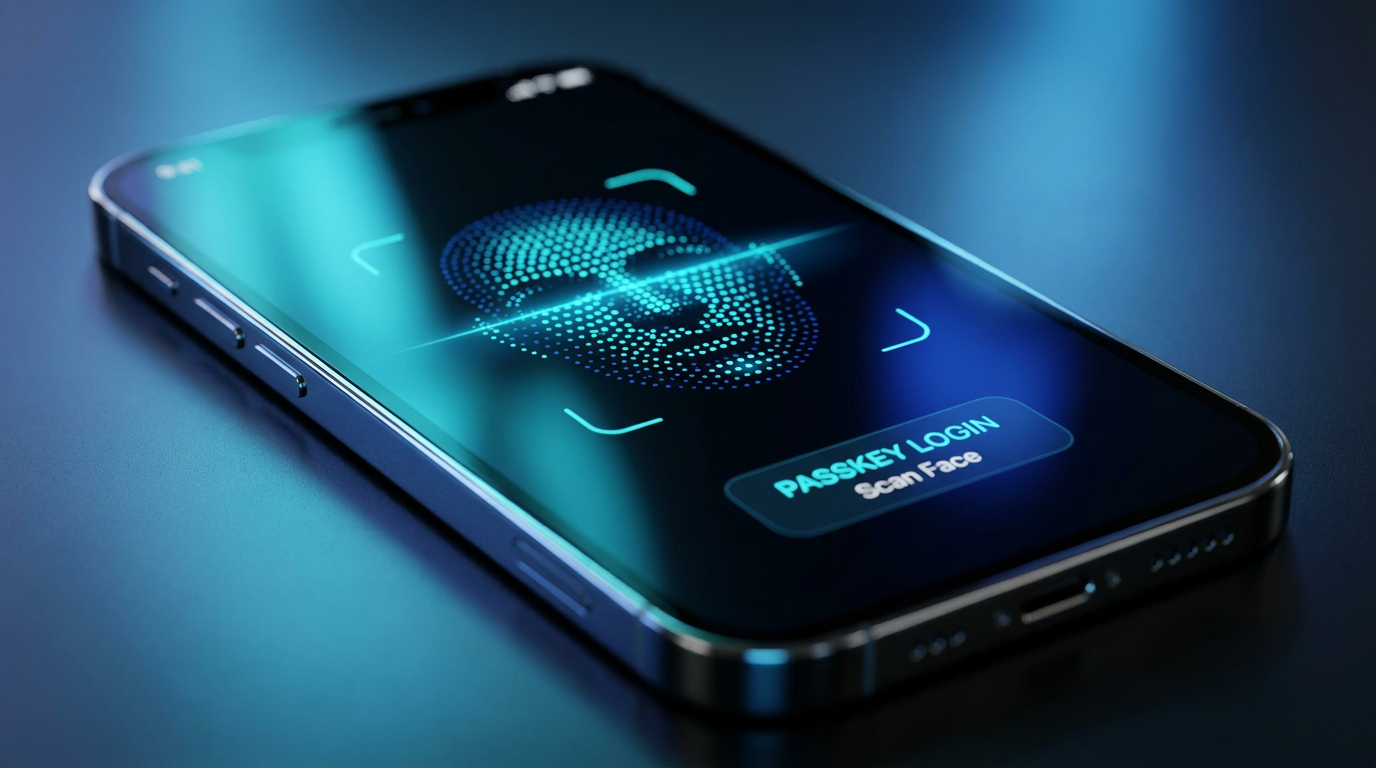
This usability gain stems from the integration of biometric sensors. Instead of typing a complex string of characters, users authenticate the passkey using the exact same mechanism they use to unlock their phone: FaceID, TouchID, or Windows Hello. The biometric data never leaves the device; it merely authorizes the local hardware to use the private key.[4][6]
However, the transition is not without friction, and the primary area of uncertainty revolves around account recovery. If a passkey is tied to a specific piece of hardware, what happens when that device is lost, stolen, or destroyed?[1]
To solve this, Apple and Google implemented "synced passkeys." Apple’s iCloud Keychain and Google’s Password Manager automatically back up the private keys and sync them across all devices logged into the same ecosystem account. If a user buys a new iPhone, their passkeys are restored from the cloud, protected by end-to-end encryption.[3][4]
While syncing solves the lost-device problem for users within a single ecosystem, it introduces a new challenge: cross-ecosystem portability. Historically, moving passkeys from an Apple device to a Windows PC, or from an Android phone to an iPad, has been cumbersome, often requiring users to scan a QR code via Bluetooth to bridge the devices.[7][8]

Independent credential managers argue that platform-native syncing creates vendor lock-in. If a user's digital identity is entirely bound to iCloud or Google, switching smartphone ecosystems becomes a monumental hurdle. Companies like 1Password and Bitwarden have built their own passkey providers to ensure keys remain portable across any operating system.[8]
In response to these concerns, the FIDO Alliance recently published the draft specifications for the Credential Exchange Protocol (CXP) and Credential Exchange Format (CXF). These standards will allow users to securely export their passkeys from one password manager or platform and import them into another, much like transferring a phone number between carriers.[2][8]
It is also crucial to understand the limits of passkey security. While they eliminate credential phishing, they do not solve session hijacking. If an attacker infects a user's computer with malware that steals the active session cookie after the user has logged in with a passkey, the attacker can still access the account.[1][5]

Furthermore, the security of a synced passkey is only as strong as the security of the underlying cloud account. If a user's Apple ID or Google account is compromised, the attacker could potentially access the synced passkeys. This is why NIST guidelines emphasize that the foundational cloud account must itself be protected by robust, phishing-resistant multi-factor authentication.[6]
Despite these edge cases, the consensus among cybersecurity professionals is overwhelming: the deprecation of the password is the single most impactful security upgrade of the modern internet era. As major consumer services and enterprise identity providers enforce passkey adoption, the era of the easily guessable, easily stolen shared secret is finally drawing to a close.[1][5][7]
How we got here
2012
The FIDO Alliance is founded with the mission of solving the world's password problem.
2019
WebAuthn becomes an official W3C web standard, laying the groundwork for browser-based passkeys.
2022
Apple, Google, and Microsoft jointly commit to supporting passkeys across their respective platforms.
2024
The FIDO Alliance publishes draft standards for the secure cross-platform transfer of passkeys.
Viewpoints in depth
Platform Ecosystems
Tech giants prioritize a frictionless user experience by building passkeys directly into the operating system.
Companies like Apple and Google view the operating system as the natural home for digital identity. By integrating passkeys into iCloud Keychain and Google Password Manager, they ensure that the average consumer doesn't have to think about key management. When a user buys a new device within the same ecosystem, their cryptographic keys are automatically restored, eliminating the primary fear of hardware-bound security: getting permanently locked out of an account.
Enterprise Security
Government and corporate security teams focus on absolute phishing resistance and zero-trust verification.
Organizations like CISA and NIST evaluate passkeys through the lens of national security and corporate espionage. Their primary concern is neutralizing adversary-in-the-middle (AitM) attacks, where sophisticated hackers intercept SMS codes or push notifications. While they strongly support consumer passkeys, enterprise guidelines often mandate hardware-bound keys (like YubiKeys) for high-privilege accounts, ensuring that a compromised cloud account cannot lead to a compromised passkey.
Independent Credential Managers
Third-party security providers advocate for open standards to prevent users from being locked into a single tech ecosystem.
Companies like 1Password and Bitwarden argue that tying a user's digital identity to a specific operating system creates dangerous vendor lock-in. If a user decides to switch from an iPhone to an Android device, platform-native passkeys historically made the transition incredibly difficult. These independent providers are championing the new Credential Exchange Protocol (CXP) to ensure that users retain true ownership and portability of their cryptographic keys, regardless of which hardware they choose to buy.
What we don't know
- How quickly legacy enterprise systems and smaller websites will upgrade their infrastructure to support WebAuthn.
- Whether the new Credential Exchange Protocol (CXP) will see universal, frictionless adoption by all major operating systems.
Key terms
- WebAuthn
- The web standard published by the W3C that allows servers to register and authenticate users using public key cryptography instead of a password.
- Public Key Cryptography
- A cryptographic system that uses pairs of keys: public keys which may be disseminated widely, and private keys which are known only to the owner.
- Credential Stuffing
- A cyberattack where stolen account credentials from one data breach are used to gain unauthorized access to user accounts on other websites.
- Phishing-Resistant MFA
- Multi-factor authentication methods that cannot be compromised by tricking a user into entering their credentials on a fake website.
Frequently asked
What happens if I lose my phone with my passkeys?
If your passkeys are synced to a cloud account like iCloud or Google Password Manager, you can restore them simply by logging into your account on a new device.
Can a passkey be stolen in a data breach?
No. Websites only store your public key. Even if the website's database is hacked, the public key is useless without the private key, which never leaves your device.
Do I still need a password manager?
Yes, for now. Password managers are adapting to store passkeys, and you will still need them for older websites that haven't yet adopted the new standard.
Sources
Source coverage
8 outlets
3 viewpoints surfaced





[1]Factlen Editorial Team
Synthesis by Factlen editorial team
Read on Factlen Editorial Team →[2]FIDO Alliance
How FIDO Works: The Standard for Phishing-Resistant Authentication
Read on FIDO Alliance →[3]Google Security BlogPlatform Ecosystems
Passkeys: A year in review
Read on Google Security Blog →[4]Apple SupportPlatform Ecosystems
About the security of passkeys
Read on Apple Support →[5]Cybersecurity and Infrastructure Security AgencyEnterprise Security
Implementing Phishing-Resistant MFA
Read on Cybersecurity and Infrastructure Security Agency →[6]NISTEnterprise Security
Digital Identity Guidelines: Authentication and Lifecycle Management
Read on NIST →[7]WiredIndependent Credential Managers
The Passwordless Future Is Finally Here
Read on Wired →[8]1Password BlogIndependent Credential Managers
The state of passkey portability
Read on 1Password Blog →

More in technology
See all 5 stories →
Every angle. Every day.
Get technology stories with full source coverage and perspective breakdowns delivered to your inbox.