
The Economics of Residential Solar Without the Federal Tax Credit
With the expiration of the 30% Residential Clean Energy Credit at the end of 2025, homeowners face higher upfront costs but are turning to alternative financing and state incentives to make solar viable.
By Noor Saidi

- Third-Party Leasing Providers
- Argue that leases and PPAs are the most practical way for average homeowners to access solar in 2026.
- Direct Ownership Advocates
- Argue that buying a system outright remains the best long-term financial decision despite the higher upfront cost.
- Grid Resilience Proponents
- Focus on the necessity of battery storage over pure financial payback.
Perspectives this story doesn't cover
- Low-Income Homeowners
- Local Utility Companies
Key terms
- Section 25D
- The section of the federal tax code that previously provided a 30% tax credit to homeowners who purchased residential clean energy systems, which expired at the end of 2025.
- Section 48E
- The Clean Electricity Investment Credit, a commercial tax incentive that remains active and allows third-party solar leasing companies to claim a 30% credit.
- Power Purchase Agreement (PPA)
- A financial arrangement where a third-party developer owns the solar system and sells the generated electricity back to the homeowner at a fixed rate.
- Net Energy Metering (NEM)
- A utility billing mechanism that credits solar energy system owners for the excess electricity they add to the grid.
- Virtual Power Plant (VPP)
- A network of decentralized, grid-connected home batteries that utilities can tap into during periods of peak electricity demand.
Key points
- The 30% federal tax credit for homeowner-purchased solar systems expired on December 31, 2025.
- Systems installed in 2026 or later no longer qualify for the Section 25D direct ownership credit.
- Third-party solar leases remain eligible for commercial tax credits, shifting consumer preference toward leasing.
- State-level rebates and net metering programs are now the primary drivers of solar return-on-investment.
- Home battery storage is increasingly monetized through utility virtual power plant programs.
For homeowners looking to install solar panels in 2026, the math has fundamentally changed. The 30 percent federal residential solar tax credit—officially known as the Residential Clean Energy Credit under Section 25D—expired on December 31, 2025. If you buy a system with cash or a loan today, you are paying the full gross cost out of pocket, effectively adding 30 percent to the bottom line compared to last year's pricing. But while the federal subsidy for direct ownership is gone, the solar market has not collapsed; it has simply shifted toward third-party leasing, state-level rebates, and utility incentives that still make the math work for the right roof.[1][3][7]
For nearly two decades, the federal Investment Tax Credit was the primary engine driving residential solar adoption across the United States. Introduced in 2005, the policy was designed to bring a niche, expensive technology into the mainstream by subsidizing the upfront cost for early adopters. A homeowner who spent $25,000 on a rooftop array and battery system could claim $7,500 as a dollar-for-dollar reduction on their federal income taxes. This incentive worked exactly as intended, helping the industry scale, driving down the per-watt cost of hardware, and normalizing rooftop solar in neighborhoods across the country.[5]
This incentive was originally scheduled to run through 2034 under the Inflation Reduction Act, providing a long runway of certainty for both consumers and installers. However, the passage of the One Big Beautiful Bill Act in July 2025 abruptly altered the landscape. The legislation terminated Section 25D, moving the sunset date up by nearly a decade and creating a frantic rush of installations in the final months of 2025. The companion Energy Efficient Home Improvement Credit, which covered heat pumps, insulation, and windows, was eliminated on the exact same timeline.[5][6]
The Internal Revenue Service enforces a rigid timeline for claiming the expired credit, leaving no room for grace periods. According to the 2025 Form 5695 instructions, costs are treated as paid when the original installation of the item is completed. This means that homeowners who signed contracts or even paid in full in late 2025, but did not have their systems fully installed, inspected, and placed in service until January 2026, are entirely locked out of the credit. The IRS guidance is unforgiving: the date of physical completion dictates eligibility, regardless of supply chain delays or permitting backlogs.[1][6]
The only lingering federal benefit for individual taxpayers is the ability to carry forward unused credit from a system installed in 2025 or earlier. Because the Residential Clean Energy Credit was nonrefundable, homeowners could only claim it up to the amount of their tax liability in a given year. If a homeowner generated a $9,000 credit in 2025 but only owed $5,000 in federal taxes, the remaining $4,000 can still be applied to their 2026 tax return. For new installations, however, the federal tax form offers no relief.[1][6]
The elimination of the credit represents a massive shift in the economics of home energy upgrades. A system that effectively cost $17,500 after the tax credit last year now requires the homeowner to absorb the full $25,000 price tag. For a family evaluating their next major home improvement, this requires a much closer look at local utility rates and the expected payback period. In states with high electricity costs, the monthly savings from generating your own power can still offset the higher upfront cost over a ten- to thirteen-year horizon. In regions with cheaper grid power, the financial case for outright ownership has become significantly harder to justify.[3][7]
The elimination of the credit represents a massive shift in the economics of home energy upgrades.
With the residential credit gone, the industry is rapidly pivoting to a different section of the tax code: Section 48E. This is the Clean Electricity Investment Credit, which applies to commercial entities and remains active through at least the end of 2027. When a homeowner chooses a solar lease or a Power Purchase Agreement instead of buying the panels, the solar company retains ownership of the equipment. Because the company is a commercial entity, it can still claim the 30 percent commercial tax credit and pass a portion of those savings down to the homeowner in the form of a lower monthly lease payment.[3][4]
This tax code disparity has completely flipped the traditional advice given to homeowners. For years, financial advisors and solar advocates recommended purchasing a system outright or financing it with a solar loan to maximize long-term savings and property value. Today, leasing has become the primary mechanism for accessing federal subsidies. Under a lease or Power Purchase Agreement, the homeowner pays little to nothing upfront and locks in a predictable electricity rate that is often lower than their local utility's pricing.[3][5]
The trade-off of the leasing model is that the homeowner does not own the asset on their roof, which can complicate the eventual sale of the property. When a home with a leased solar system goes on the market, the prospective buyer must agree to assume the remainder of the lease contract and pass the solar company's credit check. While outright ownership of a solar array generally increases a home's appraisal value, a leased system is treated as a liability or a neutral utility contract, changing the calculus for homeowners who plan to move within the next five to seven years.[7]
To bridge the gap left by the federal government, homeowners must now act as local policy experts. State-level incentives, which were previously treated as a nice bonus on top of the federal credit, are now the primary levers for reducing upfront costs. Some states offer their own income tax credits, while others mandate utility rebates based on the installed capacity of the system. Furthermore, programs like Net Energy Metering—which credits homeowners for excess power sent back to the grid—remain crucial for determining the lifetime value of a solar installation.[3][4]
The expiration of Section 25D also applied to standalone battery storage systems, which previously qualified for the 30 percent credit even if they were not paired with solar panels. Despite the sudden loss of the federal subsidy, the consumer demand for home batteries continues to rise unabated. As extreme weather events, aging infrastructure, and grid instability lead to more frequent and prolonged power outages, many homeowners are treating battery storage as an essential resilience measure rather than a pure financial investment. The peace of mind that comes with keeping the lights on and the refrigerator running during a blackout often outweighs the extended financial payback period.[2][4]
To offset the higher cost of batteries, homeowners are increasingly turning to utility-sponsored grid service programs. Some local utilities now operate virtual power plants that pay homeowners a premium for allowing the utility to draw power from their batteries during peak demand hours. These programs create a new, ongoing revenue stream that helps justify the upfront capital expenditure, transforming the home battery from a passive backup system into an active grid asset that generates passive income while supporting neighborhood energy reliability.[3][4]
For anyone considering solar in 2026, the first step is to discard any outdated financial models, sales brochures, or online calculators that still factor in a 30 percent federal discount for ownership. The math has fundamentally changed, and relying on last year's projections will lead to significant financial miscalculations. The next decision is structural: determine whether your priority is maximizing long-term home equity, which favors a cash purchase or loan despite the higher upfront cost, or securing immediate monthly savings with zero upfront investment, which strongly favors a lease or Power Purchase Agreement.[3][7]
Ultimately, the decision requires consulting local resources to map out the exact rebates, tax exemptions, and net metering rules available in your specific utility territory. The era of the universal federal solar discount is over, replaced by a fragmented, highly localized incentive landscape. But with careful planning, a clear understanding of the new financing structures, and a realistic assessment of local utility rates, the path to energy independence remains viable for millions of households. The key is to approach the investment with eyes wide open to the realities of the 2026 market.[2][7]
Frequently asked
Can I still claim the federal solar tax credit in 2026?
No, the 30% Residential Clean Energy Credit (Section 25D) expired on December 31, 2025, for homeowner-purchased systems. However, commercial credits still exist for leased systems.
What if I paid for my solar system in 2025 but it was installed in 2026?
According to IRS rules, the installation must have been fully completed and placed in service by December 31, 2025, to qualify. Systems finished in 2026 are not eligible.
Do home battery storage systems still get a tax credit?
Direct purchases of home batteries no longer qualify for the federal residential credit. Like solar panels, they must be leased through a third party to indirectly benefit from commercial tax credits.
Is it better to lease or buy solar panels now?
Leasing allows you to benefit indirectly from the commercial tax credit, lowering upfront costs. Buying outright costs more upfront but builds home equity and avoids lease transfer complications if you sell your house.
Sources
Source coverage
7 outlets
3 viewpoints surfaced







- [1]Internal Revenue Service
About Form 5695, Residential Energy Credits
Read on Internal Revenue Service → - [2]Energy Star
Federal Income Tax Credits and Incentives for Energy Efficiency
Read on Energy Star → - [3]SunrunThird-Party Leasing Providers
What changed for solar incentives in 2026
Read on Sunrun → - [4]TeslaGrid Resilience Proponents
Solar and Battery Systems in 2026
Read on Tesla → - [5]EnergySageDirect Ownership Advocates
The "Big Beautiful Bill" was signed into law on July 4, ending the 30% residential solar credit after 2025
Read on EnergySage → - [6]TaxSlayer
Do I Qualify for the Residential Clean Energy Credit (Form 5695)?
Read on TaxSlayer → - [7]Factlen Editorial TeamDirect Ownership Advocates
Synthesis by Factlen editorial team
Read on Factlen Editorial Team →
Comments

More in Home
See all →Building Physics
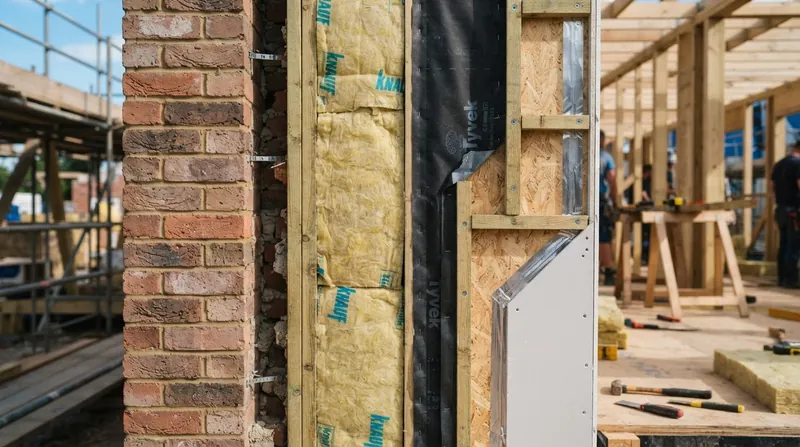
The 0.13 m²K/W Internal Surface Resistance: How the ISO 6946 Standard Defines the Baseline for a Wall's Thermal Performance
6 sources
Accessibility Standards
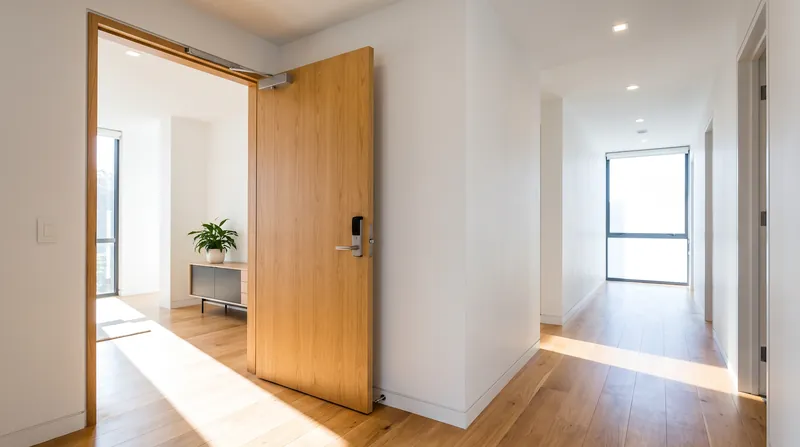
The 800 Millimeter Clear Opening: How International Accessibility Standards Dictate Doorway Width
5 sources
Radio Frequencies
The 868 MHz vs. 915 MHz Divide: How Regional Radio Frequencies Dictate Smart Home Compatibility
5 sources

Appliance Standards
The 0.5 Watt Limit: How International Standards Regulate Appliance Standby Power Consumption
6 sources

Every angle. Every day.
Get Home stories with full source coverage and perspective breakdowns delivered to your inbox.