
The Clinical Evidence Behind 'Nature Prescriptions' for Mental Health
As doctors increasingly prescribe time in green spaces to treat anxiety and depression, a growing body of peer-reviewed evidence reveals exactly how nature alters human brain chemistry.
By Factlen Editorial Team
- Clinical Psychiatrists
- View nature exposure as a powerful, low-risk adjunct therapy for mild-to-moderate mood disorders, emphasizing it should not replace medication for severe cases.
- Urban Planners
- Argue that the medicalization of nature proves the necessity of equitable, biodiverse green space distribution in modern city design.
- Public Health Economists
- Focus on the massive cost-saving potential for national healthcare systems if green prescriptions can reduce the burden on traditional psychiatric services.
What's not represented
- · Patients with severe mobility issues who cannot easily access traditional green spaces
- · Indigenous communities whose traditional ecological knowledge predates modern clinical validation
Why this matters
Understanding the precise dosage and biological mechanisms of nature exposure allows individuals to use the outdoors as a free, scientifically backed tool to improve their baseline mental health and resilience.
Key points
- Doctors are increasingly utilizing 'green prescriptions' to treat mild-to-moderate anxiety and depression.
- Research indicates a minimum threshold of 120 minutes per week in nature is required for measurable mental health benefits.
- Time in green spaces physically alters brain chemistry by lowering cortisol and reducing activity in areas linked to rumination.
- Urban parks are effective, though higher biodiversity environments yield slightly stronger neurological responses.
- Nature therapy is considered a powerful adjunct treatment, rather than a standalone cure for severe psychiatric conditions.
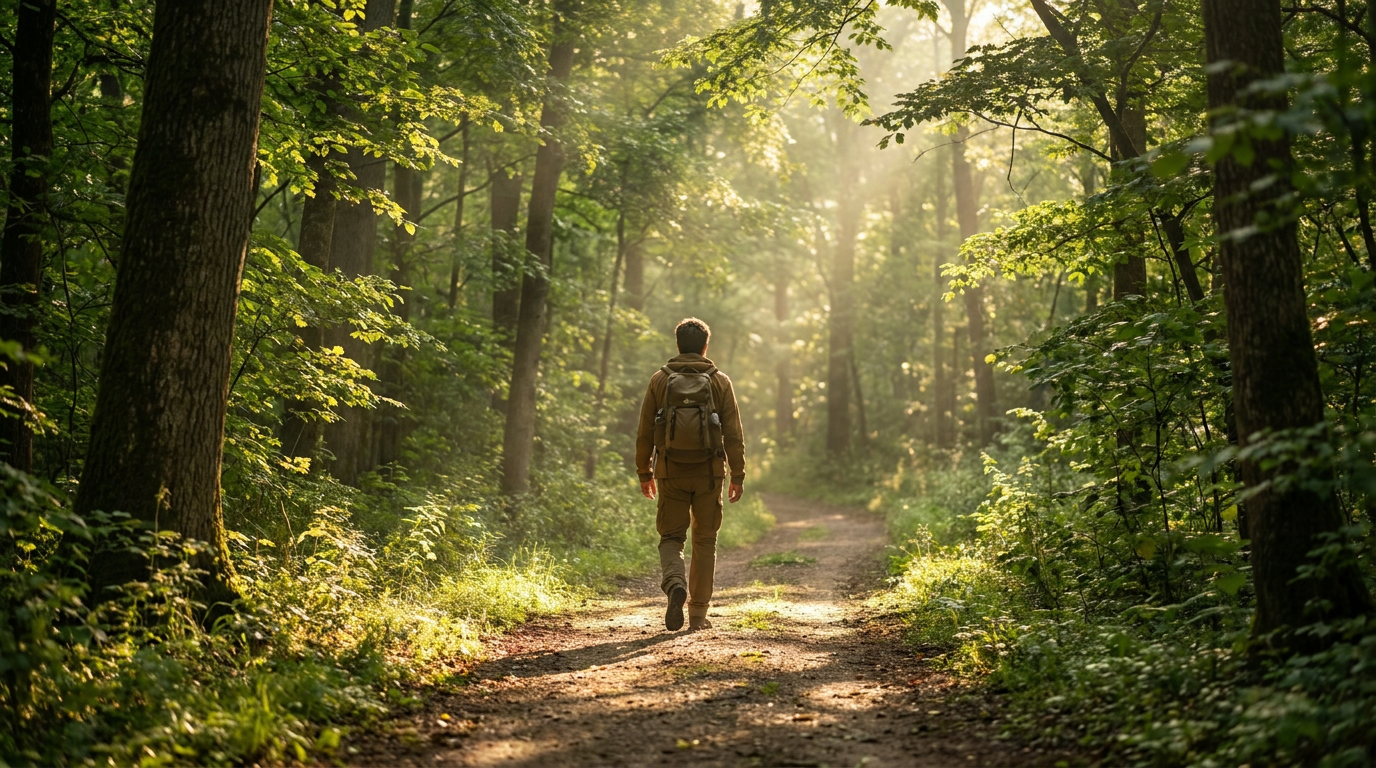
Across clinics in North America and Europe, a quiet revolution in psychiatric care is taking root. Primary care physicians and psychiatrists are increasingly handing patients formal "green prescriptions"—written directives to spend a specific amount of time in local parks, forests, or community gardens. What was once dismissed as a fringe wellness trend has rapidly integrated into mainstream medicine, driven by a desperate need for accessible mental health interventions and a growing recognition of the outdoors as a clinical tool.[1][2]
This shift is not based on mere intuition or poetic sentiment. Over the past decade, environmental psychology and neuroscience have converged to produce a robust body of peer-reviewed evidence detailing exactly how exposure to green spaces alters human biology. Researchers have moved beyond self-reported mood surveys to measure tangible physiological markers, transforming "getting fresh air" into a quantifiable medical intervention.[6]
The neurological mechanism centers largely on the subgenual prefrontal cortex, a region of the brain heavily involved in rumination—the repetitive, negative thought loops characteristic of depression and anxiety. Functional MRI scans demonstrate that a 90-minute walk in a natural setting significantly decreases neural activity in this specific area, whereas a walk of the same duration in a high-traffic urban environment produces no such reduction.[4]
Simultaneously, nature exposure triggers a profound shift in the autonomic nervous system. Clinical meta-analyses reveal that time spent in green spaces rapidly downregulates the sympathetic nervous system (the "fight or flight" response) and activates the parasympathetic nervous system (the "rest and digest" state). This shift is evidenced by measurable drops in heart rate, blood pressure, and salivary cortisol levels, often occurring within the first twenty minutes of exposure.[3][4]

As the biological mechanisms became clear, researchers sought to establish a clinical dosage. A landmark epidemiological study analyzing the habits of tens of thousands of individuals identified a distinct threshold: 120 minutes per week. Those who spent at least two hours a week in natural environments reported significantly higher psychological wellbeing and lower distress than those who spent less time, regardless of their socioeconomic status or baseline health.[5]
Crucially for patients with busy schedules, the data shows that this 120-minute dose does not need to be consumed all at once. The benefits are cumulative. A single two-hour weekend hike yields the same statistical mental health benefits as four 30-minute walks through a neighborhood park spread across the workweek, making the prescription highly adaptable to urban lifestyles.[5][6]

Crucially for patients with busy schedules, the data shows that this 120-minute dose does not need to be consumed all at once.
Beyond mood regulation, nature acts as a powerful restorative agent for cognitive fatigue. According to Attention Restoration Theory, modern urban environments require "directed attention"—the exhausting mental effort needed to ignore distractions like traffic, screens, and crowds. Nature, by contrast, engages "soft fascination," capturing our attention effortlessly through gentle stimuli like rustling leaves or moving water, allowing the brain's directed attention reserves to replenish.[4]
The efficacy of this soft fascination is partly rooted in visual geometry. Natural environments are rich in fractals—complex patterns that repeat at different scales, such as the branching of trees or the veins of a leaf. Eye-tracking studies suggest that the human visual system is evolutionarily optimized to process these specific fractal dimensions, which induces a state of wakeful relaxation measurable via alpha waves on an EEG.[4][6]
The benefits are not purely visual. The olfactory environment of a forest plays a direct pharmacological role. Trees and plants emit phytoncides, airborne antimicrobial compounds designed to protect them from insects and rot. When inhaled by humans, these volatile organic compounds have been shown to significantly boost the activity of natural killer (NK) cells in the immune system while simultaneously suppressing the release of stress hormones.[3][4]

A common question among urban populations is whether a city park offers the same benefits as a wild forest. The evidence suggests a tiered effect. While any green space is better than concrete, biodiversity matters. Environments with a wider variety of plant life, bird species, and natural water features produce stronger and faster drops in psychological distress markers than manicured, monoculture lawns.[3]
Despite the overwhelming positive data, clinical implementation faces hurdles. The primary challenge is adherence. Just as patients often struggle to complete a course of physical therapy, ensuring that individuals suffering from severe depression muster the motivation to fulfill a green prescription remains difficult. Researchers are currently studying whether group-based nature walks yield better long-term compliance than solitary prescriptions.[1][6]
Medical professionals are also careful to frame nature therapy correctly. It is positioned as a powerful, low-risk adjunct treatment, not a standalone cure for severe psychiatric illness. For mild-to-moderate anxiety, it can sometimes serve as a primary intervention, but for major depressive disorder or schizophrenia, green prescribing is meant to supplement, rather than replace, pharmaceutical and psychotherapeutic care.[1][3]
From a public health perspective, the economics of green prescribing are highly attractive. National health services are beginning to view parks not just as recreational amenities, but as vital preventative healthcare infrastructure. By reducing the incidence of stress-related illnesses and mild depression, widespread nature exposure has the potential to save healthcare systems billions of dollars annually.[2][6]
Ultimately, the clinical validation of nature prescriptions represents a profound shift in how modern medicine views the human-environment relationship. By proving that our brain chemistry is inextricably linked to the landscapes we inhabit, the medical community is offering a compelling, evidence-based reminder that time spent outdoors is not a luxury, but a biological necessity.[6]
How we got here
1984
Roger Ulrich publishes a landmark study showing hospital patients recover faster with a view of trees.
1989
Attention Restoration Theory is introduced, explaining how nature replenishes cognitive fatigue.
2019
A massive UK study establishes the '120-minute' weekly threshold for measurable wellbeing improvements.
2021
Several national health services, including in Scotland and Canada, officially integrate green prescriptions into primary care.
2026
Comprehensive meta-analyses confirm the physiological mechanisms, shifting nature therapy from wellness trend to evidence-based medicine.
Viewpoints in depth
Clinical Psychiatrists
Medical professionals view nature exposure as a highly effective, low-risk supplement to traditional treatments.
For clinical psychiatrists, the appeal of green prescribing lies in its lack of side effects and high accessibility. While they are careful to emphasize that a walk in the woods cannot cure severe schizophrenia or major depressive disorder, they increasingly view it as a vital tool for managing mild-to-moderate anxiety. The physiological evidence—specifically the rapid reduction in cortisol and the quieting of the subgenual prefrontal cortex—provides the hard data needed to justify these prescriptions to skeptical patients who might otherwise view the advice as unscientific.
Urban Planners
City designers argue that the medical data proves green space is essential public infrastructure.
Urban planners and landscape architects are using the clinical data behind green prescriptions to advocate for radical changes in city design. If 120 minutes of nature exposure is a medical necessity, they argue, then unequal access to safe, biodiverse parks is a profound public health failure. This perspective pushes back against the idea of parks as mere aesthetic or recreational amenities, framing them instead as preventative healthcare facilities that must be integrated equitably into all neighborhoods, regardless of socioeconomic status.
Public Health Economists
Economists focus on the massive cost-saving potential of widespread nature exposure.
From a macroeconomic perspective, the mental health crisis is unsustainably expensive, placing enormous strain on national healthcare budgets and resulting in billions of dollars in lost productivity. Public health economists view green prescribing as a highly scalable, cost-effective intervention. By utilizing existing natural infrastructure to lower the population's baseline stress levels and reduce the incidence of mild depression, health systems can theoretically divert significant resources away from expensive pharmaceutical interventions and acute psychiatric care.
What we don't know
- Whether the mental health benefits of nature exposure persist long-term if the habit is broken.
- The exact biological weight of specific sensory inputs, such as how much benefit comes from visual fractals versus olfactory phytoncides.
- How to ensure high adherence rates among severely depressed patients prescribed nature time compared to traditional pharmaceuticals.
Key terms
- Green Prescribing
- The practice of healthcare professionals recommending patients spend specific amounts of time in nature to improve their physical or mental health.
- Attention Restoration Theory
- A psychological framework suggesting that exposure to natural environments replenishes our capacity to concentrate by engaging effortless 'soft fascination.'
- Phytoncides
- Antimicrobial volatile organic compounds emitted by plants and trees that have been shown to lower human stress hormones when inhaled.
- Subgenual Prefrontal Cortex
- A region of the brain associated with self-focused behavioral withdrawal and rumination, which shows decreased activity during nature exposure.
- Parasympathetic Nervous System
- The network of nerves that relaxes the body after periods of stress or danger, often referred to as the 'rest and digest' system.
Frequently asked
Do I need to go to a wild forest to get the benefits?
No. While highly biodiverse forests offer strong benefits, studies show that urban parks, botanical gardens, and even tree-lined streets significantly reduce stress markers.
Does the 120 minutes need to be completed all at once?
No. Research indicates that the 120-minute weekly threshold can be broken up into shorter daily walks or achieved in a single weekend hike with the same statistical results.
Can nature prescriptions replace my anxiety medication?
No. Clinical guidelines position green prescribing as an adjunct therapy—a powerful supplement to, rather than a replacement for, prescribed medications and traditional psychotherapy for severe conditions.
Sources
Source coverage
6 outlets
3 viewpoints surfaced






[1]The GuardianClinical Psychiatrists
Doctors expand 'green prescribing' as an alternative to traditional therapy
Read on The Guardian →[2]NPRPublic Health Economists
How a dose of nature can help treat anxiety and depression
Read on NPR →[3]The Lancet Planetary HealthUrban Planners
The physiological impact of nature-based interventions on mental health: A meta-analysis
Read on The Lancet Planetary Health →[4]American Psychological AssociationClinical Psychiatrists
Nurtured by nature: Psychological research on the benefits of green space
Read on American Psychological Association →[5]Nature Scientific ReportsUrban Planners
Spending at least 120 minutes a week in nature is associated with good health and wellbeing
Read on Nature Scientific Reports →[6]Factlen Editorial TeamPublic Health Economists
Synthesis by Factlen editorial team
Read on Factlen Editorial Team →


Every angle. Every day.
Get health stories with full source coverage and perspective breakdowns delivered to your inbox.