
The Blueprint is Here: How Esports Finally Found Profitability in 2026
After years of financial instability, the competitive gaming industry has stabilized by pivoting to creator-led business models and embracing the explosive global growth of mobile esports.
By Factlen Editorial Team
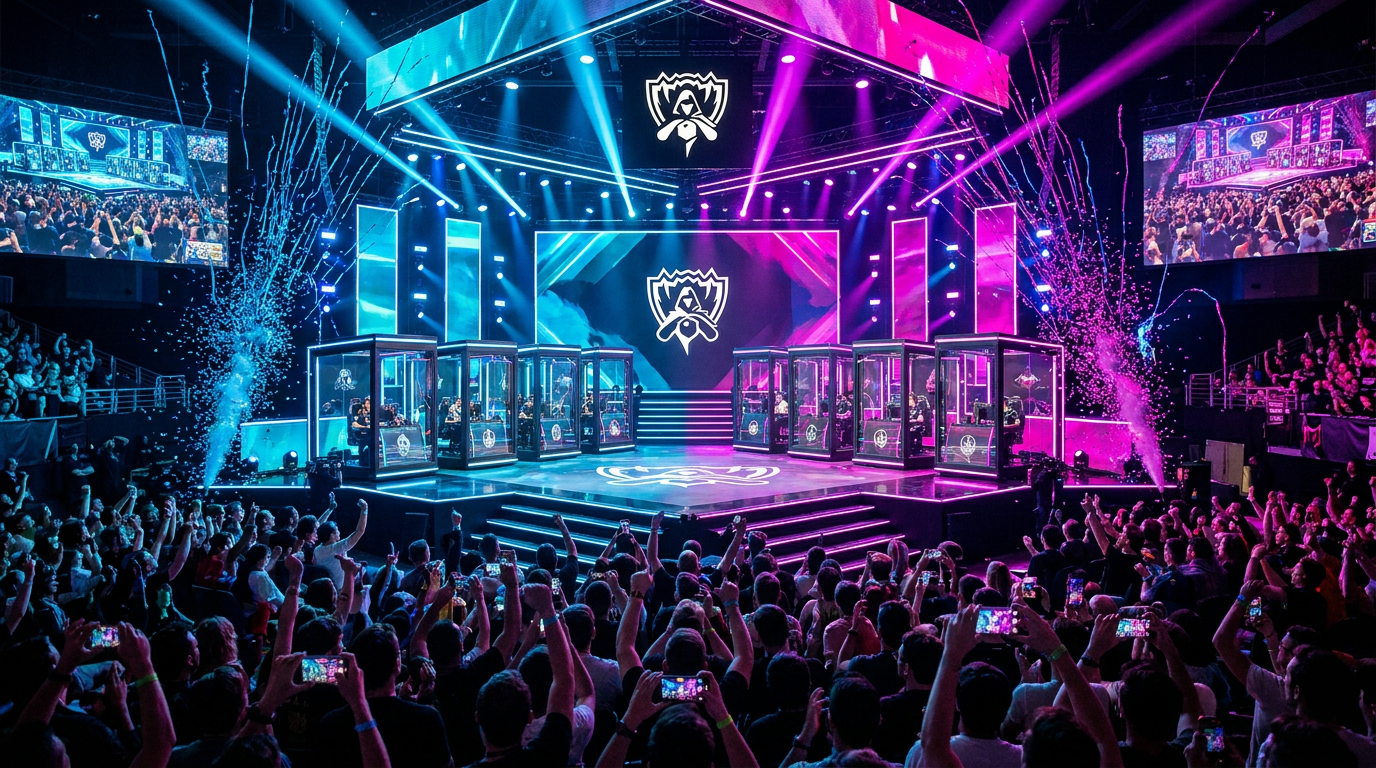
- Esports Executives
- Argue that the pivot to media and creator-led models was necessary to survive the VC drought, focusing on diversified revenue streams over pure competitive winnings.
- Content Creators
- Value the shift toward co-streaming and community-driven events, arguing that authentic personalities drive engagement better than sterile corporate broadcasts.
- Traditional Analysts
- Remain cautiously optimistic but warn that esports still relies too heavily on publisher subsidies and sponsorship dollars compared to traditional media rights deals.
What's not represented
- · Venture Capitalists
- · Grassroots Amateur Players
Why this matters
The stabilization of the esports industry secures the future of a multi-billion dollar entertainment sector, ensuring that millions of fans worldwide will continue to see high-quality tournaments and that careers in competitive gaming remain viable.
Key points
- The esports industry has rebounded from the financial struggles of 2023-2024.
- Organizations are achieving profitability by pivoting to creator-led media models.
- GameSquare expanded its gross margins to 45.9% after restructuring FaZe Clan.
- Co-streaming programs are replacing traditional, centralized tournament broadcasts.
- Mobile esports titles are breaking global viewership records, driven by short-form video platforms.
For the past three years, the dominant narrative surrounding competitive gaming was one of financial collapse. The so-called "esports winter" of 2023 and 2024 saw venture capital dry up, massive organizations shutter their doors, and critics declare the industry a burst bubble.[6]
But halfway through 2026, the landscape looks fundamentally different. The industry is no longer just surviving; it is maturing. By pivoting away from pure competitive winnings and embracing creator-led media models, esports has finally found the blueprint for sustainable profitability.[6]
The most striking evidence of this turnaround comes from GameSquare, the publicly traded parent company of the iconic gaming brand FaZe Clan. For years, esports organizations chased a business model that simply didn't work, burning cash on inflated player salaries while struggling to monetize their massive fanbases.[1]
GameSquare took a radically different approach. After acquiring FaZe Clan in 2024, the company split the organization in two: a creator-led IP company and a dedicated competitive roster. By the end of 2025, GameSquare hit a milestone the industry had been chasing for a decade—posting its first-ever quarter of operating profitability.[1]
The financial metrics signal a business that is finally growing up. Revenue more than doubled year-over-year to $18.5 million, but more importantly, gross margins expanded from 25.8% to 45.9%. This leap proves that esports organizations can thrive when positioned as next-generation media companies rather than traditional sports teams.[1]

A key driver of this newfound sustainability is the total convergence of competitive esports with broader gaming entertainment. It is no longer just about the teams and the matches; it is about the creators, the influencers, and the community-driven content surrounding the events.[4][6]
This shift is evident in how major tournaments are now broadcast. In June 2026, the Esports Foundation launched a $2 million Creator Program for the upcoming Esports World Cup in Paris, targeting 5,000 independent creators across multiple platforms.[4]
This shift is evident in how major tournaments are now broadcast.
The strategy acknowledges a fundamental change in media consumption. As Wasae Imran, Director of Broadcast & Distribution at the Esports Foundation, noted, audiences no longer want to watch a sterile, centralized broadcast. They want to choose their own experience and watch alongside creators they already trust.[4]
Co-streaming—where independent influencers broadcast the matches with their own commentary—has become the new industry standard. It transforms a traditional tournament into a massive, decentralized digital festival, driving unprecedented engagement without requiring organizations to shoulder the entire broadcast cost.[4][6]

Alongside the creator-led revolution, the explosive growth of mobile esports has provided the industry with massive new audiences. Once considered a niche category, mobile gaming has officially crossed the threshold into a core pillar of global sports entertainment in 2026.[2]
The numbers are staggering. The recent Mobile Legends: Bang Bang (MLBB) M7 World Championship shattered records, peaking at 5.68 million concurrent viewers. This milestone made it the most-watched mobile esports tournament ever and the fourth most-watched event in the history of competitive gaming.[3]
This surge is heavily fueled by platforms like TikTok Live, whose short-form algorithms are pulling massive new audiences directly into live matches. By bypassing traditional streaming bottlenecks, mobile esports is reaching demographics that legacy PC titles simply couldn't touch.[2]

Challenges certainly remain. While the top tier of the industry is stabilizing, mid-level organizations still face financial hurdles. Furthermore, the geopolitical complexities of international events—highlighted by the IOC's recent pause on its Saudi-partnered Olympic Esports Games—show that institutional alignment is still a work in progress.[5]
Yet, the overall trajectory of the industry in 2026 is undeniably positive. Sustainability, structural resilience, and fan-centric design have replaced the speculative hype of the previous decade.[6]
By empowering creators, embracing mobile accessibility, and demanding financial discipline, competitive gaming has built a foundation that works. The esports winter is officially over, and the industry that emerged is stronger, smarter, and finally built to last.[6]
How we got here
2023–2024
The "Esports Winter" sees major organizations fold and venture capital funding dry up.
March 2024
GameSquare acquires FaZe Clan, beginning a structural reorganization of the brand.
Late 2025
GameSquare posts its first quarter of operating profitability, proving the new model works.
Early 2026
The MLBB M7 World Championship breaks mobile viewership records with 5.68 million peak viewers.
June 2026
The Esports Foundation launches a $2 million co-streaming program for the 2026 Esports World Cup.
Viewpoints in depth
Esports Executives
Focus on diversified revenue and media models as the key to long-term survival.
Industry leaders argue that the "esports winter" was a necessary correction. By forcing organizations to abandon the traditional sports model—which relied heavily on winning tournaments and selling merchandise—teams were pushed to become agile media companies. Executives point to GameSquare's margin expansion as proof that integrating creator tools, analytics, and diversified IP is the only sustainable path forward.
Content Creators
Value co-streaming and community-driven broadcasts over sterile corporate productions.
For independent streamers and influencers, the shift toward co-streaming represents a democratization of esports broadcasting. Creators argue that modern audiences crave authenticity and interaction, which traditional desk-analyst broadcasts fail to provide. By allowing creators to co-stream major events, tournament organizers are tapping into pre-existing, highly engaged communities rather than trying to build an audience from scratch.
Traditional Analysts
Remain cautiously optimistic but warn of lingering structural vulnerabilities.
While acknowledging the recent financial milestones, traditional sports and media analysts caution that esports still lacks the massive, guaranteed media rights deals that sustain leagues like the NFL or Premier League. They warn that the industry remains heavily dependent on game publishers subsidizing the ecosystem and that the mid-tier competitive scene is still financially precarious compared to the top-heavy success stories.
What we don't know
- Whether mid-tier esports organizations can replicate the profitability models of massive brands like FaZe Clan.
- How the IOC will ultimately integrate esports into the Olympic movement following the pause of the Saudi-partnered games.
- If mobile esports can achieve the same level of cultural penetration in North America as it has in Asia.
Key terms
- Co-streaming
- When independent content creators broadcast a live tournament on their own channels, adding their own commentary and interacting directly with their audience.
- Operating Profitability
- A financial metric indicating that a company's core business operations generate enough revenue to cover all of its operating expenses.
- Mobile Esports
- Competitive gaming played exclusively on smartphones or tablets, highly popular in Asian and emerging markets.
Frequently asked
Why did so many esports teams struggle recently?
Many organizations relied on unsustainable venture capital and inflated player salaries without generating enough direct revenue to cover their operating costs.
How did FaZe Clan become profitable?
Parent company GameSquare split the creator-led IP from the competitive roster and diversified into a broader media and technology company, drastically improving profit margins.
What is the biggest esports game right now?
While PC titles like League of Legends remain massive, mobile games like Mobile Legends: Bang Bang are setting new viewership records globally, recently hitting 5.68 million peak viewers.
Sources
Source coverage
6 outlets
3 viewpoints surfaced






[1]ESTAEsports Executives
The Blueprint for a Profitable Esports Business Is Here
Read on ESTA →[2]Esports ChartsTraditional Analysts
Mobile esports officially taking over the world in 2026
Read on Esports Charts →[3]Esports Awards
MLBB M7 Championship Is The Fourth Biggest Esport Event Ever
Read on Esports Awards →[4]EE GamingContent Creators
Esports Foundation opens 2026 co-streaming Creator Program with $2m rewards pool
Read on EE Gaming →[5]Sheep EsportsTraditional Analysts
South Korea eyes the inaugural Olympic Esports Games
Read on Sheep Esports →[6]Factlen Editorial TeamEsports Executives
Synthesis by Factlen editorial team
Read on Factlen Editorial Team →

More in sports
See all 10 stories →NWSL Expansion
NWSL Shatters Attendance Records as Utah Royals Mount Historic 10-Game Unbeaten Streak
7 sources
Injury
Ilia Topuria Avoids Surgery for Orbital Fractures Following UFC Freedom 250 Title Bout
9 sources
Standings
UFC Championship Picture: Gaethje and Gane Claim Gold as Standings Reshuffle
8 sources
US Cricket
Major League Cricket Launches Season 4 as US Infrastructure Boom Accelerates
8 sources
Every angle. Every day.
Get sports stories with full source coverage and perspective breakdowns delivered to your inbox.