
The 350-Home Rule: How the New Federal Housing Act Bans Large Corporate Investors From Buying Single-Family Homes
A sweeping new bipartisan law prohibits Wall Street firms from purchasing existing single-family homes, aiming to level the playing field for everyday buyers and small-scale investors.
By Dev Anand

Share this story
In a rare display of overwhelming bipartisan consensus, the federal government has fundamentally rewritten the rules of American real estate. The 21st Century ROAD to Housing Act, which recently passed the House by a margin of 358-32 and the Senate by 85-5, has officially been signed into law. The legislation marks the most significant federal intervention in the single-family housing market in modern history, aiming to cool down an affordability crisis that has locked millions of families out of homeownership.[1]
The centerpiece of the new legislation is the '350-Home Rule,' a direct regulatory strike at the Wall Street firms, private equity funds, and large institutional investors that have aggressively purchased American starter homes over the last decade. Following the 2008 financial crisis, corporate consolidation of single-family neighborhoods accelerated rapidly, transforming traditionally owner-occupied blocks into permanent rental portfolios. This law explicitly targets those mega-landlords, fundamentally altering their acquisition strategies and forcing them to pivot away from competing directly with everyday buyers for existing properties.
The core mechanism of the ban is straightforward but carries severe implications for the real estate industry: any for-profit entity that already controls 350 or more single-family homes is now federally prohibited from purchasing any additional existing single-family properties.
This threshold applies whether the entity owns the homes directly or indirectly through various investment vehicles, effectively capping the size of the nation's largest corporate landlords. By drawing a hard line at 350 properties, the federal government is actively preventing mega-funds from further depleting the limited supply of existing homes on the market.
Under the new law, the definition of a 'single-family home' is surprisingly broad and protective of entry-level real estate. It includes traditional detached houses as well as structures with up to two dwelling units. This means that duplexes—long a favorite target for both corporate portfolios and small-scale 'house hackers' looking to offset their mortgage with rental income—are also protected from institutional consolidation. Notably, manufactured homes are explicitly excluded from the purchasing ban, leaving that specific, highly distinct sector of the housing market open to continued corporate investment and management.
To ensure strict compliance, the legislation arms federal regulators with massive financial teeth. Violations of the purchasing ban trigger staggering civil penalties of up to $1 million per infraction, or three times the purchase price of the home—whichever figure is greater.
This punitive structure is specifically designed to completely erase any potential profit margin a corporate buyer might hope to achieve by quietly flouting the rules. By tying the penalty directly to a multiple of the asset's value, lawmakers have made the risk of illegal acquisitions mathematically unjustifiable for even the most well-capitalized Wall Street funds.
For everyday homebuyers, DIY renovators, and small-scale local landlords, the legislation removes a massive, often insurmountable competitive hurdle. During the pandemic-era housing boom, corporate buyers frequently utilized algorithmic purchasing software and all-cash offers to outbid traditional families. Regular buyers, who typically require 30-day mortgage contingencies, standard home inspections, and careful budgeting, found themselves routinely pushed to the sidelines by institutional funds capable of closing on a property in a matter of days. This dynamic artificially inflated neighborhood prices and stripped communities of their accessible starter homes.
By sidelining these mega-investors, the new law effectively ring-fences the existing housing inventory for individual buyers and mom-and-pop investors. Small-scale real estate investors—those who might own three or four rental properties in their local community—are entirely exempt from the 350-home cap.
This creates a unique structural advantage for local buyers, allowing them to negotiate for foreclosures, fixer-uppers, and entry-level homes without the looming threat of a billion-dollar private equity firm swooping in at the last minute. For the DIY community, this means a return to an era where sweat equity and local market knowledge actually pay off.
Despite the strict purchasing limits moving forward, the law does not force a massive corporate sell-off. Institutional investors are not required to divest the portfolios they have already accumulated prior to the bill's enactment. This means that the hundreds of thousands of single-family homes currently operating as corporate-owned rentals across the country will remain in corporate hands.
Lawmakers opted against forced divestiture to avoid flooding the market with inventory in a chaotic manner, which could have triggered unintended economic shocks, destabilized local property tax bases, or suddenly displaced millions of current renters.
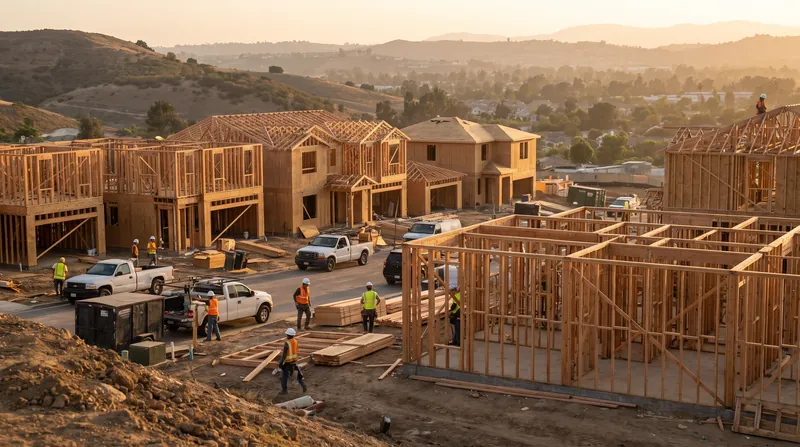
To ensure the legislation doesn't accidentally stifle the creation of new housing, lawmakers included a critical 'build-to-rent' exemption. Large investors are still permitted to purchase or build brand-new single-family homes specifically intended for the rental market. This carve-out recognizes that institutional capital can play a highly productive role in the economy when it is directed toward funding new construction. By exempting new builds, the federal government is effectively forcing Wall Street to add to the national housing supply rather than simply hoarding the existing stock of mid-century starter homes.
This specific build-to-rent carve-out was the subject of intense negotiation between the House and Senate before the final vote. The original Senate version of the bill included a strict timeline, requiring corporations to sell these newly built rental properties to individual homebuyers after seven years. However, the final House-amended version stripped that resale requirement entirely. As a result, institutional firms are now allowed to hold and operate their new build-to-rent developments indefinitely, securing a permanent rental revenue stream while still complying with the overarching goal of generating new housing units.
Beyond the corporate purchasing ban, the ROAD to Housing Act attacks the supply side of the affordability crisis by aggressively cutting bureaucratic red tape. The law streamlines National Environmental Policy Act (NEPA) reviews for certain housing projects, reclassifying them as 'categorical exclusions.' This highly technical change removes the requirement for exhaustive, multi-year environmental impact statements for projects that do not materially alter existing environmental conditions. By bypassing these notorious bottlenecks, the federal government is making it significantly cheaper and faster for builders to break ground on new residential developments.
By reducing this federal environmental review burden, the law aims to accelerate infill development and the rehabilitation of older, vacant homes within existing urban footprints. For local developers and DIY flippers navigating complex local zoning delays, this streamlining provides much-needed relief. It empowers communities to quickly convert empty lots into usable housing, ensuring that the push for more inventory isn't endlessly stalled by administrative paperwork and bad-faith neighborhood opposition. This aligns perfectly with the broader goal of empowering local actors to solve their own localized housing shortages.[1]
The legislation also establishes a new renter outreach resource within the Department of Housing and Urban Development (HUD). This dedicated office is designed to assist tenants living in corporate-owned properties with landlord disputes, maintenance issues, and lease violations. By providing a centralized federal resource, the government aims to help renters navigate the often-faceless bureaucracy of mega-landlords. Furthermore, this HUD office will serve as a vital data-collection hub, helping regulators monitor ongoing corporate compliance with federal housing standards and ensuring that institutional landlords maintain the properties they are permitted to keep.
While the purchasing ban is undeniably historic, it is not permanent. The 350-Home Rule includes a built-in sunset provision and will automatically self-terminate 15 years after enactment. Lawmakers designed this as a decade-and-a-half cooling-off period for the overheated housing market. This 15-year window provides enough time for a new generation of families to achieve homeownership, stabilize their neighborhoods, and build generational equity, while leaving the door open for future Congresses to reassess the appropriate role of institutional capital in residential real estate once the current supply crisis has abated.
Real estate analysts and legal experts are already anticipating how the market will adapt to these unprecedented restrictions. Some industry watchers warn that the 350-home threshold might encourage highly creative corporate restructuring.
There is widespread speculation that massive investment funds might attempt to spin off their portfolios into dozens of smaller, legally distinct shell companies, each carefully calibrated to own exactly 349 homes. While the law includes language targeting indirect ownership, the true test of the legislation will be how aggressively federal regulators pursue and dismantle these complex corporate evasion tactics.
Ultimately, the law represents a rare moment of Washington consensus, uniting lawmakers across the political spectrum around a shared, tangible goal. By returning the American starter home to the American family, and shifting corporate capital toward building new supply rather than hoarding existing stock, the 21st Century ROAD to Housing Act fundamentally rebalances the real estate landscape.
For the first time in a generation, the individual homebuyer, the local flipper, and the neighborhood landlord finally have the upper hand, free to invest in their communities without competing against the limitless pockets of Wall Street.[1]
Key points
- The new law bans for-profit entities with 350 or more single-family homes from buying existing properties.
- Violations carry a penalty of up to $1 million or three times the purchase price of the home.
- A 'build-to-rent' exemption allows corporations to continue building and owning brand-new housing developments.
- The legislation also streamlines environmental reviews to speed up the construction of new residential projects.
What we don’t know
- Whether large institutional investors will exploit loopholes by creating multiple smaller shell companies that each own 349 homes.
- How quickly the removal of corporate buyers will translate to measurable price drops for individual homebuyers.
- Whether the build-to-rent exemption will lead to a massive surge in corporate-owned new construction neighborhoods.
How we got here
2010–2022
Institutional investors rapidly accelerate their purchases of single-family homes, heavily targeting affordable starter properties.
March 2026
The US Senate passes the initial version of the 21st Century ROAD to Housing Act with an 89-10 vote.
May 2026
The House amends the bill, removing a forced seven-year resale requirement for corporate build-to-rent properties.
June 2026
The final bipartisan agreement passes both chambers overwhelmingly and is signed into law.
- First-Time Buyers & Small Investors
- Views the ban as a necessary intervention to stop all-cash corporate buyers from outbidding local families and mom-and-pop landlords.
- Housing Policy Advocates
- Focuses on the law's ability to cut red tape, speed up new construction, and protect tenants in existing corporate-owned properties.
- Corporate Legal Analysts
- Analyzes the compliance risks, the build-to-rent exemptions, and the potential for corporate restructuring to navigate the new federal caps.
Perspectives this story doesn't cover
- Current renters in corporate-owned homes
- Local zoning boards and municipal planners
Sources
Source coverage
1 outlets
3 viewpoints surfaced

- [1]The Bend BulletinHousing Policy Advocates
Editorial: Bipartisan housing bill is a win for Americans
Read on The Bend Bulletin →
More in Home
See all →Land Use
How AI Data Centers Are Reshaping the Real Estate Market and Land Use
6 sources

Appliance Electrification
California Zero-Emission Appliance Mandate Takes Effect: The End of Natural Gas in New Homes and Replacements
4 sources

Smart Home Tech
Smart Home Market Shifts Focus to Energy Management and Universal Interoperability with Matter Protocol
6 sources

Housing Market
Mortgage 'Lock-In' Effect Fuels Remodeling Boom, Outpacing New Home Construction in 2026
1 sources

Comments
Every angle. Every day.
Get Home stories with full source coverage and perspective breakdowns, free every day.