
Stem Cell Transplant Halts Severe Autoimmune Disease for Over 15 Years in Landmark Follow-Up
Two patients with a devastating neurological autoimmune disorder have achieved a 15-year drug-free remission after an experimental donor stem-cell transplant completely reset their immune systems.
By Factlen Editorial Team
- Clinical Researchers
- Focus on the unprecedented 15-year drug-free remission data and the need for larger trials.
- Transplant Specialists
- Emphasize the severe risks of allogeneic HSCT, arguing it must be reserved for highly refractory cases.
- Patient Advocacy Groups
- Highlight the life-changing impact of regaining mobility and dropping lifelong immunosuppressants.
- Immunologists
- Study the biological mechanism of erasing autoantibodies and rebuilding a self-tolerant immune system.
What's not represented
- · Health insurance providers evaluating the coverage of experimental cellular therapies.
- · Patients with less severe forms of NMOSD who manage their condition with standard drugs.
Why this matters
For decades, severe autoimmune diseases have been viewed as lifelong conditions requiring perpetual management with immunosuppressive drugs. This 15-year milestone proves that a complete biological reset is possible, offering a definitive blueprint for curing—rather than just treating—some of the most devastating immune disorders.
Key points
- Two patients with Neuromyelitis Optica Spectrum Disorder (NMOSD) have achieved over 15 years of remission.
- The patients received an allogeneic hematopoietic stem-cell transplant using donor cells.
- The treatment completely replaced their malfunctioning immune systems with healthy, self-tolerant cells.
- Pathogenic autoantibodies disappeared entirely following the procedure.
- Researchers caution that the transplant carries severe risks and should be reserved for refractory cases.
For decades, the medical consensus surrounding severe autoimmune diseases has been one of management, not cure. Patients with aggressive conditions are typically prescribed lifelong regimens of immunosuppressive drugs to keep their hyperactive immune systems at bay. But a landmark paper published in the journal Med has provided unprecedented evidence that a complete biological reset is possible. Researchers have detailed the cases of two individuals suffering from a devastating autoimmune condition who have remained entirely symptom-free for more than 15 years after receiving an experimental stem-cell transplant. The procedure effectively eradicated their malfunctioning immune systems and replaced them with healthy donor cells, halting the disease in its tracks.[1][2][5]
The patients in the study were diagnosed with Neuromyelitis Optica Spectrum Disorder (NMOSD), a rare and aggressive disease that specifically targets the central nervous system. In NMOSD, the body's immune system mistakenly produces autoantibodies—most commonly against a protein called aquaporin-4 (AQP4)—that attack the optic nerve and the spinal cord. This relentless assault leads to recurring, debilitating episodes of vision loss, severe eye pain, vomiting, and progressive weakness or paralysis in the limbs. While modern monoclonal antibodies and immunosuppressants can reduce the frequency of these attacks, they are not universally effective. For the two patients in this study, standard therapies had failed, leaving them facing a grim prognosis of accumulating disability.[1][3][4]
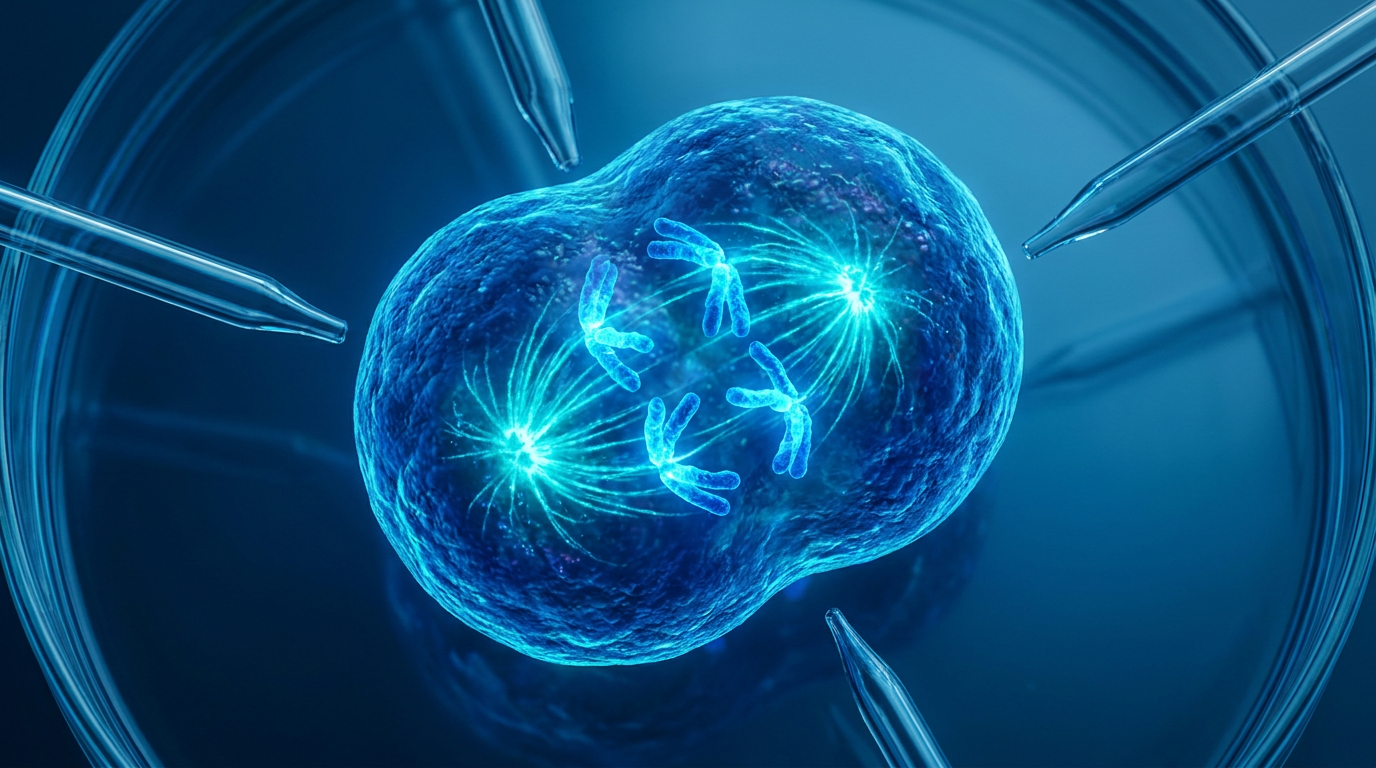
Faced with refractory disease, the medical team opted for a radical intervention: an allogeneic hematopoietic stem-cell transplant (HSCT). Unlike autologous transplants, which use a patient's own cleaned stem cells and have seen growing use in multiple sclerosis, an allogeneic transplant relies on blood-forming stem cells from a healthy donor. The rationale is profound. By using donor cells, doctors aim to completely replace the patient's defective immune architecture with a naive, self-tolerant immune system that harbors no cellular memory of the AQP4 autoantibodies. According to the study authors, this represents the first published use of an allogeneic transplant specifically for NMOSD.[2][4][7]

The protocol required a grueling preparation phase known as a conditioning regimen. Before the donor stem cells could be introduced, the patients' existing immune systems had to be systematically dismantled. Doctors administered a potent combination of chemotherapy drugs, including fludarabine and treosulfan, alongside B-cell depleting antibody treatments. This aggressive chemical sweep served a dual purpose: it eradicated the rogue immune cells responsible for the autoimmune attacks, and it prevented the patients' bodies from rejecting the incoming donor cells. Only after this biological slate was wiped clean were the healthy stem cells infused into the bloodstream.[1][2][4]
The first patient, a man suffering from a severe manifestation of NMOSD, received his transplant in 2009 using stem cells donated by his sister. The following year, a woman battling the same relentless condition underwent the procedure using stem cells from a matched, unrelated donor. Following the infusions, both patients required careful monitoring and additional medications to prevent graft-versus-host disease (GVHD), a perilous complication where the newly engrafted donor immune cells recognize the recipient's tissues as foreign and launch a systemic attack. Navigating this immediate post-transplant period is historically the most dangerous phase of allogeneic HSCT.[1][5][7]
The first patient, a man suffering from a severe manifestation of NMOSD, received his transplant in 2009 using stem cells donated by his sister.
The long-term results, however, have exceeded the most optimistic projections of the clinical team. More than a decade and a half later, neither patient has experienced a single relapse. Immunological assays confirm the complete disappearance of the pathogenic AQP4 antibodies that once ravaged their nervous systems. The clinical improvements have been equally dramatic. The male patient's neurological function recovered to the point where he was able to resume a normal life and start a family. The female patient regained significant motor function in her arms and has lived for 15 years without needing any disease-modifying medications to manage her symptoms.[1][2][6]

Immunologists point to these outcomes as proof-of-concept for the "immune reset" hypothesis in severe autoimmunity. The donor-derived stem cells successfully engrafted in the bone marrow and began producing a steady stream of healthy, naive white blood cells. Because these new cells matured in the recipient's body without the genetic or environmental triggers that sparked the original disease, they developed normal tolerance to the body's own tissues. The treatment did not merely suppress the autoimmune response; it fundamentally replaced the biological machinery that was generating it.[2][4][7]
Despite the triumphant 15-year milestone, neurologists and transplant specialists urge caution, emphasizing that allogeneic HSCT is not a first-line therapy. The procedure carries a substantial mortality risk, primarily from opportunistic infections during the period when the immune system is absent, and from severe graft-versus-host disease. The intense toxicity of the conditioning chemotherapy also poses long-term risks to organ function and fertility. Consequently, experts argue that this aggressive approach must be strictly reserved for patients with highly refractory, life-threatening autoimmune diseases who have exhausted all conventional pharmacological options.[3][4][7]
The implications of this study extend far beyond the estimated 1 to 2 per 100,000 people who suffer from NMOSD. The success of allogeneic HSCT in achieving durable, drug-free remission provides a vital data point for researchers investigating cellular therapies for other intractable autoimmune conditions, including severe systemic lupus erythematosus, systemic sclerosis, and advanced multiple sclerosis. As the scientific community digests the findings published in Med, the next critical step will be organizing larger, multi-center clinical trials to standardize the conditioning regimens, refine patient selection, and definitively weigh the curative potential against the inherent risks of the procedure.[1][2][4][7]

The financial and logistical barriers to scaling this therapy are also significant. Allogeneic stem-cell transplants require sophisticated cellular processing facilities, extensive donor matching registries, and weeks of specialized inpatient care in sterile isolation wards. The upfront cost of the procedure and the associated hospitalization can run into the hundreds of thousands of dollars. However, health economists note that when compared to the cumulative expense of lifelong monoclonal antibody infusions and the economic burden of severe disability, a one-time curative transplant could eventually prove cost-effective for healthcare systems.[4][7]
The evolution of stem-cell therapies for autoimmune diseases is rapidly accelerating. While this 15-year follow-up highlights the power of unmodified donor stem cells, researchers are already exploring next-generation approaches, such as CAR-T cell therapy, which genetically engineers a patient's own immune cells to hunt down and destroy the specific B-cells producing autoantibodies. These targeted therapies aim to deliver the "immune reset" benefits of a transplant without the severe toxicity of high-dose chemotherapy or the risk of graft-versus-host disease.[4][7]
For the patients who participated in this pioneering trial, the abstract debates over cellular engineering and health economics are secondary to the profound reality of their daily lives. They entered the clinic facing a progressive loss of mobility, vision, and independence. Today, they stand as living proof that the human immune system can be entirely rebooted. As the medical community works to make these interventions safer and more accessible, the 15-year remission of these two individuals serves as a beacon of hope, signaling a future where severe autoimmune diseases are not just managed, but definitively cured.[1][4][5][6]
How we got here
2009
A male patient with severe NMOSD receives an allogeneic stem-cell transplant from his sister.
2010
A female patient with the same condition undergoes the procedure using stem cells from an unrelated donor.
2021
Clinical trials for autologous stem-cell transplants in other autoimmune diseases like MS show growing success, building interest in cellular therapies.
June 2026
Researchers publish a 15-year follow-up in the journal Med, confirming both patients remain completely free of the disease.
Viewpoints in depth
Clinical Researchers
Advocating for the expansion of cellular therapies based on long-term remission data.
For clinical researchers, the 15-year milestone published in Med represents a paradigm shift in how severe autoimmune diseases are conceptualized. Rather than viewing conditions like NMOSD as lifelong sentences requiring perpetual pharmacological management, these scientists argue that a definitive cure is biologically possible. They point to the complete eradication of AQP4 autoantibodies as proof that the immune system can be fundamentally rebooted. Consequently, this camp is urgently calling for larger, multi-center clinical trials to standardize conditioning regimens and prove efficacy across a broader patient population.
Transplant Specialists
Urging caution regarding the severe toxicity and mortality risks of the procedure.
While acknowledging the remarkable outcomes, transplant specialists emphasize that allogeneic hematopoietic stem-cell transplantation remains one of the most aggressive and dangerous procedures in modern medicine. They highlight the perilous period immediately following the transplant, where patients have zero immune defense and are highly susceptible to lethal opportunistic infections. Furthermore, the risk of graft-versus-host disease (GVHD)—where the donor cells attack the recipient's organs—requires meticulous management. This camp insists that until the safety profile improves, allogeneic HSCT must be strictly reserved as a salvage therapy for patients who have failed all other conventional treatments.
What we don't know
- Whether this allogeneic transplant protocol will be equally effective and safe in a larger, more diverse cohort of NMOSD patients.
- How the long-term cost-effectiveness of a one-time curative transplant compares to decades of expensive monoclonal antibody treatments.
- If the success seen in NMOSD can be directly replicated in other severe autoantibody-driven diseases like systemic lupus erythematosus.
Key terms
- Allogeneic HSCT
- A hematopoietic stem-cell transplant that uses healthy blood-forming stem cells from a donor, rather than the patient's own cells.
- NMOSD
- Neuromyelitis Optica Spectrum Disorder, a rare autoimmune disease characterized by inflammation of the optic nerve and spinal cord.
- AQP4 Antibodies
- Autoantibodies that mistakenly target aquaporin-4, a protein in the central nervous system, driving the destructive attacks in NMOSD.
- Conditioning Regimen
- The intensive chemotherapy and antibody treatment given before a transplant to wipe out the patient's existing immune system.
- Graft-versus-host disease (GVHD)
- A potentially severe complication of allogeneic transplants where the newly engrafted donor immune cells attack the recipient's tissues.
Frequently asked
What is Neuromyelitis Optica Spectrum Disorder (NMOSD)?
NMOSD is a rare, severe autoimmune disease where the body's immune system mistakenly attacks the optic nerve and the spinal cord, leading to vision loss and paralysis.
How does a stem-cell transplant cure an autoimmune disease?
The procedure uses high-dose chemotherapy to destroy the patient's malfunctioning immune system, then infuses healthy donor stem cells to grow a new, self-tolerant immune system that does not attack the body.
Why is this treatment not used for everyone with an autoimmune disease?
Allogeneic stem-cell transplants carry severe risks, including lethal infections and graft-versus-host disease. They are currently reserved only for patients whose conditions are life-threatening and unresponsive to standard medications.
Sources
Source coverage
7 outlets
4 viewpoints surfaced






[1]NatureClinical Researchers
Stem cells banish severe autoimmune disease for 15 years
Read on Nature →[2]MedClinical Researchers
Durable clinical remissions after allogeneic hematopoietic stem cell transplantation for neuromyelitis optica
Read on Med →[3]National Institutes of HealthImmunologists
Neuromyelitis optica spectrum disorders: from basic research to clinical perspectives
Read on National Institutes of Health →[4]Factlen Editorial TeamTransplant Specialists
Synthesis by Factlen editorial team
Read on Factlen Editorial Team →[5]QazinformPatient Advocacy Groups
Rare autoimmune disease halted for 15 years after stem-cell transplant
Read on Qazinform →[6]Positron TodayPatient Advocacy Groups
Stem cells banish severe autoimmune disease for 15 years
Read on Positron Today →[7]Current Allergy and Asthma ReportsTransplant Specialists
Stem Cell Therapy as a Treatment for Autoimmune Disease
Read on Current Allergy and Asthma Reports →
Every angle. Every day.
Get science stories with full source coverage and perspective breakdowns delivered to your inbox.