
State and Federal Lawmakers Propose Dozens of New Bills in Major Right-to-Repair Push for Cars and Equipment
A massive 2026 legislative wave is dismantling manufacturer monopolies, granting consumers and independent shops the legal right and digital tools to repair their own vehicles and devices.
By Derya Kaplan

In short
- The FTC finalized a landmark 10-year settlement forcing John Deere to share diagnostic software with farmers.
- Texas will enact a sweeping right-to-repair law for consumer electronics on September 1, 2026.
- The bipartisan REPAIR Act (H.R. 1566) is advancing in Congress to secure data access for independent auto mechanics.
On July 8, 2026, the Federal Trade Commission finalized a landmark settlement forcing John Deere to hand over its proprietary diagnostic software to independent mechanics and farmers. This regulatory action is the crest of a massive 2026 legislative push, with dozens of right-to-repair bills advancing across the country to break manufacturer monopolies on parts and data.[1][4][6]
For the everyday consumer, these abstract legal battles dictate the practical cost of ownership. When a modern device or vehicle breaks, the manufacturer often holds the exclusive digital keys required to fix it, forcing owners into expensive authorized service networks. The current legislative push aims to dismantle these artificial barriers, ensuring that buyers actually control the hardware they purchase.[4][5]
The momentum is accelerating rapidly at the state level. On September 1, 2026, Texas will enact House Bill 2963, a sweeping law that requires manufacturers to provide parts, tools, and manuals to consumers and independent shops for digital electronics. For the average household, this means avoiding forced upgrades and saving hundreds of dollars annually by fixing what they already own rather than replacing it.[3][6]
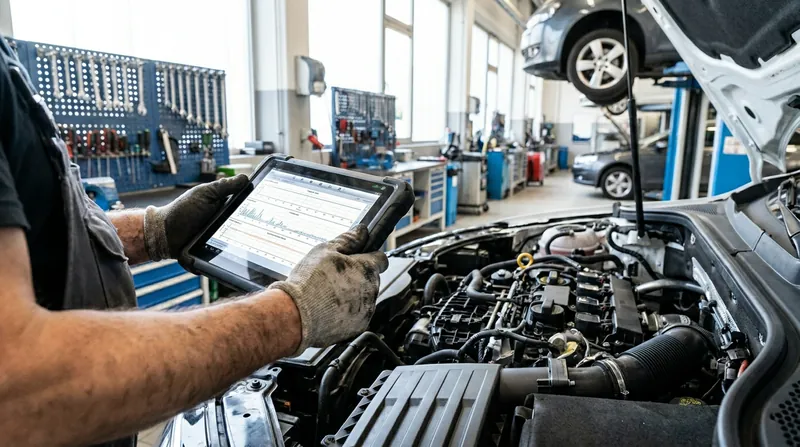
While the Texas law exempts motor vehicles, the automotive sector remains the most fiercely contested battleground. Modern cars are essentially rolling computers, and independent collision repair shops report spending hours trying to bypass software locks just to recalibrate sensors or clear fault codes after a physical repair. Without the manufacturer's specific software tool, a mechanical fix often leaves the vehicle disabled.[1][5][6]
The financial stakes for drivers are substantial. Consumers currently spend significantly more on average at dealerships than at independent service shops. Right-to-repair advocates argue that preserving independent repair channels is critical for keeping maintenance affordable, especially as vehicles become increasingly complex and software-driven.[4][6]
To prevent a fragmented state-by-state patchwork, federal lawmakers are pushing the Right to Equitable and Professional Auto Industry Repair (REPAIR) Act, designated as H.R. 1566. The bipartisan legislation, which advanced through a House subcommittee earlier this year, would mandate that automakers provide independent facilities with direct access to vehicle-generated data, diagnostic codes, and calibration tools.[2][6]
Automakers, however, argue that the current system is already functioning well and that further legislation is unnecessary. Industry representatives maintain that manufacturers routinely provide independent shops with the necessary service information, parts, and diagnostic data needed to complete repairs safely.[6]
These manufacturers also raise significant security concerns regarding open data access. They caution that unfettered, unregulated access to a vehicle's core telematics and software systems could introduce severe cybersecurity vulnerabilities, potentially compromising passenger safety and vehicle integrity on public roads.[5][6]
Despite these industry warnings, the regulatory tide is decisively shifting toward consumer access. The FTC's ten-year consent order against Deere sets a powerful precedent, explicitly barring the company from retaliating against owners who use third-party diagnostic tools instead of authorized dealership service.[1]
Legal analysts note that the Deere settlement serves as a warning shot across multiple industries. Any manufacturer of connected, software-dependent products—from home appliances to electric vehicles—is now facing a landscape where federal regulators and state attorneys general are willing to aggressively enforce antitrust laws to protect repair markets.[1][6]
For the everyday buyer, this legislative and regulatory wave translates directly to more choices and lower long-term maintenance bills. Whether it's replacing a smartphone battery in Dallas or recalibrating a bumper sensor in Ohio, the 2026 right-to-repair push is systematically dismantling the digital barriers that force consumers back to the dealership.[3][4]
Viewpoints in depth
Consumer Advocates & Independent Shops
Argue that repair monopolies artificially inflate costs and strip owners of their property rights.
Independent mechanics and consumer rights groups argue that purchasing a product should grant the buyer full ownership, including the right to maintain it. They point out that modern software locks—such as parts pairing—are designed not for safety, but to eliminate competition. By forcing owners back to the dealership for routine sensor recalibrations, manufacturers artificially inflate maintenance costs and drive independent shops out of business.
Original Equipment Manufacturers (OEMs)
Warn that unfettered access to core software compromises safety, emissions compliance, and cybersecurity.
Automakers and electronics manufacturers maintain that modern devices are highly complex ecosystems where hardware and software are deeply integrated. They argue that restricting access to core diagnostic tools is necessary to prevent untrained individuals from compromising vehicle safety systems, altering emissions controls, or introducing cybersecurity vulnerabilities. From their perspective, authorized networks ensure quality control and protect the integrity of the product.
Federal & State Regulators
Focus on breaking up aftermarket monopolies to lower the cost of living for consumers.
Regulators like the FTC are increasingly viewing repair restrictions through the lens of antitrust law. By treating the repair market as a distinct aftermarket, agencies are taking aggressive action against companies that use their dominant market position to lock out independent competition. For policymakers, right-to-repair legislation is a direct mechanism to lower household expenses and reduce electronic waste.
- Consumer Advocates & Independent Shops
- Argue that repair monopolies artificially inflate costs and strip owners of their property rights.
- Original Equipment Manufacturers (OEMs)
- Warn that unfettered access to core software compromises safety, emissions compliance, and cybersecurity.
- Regulators & Policymakers
- Focus on breaking up aftermarket monopolies to lower the cost of living for consumers.
Perspectives this story doesn't cover
- Cybersecurity experts evaluating the actual risk of open telematics access.
Sources
Source coverage
6 outlets
3 viewpoints surfaced






- [1]Federal Trade CommissionRegulators & Policymakers
FTC, States Secure Settlement with Deere & Company, Advancing Farmers' Right to Repair
Read on Federal Trade Commission → - [2]Congress.govRegulators & Policymakers
H.R.1566 - Right to Equitable and Professional Auto Industry Repair Act
Read on Congress.gov → - [3]Texas Legislature OnlineRegulators & Policymakers
Texas House Bill 2963
Read on Texas Legislature Online → - [4]WikipediaConsumer Advocates & Independent Shops
Right to repair
Read on Wikipedia → - [5]BritannicaOriginal Equipment Manufacturers (OEMs)
Right to repair
Read on Britannica → - [6]Factlen Editorial TeamConsumer Advocates & Independent Shops
Synthesis by Factlen editorial team
Read on Factlen Editorial Team →
More in Automotive & Transportation
See all →Right to Repair
House Committee Advances Bill to Codify Automotive Right-to-Repair and Open Diagnostic Data
5 sources
Right to Repair
House Committee Advances Federal REPAIR Act, Mandating Automaker Access to Vehicle Data for Independent Shops
6 sources
Right to Repair
House Committee Advances 'Right to Repair' Bill, But Critics Say It Fails to Address Modern Telematics Data Lockout
6 sources
Lubricant Shortage
Costco Rations Motor Oil as Global Lubricant Shortage Reaches Retail Shelves
5 sources
Comments
Every angle. Every day.
Get Automotive & Transportation stories with full source coverage and perspective breakdowns, free every day.