
Amended REPAIR Act Codifies Physical Diagnostics but Drops Wireless Telematics
Lawmakers have removed key wireless data provisions from the 2026 REPAIR Act, codifying older physical diagnostic rules but leaving the battle over modern vehicle telematics unresolved.

Share this story
The House Energy and Commerce Committee recently advanced the Motor Vehicle Modernization Act of 2026, a legislative package that includes an amended version of the Right to Equitable and Professional Auto Industry Repair (REPAIR) Act. However, the approved language represents a significant compromise. Lawmakers stripped out the bill's most contentious provisions regarding telematics and direct wireless access to vehicle data, opting instead to codify older, existing agreements between automakers and the independent repair industry.
The original REPAIR Act was designed to address the rapid digitization of the automotive industry. As vehicles increasingly rely on cellular connections to transmit diagnostic data directly to manufacturer servers, independent repair shops have warned that they are being locked out of the repair ecosystem. The initial bill would have mandated that automakers provide vehicle owners and their designees with direct, real-time access to this wireless data.
Instead, the amended legislation focuses on physical access. Section 202 of the bill formally enacts key provisions of a 2014 national memorandum of understanding (MOU) for light-duty vehicles weighing under 14,000 pounds. This historic agreement required participating automakers to provide independent repair facilities with the same diagnostic and repair information available to franchised dealerships, primarily accessed via the standardized, physical OBD-II port under the dashboard.
The legislation also makes portions of a separate 2015 MOU regarding heavy-duty vehicles enforceable under federal law. Crucially, Section 203 of the new bill empowers the Federal Trade Commission (FTC) to impose civil penalties on automakers that violate these physical information-sharing agreements, giving the older MOUs new regulatory teeth.
To understand the stakes of the removed telematics provisions, one must look at the mechanism of modern car repair. For decades, diagnosing a check-engine light involved plugging a handheld scanner into the vehicle's physical On-Board Diagnostics (OBD-II) port. This standardized interface allowed any mechanic with the right tool to read fault codes, monitor sensor data, and clear errors.
Today, the paradigm has shifted. Modern vehicles are essentially rolling computer networks, equipped with dozens of electronic control units (ECUs) that manage everything from battery thermal dynamics to advanced driver-assistance systems (ADAS). Rather than waiting for a mechanic to plug in a scanner, these vehicles continuously beam diagnostic data over cellular networks directly to the automaker's proprietary cloud servers—a technology known as telematics.
Independent repair advocates argue that physical OBD-II access is no longer sufficient. The Auto Care Association and the National Federation of Independent Business (NFIB) contend that automakers are increasingly routing critical diagnostic functions, software updates, and system recalibrations exclusively through these wireless channels. When a vehicle requires a software patch to resolve a transmission shudder, or an ADAS recalibration after a windshield replacement, independent shops often find themselves unable to perform the work without the manufacturer's wireless authorization.
The NFIB has urged Congress to reinsert the substantive telematics provisions back into the broader Highway Bill, warning that the current watered-down version puts small auto shops at a severe disadvantage. They argue that blocking access to wireless repair data forces consumers to endure longer wait times and higher costs at franchised dealerships, undermining market competition.
Conversely, automakers and their allied dealership networks strongly opposed the wireless data mandates. Organizations like the Alliance for Automotive Innovation argue that mandating open, third-party access to a vehicle's wireless network introduces severe cybersecurity vulnerabilities. Modern cars control critical physical systems—steering, braking, and acceleration—via software. Automakers maintain that tightly controlling who can wirelessly send commands to a vehicle is a necessary safeguard against malicious hacking.
Data privacy is another major friction point. Telematics systems do not just transmit engine fault codes; they can also broadcast location data, driving habits, and personal information synced from smartphones. Automakers argue that opening this data pipeline to thousands of independent shops and third-party app developers creates a massive privacy liability, complicating compliance with state and federal data protection laws.
The heavy-duty trucking sector has also weighed in against broad right-to-repair mandates. The American Truck Dealers (ATD) organization has actively lobbied against expanding the legislation, arguing that the existing 2015 MOU already ensures heavy-duty repair shops have adequate access to necessary parts and data. They view the scaled-back version of the REPAIR Act as a necessary boundary to protect intellectual property and vehicle integrity.
The legal landscape surrounding the right to repair is becoming increasingly complex. Beyond federal legislation, companies face a sophisticated framework of state consumer protection laws, antitrust scrutiny, and warranty regulations. The Magnuson-Moss Warranty Act already prohibits manufacturers from voiding warranties simply because a consumer used an independent mechanic or an aftermarket part, but the enforcement of these rules in the digital age remains highly contested.
The debate has also drawn attention from the highest levels of the executive branch. In late June 2026, the White House issued a Freedom to Fix presidential memorandum aimed at lowering consumer costs by easing restrictions on automotive repairs. The memorandum specifically targeted the Environmental Protection Agency (EPA) and the California Air Resources Board (CARB), directing them to streamline the certification process for aftermarket emissions parts.[1]
While the White House memorandum focused primarily on physical aftermarket parts rather than digital telematics, it underscored a growing bipartisan and populist momentum behind the broader right-to-repair movement. The administration explicitly criticized policies that effectively hand the determination of federal compliance over to state boards, arguing that consumers should be able to fix their vehicles with affordable parts without facing regulatory bottlenecks.[1]
For the consumer, the immediate impact of the amended REPAIR Act is a reinforcement of the status quo. Independent shops will retain their legally protected access to physical diagnostic ports, now backed by the threat of FTC enforcement. However, as the fleet of older vehicles gradually ages out and is replaced by highly connected, software-defined electric vehicles, the limitations of physical-only access will become more pronounced.
The battle over vehicle data is far from over. As the Motor Vehicle Modernization Act of 2026 moves toward integration into the broader surface transportation reauthorization package—which must be passed by September 2026—industry groups on both sides are preparing for the next phase of lobbying. The ultimate resolution will dictate not just who fixes the cars of tomorrow, but who owns the data they generate.
Key points
- The House Energy and Commerce Committee advanced an amended REPAIR Act that strips out mandates for wireless vehicle data sharing.
- The revised bill instead codifies existing 2014 and 2015 agreements, guaranteeing independent shops access to physical diagnostic ports.
- The Federal Trade Commission (FTC) will be empowered to enforce these physical information-sharing agreements with civil penalties.
- Independent repair advocates warn that without wireless telematics access, they cannot fully service modern, software-defined vehicles.
Open questions
- Whether the stripped telematics provisions will be reintroduced as amendments when the broader Highway Bill reaches the House floor.
- How the FTC will define and enforce compliance with the newly codified 2014 and 2015 memorandums of understanding.
- How state-level right-to-repair laws will interact with this federal legislation if it passes in its current form.
Timeline
2014
Automakers and independent repair organizations sign a national MOU guaranteeing access to physical diagnostic information for light-duty vehicles.
2015
A similar memorandum of understanding is established for heavy-duty commercial vehicles.
February 2026
Lawmakers introduce the REPAIR Act to mandate the sharing of wireless vehicle data and telematics with independent repair shops.
June 2026
The House Energy and Commerce Committee advances an amended version of the bill, stripping out the wireless data mandates but codifying the older MOUs.
June 29, 2026
The White House issues a Freedom to Fix memorandum directing the EPA to ease restrictions on aftermarket emissions parts.
- Independent Repair Advocates
- Argue that without wireless data access, independent shops will be locked out of the market, driving up consumer costs.
- Automakers & Dealerships
- Maintain that restricting wireless access is essential for vehicle cybersecurity, safety, and data privacy.
- Legal & Regulatory Observers
- Focus on the codification of existing agreements and the FTC's new enforcement powers over physical diagnostics.
Perspectives this story doesn't cover
- Consumer Privacy Advocates
- Automotive Cybersecurity Researchers
- Electric Vehicle (EV) Startups
Sources
Source coverage
1 outlets
3 viewpoints surfaced

- [1]The White HouseLegal & Regulatory Observers
Lowering the Cost of Living by Promoting the Freedom to Fix
Read on The White House →
More in Automotive & Transportation
See all →Right to Repair
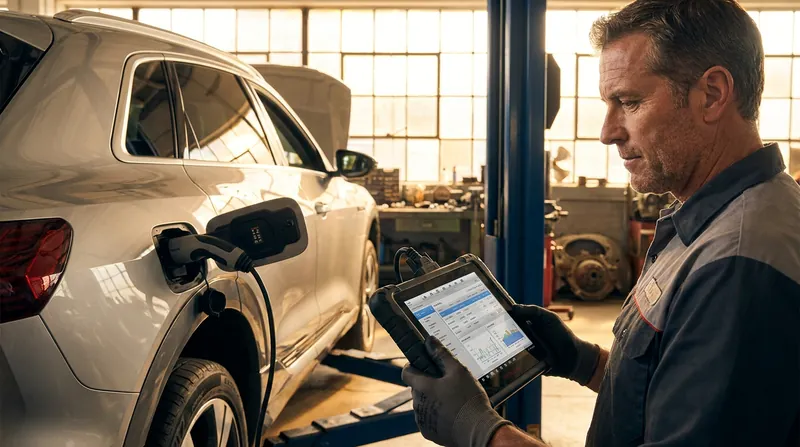
House Committee Advances Federal REPAIR Act, Mandating Automaker Access to Vehicle Data for Independent Shops
6 sources
Right to Repair
House Committee Advances 'Right to Repair' Bill, But Critics Say It Fails to Address Modern Telematics Data Lockout
6 sources
Right to Repair
State and Federal Lawmakers Propose Dozens of New Bills in Major Right-to-Repair Push for Cars and Equipment
5 sources
AI Claims Tech
How AI is Reshaping Auto Repair Estimates and Insurance Claims
7 sources
Comments
Every angle. Every day.
Get Automotive & Transportation stories with full source coverage and perspective breakdowns, free every day.