
US Freight Rail Labor Deal Ratified by All 12 Unions, Averting Strike and Stabilizing Supply Chain Through 2029
The Brotherhood of Railroad Signalmen became the final union to ratify a new national contract, securing an 18.8% wage increase and guaranteeing uninterrupted freight movement through the end of the decade.

Share this story
The United States freight rail industry and its workforce have officially locked in labor peace through the end of the decade, averting a potential logistical crisis and securing the nation's supply chain. On July 6, the Brotherhood of Railroad Signalmen (BRS) became the twelfth and final union to ratify a new national contract, bringing the 2025–2026 bargaining round to a definitive and successful close.
The ratification eliminates the looming threat of a nationwide rail strike—a catastrophic scenario that supply chain experts and industry groups warned could have cost the US economy up to $2 billion per day in lost output. With all 12 labor organizations now under contract, the agreement guarantees the uninterrupted movement of roughly 30% of the nation's freight, encompassing everything from critical agricultural exports and energy commodities to the retail consumer goods that line store shelves.[1][2][7]
"We are pleased that this round of bargaining has come to a close with a fair agreement for BRS members," stated BRS President Michael Baldwin, noting that 72% of eligible signalmen participated in the democratic process, with a large majority voting in favor of the deal. The successful and orderly resolution of this contract stands in stark contrast to the bitter, protracted negotiations that defined the 2022 cycle.
During that previous round, talks dragged on for more than three agonizing years, eventually requiring the appointment of a Presidential Emergency Board and an eleventh-hour intervention by the United States Congress to force a settlement and prevent a holiday supply chain freeze. This time, the process was remarkably swift and collaborative, concluding in just 18 months to become the fastest national bargaining cycle in decades.[1][3][4]
The 2026 agreement marks a historic milestone for labor relations within the heavy transportation sector. It is the first time since 2005 that all 12 national rail unions reached and ratified their contracts entirely voluntarily, without resorting to federal mediation, interest arbitration, or emergency congressional legislation.
"This round of bargaining will stand as one of the most successful in freight rail history — not just for the results it delivered, but for how they were achieved," remarked Jeff Rodgers, chairman of the National Railway Labor Conference (NCCC), which negotiates on behalf of the major Class I railroads. Rodgers emphasized that all parties chose a path of early collaboration, ensuring that every railroader covered by the agreements is tangibly better off without the industry enduring the brinkmanship of past cycles.[2][3]
The cornerstone of the newly ratified agreement is a substantial and front-loaded financial package designed to retain skilled workers in a highly competitive industrial labor market. Under the terms of the deal, workers will receive an 18.8% compounded wage increase over the five-year life of the contract, which runs retroactively from 2025 through December 31, 2029.
When combined with the historic 24% wage increase secured during the contentious 2022 bargaining round, union-represented rail employees will see their baseline wages grow by nearly 50% over the course of the decade. By the expiration of this current contract, average annual wages for freight rail workers will rise to approximately $135,000, cementing railroading as one of the most lucrative blue-collar professions in the American economy.[1][3][6]
Beyond base salary, the total compensation package—which includes comprehensive health care and robust retirement benefits—is projected to reach an impressive $190,000 per employee. Crucially for the labor unions, the agreement locks in these platinum-level health and welfare benefits without increasing the out-of-pocket contribution rates for the workers themselves.
Rail employees' health care premiums will remain strictly capped at roughly $308 per month. The NCCC was quick to note that this figure sits significantly below the national average of more than $500 per month for standard employer-provided family coverage, representing a massive cost-of-living victory for the workforce amid broader national inflation in the medical sector.[2][3]
While the financial gains are historic, the new contracts also directly address the systemic quality-of-life concerns that brought the industry to the absolute brink of a strike four years ago. The agreements provide accelerated access to paid vacation time, allowing newer employees to earn essential time off much earlier in their careers.
The speed and success of the resolution were largely driven by a strategic approach known as "pattern bargaining." Early in the negotiation process, a coalition of unions reached a tentative framework with the carriers. Because this initial pattern offered undeniably strong wage growth and fiercely protected health benefits, it established a high, acceptable floor that was quickly adopted by the remaining labor organizations, streamlining the entire national process.[1][3][6]
Individual railroad operators are already celebrating the operational stability that the finalized deal provides. BNSF Railway, which negotiated certain localized terms alongside the broader national framework, confirmed that 100% of its union-represented workforce is now fully covered under ratified agreements. "This agreement marks an important milestone... ensuring all union-represented employees are now covered," said BNSF President and CEO Katie Farmer. She emphasized the carrier's renewed focus on delivering safe, reliable, and predictable service to its customers without the looming cloud of labor uncertainty that has historically hampered long-term logistics planning.[6]
For the broader United States supply chain, the timing of this labor peace is absolutely critical. Global shipping networks are currently grappling with severe, compounding challenges, including elevated container freight rates, persistent port congestion, and geopolitical disruptions in vital maritime corridors like the Red Sea and the Strait of Hormuz.
Against this backdrop of international volatility, the absolute certainty of a functioning domestic rail network provides a vital, stabilizing anchor for American manufacturers, agricultural producers, and retail giants. Rail remains the most cost-effective and environmentally efficient way to move heavy industrial materials, chemicals, and intermodal shipping containers from coastal ports to inland distribution hubs.[5]
While union leadership celebrated the undeniable wage gains and health care protections, they also clearly signaled that their workplace advocacy is an ongoing mission. BRS General Chairman Jeremy Huckabee noted that while the agreement provides "much needed improvements" to compensation and vacation time, there is "more work to do" regarding localized scheduling, fatigue management, and strict attendance policies.
Nevertheless, the highly collaborative tone of the 2025–2026 negotiations represents a massive paradigm shift for an industry historically defined by its deeply adversarial labor relations. By prioritizing early compromises and avoiding the destructive brinkmanship of past cycles, both the freight railroads and the labor unions have successfully secured a half-decade of mutual prosperity and operational stability.[2][3][6]
The mechanics of rail labor negotiations are uniquely governed by the Railway Labor Act (RLA) of 1926, a federal statute designed specifically to prevent interstate commerce disruptions by making it intentionally difficult for transportation workers to strike.
Under the RLA, contracts do not expire; instead, they become amendable, triggering a highly structured, multi-step process of direct bargaining, federal mediation, and mandatory cooling-off periods. The fact that the 2026 round bypassed the final, most drastic steps of the RLA—namely the Presidential Emergency Board and congressional intervention—demonstrates a profound maturation in how the carriers and unions approach the bargaining table.[3][5]
The ripple effects of this stability extend far beyond the rail yards. Major trade associations, including the National Retail Federation and the National Grain and Feed Association, had been closely monitoring the talks, acutely aware that a rail stoppage would immediately strand perishable agricultural exports and halt the delivery of automotive parts to assembly lines.
By securing the network through 2029, the freight rail industry has effectively guaranteed that the domestic arteries of American commerce will remain open, providing a critical competitive advantage as the nation continues to near-shore its manufacturing base and fortify its industrial supply chains against global shocks.[7]
Ultimately, the 2026 national rail agreement serves as a powerful case study in modern industrial relations. It proves that when management and labor prioritize transparent, early communication over public posturing, they can achieve outcomes that genuinely benefit both the balance sheet and the workforce. As the twelve unions transition from the negotiating table back to the daily rigors of operating the nation's locomotives, maintaining the tracks, and managing the complex signal networks, they do so with the financial security and operational certainty required to keep the American economy moving forward.[1][2][4]
Key points
- The Brotherhood of Railroad Signalmen became the final union to ratify the national contract, averting a nationwide strike.
- The agreement provides an 18.8% compounded wage increase and caps health care premiums through 2029.
- The 2025–2026 bargaining round was the fastest in decades, concluding in just 18 months without federal intervention.
- The labor peace secures the movement of 30% of US freight, stabilizing the domestic supply chain amid global shipping volatility.
Unanswered questions
- How individual railroads will implement localized scheduling and attendance policy reforms moving forward.
- Whether the increased labor costs will be passed on to shippers in the form of higher freight rates.
- How the new contract will impact the industry's long-term ability to recruit younger workers into the demanding rail lifestyle.
How we got here
Late 2022
The previous bargaining round concludes only after a Presidential Emergency Board and congressional intervention avert a holiday strike.
Jan 2025
The 2025–2026 national bargaining round officially opens with the exchange of Section 6 notices.
Late 2025
Early 'pattern agreements' are established, setting a high floor for wages and benefits.
June 2026
The National Carriers' Conference Committee and the Brotherhood of Railroad Signalmen reach a tentative agreement.
July 6, 2026
BRS members ratify the contract, officially closing the bargaining round for all 12 national rail unions.
- Rail Labor Unions
- Focused on securing substantial wage growth, protecting health benefits, and improving quality-of-life metrics like paid time off.
- Freight Rail Carriers
- Prioritized reaching a swift, voluntary agreement to ensure network reliability and retain skilled workers in a competitive labor market.
- Supply Chain & Shippers
- Relieved by the avoidance of a strike, emphasizing the need for predictable, uninterrupted freight service amid global logistics volatility.
Perspectives this story doesn't cover
- Passenger Rail Operators (Amtrak/Commuter)
- Agricultural Exporters relying on bulk rail
Sources
Source coverage
7 outlets
3 viewpoints surfaced







- [1]Trains MagazineRail Labor Unions
Signalmen’s union ratifies national agreement
Read on Trains Magazine → - [2]Progressive RailroadingFreight Rail Carriers
Carriers, unions close out 2025 national bargaining round
- [3]National Railway Labor ConferenceFreight Rail Carriers
Freight Rail Industry Closes Fastest National Bargaining Round in Decades
- [4]Brotherhood of Railroad SignalmenRail Labor Unions
Brotherhood of Railroad Signalmen Membership Approves National Agreement
- [5]Association of American RailroadsSupply Chain & Shippers
Freight Railroads and Unions Reach Agreements, Strike Averted
- [6]BNSF RailwayFreight Rail Carriers
BRS employees vote to ratify new labor agreement with BNSF
Read on BNSF Railway → - [7]AllSidesSupply Chain & Shippers
Looming railroad strike could be 'economic disaster,' impacting consumers from all angles
Read on AllSides →

More in Transportation
See all →Rail Consolidation
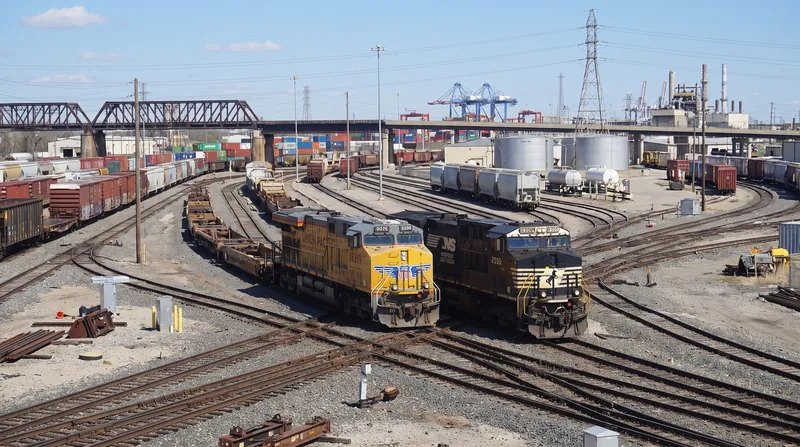
STB Review Begins for $85 Billion Union Pacific-Norfolk Southern Merger to Create First Transcontinental Freight Railroad
6 sources
Rail Safety
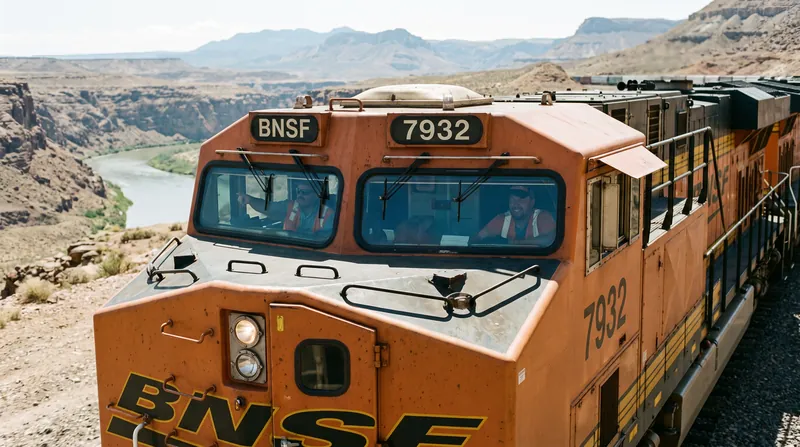
How the FRA's Two-Person Crew and Freight Car Standards Regulate US Rail
5 sources
Infrastructure Funding
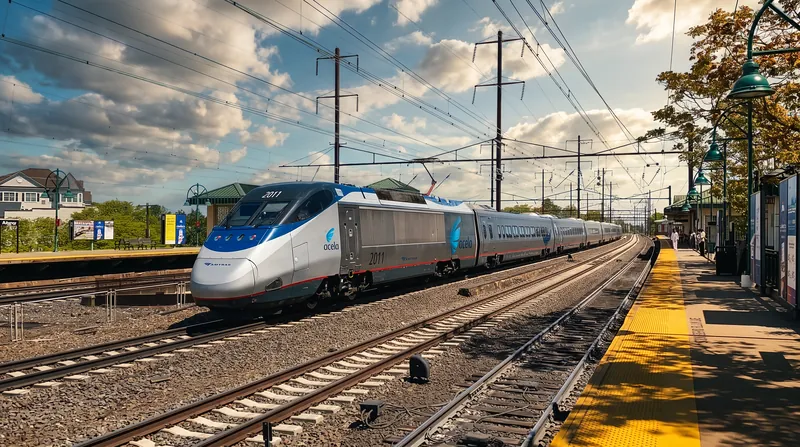
FRA Announces $4.7 Billion Investment for Amtrak's Northeast Corridor Modernization
6 sources
Infrastructure Funding
The House Vote to End California High-Speed Rail Funding: How We Got Here
7 sources
Comments
Every angle. Every day.
Get Transportation stories with full source coverage and perspective breakdowns, free every day.