
How the New 'Workforce Pell Grant' Expands Federal Aid to Short-Term Trade Programs
Beginning in July 2026, a major overhaul of federal financial aid allows students to use Pell Grants for short-term, job-focused training programs. The expansion aims to address labor shortages in the skilled trades while imposing strict new accountability metrics on educational providers.
By Kavya Nair

Share this story
In short
- The Workforce Pell Grant program expands federal financial aid to short-term, job-focused training programs lasting 8 to 15 weeks.
- Eligible programs must meet strict accountability metrics, including a 70% completion rate and a 70% job placement rate.
- Graduates must earn a median income exceeding 150% of the federal poverty line plus the cost of tuition.
For decades, the federal Pell Grant program has served as the foundational pillar of American higher education access, channeling billions of dollars annually to low-income students pursuing traditional two- and four-year academic degrees. However, a massive and increasingly vital segment of the educational landscape—short-term, job-focused training programs and trade certifications—has historically been locked out of this funding.
Students seeking to become welders, emergency medical technicians, or commercial drivers were forced to pay out of pocket, take on private debt, or rely on a patchwork of state and local grants. This structural bias toward traditional degree pathways left many adult learners and career-changers without federal support, precisely when the broader economy was facing a severe shortage of skilled technical labor.[1][4]
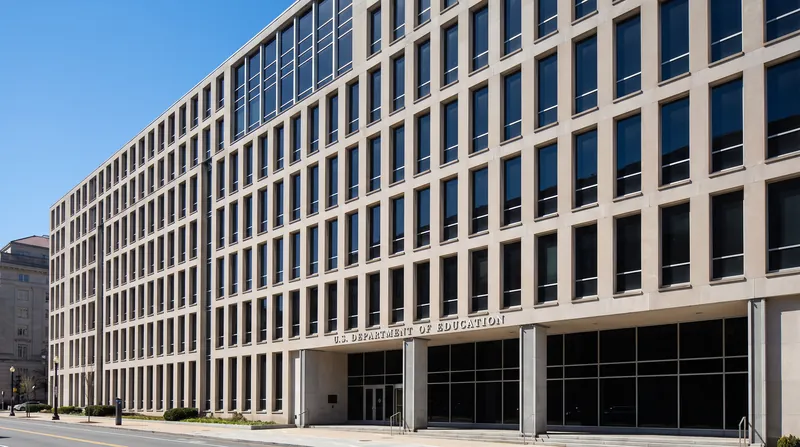
That paradigm shifts fundamentally this month. Beginning in July 2026, the U.S. Department of Education has officially launched the "Workforce Pell Grant" program, a sweeping expansion of federal financial aid authorized under the 2025 legislative package. The initiative allows eligible students to use federal Pell Grants to pay for high-quality, short-term training programs that take as little as eight weeks to complete. It marks a historic pivot in federal education policy, moving away from a strict "degree-only" mindset and toward a model that equally values direct-to-workforce credentialing and rapid upskilling.[1][8]
"No more forcing Americans to choose between long, expensive degrees or no training at all," Acting U.S. Secretary of Labor Keith Sonderling announced during the rollout, framing the expansion as a critical gateway to Registered Apprenticeships and targeted skills training. By lowering the financial barrier to entry for fast-track programs, the federal government aims to help more Americans rapidly enter the workforce with little to no student debt, while simultaneously strengthening the nation’s talent pipeline in critical infrastructure and healthcare sectors.[1][5]
The mechanics of the new grant are heavily structured to differentiate eligible workforce training from casual or unaccredited coursework. To qualify for Workforce Pell funding, a program must offer between 150 and 599 clock hours of instruction and span a minimum of 8 weeks, up to a maximum of 15 weeks. The training must lead directly to a recognized postsecondary credential that is stackable and portable across employers, ensuring that students are earning qualifications that hold genuine weight in the regional labor market.[6][7]
Because these eligible programs are significantly shorter than a traditional two-semester academic year, the financial awards distributed to students are prorated based on the program's length and intensity. While the maximum traditional Pell Grant hovers around $7,395 for a full-time student over a full academic year, a student enrolled in a 10-week, 300-hour HVAC certification program might receive a prorated award of approximately $1,800 to $2,500. This calculation depends on the institution's cost of attendance formula, ensuring that the federal subsidy scales appropriately with the actual duration of the training.[7]
However, the federal government is not simply opening its checkbook to any short-term educational provider. To prevent the proliferation of low-quality certificate mills that have historically plagued the for-profit education sector, the Department of Education has attached some of the most rigorous accountability metrics in the history of federal student aid to the new funds. Programs must prove they deliver a tangible return on investment before they can receive a single dollar of federal backing.[1][8]
To maintain eligibility for Workforce Pell, a training program must consistently demonstrate a student completion rate of at least 70%. Furthermore, the institution must prove a job placement rate of 70% or higher within 180 days of graduation. These metrics force community colleges and technical schools to take active responsibility for their students' outcomes long after they leave the classroom, shifting the institutional focus from mere enrollment to actual career placement.[2][3]
Perhaps the most stringent guardrail implemented by the Department of Education is the mandatory "value-added earnings test." Programs must prove that their graduates earn a median income that exceeds 150% of the federal poverty line, plus the total cost of tuition and fees. If a program costs too much and yields wages that are too low to justify the investment, it is automatically disqualified from accessing federal funds, protecting both taxpayers and vulnerable students from predatory educational practices.[4]
The responsibility for vetting these programs and enforcing these standards falls largely to state governments. Under the new federal rules, governors, working in tandem with state workforce development boards, are tasked with identifying high-growth, high-demand job sectors in their specific regions. This decentralized approach ensures that federal funds are channeled into training programs that meet actual local labor market needs, rather than a one-size-fits-all national mandate.[1][2]
In Pennsylvania, for example, the state's Department of Education recently approved an initial slate of 40 programs across 11 institutions for the 2026–2027 academic year. The state specifically targeted critical regional shortages, approving Workforce Pell eligibility for programs training emergency medical technicians, pharmacy technicians, nursing assistants, and heating, ventilation, and air conditioning (HVAC) installers.[3]
Indiana has taken a similarly targeted approach for its pilot phase. The state is initially limiting Workforce Pell applications to its public two-year institutions—Ivy Tech Community College and Vincennes University—before opening the doors to other providers in 2027. A joint committee of representatives from the Indiana Commission for Higher Education and the Department of Workforce Development reviews each program to ensure it aligns with the state's high-growth sectors before forwarding it to the governor for final federal certification.[2]
The economic backdrop for this sweeping policy shift is a severe and growing labor shortage across the American skilled trades. As older generations of tradespeople reach retirement age, industries ranging from commercial construction to advanced manufacturing are struggling to find qualified replacements. While college enrollment has seen a gradual decline over the past decade, participation in apprenticeships has surged by more than 50%, reflecting a broader cultural shift among Generation Z toward tangible, skills-based careers.[5]
The Alliance for American Manufacturing projects that within the next seven years, the manufacturing sector alone will need to fill 3.9 million roles to maintain the nation's industrial capabilities. Without a significant expansion of training pipelines, the industry faces a potential shortfall of 1.9 million workers. By removing the financial barrier to entry for short-term credentials, Workforce Pell is explicitly designed to rapidly alleviate these supply chain and infrastructure bottlenecks.[5]
For community colleges and technical schools, the arrival of Workforce Pell represents both a massive enrollment opportunity and a daunting administrative hurdle. While institutions welcome the new revenue stream and the ability to better serve non-traditional adult learners, they must now build the sophisticated data infrastructure required to track graduates into the workforce. Proving a 70% job placement rate requires deep partnerships with local employers and robust alumni tracking systems that many smaller colleges currently lack.[6][7]
Another unique feature of the expansion is its integration with the Registered Apprenticeship system. Under the new rules, the related technical instruction (RTI) component of an apprenticeship may qualify for Workforce Pell funding if it meets the length and accountability requirements. This creates a powerful new mechanism to subsidize the classroom portion of apprenticeship programs, allowing employers and unions to expand their training cohorts while maintaining the core model of paid, on-the-job learning.[4]
Ultimately, the success of the Workforce Pell Grant expansion will be measured not by the sheer volume of students who enroll, but by how many secure family-sustaining wages in critical industries. By tying federal financial aid directly to strict labor market outcomes, the government is making a high-stakes bet that short-term, intensive training can deliver long-term economic mobility for millions of Americans.[8]
Jargon, explained
- Workforce Pell Grant
- A new federal financial aid program that extends Pell Grant eligibility to short-term, career-focused training programs.
- Value-Added Earnings Test
- A federal requirement ensuring that graduates of a program earn more than 150% of the federal poverty line plus the cost of tuition.
- Clock Hours
- A measurement of instructional time used to determine federal aid eligibility, distinct from traditional academic credit hours.
- Registered Apprenticeship
- An industry-driven career pathway where employers develop their future workforce, which can now integrate Workforce Pell funding for classroom instruction.
Common questions
Can I use a Workforce Pell Grant if I already have a bachelor's degree?
Yes. Unlike traditional Pell Grants, students who have earned a bachelor's degree may still qualify for Workforce Pell, provided they have not earned a graduate or professional degree.
How much money does the grant provide?
Awards are prorated based on the program's length and intensity. A 10-week program might yield between $1,800 and $2,500, rather than the full annual Pell maximum of $7,395.
What kinds of programs are eligible for this funding?
Eligible programs must last 8 to 15 weeks, prepare students for high-demand fields like healthcare, IT, or skilled trades, and meet strict job placement and earnings metrics.
Competing readings
Federal Policymakers
View the expansion as a critical tool to shift federal funding toward high-value, direct-to-employment pathways.
Federal officials argue that the traditional degree-only model of financial aid has failed to keep pace with the realities of the modern economy. By opening Pell Grants to short-term programs, they aim to close the skilled labor gap rapidly. However, they emphasize that the strict 70% completion and placement metrics are non-negotiable guardrails designed to prevent the exploitation of students by low-quality, for-profit certificate mills.
Industry & Employers
Support the initiative as a necessary pipeline to fill millions of vacant roles in the skilled trades.
With trades growing at 20 times the average rate of job growth, employers view Workforce Pell as a critical workforce development subsidy. Industry advocates argue that removing the financial barrier to entry for an 8-week CDL or welding program will rapidly alleviate supply chain and infrastructure bottlenecks, particularly as a generation of older tradespeople reaches retirement age.
Higher Education Administrators
Welcome the enrollment opportunity but express concern over the logistical burden of the new reporting requirements.
While community college leaders are eager to serve non-traditional adult learners with federal backing, they caution that the administrative overhead is immense. Tracking students 180 days post-graduation to prove a 70% job placement rate requires expensive new data systems and deep employer partnerships. Administrators worry that smaller, under-resourced technical schools might struggle to meet the reporting burden despite offering high-quality instruction.
- Industry & Employers
- Support the initiative as a necessary pipeline to fill millions of vacant roles in the skilled trades.
- Federal Policymakers
- View the expansion as a critical tool to shift federal funding toward high-value, direct-to-employment pathways.
- State Administrators
- Focused on the logistical challenges of vetting programs and aligning them with regional workforce boards.
- Higher Education Institutions
- Welcome the enrollment opportunity but express concern over the logistical burden of the new reporting requirements.
- Policy Analysts & Observers
- Monitor the rollout to ensure the strict accountability metrics are enforced without stifling program creation.
Perspectives this story doesn't cover
- Current trade school students
- Labor unions representing skilled trades
Sources
Source coverage
8 outlets
5 viewpoints surfaced








- [1]U.S. Department of EducationFederal Policymakers
Department of Education Announces Final Rule for Workforce Pell Grant Program
- [2]State of IndianaState Administrators
Workforce Pell Program Eligibility and Application Process
- [3]Commonwealth of PennsylvaniaState Administrators
PA Workforce Pell 2026-27 Policy Report
- [4]Society for Human Resource ManagementIndustry & Employers
How Workforce Pell Grants Expand Short-Term Training
- [5]Alliance for American ManufacturingIndustry & Employers
New federal program aims to make financial aid for short-term workforce training programs
- [6]American Institutes for ResearchPolicy Analysts & Observers
Timeline and Process: Rulemaking to Implementation for Workforce Pell
- [7]UPCEAHigher Education Institutions
Workforce Pell Is Here: What Colleges Need to Know
- [8]Factlen Editorial TeamPolicy Analysts & Observers
Synthesis by Factlen editorial team
Read on Factlen Editorial Team →

More in Education
See all →NIL Reform
Executive Order Mandates NCAA Reform on NIL and Transfers, Tying Compliance to Federal Funding
7 sources

AI Literacy
House Committee Advances Bill to Unlock Federal Funds for K-12 AI Literacy
7 sources

Civil Rights Policy
Education Department Eliminates 'Disparate Impact' Standard, Altering Civil Rights Enforcement for School Policies and EdTech
6 sources
Higher Ed Policy
New Federal Rule Strips Loan Access From College Degrees Failing Earnings Benchmarks
2 sources

Comments
Every angle. Every day.
Get Education stories with full source coverage and perspective breakdowns, free every day.