
House Democrats Advance Measure to Restrict U.S. Military Funding to Israel
A significant bloc of House Democrats has voted to condition or cut U.S. military aid to Israel, signaling a historic fracture in Washington's bipartisan consensus on defense assistance.

Share this story
In a watershed moment for U.S. foreign policy, a substantial majority of House Democrats voted on Thursday to cut or heavily condition U.S. military funding to Israel. The measure, attached as a contentious amendment to the annual defense appropriations bill, marks the most significant legislative rupture in the decades-long bipartisan consensus supporting unconditional security assistance to Jerusalem. While the amendment faces near-certain defeat in the Republican-controlled Senate, its passage through the Democratic caucus underscores a profound generational and ideological shift within the party regarding the Middle East.[1][3]
The legislative maneuver specifically targets offensive munitions and advanced weapons systems, explicitly exempting defensive architectures like the Iron Dome and David's Sling. By leveraging the Leahy Law—which prohibits the U.S. from funding foreign security forces implicated in gross human rights violations—the amendment's sponsors argued that Congress has a legal and moral obligation to restrict arms transfers. The vote tally revealed a stark partisan divide, with zero Republicans supporting the measure and moderate Democrats facing intense pressure from both progressive activists and pro-Israel lobbying groups.[4][7]
The momentum for this unprecedented vote has been building for years, accelerated by mounting civilian casualties in ongoing regional conflicts and shifting public opinion among younger Democratic voters. Progressive lawmakers, who spearheaded the initiative, framed the vote not as an abandonment of Israel, but as an alignment of U.S. foreign policy with international human rights standards. They argued that continuing to provide blank-check military aid without end-use monitoring makes the United States complicit in actions that destabilize the region and violate international law.[5][8]
Opposition to the measure was fierce and immediate. Republican leadership and a vocal contingent of moderate Democrats condemned the vote as a dangerous betrayal of America's closest Middle Eastern ally during a period of acute regional instability. Critics warned that conditioning aid emboldens adversaries, undermines Israel's qualitative military edge, and signals weakness to state and non-state actors watching Washington's internal divisions. They emphasized that U.S. security assistance is a cornerstone of regional deterrence, not merely a diplomatic bargaining chip.[2][6]
In Jerusalem, the reaction was one of deep concern and diplomatic mobilization. Israeli defense officials and political leaders across the spectrum warned that the vote, even if symbolic in the short term, threatens to erode the strategic ambiguity and unified front that has historically deterred regional escalation. The Israeli defense establishment relies heavily on the $3.8 billion in annual U.S. Foreign Military Financing to maintain its operational readiness and procure advanced platforms, making any legislative threat to that pipeline a top-tier national security issue.[6][7]
The White House now finds itself navigating a precarious political minefield. The administration has historically opposed legislative efforts to condition aid to Israel, preferring to manage bilateral disputes through private diplomatic channels rather than public congressional mandates. However, the sheer volume of Democratic support for the amendment forces the executive branch to acknowledge the shifting center of gravity within its own party, complicating future arms sales notifications and diplomatic negotiations in the Middle East.[1][4]
Beyond the immediate diplomatic fallout, the vote sends a chilling signal to the U.S. defense industrial base. Major aerospace and defense contractors, which fulfill billions of dollars in Israeli procurement orders subsidized by U.S. taxpayers, are closely monitoring the legislative landscape. If conditionality becomes a normalized feature of Democratic foreign policy platforms, defense firms may face increased regulatory scrutiny, delayed export licenses, and a more volatile procurement environment for foreign military sales.[3][8]
Looking ahead, the amendment's immediate legislative future is bleak. The Senate, where bipartisan support for Israel remains deeply entrenched, is expected to strip the provision during the conference committee process. Nevertheless, the House vote has permanently altered the parameters of the debate. What was once considered a fringe progressive talking point has now been codified as a mainstream Democratic policy position, ensuring that future military aid packages will face unprecedented scrutiny and structural resistance.[4][7]
Viewpoints in depth
Conditionality Advocates
Lawmakers and groups arguing that U.S. aid must be tied to human rights compliance.
This camp, primarily composed of progressive Democrats and international human rights organizations, argues that the U.S. cannot claim to uphold a rules-based international order while providing unconditional military funding to a nation accused of disproportionate civilian harm. They cite the Leahy Law as existing statutory framework that should compel the suspension of offensive arms transfers. For these advocates, the vote is a long-overdue alignment of American foreign policy with its stated democratic values.
Unconditional Security Proponents
Those who view unwavering military support for Israel as a vital U.S. strategic interest.
Comprising Republicans, moderate Democrats, and pro-Israel advocacy groups, this perspective maintains that Israel is a crucial democratic ally in a hostile region. They argue that conditioning aid undermines Israel's qualitative military edge, emboldens adversaries like Iran and its proxies, and ultimately makes the region more volatile. This camp views the Democratic vote as a dangerous capitulation to fringe political elements that jeopardizes decades of strategic deterrence.
Israeli Defense Establishment
Officials focused on the operational impact of potential funding cuts.
For Israeli military planners, the U.S. defense subsidy is not just a financial boost but a structural pillar of their long-term procurement strategy. While they acknowledge the political shifts in Washington, their primary concern is the potential disruption to supply chains for advanced munitions and aircraft. They warn that any reduction in U.S. support forces Israel to make difficult operational choices and could trigger preemptive defensive actions if their deterrence capabilities are perceived to be weakening.
Key points
- A majority of House Democrats voted to condition or cut offensive military aid to Israel.
- The measure explicitly exempts defensive systems like the Iron Dome.
- Zero Republicans voted in favor of the restriction.
- The amendment is expected to be defeated in the Republican-controlled Senate.
What we don’t know
- How the White House will adjust its diplomatic strategy in response to the shifting Democratic consensus.
- Whether the vote will impact ongoing defense contracts and procurement timelines for the Israeli military.
- How regional adversaries will interpret the legislative divide in Washington.
How we got here
2016
U.S. and Israel sign a 10-year, $38 billion Memorandum of Understanding for military aid.
2021
Progressive lawmakers introduce early, unsuccessful legislation to condition aid over settlement expansion.
2023-2024
Regional conflicts intensify scrutiny on U.S. arms transfers and civilian casualties.
July 2026
House Democrats successfully attach an aid-restriction amendment to the defense appropriations bill.
- Unconditional Security Proponents
- Those who view unwavering military support for Israel as a vital U.S. strategic interest.
- Conditionality Advocates
- Lawmakers and groups arguing that U.S. aid must be tied to human rights compliance.
- Israeli Defense Establishment
- Officials focused on the operational impact of potential funding cuts.
Perspectives this story doesn't cover
- Palestinian civilians affected by U.S. munitions
- U.S. defense contractors manufacturing the restricted weapons
Sources
Source coverage
8 outlets
3 viewpoints surfaced








- [1]ReutersUnconditional Security Proponents
House Democrats push historic vote to restrict Israel military aid
Read on Reuters → - [2]Fox NewsUnconditional Security Proponents
Democrats turn on Israel: House vote threatens critical military funding
- [3]AP NewsUnconditional Security Proponents
In major shift, House Democrats vote to condition military assistance to Israel
Read on AP News → - [4]PoliticoConditionality Advocates
The Democratic fracture on Israel aid finally reaches the House floor
- [5]Al JazeeraConditionality Advocates
US lawmakers vote to cut military funding to Israel amid rights concerns
Read on Al Jazeera → - [6]The Times of IsraelIsraeli Defense Establishment
Unprecedented House Democratic vote seeks to curb US defense aid to Israel
- [7]AxiosIsraeli Defense Establishment
Scoop: Inside the Democratic rebellion on Israel funding
Read on Axios → - [8]CNNConditionality Advocates
House Democrats pass symbolic but historic restriction on Israel military aid

More in News & Politics
See all →Prison Healthcare
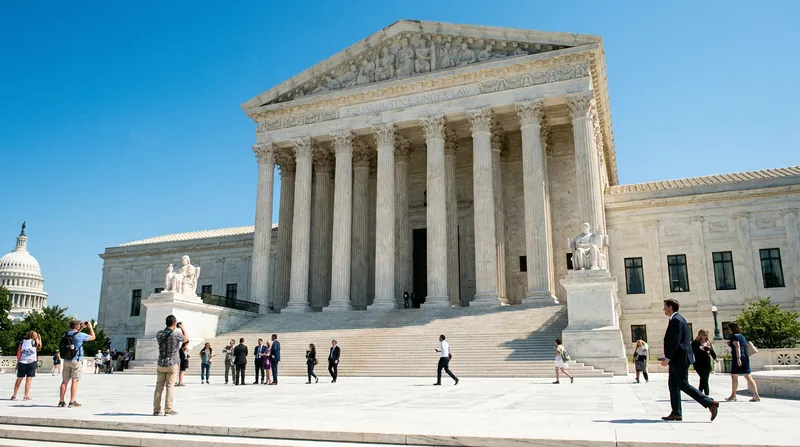
Supreme Court Rejects Trump Administration Bid to Restrict Transgender Inmate Medical Care
5 sources
Immigration Crackdown
State Department Cancels Over 300,000 Visas in Broad Trump Administration Immigration Crackdown
5 sources

Border Security
Trump Administration Asks Supreme Court to Lift Halt on Big Bend Border Wall
6 sources
School Admissions
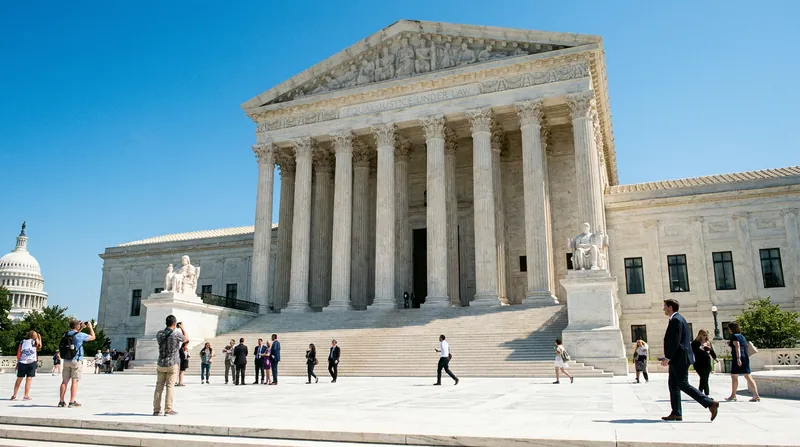
Supreme Court to Hear Challenge to Race-Neutral Middle School Admissions Policy
5 sources

Comments
Every angle. Every day.
Get News & Politics stories with full source coverage and perspective breakdowns, free every day.