
House Committee Advances Federal REPAIR Act, Mandating Automaker Access to Vehicle Data for Independent Shops
A House committee has advanced legislation that legally binds automakers to share diagnostic and repair data with independent mechanics, ensuring drivers can choose where they service their modern vehicles.
By Tao Yang

The next time a dashboard warning light illuminates on a late-model vehicle, the decision of where to take it might not be dictated by the manufacturer's software locks. For years, independent mechanics have faced a growing technological wall, increasingly unable to access the proprietary data and wireless diagnostics required to service modern, computer-reliant cars.
That dynamic is poised to shift, ensuring that drivers are not forced into higher-priced franchised dealerships simply because their local garage lacks the digital keys. The U.S. House Energy and Commerce Committee has advanced an amended version of the Right to Equitable and Professional Auto Industry Repair (REPAIR) Act, moving the automotive aftermarket closer to a guaranteed federal right-to-repair standard.[1][3]
Folded into the broader Motor Vehicle Modernization Act of 2026 (H.R. 7389), the committee-passed legislation legally mandates that automakers provide independent repair facilities with standardized, non-proprietary access to vehicle repair and diagnostic data. The bill achieves this by codifying a 2014 national memorandum of understanding for light-duty vehicles and a 2015 agreement for heavy-duty trucks, transforming what were previously voluntary industry pacts into enforceable federal law.
Under the new framework, the Federal Trade Commission (FTC) would be granted explicit authority to enforce compliance, empowering the agency to impose civil penalties on manufacturers that withhold critical repair information or diagnostic tools from third-party shops.[1][4]
The stakes for the aftermarket industry are massive. According to the Alliance for Automotive Innovation, roughly 75% of all post-warranty repair work in the United States takes place at independent shops rather than authorized dealerships. However, as vehicles have evolved into rolling computers—reliant on advanced driver assistance systems, complex battery management software, and over-the-air updates—local mechanics have struggled to keep pace.
Independent repair advocates argue that automakers have increasingly used this technological shift to gatekeep maintenance data, forcing shops to either turn away customers or invest in prohibitively expensive, brand-specific diagnostic equipment just to perform routine services.[3][5]
Despite the momentum, the version of the REPAIR Act that cleared the committee represents a heavily negotiated compromise. Lawmakers deliberately stripped out broader, highly controversial provisions from the original draft that would have mandated direct wireless data access and open telematics sharing. Those original clauses faced fierce opposition from automakers and franchised dealership networks, who argued that granting unfettered, third-party wireless access to a vehicle's core systems would introduce severe cybersecurity vulnerabilities, compromise driver privacy, and enable the unregulated reverse-engineering of proprietary original equipment manufacturer (OEM) parts.[1][2]
Franchised auto dealers and their lobbying arms have largely embraced the scaled-back legislation, viewing it as a necessary guardrail that protects consumers without exposing vehicles to hacking risks.
The National Automobile Dealers Association (NADA) has publicly urged Congress to retain the committee-passed language, arguing that it strikes the right balance by enforcing existing information-sharing agreements while directing the FTC to further study the complex intersection of vehicle repair, cybersecurity, and data privacy. Dealership groups maintain that the original bill's telematics provisions were overly broad and primarily designed to benefit auto insurers seeking to lower claims costs with cheaper aftermarket parts.[2][6]
Conversely, aftermarket parts manufacturers and independent repair associations view the bill's advancement as a crucial, albeit partial, victory for small businesses and driver autonomy. Organizations like the Specialty Equipment Market Association (SEMA) and the Auto Care Association have spent years lobbying for federal intervention, arguing that without guaranteed data access, the independent repair ecosystem would eventually collapse under the weight of automotive software monopolies.
While some advocates expressed disappointment over the removal of the wireless telematics mandates, the codification of the 2014 agreement is widely seen as a foundational step in preserving consumer choice in a rapidly digitizing market.[4][5]
The legislation now heads toward a potential vote on the full House floor, where it is expected to be attached as the auto safety title of the upcoming surface transportation reauthorization bill, known as the Build America 250 Act.
If enacted, the REPAIR Act will establish the first concrete federal baseline for automotive right-to-repair, superseding a patchwork of state-level initiatives and ballot measures that have attempted to tackle the issue in recent years. Lawmakers from both parties have signaled a willingness to continue refining the bill, though efforts to reintroduce the stripped telematics provisions could spark renewed industry battles.[2][4]
For everyday vehicle owners, the immediate impact of the legislation will be felt directly at the service counter. By preventing automakers from monopolizing diagnostic codes and repair manuals, the federal mandate aims to foster a more competitive maintenance landscape. This ensures that as the national fleet transitions toward highly computerized electric and hybrid models, drivers will retain the freedom to shop around for the best service rates, potentially lowering the average repair bill and saving consumers from long waits at backlogged dealership service centers.[3][5]
Key points
- The House Energy and Commerce Committee advanced an amended version of the REPAIR Act as part of a broader vehicle modernization bill.
- The legislation legally binds automakers to share diagnostic and repair data with independent mechanics, codifying existing industry agreements.
- Lawmakers stripped broader wireless telematics provisions from the bill following opposition from automakers over cybersecurity concerns.
- The Federal Trade Commission (FTC) would be granted authority to enforce compliance and issue civil penalties.
How we got here
2014
Automakers and independent repair groups sign a national memorandum of understanding for light-duty vehicle data sharing.
2015
A similar memorandum of understanding is established for heavy-duty commercial trucks.
February 2026
The REPAIR Act (H.R. 1566) clears a House subcommittee, advancing right-to-repair legislation.
May 2026
The House Energy and Commerce Committee passes an amended, scaled-back version of the REPAIR Act as part of the Motor Vehicle Modernization Act.
- Independent Repair Advocates
- Argue that guaranteed federal access to vehicle data is essential to prevent automakers from monopolizing repairs and driving up costs for consumers.
- Automakers & Franchised Dealers
- Support codifying existing data-sharing agreements but strongly oppose broader wireless telematics access due to cybersecurity and privacy risks.
- Automotive Industry Observers
- Track the legislative progress and market impact of the bill on both dealership networks and the aftermarket.
Perspectives this story doesn't cover
- Auto Insurance Providers
- Cybersecurity Experts
Sources
Source coverage
6 outlets
3 viewpoints surfaced






- [1]CBT NewsAutomotive Industry Observers
House committee advances amended REPAIR Act as part of vehicle modernization package
Read on CBT News → - [2]National Automobile Dealers AssociationAutomakers & Franchised Dealers
Congress Should Retain House-Committee Passed “REPAIR Act” Language (H.R. 7389)
Read on National Automobile Dealers Association → - [3]Kelley Blue BookAutomotive Industry Observers
Committee Advances Right to Repair Provisions
Read on Kelley Blue Book → - [4]SEMAIndependent Repair Advocates
House Committee Advances Amended REPAIR Act
Read on SEMA → - [5]Auto Care AssociationIndependent Repair Advocates
Subcommittee Advances REPAIR Act
Read on Auto Care Association → - [6]National Independent Automobile Dealers AssociationIndependent Repair Advocates
Committee Advances Right to Repair Provisions
Read on National Independent Automobile Dealers Association →
More in Automotive & Transportation
See all →Right to Repair
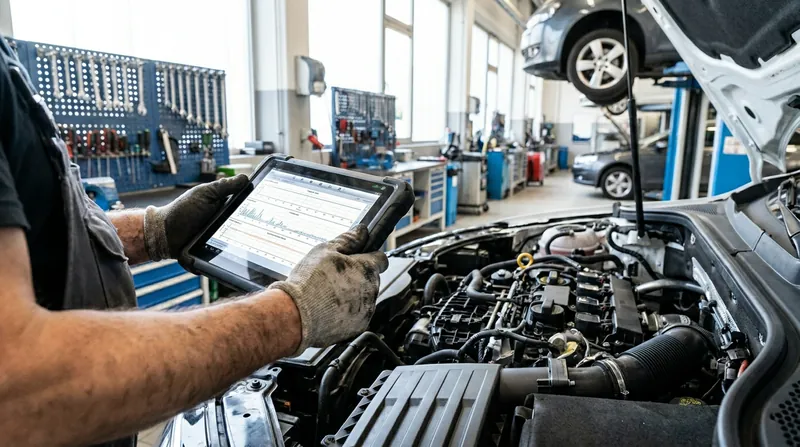
House Committee Advances Bill to Codify Automotive Right-to-Repair and Open Diagnostic Data
5 sources
Right to Repair
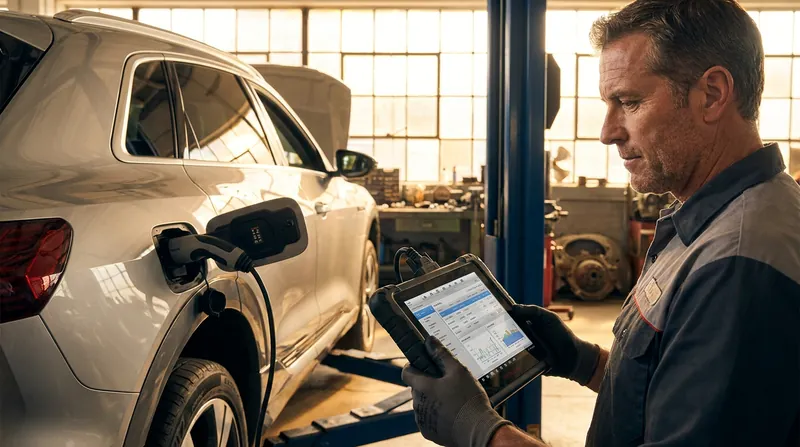
House Committee Advances 'Right to Repair' Bill, But Critics Say It Fails to Address Modern Telematics Data Lockout
6 sources
Right to Repair
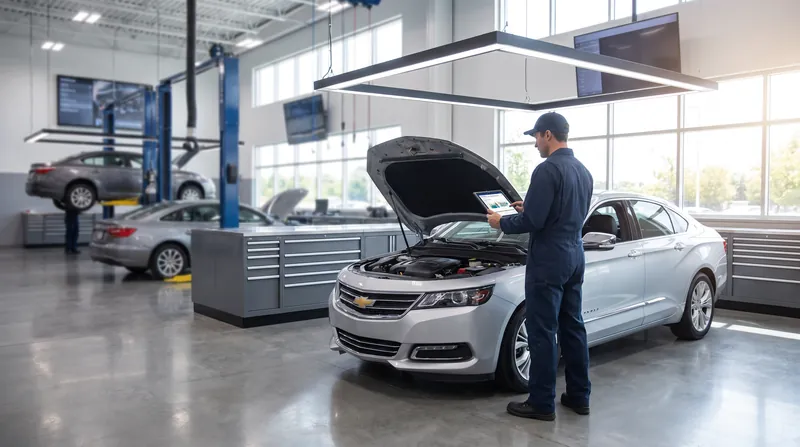
State and Federal Lawmakers Propose Dozens of New Bills in Major Right-to-Repair Push for Cars and Equipment
6 sources
Vehicle Longevity
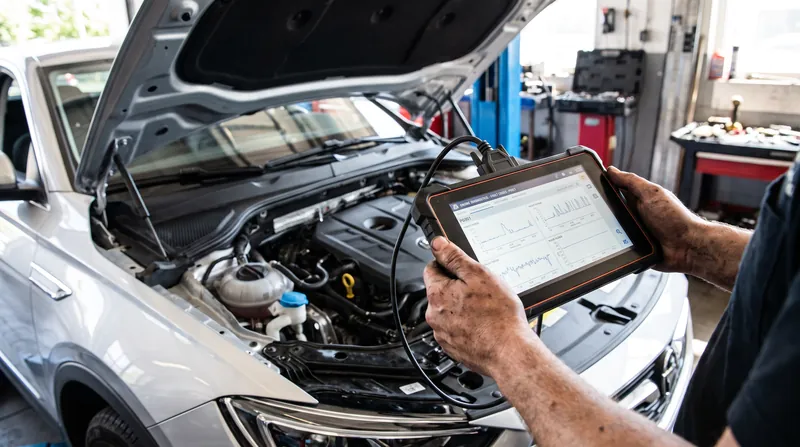
The 12.8-Year Fleet: How Drivers and Auto Shops Are Adapting to America's Oldest Cars
6 sources
Comments
Every angle. Every day.
Get Automotive & Transportation stories with full source coverage and perspective breakdowns, free every day.