
Solid-State EV Batteries Move From Lab to Assembly Line in 2026
After years of development, major automakers and battery startups are launching pilot production lines for solid-state batteries, promising to double EV range and drastically cut charging times.
By Factlen Editorial Team
- Solid-State Pioneers
- Startups and tech firms pushing for rapid commercialization.
- Legacy Automakers
- Established car brands treating solid-state as a proprietary advantage.
- Manufacturing Realists
- Analysts and engineers focused on the realities of gigawatt-hour scaling.
What's not represented
- · Lithium-ion gigafactory operators
- · Raw material mining companies
Why this matters
Solid-state batteries solve the two biggest hurdles to mass EV adoption: range anxiety and charging speed. By doubling energy density and eliminating fire risks, this technology will fundamentally reshape the automotive industry and accelerate the transition away from fossil fuels.
Key points
- Solid-state batteries are entering pilot production in 2026, marking their transition from laboratory research to real-world manufacturing.
- The technology replaces flammable liquid electrolytes with solid materials, enabling the use of energy-dense lithium-metal anodes.
- Early solid-state cells target 400 to 500 Wh/kg, effectively doubling the energy density of current lithium-ion batteries.
- Testing demonstrates the batteries can deliver over 700 miles of range and fast-charge in just 15 minutes.
- Initial rollouts will be limited to premium luxury vehicles and motorcycles, with mass-market adoption expected in the 2030s.
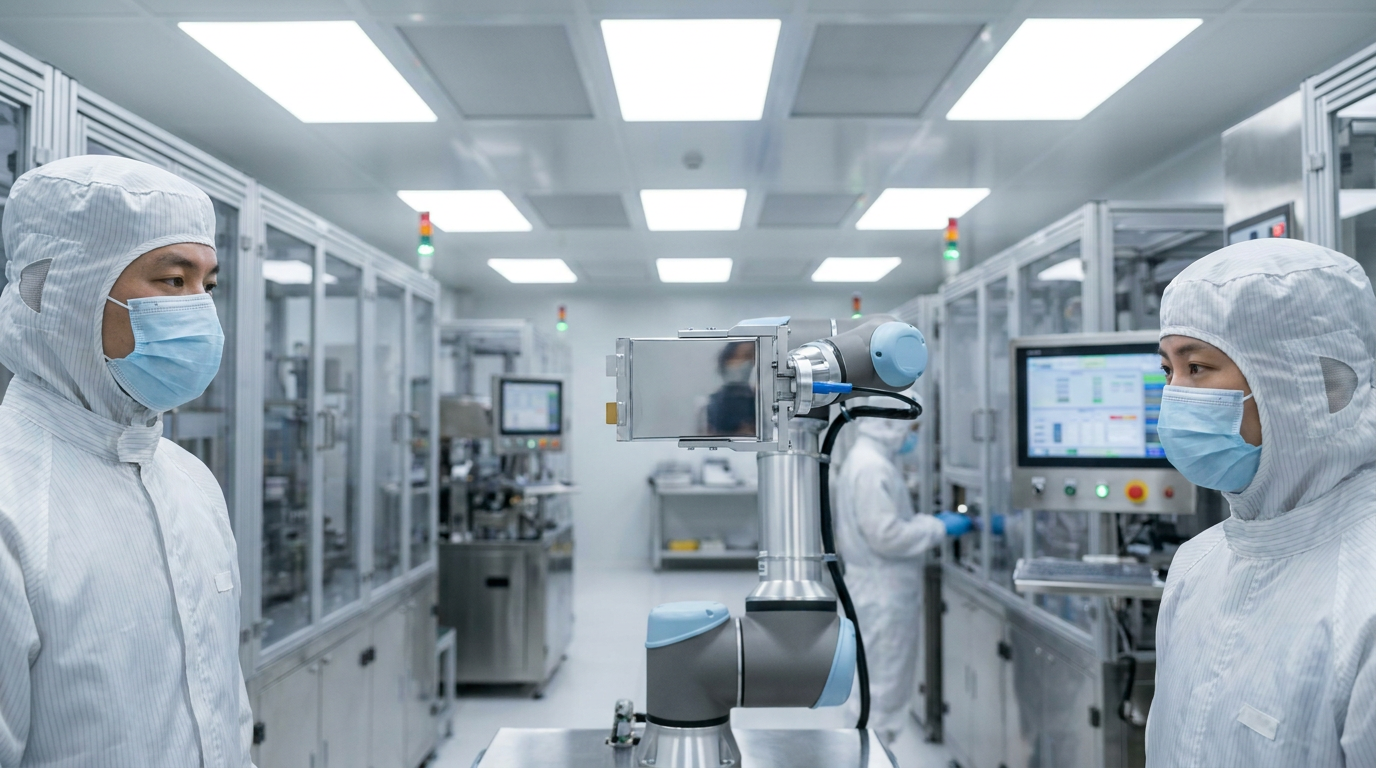
For the better part of a decade, solid-state batteries have been the fusion power of the automotive industry—a miraculous, world-changing technology that was perpetually five years away. But in 2026, the narrative has fundamentally shifted. The technology is officially graduating from isolated laboratory experiments to automated assembly lines. Major manufacturers and specialized startups are now racing to commercialize what is widely considered the most significant leap in energy storage since the invention of the lithium-ion cell.[9]
The momentum is visible across the globe. In California, QuantumScape recently inaugurated its "Eagle Line," a highly automated pilot facility designed to produce solid-state cells for automotive sampling. Meanwhile, Japanese regulators have formally approved Toyota's plans to begin manufacturing next-generation solid-state batteries by 2026, with the automaker breaking ground on a dedicated solid electrolyte plant. Simultaneously, US-based Factorial Energy has tapped into public markets via a $1.3 billion merger to fund its commercialization efforts.[1][2][3][4][8]
To understand why the industry is pouring billions into this transition, one must look at the limitations of current technology. Traditional lithium-ion batteries rely on a liquid electrolyte—a chemical solvent that shuttles lithium ions back and forth between the cathode and the anode. While effective, this liquid is heavy, takes up valuable physical space within the cell, and is highly flammable.[9]
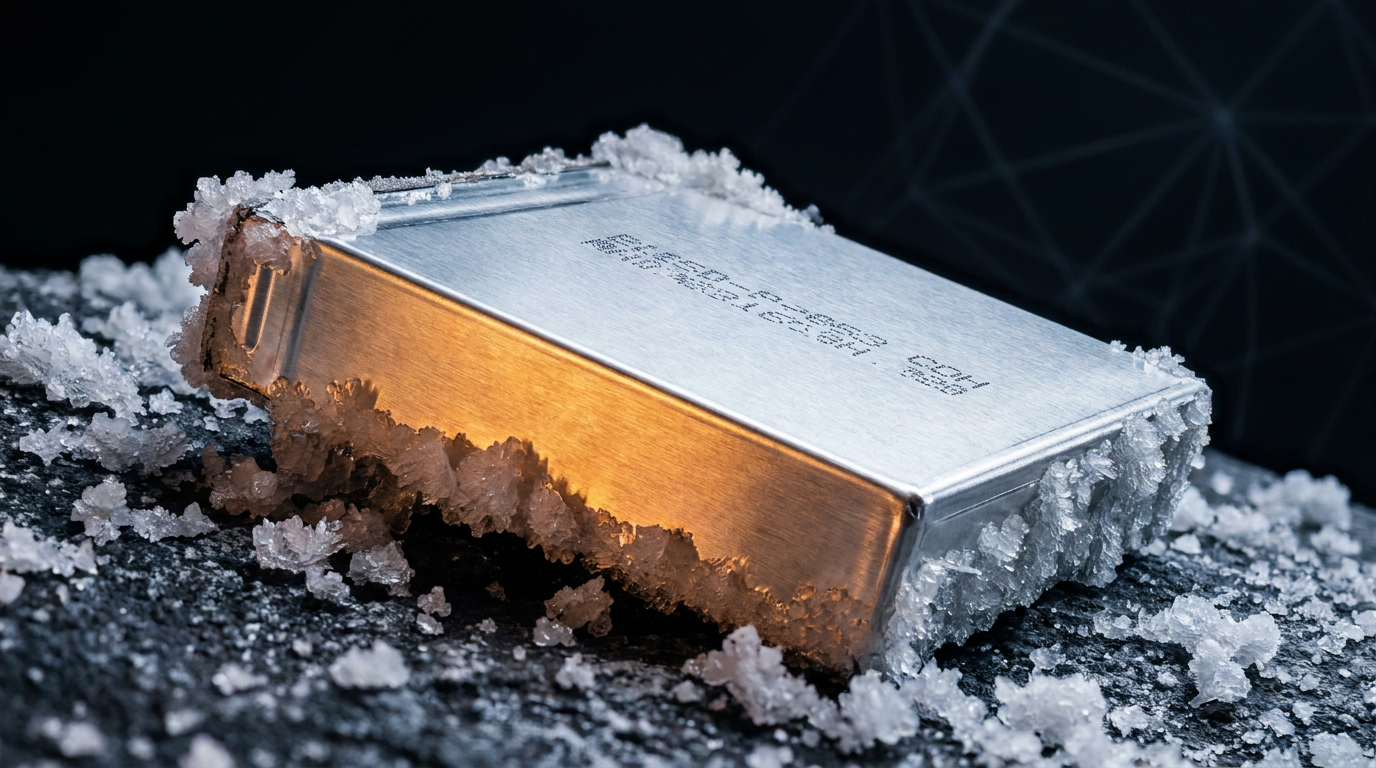
Solid-state batteries, as the name implies, replace this volatile liquid solvent with a solid material, typically a specialized ceramic, polymer, or sulfide glass. This is not merely a structural swap; it is a fundamental chemistry shift that unlocks the holy grail of battery engineering: the lithium-metal anode.[5][9]

In a conventional liquid battery, the anode is usually made of graphite, which safely absorbs lithium ions but adds significant bulk. Engineers have long known that using pure lithium metal for the anode would drastically increase capacity, but doing so in a liquid electrolyte causes the formation of dendrites. These microscopic, needle-like metallic growths can pierce the battery's internal separator, causing catastrophic short circuits.[9]
A solid electrolyte acts as a rigid, impenetrable physical barrier. It suppresses dendrite growth entirely, allowing the battery to safely utilize a pure lithium-metal anode. By stripping out the heavy graphite and the bulky liquid, engineers can pack significantly more active energy-storing material into the exact same physical footprint.[1][9]
The resulting leap in energy density is staggering. Today's best commercial lithium-ion batteries deliver roughly 200 to 300 watt-hours per kilogram (Wh/kg). The solid-state cells entering pilot production in 2026 are targeting 400 to 500 Wh/kg, effectively doubling the amount of energy stored per pound of battery weight.[9]

Today's best commercial lithium-ion batteries deliver roughly 200 to 300 watt-hours per kilogram (Wh/kg).
For the everyday driver, this translates directly to the elimination of range anxiety. In real-world testing, Factorial Energy's solid-state cells were integrated into a modified Mercedes-Benz EQS, delivering an astonishing 745 miles (1,200 kilometers) of driving range on a single charge. Chinese automaker Dongfeng has similarly promised that its upcoming solid-state vehicles will breach the 1,000-kilometer mark.[1][7]
Beyond raw distance, the solid architecture fundamentally rewrites the rules of charging speed. Because solid electrolytes are vastly more tolerant of high voltages and extreme temperatures, they can absorb electricity at unprecedented rates. QuantumScape's latest testing data demonstrates that its cells can fast-charge from 10 percent to 80 percent capacity in just 15 minutes, maintaining this performance over 400 consecutive cycles with minimal degradation.[1]
Safety, while less heavily marketed than range, is perhaps the technology's most critical advancement. The elimination of flammable liquid solvents drastically alters the physics of battery failure. Comparative testing shows that while conventional lithium-ion cells can enter thermal runaway at temperatures as low as 90 degrees Celsius, solid-state systems remain stable up to nearly 250 degrees Celsius. They simply do not catch fire under the same stress conditions.[5][9]

Despite these massive advantages, the rollout will not happen overnight. The first commercial applications of true solid-state batteries in 2026 are bypassing mass-market sedans in favor of premium, weight-sensitive applications. For example, Verge Motorcycles is deploying Donut Lab's 400 Wh/kg solid-state cells in its high-performance two-wheelers, where shedding battery weight is critical to handling.[6]
In the automotive sector, early adoption will be strictly limited to flagship luxury vehicles. Toyota has explicitly stated that its initial solid-state production volumes will be small, likely reserved for high-end Lexus models or specialized sports cars before gradually scaling up toward the end of the decade.[4][8]
The bottleneck is no longer the chemistry; it is the manufacturing. Building a perfect solid-state cell in a laboratory is a solved problem, but achieving gigawatt-hour scale with stable yields requires entirely new factory equipment. The solid-solid interfaces within the battery demand extreme precision and high-pressure manufacturing environments that traditional gigafactories are not equipped to handle.[5]

Because of these industrial hurdles, manufacturing realists caution against expecting a sudden, overnight revolution. Analysts project that while pilot lines and premium integrations define 2026, true high-volume, cost-competitive commercialization of pure solid-state batteries will likely not occur until the early 2030s.[5]
Until then, the automotive market will enter a bifurcated era. Everyday commuter vehicles will increasingly rely on highly affordable, durable lithium-iron-phosphate (LFP) batteries, while solid-state technology becomes the ultimate premium upgrade. But the milestone is undeniable: in 2026, the battery that promises to permanently change how the world drives finally left the lab and hit the road.
How we got here
2020–2023
Major automakers and startups announce breakthroughs in solid-state chemistry, solving early degradation issues.
Jan 2026
Toyota and Idemitsu break ground on a large-scale solid electrolyte pilot plant in Japan.
Feb 2026
QuantumScape inaugurates its 'Eagle Line' pilot facility to produce solid-state cells for automotive sampling.
Jun 2026
Factorial Energy goes public via a $1.3 billion merger to fund commercial-scale manufacturing.
Late 2026
First commercial applications hit the road in premium electric motorcycles and limited-run luxury vehicles.
Viewpoints in depth
Solid-State Pioneers
Startups and tech firms pushing for rapid commercialization.
Companies like QuantumScape and Factorial Energy argue that the fundamental chemistry problems of solid-state batteries have been solved. By pointing to successful pilot lines and real-world vehicle testing that yields over 700 miles of range, this camp believes the technology is ready for immediate integration into premium vehicles and aerospace applications. They view the remaining hurdles as standard scaling challenges rather than scientific roadblocks.
Legacy Automakers
Established car brands treating solid-state as a proprietary advantage.
Automakers like Toyota and Mercedes-Benz view solid-state batteries as the key differentiator for their next generation of flagship EVs. Rather than rushing to mass-market deployment, they are investing heavily in proprietary supply chains—such as Toyota's partnership with Idemitsu for solid electrolytes. This camp is willing to absorb high initial costs to launch low-volume, ultra-premium vehicles that showcase the technology's maximum potential before scaling down to cheaper models.
Manufacturing Realists
Analysts and engineers focused on the realities of gigawatt-hour scaling.
Industry analysts and manufacturing experts caution against the hype of pilot lines. They point out that building a solid-state cell requires entirely new factory equipment, precise pressure controls, and complex solid-solid interfaces that are notoriously difficult to mass-produce with stable yields. This camp argues that while the chemistry is sound, the sheer industrial inertia of current lithium-ion gigafactories means true cost-competitive solid-state EVs won't reach the average consumer until the early 2030s.
What we don't know
- Exactly how quickly manufacturing yields can be improved to bring the cost of solid-state cells down to parity with traditional lithium-ion batteries.
- Whether solid-state batteries will suffer from unforeseen degradation issues when subjected to a decade of real-world driving conditions.
- Which specific solid electrolyte chemistry (polymers, ceramics, or sulfides) will ultimately become the industry standard.
Key terms
- Electrolyte
- The medium that allows ions to flow between a battery's anode and cathode during charging and discharging.
- Lithium-metal anode
- An advanced battery component made of pure lithium that offers vastly more energy storage than traditional graphite anodes, but requires a solid electrolyte to function safely.
- Dendrites
- Microscopic, needle-like structures of lithium that can grow inside a liquid battery, potentially piercing the separator and causing a short circuit.
- Energy density
- The amount of energy a battery can store relative to its weight, typically measured in watt-hours per kilogram (Wh/kg).
- Thermal runaway
- A dangerous chain reaction in which a battery generates excessive heat, potentially leading to a fire or explosion.
Frequently asked
What makes a battery 'solid-state'?
It replaces the flammable liquid electrolyte found in traditional batteries with a solid material, such as a ceramic or polymer, allowing for a denser lithium-metal anode.
Will my next EV have a solid-state battery?
Likely not, unless you are purchasing a high-end luxury vehicle or performance motorcycle in the next few years. Mass-market adoption is expected in the early 2030s.
Why do solid-state batteries charge faster?
The solid electrolyte allows lithium ions to move more efficiently and tolerates much higher voltages and temperatures without degrading the battery.
Are solid-state batteries safer?
Yes. By eliminating the volatile liquid solvents used in current batteries, they drastically reduce the risk of fire and thermal runaway.
Sources
Source coverage
9 outlets
3 viewpoints surfaced








[1]ElectrekSolid-State Pioneers
QuantumScape inaugurates Eagle Line pilot for solid-state battery production
Read on Electrek →[2]InsideEVsManufacturing Realists
QuantumScape Takes Major Step Toward Commercializing Solid-State Batteries
Read on InsideEVs →[3]QuantumScapeSolid-State Pioneers
QuantumScape Celebrates Inauguration of Eagle Line
Read on QuantumScape →[4]Green Car ReportsLegacy Automakers
Toyota to manufacture solid-state batteries in Japan by 2026
Read on Green Car Reports →[5]BatteryTechOnlineManufacturing Realists
Lithium solid-state batteries promise higher energy density and safety, but manufacturing challenges delay commercialization until the 2030s
Read on BatteryTechOnline →[6]EngineerLiveSolid-State Pioneers
Solid-state batteries: From lab to road
Read on EngineerLive →[7]CarsGuideLegacy Automakers
Dongfeng solid-state batteries to be mass-produced in 2026 with 1000km-plus of driving range
Read on CarsGuide →[8]CBT NewsLegacy Automakers
Toyota to launch solid-state battery production by 2026
Read on CBT News →[9]TO7 MotorManufacturing Realists
Solid-State Batteries 2026: The Complete Guide to the EV Revolution
Read on TO7 Motor →
Every angle. Every day.
Get automotive stories with full source coverage and perspective breakdowns delivered to your inbox.