
Solid-State Batteries Finally Arrive in Production Vehicles—Starting With Motorcycles
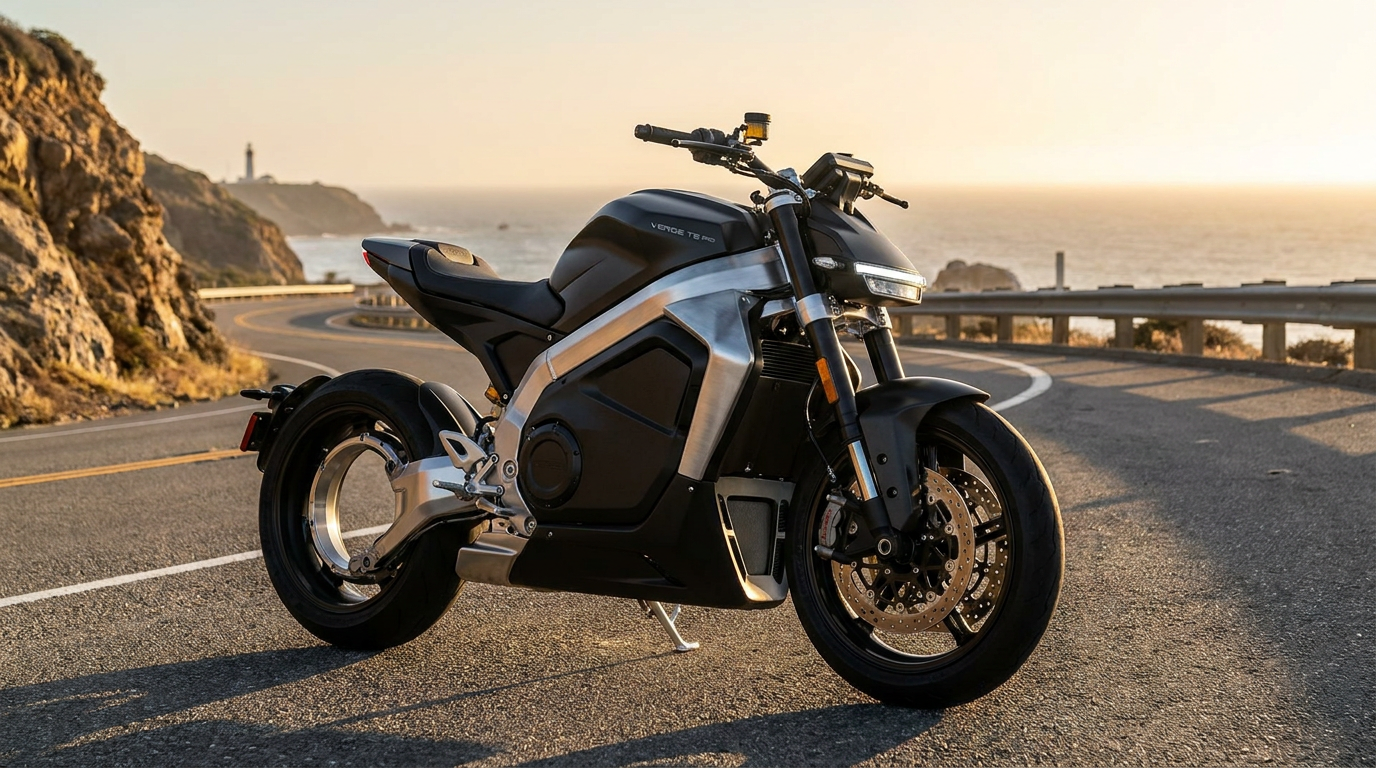
Estonian manufacturer Verge Motorcycles has commenced production of the 2026 TS Pro, the world's first mass-produced electric vehicle powered by a solid-state battery, unlocking 370 miles of range and 12-minute charging.
By Factlen Editorial Team
- EV Battery Innovators
- Believe solid-state technology is ready for commercialization now and will fundamentally disrupt the legacy automotive industry.
- Industry Skeptics
- Remain cautious about startups' claims regarding gigawatt-scale production readiness and long-term cell degradation.
- Performance Enthusiasts
- Focus on the unprecedented torque, massive range, and the elimination of charging anxiety, despite the high purchase price.
What's not represented
- · Traditional Motorcycle Manufacturers
- · Mass-Market Commuters
Why this matters
Solid-state batteries have long been the holy grail of the electric vehicle transition, promising to eliminate range anxiety, slash charging times, and prevent battery fires. By successfully bringing this technology to market in a production motorcycle, the industry has proven that these next-generation batteries are viable today, paving the way for lighter, safer, and faster-charging electric cars in the near future.
Key points
- Verge Motorcycles has commenced production of the 2026 TS Pro, the world's first mass-produced vehicle featuring a solid-state battery.
- The solid-state cells, developed by Donut Lab, boast an energy density of 400 Wh/kg, allowing for up to 370 miles of range.
- Pack-level testing demonstrated the ability to charge from 10% to 80% in just 12 minutes using an air-cooled system.
- The motorcycle features a unique hubless in-wheel motor that delivers 137 horsepower and 1,000 Nm of torque.
- Starting at $29,900, the TS Pro serves as a premium incubator for solid-state technology before it scales to mass-market passenger cars.
For the better part of a decade, the automotive industry has chased a singular holy grail: the solid-state battery. Promised to deliver double the range, a fraction of the charging time, and an end to battery fires, the technology has been perpetually "five years away" in the press releases of major automakers. But the breakthrough hasn't arrived in a flagship electric sedan or a mass-market SUV. Instead, the first commercially available electric vehicle powered by a solid-state battery has arrived on two wheels. In early 2026, Estonian-Finnish manufacturer Verge Motorcycles officially began rolling the TS Pro off its production lines, marking a historic milestone for electric mobility. By partnering with battery startup Donut Lab, Verge has bypassed the legacy automotive giants, delivering a high-performance motorcycle that fundamentally rewrites the rules of range and charging speed.[2][3][4]
To understand why the TS Pro is a watershed moment, one must understand the chemistry it replaces. Traditional lithium-ion batteries rely on liquid or gel electrolytes to move ions back and forth between the cathode and anode. While effective, these liquids are highly flammable and sensitive to temperature extremes, requiring heavy, complex liquid-cooling systems to prevent thermal runaway. Solid-state batteries, as the name implies, replace that liquid with a solid electrolyte material. This structural transformation yields a battery that is inherently stable, virtually eliminating fire risks while allowing engineers to pack significantly more active material into the same physical footprint. The result is a dramatic leap in energy density—the metric that dictates how much power a vehicle can carry relative to its weight.[3][4]
The numbers attached to the Verge TS Pro illustrate exactly what that leap in energy density looks like in the real world. The solid-state cells developed by Donut Lab boast an energy density of 400 watt-hours per kilogram (Wh/kg), far exceeding the roughly 250 Wh/kg typical of premium lithium-ion packs. This allows Verge to offer two staggering battery configurations. The standard model features a 20.2-kilowatt-hour (kWh) pack capable of 217 miles of range. The extended-range version crams a massive 33.3 kWh battery into the motorcycle's frame, delivering an unprecedented 370 miles (600 kilometers) on a single charge. For context, most premium electric touring motorcycles struggle to surpass 150 miles of highway range. By effectively doubling the industry standard, Verge has functionally eliminated range anxiety for two-wheeled travelers.[2][3][4]

Yet, massive range is only half of the solid-state promise; the other half is ultra-fast charging. Because solid electrolytes are vastly more resistant to heat buildup, they can accept electrical current at blistering speeds without degrading the battery's lifespan. In recent pack-level testing, Donut Lab demonstrated that their 18 kWh pack could sustain over 100 kilowatts of charging power—a massive 5C charge rate—for five continuous minutes. Starting at a standard room temperature, the battery surged from a 10 percent charge to 50 percent in just five minutes, and reached 80 percent capacity in exactly 12 minutes. Crucially, it achieved this using a simple air-cooled design, entirely avoiding the heavy liquid-cooling plumbing required by electric cars to sustain similar charging speeds.[1][3]
For the rider, these charging metrics transform the electric motorcycle experience from a carefully planned logistical puzzle into a seamless road trip. When plugged into a DC fast charger, the TS Pro can add roughly 186 miles of range in approximately ten minutes. That is roughly the time it takes a rider to dismount, stretch, use the restroom, and buy a coffee. Furthermore, Verge has confirmed that 2026 models destined for the United States will feature the North American Charging Standard (NACS) port, granting riders direct access to the ubiquitous Tesla Supercharger network. Between the 370-mile maximum range and the ten-minute top-ups, the TS Pro is the first electric motorcycle that can genuinely match the cadence of a cross-country journey on a gasoline-powered touring bike.[2][4]
The road to production, however, was paved with intense industry skepticism. When Donut Lab first announced its 400 Wh/kg solid-state cell at the CES technology trade show in early 2026, battery experts were quick to cry foul. The startup claimed a 100,000-cycle lifespan and five-minute charging capabilities, figures that seemed to defy the known limits of material science. Leading academics, including molecular engineering professors and executives from rival Chinese battery giants, publicly dismissed the claims as contradictory and pointed to the lack of a physical demonstration. For months, Donut Lab was grouped in with a long history of "vaporware" battery startups that promised the world but never delivered a commercial product.[1][3]

The road to production, however, was paved with intense industry skepticism.
To silence the critics, Donut Lab and Verge had to move beyond laboratory cell data and prove the technology in a real-world vehicle environment. The recent pack-level charging tests were the first step, demonstrating that the solid-state cells could perform collectively without thermal throttling. But the ultimate proof arrived when Verge officially commenced commercial production at its facilities in Estonia. By delivering physical, customer-ready motorcycles equipped with the technology, the companies achieved a genuine first for the Western market. While major automakers like Toyota and Changan are targeting 2027 or later for meaningful solid-state production volumes, Verge is currently shipping units to early reservation holders, proving that the technology is viable today.[1][3][4]
While the battery is the headline, the motorcycle built around it is an engineering marvel in its own right. Founded in Finland, Verge took a clean-sheet approach to the TS Pro, asking what a motorcycle should look like if it were designed exclusively for electric power. The answer is dominated by the "Donut Motor 2.0," a hubless, in-wheel electric motor that entirely replaces the traditional rear wheel, axle, and chain drive. By moving the motor into the rim of the rear tire, Verge lowered the bike's center of gravity and freed up the massive central chassis space required to house the 33.3 kWh solid-state battery pack.[2][4]
The hubless design is not merely an aesthetic party trick; it delivers staggering performance metrics. Because the motor applies force directly to the road without the parasitic power losses of a chain or belt drive, the TS Pro generates 137 horsepower and an earth-shattering 1,000 Newton-meters (737 lb-ft) of torque. That is roughly five times the torque of a flagship gasoline superbike, allowing the heavy machine to accelerate from zero to 60 miles per hour in just 3.5 seconds. Furthermore, the second-generation Donut motor introduced for the 2026 model year is 50 percent lighter than its predecessor, significantly improving the motorcycle's unsprung weight, suspension dynamics, and overall handling stability at its 124 mph top speed.[2][4]
Naturally, pioneering the world's most advanced battery technology comes with a steep financial barrier to entry. The 2026 Verge TS Pro starts at $29,900 for the standard battery configuration, while the extended-range 33.3 kWh model commands a premium price tag of $34,900 before taxes and destination fees. This pricing places the TS Pro firmly in the ultra-luxury segment, competing for garage space with top-tier European superbikes like the Ducati Panigale or the Aprilia RSV4. For the average urban commuter looking to save money on gasoline, the TS Pro remains entirely out of reach, serving instead as a halo product for wealthy early adopters and technology enthusiasts.[2][4]
The exorbitant price tag helps explain exactly why a niche motorcycle manufacturer beat the world's largest automakers to the solid-state finish line. Electric cars require massive battery packs—often between 80 and 100 kWh—meaning the high per-kilowatt-hour cost of early-stage solid-state manufacturing makes a passenger car financially unviable. A motorcycle, however, requires only a fraction of that total cell volume. By launching in a premium, low-volume motorcycle, Donut Lab can scale its manufacturing lines gradually, absorbing the high initial production costs while refining its yields. The motorcycle serves as the perfect commercial incubator for a technology that will eventually trickle down to mass-market vehicles.[1][2]

The arrival of the TS Pro coincides with a massive global surge in electric two-wheeler adoption. The global electric motorcycle market is projected to reach nearly $65 billion in 2026, driven by a combination of rising global fuel prices, stringent urban emissions regulations, and a growing consumer appetite for low-maintenance transportation. While the majority of this volume consists of low-cost, low-speed urban commuters in Asian markets, the premium high-performance segment in North America and Europe is expanding rapidly. As battery technology improves and total cost of ownership drops—electric bikes already offer up to 70 percent savings on fuel and maintenance compared to internal combustion engines—the transition away from gasoline is accelerating.[5][6]
For Donut Lab, the successful launch of the TS Pro is likely just the beginning of a much larger corporate trajectory. The startup has boldly claimed that it is ready for gigawatt-scale production, a statement that, if true, positions them as one of the most valuable intellectual properties in the mobility sector. If their solid-state cells can maintain their 400 Wh/kg density and 5C charging rates when scaled up for passenger cars, Donut Lab will inevitably become a prime acquisition target for legacy automakers desperate to secure a battery advantage. The technology powering today's fastest-charging motorcycle may very well be the architecture that powers tomorrow's electric SUVs.[1][2]

Ultimately, the 2026 Verge TS Pro represents a paradigm shift that extends far beyond the motorcycle industry. It proves that the long-promised benefits of solid-state batteries—vastly superior range, fire-safe chemistry, and ten-minute charging—are no longer confined to laboratory white papers or speculative press releases. They are currently rolling off an assembly line in Estonia and onto public roads. While the current iteration remains a luxury item for the wealthy few, it serves as a rolling proof-of-concept for the future of transportation. The era of the solid-state electric vehicle has officially begun, and it arrived on two hubless wheels.[1][3][4]
How we got here
January 2026
Donut Lab unveils its 400 Wh/kg solid-state battery cell at CES, facing intense skepticism from industry experts.
March 2026
Donut Lab releases pack-level testing data, proving the battery can sustain a 5C charging rate in a real vehicle environment.
April 2026
Verge Motorcycles officially begins commercial production of the TS Pro at its facilities in Estonia.
Late 2026
Scheduled delivery of the first North American TS Pro models equipped with NACS charging ports.
Viewpoints in depth
EV Battery Innovators
Believe solid-state technology is ready for commercialization now and will fundamentally disrupt the legacy automotive industry.
Companies like Verge and Donut Lab argue that the legacy automotive industry moves too slowly to commercialize breakthrough battery chemistry. By focusing on a low-volume, high-margin product like a premium motorcycle, they claim to have solved the initial scaling challenges of solid-state manufacturing. They point to their active production lines in Estonia and verified pack-level charging tests as undeniable proof that solid-state batteries are no longer vaporware, but a present-day reality capable of delivering 400 Wh/kg energy density and 12-minute charging.
Industry Skeptics
Remain cautious about startups' claims regarding gigawatt-scale production readiness and long-term cell degradation.
Despite the impressive pack-level demonstrations, many battery scientists and executives at established automakers remain highly skeptical of Donut Lab's long-term claims. While they acknowledge that building a few thousand battery packs for luxury motorcycles is an achievement, they argue that scaling to the gigawatt levels required for mass-market passenger cars presents entirely different manufacturing hurdles. Skeptics also question how the solid-state cells will handle a decade of real-world thermal cycling across diverse climates, noting that early cycle testing in a lab does not always translate to long-term reliability on the road.
Performance Enthusiasts
Focus on the unprecedented torque, massive range, and the elimination of charging anxiety, despite the high purchase price.
For the motorcycle community, the chemistry inside the battery is secondary to the performance it unlocks on the asphalt. Enthusiasts celebrate the TS Pro for effectively eliminating the two greatest barriers to electric motorcycle adoption: range anxiety and agonizingly slow charging times. With 370 miles of range and the ability to add nearly 200 miles in the time it takes to drink a cup of coffee, the TS Pro finally allows electric riders to keep pace with gasoline-powered touring bikes. While the $30,000 price tag restricts ownership to a wealthy few, enthusiasts view the bike as a necessary halo product that proves electric performance can surpass internal combustion.
What we don't know
- Whether Donut Lab can successfully scale its solid-state battery manufacturing to the gigawatt levels required for passenger cars.
- How the solid-state cells will degrade over a decade of real-world use across diverse climates, despite positive early cycle testing.
- When the high manufacturing costs of solid-state technology will drop enough to be viable in entry-level commuter motorcycles.
Key terms
- Solid-State Battery
- A next-generation battery that uses a solid electrolyte instead of a flammable liquid, allowing it to store more energy safely and charge much faster.
- Energy Density
- A measurement of how much power a battery can hold relative to its weight, typically expressed in watt-hours per kilogram (Wh/kg).
- C-Rate
- A metric used to describe how fast a battery charges or discharges; a 5C rate means the battery can theoretically fully charge in one-fifth of an hour, or 12 minutes.
- Hubless In-Wheel Motor
- An electric motor built directly into the rim of the wheel, eliminating the need for a traditional axle, chain, or belt drive.
Frequently asked
Why are solid-state batteries better than traditional lithium-ion?
They replace flammable liquid electrolytes with stable solid materials, which drastically reduces fire risk, allows for much faster charging without overheating, and packs significantly more energy into a smaller space.
How fast does the Verge TS Pro charge?
Using a DC fast charger, the motorcycle's solid-state battery can charge from 10% to 80% in just 12 minutes, adding roughly 186 miles of range in a ten-minute stop.
How far can the motorcycle travel on a single charge?
The extended-range version features a 33.3 kWh battery pack that delivers up to 370 miles (600 kilometers) of range, effectively doubling the industry standard for electric motorcycles.
Why did this technology debut in a motorcycle instead of a car?
Motorcycles require much smaller battery packs than cars. This allows startups to scale their manufacturing gradually and absorb the high initial costs of new battery technology before attempting mass-market automotive production.
Sources
Source coverage
6 outlets
3 viewpoints surfaced






[1]ElectrekIndustry Skeptics
Donut Lab proves solid-state battery charging in Verge TS Pro
Read on Electrek →[2]GearJunkiePerformance Enthusiasts
You Can Finally Buy an EV With a Solid-State Battery: It's a Motorcycle
Read on GearJunkie →[3]HiConsumptionEV Battery Innovators
Verge's 2026 TS Pro Is Here, Becoming the First Production Vehicle Ever with a Solid-State Battery
Read on HiConsumption →[4]Verge MotorcyclesEV Battery Innovators
The World's First Solid-State Battery Motorcycle Enters Production
Read on Verge Motorcycles →[5]Fortune Business Insights
Electric Motorcycle Market Size & Future Outlook
Read on Fortune Business Insights →[6]Intel Market Research
Electric Motorbikes Market Insights
Read on Intel Market Research →

Every angle. Every day.
Get shopping stories with full source coverage and perspective breakdowns delivered to your inbox.