
Kalaya and Michael Tusk Take Top Honors at 2026 James Beard Awards
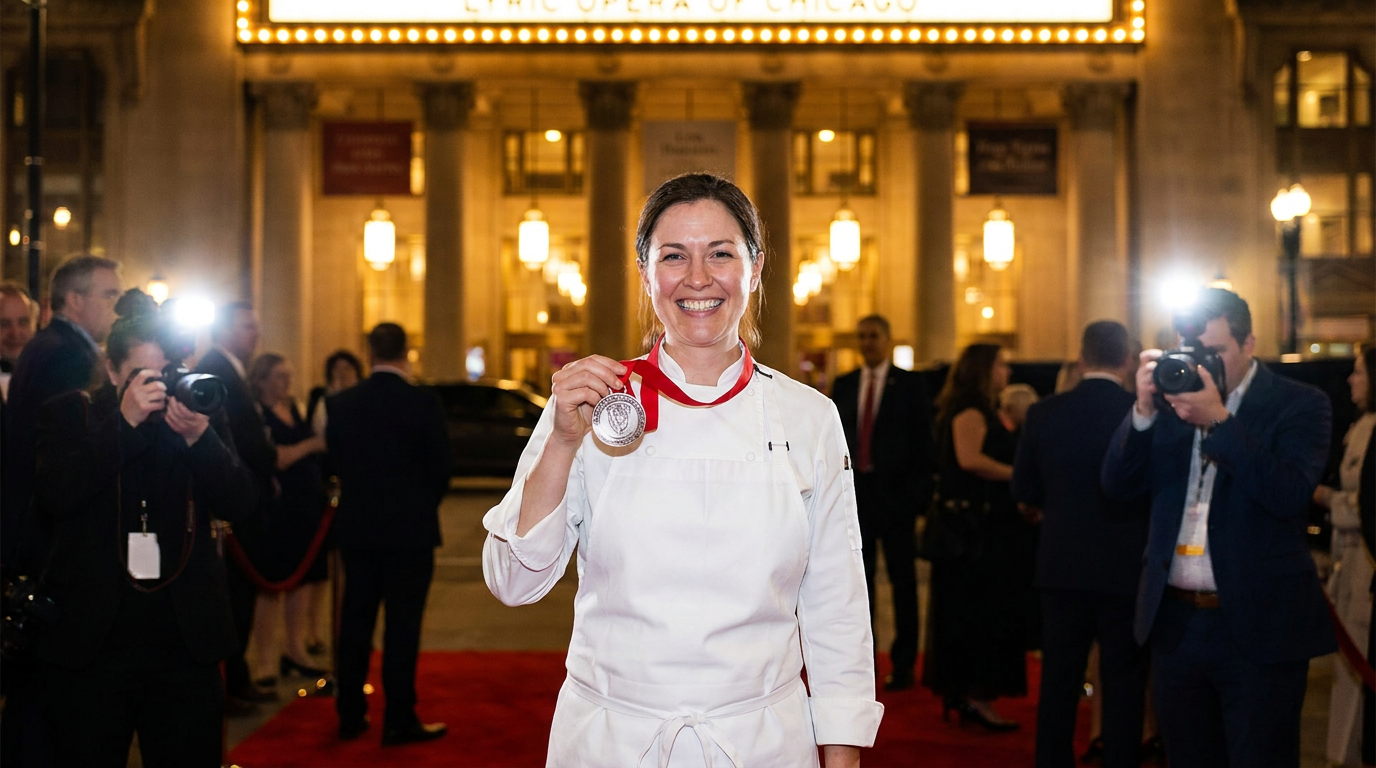
Philadelphia's Kalaya was named Outstanding Restaurant and San Francisco's Michael Tusk won Outstanding Chef at the 2026 James Beard Awards in Chicago. The ceremony highlighted a thriving premium dining sector that continues to draw diners despite broader economic shifts.
By Factlen Editorial Team
- Culinary Innovators
- Chefs and restaurateurs focused on pushing creative boundaries and cultural storytelling.
- Industry Analysts
- Market researchers tracking consumer spending and satisfaction trends.
- Local Food Communities
- Regional diners and local media celebrating the decentralization of culinary excellence.
What's not represented
- · Front-of-house staff and line cooks who execute the award-winning visions daily.
- · Mid-tier restaurant operators who are struggling with the current bifurcation of consumer spending.
Why this matters
While fast-food chains and mid-tier restaurants battle over price-sensitive consumers, the success of these independent, culturally rich establishments proves that diners are still willing to invest in exceptional culinary experiences. The awards provide a crucial economic lifeline to independent restaurants, driving tourism and local pride.
Key points
- Philadelphia's Kalaya won Outstanding Restaurant, highlighting the growing prominence of authentic regional cuisines.
- Michael Tusk of San Francisco's Quince was awarded Outstanding Chef for his enduring excellence in fine dining.
- New York's Lei won Best New Restaurant, while Adrian Torres of Maximo in Texas took Emerging Chef.
- Consumer data shows diners are increasingly willing to splurge on premium, high-quality dining experiences.
- Full-service restaurants maintained a high satisfaction score of 82, according to the ACSI.
The American culinary world gathered at the Lyric Opera of Chicago on Monday night to celebrate the 2026 James Beard Foundation Restaurant and Chef Awards, an event widely considered the Oscars of the food industry. This year’s ceremony highlighted a vibrant, evolving dining landscape that continues to push creative boundaries even as the broader hospitality sector navigates shifting consumer habits.[1]
Taking home the night’s most coveted prize, Outstanding Restaurant, was Kalaya, the acclaimed Southern Thai establishment in Philadelphia. The win marks a significant triumph for a restaurant that has consistently drawn national praise for its uncompromising, deeply personal approach to regional Thai cuisine, cementing Philadelphia's status as a top-tier dining destination.[1][2][6]
In the Outstanding Chef category, the medallion went to Michael Tusk of Quince in San Francisco. Tusk’s victory is a testament to enduring excellence in fine dining, recognizing a chef who has continuously refined his craft and maintained a world-class standard over decades in one of the country's most competitive culinary markets.[1][7]

The awards also shone a spotlight on the industry's rising stars and fresh concepts. Adrian Torres of Maximo in West University Place, Texas, was named Emerging Chef, signaling a bright future for his innovative approach to regional flavors. Meanwhile, Lei, located in New York’s Chinatown, captured the title of Best New Restaurant, a highly competitive category that often dictates the next major trends in American dining.[1][2][5]
Beyond the kitchen, the James Beard Foundation honored the professionals who elevate the entire dining experience. Lee Campbell of Borgo in New York won Outstanding Professional in Beverage Service, while Portland, Oregon's Scotch Lodge took home the award for Outstanding Bar, underscoring the growing importance of sophisticated, curated beverage programs in modern hospitality.[1][2]
Beyond the kitchen, the James Beard Foundation honored the professionals who elevate the entire dining experience.
The celebration of these premium, independent establishments comes at a fascinating inflection point for the broader restaurant industry. According to a mid-year outlook by Consumer Edge, U.S. restaurant spending is becoming increasingly fractured. Consumers are either trading down to affordable, value-driven quick-service options or trading up for premium experiences they feel are genuinely worth the splurge.[3]

This bifurcation is leaving mid-tier restaurants struggling, but it provides a robust tailwind for the types of establishments honored by the James Beard Foundation. Diners are consolidating their restaurant visits into fewer, more meaningful occasions, placing a premium on exceptional quality, cultural storytelling, and flawless execution.[3][4]
Data from the American Customer Satisfaction Index (ACSI) supports this trend. Full-service restaurants have maintained a high satisfaction score of 82 out of 100, continuing to rank as one of the highest-scoring industries in the index. The ACSI notes that in a market defined by economic trade-offs, consistency across the full dining experience is what separates the leaders from the pack.[4]
Regional culinary hubs also had a strong showing, proving that world-class dining is no longer confined to a handful of major coastal cities. Dana Street, the force behind Fore Street, Scales, and Standard Baking Co. in Portland, Maine, won Outstanding Restaurateur. The award acknowledges Street's decades-long influence in transforming Portland into an outsized culinary powerhouse.[1][5]

In the regional Best Chef categories, the winners reflected a rich tapestry of American dining. Jesse Ito of Royal Sushi Omakase won Best Chef: Mid-Atlantic, Jacob Potashnick of Chicago's Feld took Best Chef: Great Lakes, and Hooni Kim of Meju secured Best Chef: New York. Each chef represents a distinct culinary viewpoint, from meticulous sushi preparation to modern Korean fermentation.[1][2]
For the winning restaurants, a James Beard Award is more than just a prestigious plaque; it is a transformative business event. The national recognition typically triggers a massive surge in reservations, media attention, and out-of-town tourism, providing a vital economic boost that helps independent operators thrive despite rising food and labor costs.[5]
As the culinary community looks ahead, the 2026 awards serve as a powerful reminder of the industry's resilience and creativity. By honoring both established legends and groundbreaking newcomers, the James Beard Foundation has mapped out a vibrant future for American dining—one where passion, heritage, and exceptional hospitality continue to draw people to the table.[1][2]
How we got here
January 2026
The James Beard Foundation announces the semifinalists for the Restaurant and Chef Awards.
March 2026
The final nominees are revealed, showcasing a highly diverse group of chefs and establishments across the country.
June 15, 2026
The 2026 James Beard Awards ceremony takes place at the Lyric Opera of Chicago, crowning the year's winners.
Viewpoints in depth
Culinary Innovators
Chefs and restaurateurs focused on pushing creative boundaries and cultural storytelling.
For the chefs and operators taking home awards, the recognition validates years of uncompromising dedication to their specific culinary visions. Winners like Kalaya and Meju emphasize that American diners are increasingly hungry for authentic, unvarnished regional cuisines rather than watered-down fusion. These innovators argue that the future of fine dining lies in deep cultural storytelling, where the origin of the ingredients and the history of the recipes are just as important as the final presentation on the plate.
Industry Analysts
Market researchers tracking consumer spending and satisfaction trends.
Data analysts from firms like Consumer Edge and the ACSI view the success of high-end, independent restaurants through a macroeconomic lens. They note that while inflation has made consumers more price-sensitive, it hasn't killed the desire to dine out; rather, it has raised the bar for what constitutes a worthwhile experience. Analysts point out that diners are willing to pay premium prices, but only if the execution, service, and ambiance are flawless. This 'splurge or save' mentality is creating a golden era for top-tier restaurants while hollowing out the mediocre middle.
Local Food Communities
Regional diners and local media celebrating the decentralization of culinary excellence.
For food enthusiasts outside of traditional culinary capitals like New York and Los Angeles, the 2026 awards are a point of immense civic pride. Communities in Portland, Maine, Philadelphia, and West University Place, Texas, see these national wins as proof that world-class dining is becoming truly decentralized. Local advocates argue that lower commercial rents and strong agricultural networks in smaller cities are allowing chefs to take bigger creative risks, ultimately enriching the entire American food landscape.
What we don't know
- How the continued rise in food and labor costs will impact the profit margins of these award-winning independent restaurants.
- Whether the 'splurge or save' consumer mindset will permanently alter the viability of mid-tier, casual dining chains.
Key terms
- James Beard Awards
- Annual awards presented by the James Beard Foundation to recognize culinary professionals in the United States, often referred to as the Oscars of the food world.
- Outstanding Restaurateur
- An award given to a working restaurateur who sets high national standards in restaurant operations and entrepreneurship.
- ACSI
- The American Customer Satisfaction Index, an economic indicator that measures the satisfaction of consumers across the U.S. economy.
- Omakase
- A Japanese dining phrase that translates to 'I'll leave it up to you,' where the chef selects and serves a series of dishes, typically sushi.
Frequently asked
Who won Outstanding Restaurant at the 2026 James Beard Awards?
Kalaya, a highly acclaimed Southern Thai restaurant located in Philadelphia, won the award for Outstanding Restaurant.
Who was named Outstanding Chef?
Michael Tusk of Quince in San Francisco was awarded Outstanding Chef.
Where were the 2026 awards held?
The ceremony took place on June 15, 2026, at the Lyric Opera of Chicago.
How is the restaurant industry performing overall?
The industry is fracturing; while fast-food and mid-tier restaurants face challenges, premium, experience-driven dining is thriving as consumers choose to splurge on high-quality meals.
Sources
Source coverage
7 outlets
3 viewpoints surfaced







[1]James Beard FoundationCulinary Innovators
The 2026 James Beard Restaurant and Chef Award Winners
Read on James Beard Foundation →[2]ResyCulinary Innovators
The Resy Guide to the 2026 James Beard Awards® Winners
Read on Resy →[3]Consumer EdgeIndustry Analysts
Consumer Edge Shows the Restaurant Industry Is Fracturing
Read on Consumer Edge →[4]American Customer Satisfaction IndexIndustry Analysts
Execution is now the dividing line in the restaurant industry
Read on American Customer Satisfaction Index →[5]EaterCulinary Innovators
Here Are the 2026 James Beard Awards Restaurant and Chef Winners
Read on Eater →[6]The Philadelphia InquirerLocal Food Communities
Kalaya wins Outstanding Restaurant at the 2026 James Beard Awards
Read on The Philadelphia Inquirer →[7]San Francisco ChronicleLocal Food Communities
Quince’s Michael Tusk wins Outstanding Chef at James Beard Awards
Read on San Francisco Chronicle →
Every angle. Every day.
Get food drink stories with full source coverage and perspective breakdowns delivered to your inbox.