
Nutritional Psychiatry: How the Gut Microbiome is Reshaping Mental Health Treatment
Emerging research confirms that the gut microbiome plays a critical role in regulating mood and cognition, giving rise to "psychobiotics" and targeted dietary interventions for anxiety and depression.
By Factlen Editorial Team
- Nutritional Psychiatrists
- Argue that dietary interventions and microbiome modulation should be standard adjunctive treatments for mental health disorders.
- Precision Medicine Researchers
- Focus on using biomarkers to subtype patients and prescribe highly targeted, individualized psychobiotic treatments rather than broad dietary advice.
- Methodologists & Skeptics
- Caution that while preclinical data is strong, human trials show high variability, and over-the-counter supplements often lack the specificity needed for clinical results.
- Commercial Biotech
- Emphasize the development and commercialization of specific, patented psychobiotic strains to treat neurodevelopmental and psychiatric conditions.
What's not represented
- · Patients with severe treatment-resistant depression
- · Public health policymakers addressing food deserts
Why this matters
Understanding the gut-brain connection empowers individuals to actively improve their mental health and stress resilience through accessible, daily dietary choices, offering a powerful adjunct to traditional psychiatric care.
Key points
- Nutritional psychiatry is shifting mental health treatment by targeting the gut microbiome.
- The gut produces 95% of the body's serotonin, alongside other key neurotransmitters like GABA and dopamine.
- Western diets promote dysbiosis and neuroinflammation, increasing the risk of depression and anxiety.
- Specific bacterial strains, known as psychobiotics, are showing clinical efficacy in alleviating psychiatric symptoms.
- Researchers are developing precision medicine approaches to match specific psychobiotics to individual patient biomarkers.
For decades, modern medicine treated mental health primarily as an issue confined to the brain—a matter of neurotransmitter imbalances to be corrected with targeted pharmaceuticals. But a paradigm shift is rapidly redefining psychiatric care in 2026. Researchers are increasingly looking downward, focusing on the trillions of microorganisms residing in the human digestive tract.[1]
This emerging field, known as nutritional psychiatry, posits that the gut microbiome is a critical regulator of mood, stress resilience, and cognitive function. By mapping the complex communication network between the gut and the brain, scientists are discovering that what we eat fundamentally alters how we feel.[2][3]
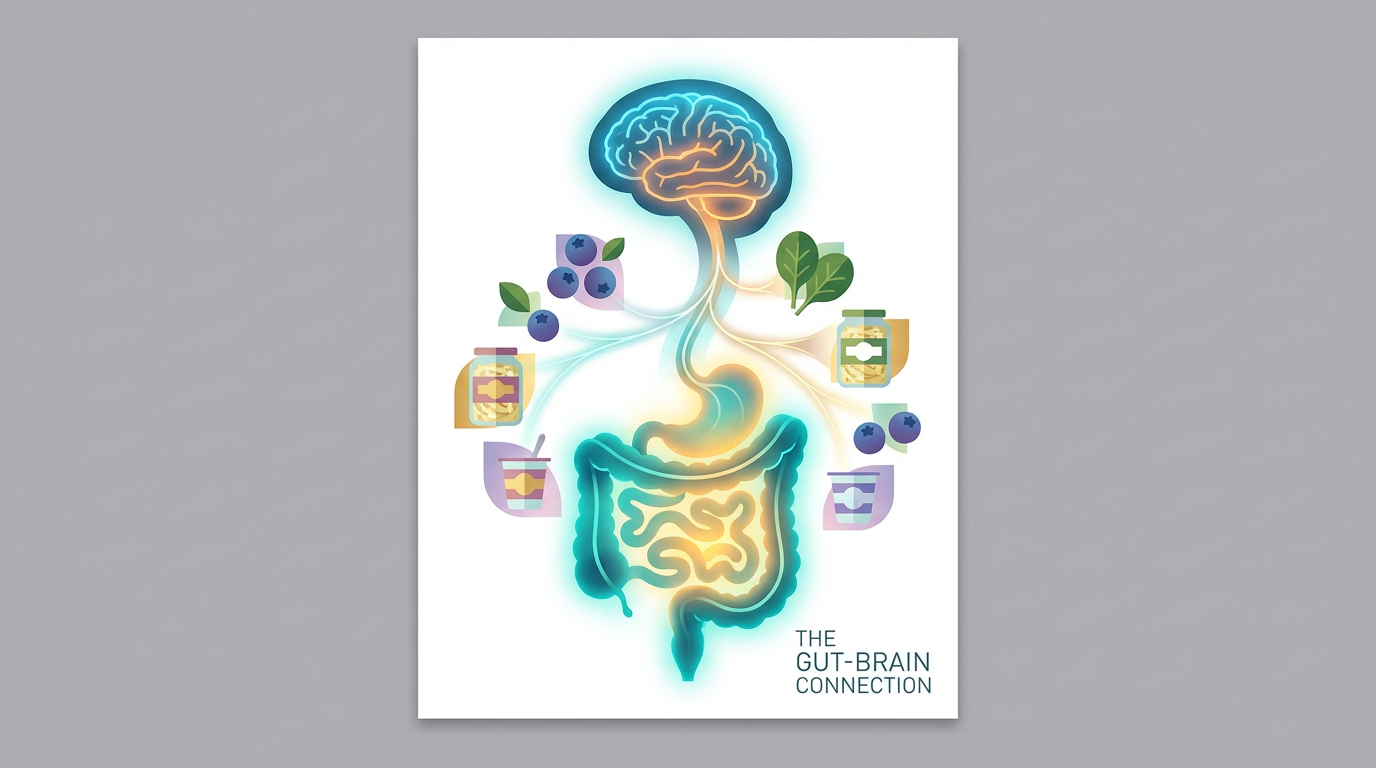
The connection relies on the "microbiota-gut-brain axis," a bidirectional superhighway of neural, metabolic, immune, and endocrine signals. The most direct physical link is the vagus nerve, which runs from the brainstem to the abdomen, allowing the gut and the brain to exchange rapid, continuous signals.[1][2]
But the communication is also chemical. Gut bacteria are prolific chemical factories. Remarkably, an estimated 95% of the body's serotonin—a neurotransmitter heavily involved in mood regulation—is produced in the gastrointestinal tract. Microbes also synthesize other crucial neuroactive compounds, including dopamine and gamma-aminobutyric acid (GABA), which helps calm the nervous system.[1][4]

When the microbiome is fed a Western diet—characterized by high intakes of ultra-processed foods, saturated fats, and refined sugars—the microbial ecosystem falls into a state of imbalance known as dysbiosis. This state degrades the intestinal barrier and triggers chronic, low-grade systemic inflammation.[3]
Neuroinflammation is now recognized as a major underlying factor in many psychiatric conditions. Inflammatory cytokines can cross the blood-brain barrier, altering brain function and significantly increasing the risk of depression, anxiety, and cognitive impairment over time.[3]
Conversely, diets rich in fiber, polyphenols, and fermented foods provide the raw materials that beneficial bacteria need to thrive. When microbes ferment dietary fiber, they produce short-chain fatty acids (SCFAs) like butyrate, which have potent anti-inflammatory properties and help maintain the integrity of the blood-brain barrier.[2][4]
Clinical trials have repeatedly demonstrated the power of this dietary approach. In multiple studies, patients adhering to a Mediterranean-style diet for just 12 weeks experienced significantly reduced symptoms of depression compared to those receiving only social support, with concurrent positive changes in their inflammatory markers.[3]

Beyond general dietary patterns, researchers are now isolating specific bacterial strains that confer targeted mental health benefits. These specialized microbes have been dubbed "psychobiotics," and they represent the frontier of microbiome-targeted therapies.[5]
Beyond general dietary patterns, researchers are now isolating specific bacterial strains that confer targeted mental health benefits.
"If microbes are controlling the brain, then microbes are controlling everything," notes Dr. John F. Cryan, a leading microbiome researcher. Recent work highlights specific strains, such as Lactobacillus plantarum and Bifidobacterium breve, which have shown efficacy in alleviating symptoms of depression and anxiety in clinical settings.[5]
Another potent psychobiotic gaining attention in 2026 is Akkermansia muciniphila. This strain, which thrives on polyphenol-rich foods like cranberries and grapes, has demonstrated antidepressant effects and the ability to improve cognitive function in recent trials.[5]
The commercial biotech sector is rapidly translating these discoveries into targeted therapies. Companies are developing precision psychobiotic blends designed to modulate the production of specific neurotransmitters. For example, formulations containing Levilactobacillus brevis and Lactiplantibacillus plantarum are currently being explored for their ability to promote GABA production.[7]

These specific GABA-promoting strains are showing early promise in clinical trials aimed at supporting neurodevelopmental conditions like ADHD and autism spectrum disorder, suggesting that psychobiotics may eventually play a role far beyond standard depression and anxiety management.[7]
However, the future of nutritional psychiatry is not just about prescribing a universal probiotic pill. The field is moving rapidly toward precision medicine, utilizing biomarkers to tailor treatments to individual patients rather than relying on a one-size-fits-all approach.[6]
Dr. Jane A. Foster, an associate professor at McMaster University, emphasizes that mental health disorders are highly heterogeneous. "In the long run we want to know if biomarkers that we can look at outside the brain might give us indications of what's happening in the central nervous system," she explains.[6]
By analyzing blood or urine markers, clinicians hope to subtype patients with depression based on their unique biological and microbial profiles. This would allow doctors to identify which patients are most likely to respond to a specific psychobiotic, a dietary intervention, or a traditional pharmaceutical.[6]
Despite the immense promise, researchers caution against viewing psychobiotics as a standalone cure-all. Translating preclinical findings from mouse models to human applications remains challenging, as the human microbiome is vastly more complex and heavily influenced by genetics, environment, and baseline stress levels.[4]
Some clinical trials involving healthy populations with low baseline stress have shown limited psychological effects. This underscores that psychobiotics may be most effective when correcting an existing dysbiosis or inflammatory state, rather than artificially enhancing an already healthy system.[4]

Furthermore, the regulatory landscape for psychobiotics is still evolving. Because many of these products are classified as dietary supplements rather than drugs, quality control and strain specificity can vary wildly on consumer shelves. Experts stress that standard over-the-counter probiotics are not necessarily psychobiotics; the neurological benefits are highly strain-specific.[1][5]
For the general public, the most actionable takeaway from the 2026 consensus on nutritional psychiatry is the foundational importance of diet. Incorporating a diverse array of plant fibers, fermented foods, and polyphenol-rich berries remains the most reliable, evidence-backed way to cultivate a resilient, mood-supporting microbiome.[1][2]
How we got here
Early 1900s
Zoologist Élie Metchnikoff observes that Bulgarian peasants consuming Lactobacillus-rich yogurt live longer, happier lives, sparking early probiotic theories.
2013
The term 'psychobiotics' is officially coined by Irish researchers to describe live organisms that confer mental health benefits.
2020–2024
Large-scale observational studies and initial clinical trials firmly establish the link between Western diets, gut dysbiosis, and increased rates of depression.
2025–2026
Research shifts toward precision medicine, isolating specific strains like L. plantarum and exploring biomarkers to tailor psychobiotic treatments to individual patients.
Viewpoints in depth
Nutritional Psychiatrists' view
Advocates for integrating dietary interventions as a foundational pillar of mental health care.
This camp argues that the evidence linking diet, the microbiome, and mental health is now too robust to ignore. They advocate for moving beyond a purely pharmaceutical model of psychiatric care, suggesting that dietary interventions—specifically the adoption of Mediterranean-style, fiber-rich diets—should be prescribed as standard adjunctive treatments for depression and anxiety. They emphasize that correcting underlying dysbiosis and neuroinflammation is essential for long-term mental well-being.
Precision Medicine Researchers' view
Focuses on utilizing biomarkers to deliver highly individualized microbiome therapies.
Researchers in this camp caution against a one-size-fits-all approach to nutritional psychiatry. Because the human microbiome is incredibly diverse and mental health disorders are highly heterogeneous, they argue that broad dietary advice or generic probiotics are insufficient. Instead, they are focused on identifying specific blood and urine biomarkers that can subtype patients, allowing clinicians to prescribe the exact psychobiotic strain or targeted therapy most likely to work for an individual's unique biological profile.
Commercial Biotech's view
Drives the development and patenting of specific psychobiotic strains for clinical use.
The commercial sector views the gut-brain axis as a massive frontier for therapeutic development. Biotech companies are investing heavily in isolating, bioengineering, and patenting specific bacterial strains—such as those that promote GABA or serotonin production. Their goal is to create standardized, clinically validated psychobiotic supplements and functional foods that can be marketed for specific conditions, ranging from general stress and anxiety to neurodevelopmental disorders like ADHD.
Methodologists' view
Urges caution regarding the translation of animal models to human clinical applications.
While acknowledging the exciting potential of the gut-brain axis, skeptics and methodologists emphasize the limitations of current research. They point out that many of the most dramatic findings come from highly controlled mouse models, which do not perfectly map onto the complex, environmentally influenced human microbiome. They caution against the over-commercialization of 'psychobiotics' before large-scale, long-term human trials can definitively prove their efficacy across diverse populations.
What we don't know
- Exactly how long it takes for a newly introduced psychobiotic strain to permanently colonize the human gut.
- Which specific biomarkers will prove most reliable for subtyping depression in clinical settings.
- How individual genetics interact with specific psychobiotic strains to either enhance or blunt their psychological effects.
Key terms
- Psychobiotics
- Live bacterial strains that, when ingested in adequate amounts, confer mental health benefits by interacting with the gut-brain axis.
- Gut-Brain Axis
- The bidirectional communication network linking the gastrointestinal tract and the central nervous system, involving neural, hormonal, and immune pathways.
- Short-Chain Fatty Acids (SCFAs)
- Beneficial compounds, such as butyrate, produced when gut bacteria ferment dietary fiber; they help reduce inflammation and protect the brain.
- Vagus Nerve
- The longest cranial nerve in the body, serving as the primary physical information highway between the gut and the brain.
- Dysbiosis
- An imbalance in the gut microbial community, often caused by poor diet or antibiotics, which can lead to systemic inflammation and disease.
Frequently asked
Can changing my diet cure depression?
While diet alone is rarely a cure for severe clinical depression, research shows that adopting a Mediterranean-style, fiber-rich diet can significantly reduce depressive symptoms and improve the efficacy of other treatments.
Are standard probiotics considered psychobiotics?
Not necessarily. While general probiotics support digestive health, psychobiotics are specific, clinically tested strains (like certain Lactobacillus and Bifidobacterium species) proven to produce neuroactive compounds and affect mood.
How quickly can diet alter the gut microbiome?
The gut microbiome is highly responsive to dietary changes. Studies indicate that shifting to a high-fiber, plant-rich diet can alter microbial composition within just a few days, though lasting mental health benefits typically require weeks of sustained dietary habits.
Sources
Source coverage
7 outlets
4 viewpoints surfaced







[1]Factlen Editorial Team
Synthesis by Factlen editorial team
Read on Factlen Editorial Team →[2]Annual Review of Food Science and TechnologyNutritional Psychiatrists
From Fork to Feelings: How Foods Shape Mental Health via the Microbiota–Gut–Brain Axis
Read on Annual Review of Food Science and Technology →[3]NutrientsNutritional Psychiatrists
Diet–Microbiome–Brain Axis: A Narrative Review
Read on Nutrients →[4]Frontiers in NutritionMethodologists & Skeptics
Psychobiotics as Interventions for Anxiety and Depression
Read on Frontiers in Nutrition →[5]Psychology TodayMethodologists & Skeptics
Psychobiotics Get Real
Read on Psychology Today →[6]Gut Microbiota for HealthPrecision Medicine Researchers
Precision medicine and the gut-brain axis
Read on Gut Microbiota for Health →[7]Nutrition InsightCommercial Biotech
Gut-brain axis: Innovations in psychobiotics
Read on Nutrition Insight →



Every angle. Every day.
Get health stories with full source coverage and perspective breakdowns delivered to your inbox.