
The Ultimate Predictors of Longevity: Why VO2 Max and Muscle Strength Outperform Traditional Health Metrics
Extensive clinical data reveals that cardiorespiratory fitness and muscular strength are far stronger predictors of lifespan than traditional metrics like cholesterol, blood pressure, or even smoking status.
By Factlen Editorial Team
- Longevity Physicians & Researchers
- Physical capacity should be optimized to elite levels to build a reserve against aging.
- Traditional Preventative Cardiology
- Focuses on standard clinical biomarkers and moderate exercise guidelines for disease prevention.
- Epidemiologists & Skeptics
- Emphasizes the role of healthy user bias and reverse causality in observational fitness data.
What's not represented
- · Public health officials focused on making basic, moderate exercise accessible to low-income populations rather than elite optimization.
- · Patients with physical disabilities who cannot perform traditional VO2 max or grip strength tests.
Why this matters
Most people focus on lab results like cholesterol or blood sugar, but improving your VO2 max and grip strength offers the highest statistical return on investment for extending your life and maintaining physical independence.
Key points
- Cardiorespiratory fitness (VO2 max) is a stronger predictor of mortality than smoking, diabetes, or hypertension.
- A 2018 study of 122,000 patients found that those with 'low' fitness had a 500% higher risk of death than 'elite' performers.
- Unlike many health interventions, there is no 'ceiling effect' to aerobic fitness; higher is always better.
- Muscular strength, often measured by grip strength, is independently associated with lower risks of cardiovascular disease and cancer.
- Longevity experts recommend a mix of high-intensity interval training (HIIT) and steady-state cardio to optimize these metrics.
For decades, the annual physical examination has centered on a familiar panel of clinical biomarkers: low-density lipoprotein (LDL) cholesterol, resting blood pressure, and fasting blood glucose. These metrics have formed the bedrock of preventative medicine, guiding millions of prescriptions for statins and antihypertensives designed to stave off cardiovascular disease and metabolic syndrome. While these numbers remain undeniably crucial for risk stratification, a growing consensus in the emerging field of longevity science suggests they are secondary to a much more powerful, holistic predictor of human lifespan: physical capacity.[1][4]
The paradigm is shifting from merely mitigating disease to actively building physiological reserves. Specifically, researchers are pointing to cardiorespiratory fitness—quantified by VO2 max—and muscular strength as the ultimate vital signs. Unlike a cholesterol test, which measures a single risk factor in the bloodstream, physical capacity tests evaluate the integrated health of the entire human organism. They reveal how efficiently the heart, lungs, blood vessels, and mitochondria work in unison under stress, offering a comprehensive window into a patient's biological age and future resilience.[1][5]
The sheer magnitude of this effect was crystallized in a landmark 2018 study published in JAMA Network Open. Researchers at the Cleveland Clinic analyzed data from 122,007 adults who underwent symptom-limited exercise treadmill testing. The cohort was tracked over a median follow-up period of 8.4 years, during which researchers recorded over 1.1 million person-years of observation. The scale and rigor of the data collection provided an unprecedented look at how aerobic capacity correlates with long-term survival.[1]
The findings were stark and unequivocal. Risk-adjusted all-cause mortality was inversely proportional to cardiorespiratory fitness, with no observed upper limit of benefit. Individuals categorized as having "low" fitness—those in the bottom 25th percentile for their age and sex—faced a staggering 500% higher risk of death over the following decade compared to those with "elite" fitness in the top 2.3%. Even moving from the "low" category to simply "below average" resulted in a massive reduction in mortality risk.[1][4]

To put the Cleveland Clinic findings into perspective, the mortality risk associated with poor cardiorespiratory fitness significantly eclipsed traditional clinical risk factors that dominate public health campaigns. Being in the lowest fitness quartile was statistically more dangerous than being a current smoker, having a diagnosis of coronary artery disease, or living with diabetes. The data suggests that while doctors routinely sound the alarm over a patient's smoking habit or rising blood sugar, a low VO2 max is an equally, if not more, urgent medical crisis.[1][4]
Furthermore, the researchers observed a distinct "no ceiling" effect. In many areas of medicine, interventions eventually hit a point of diminishing returns, where more of a good thing ceases to be beneficial and may even become harmful. But with aerobic fitness, moving from "high" to "elite" still conferred a statistically significant survival advantage. This dose-response benefit extended across all demographics, proving particularly valuable for patients over the age of 70 and those managing hypertension.[1][5]
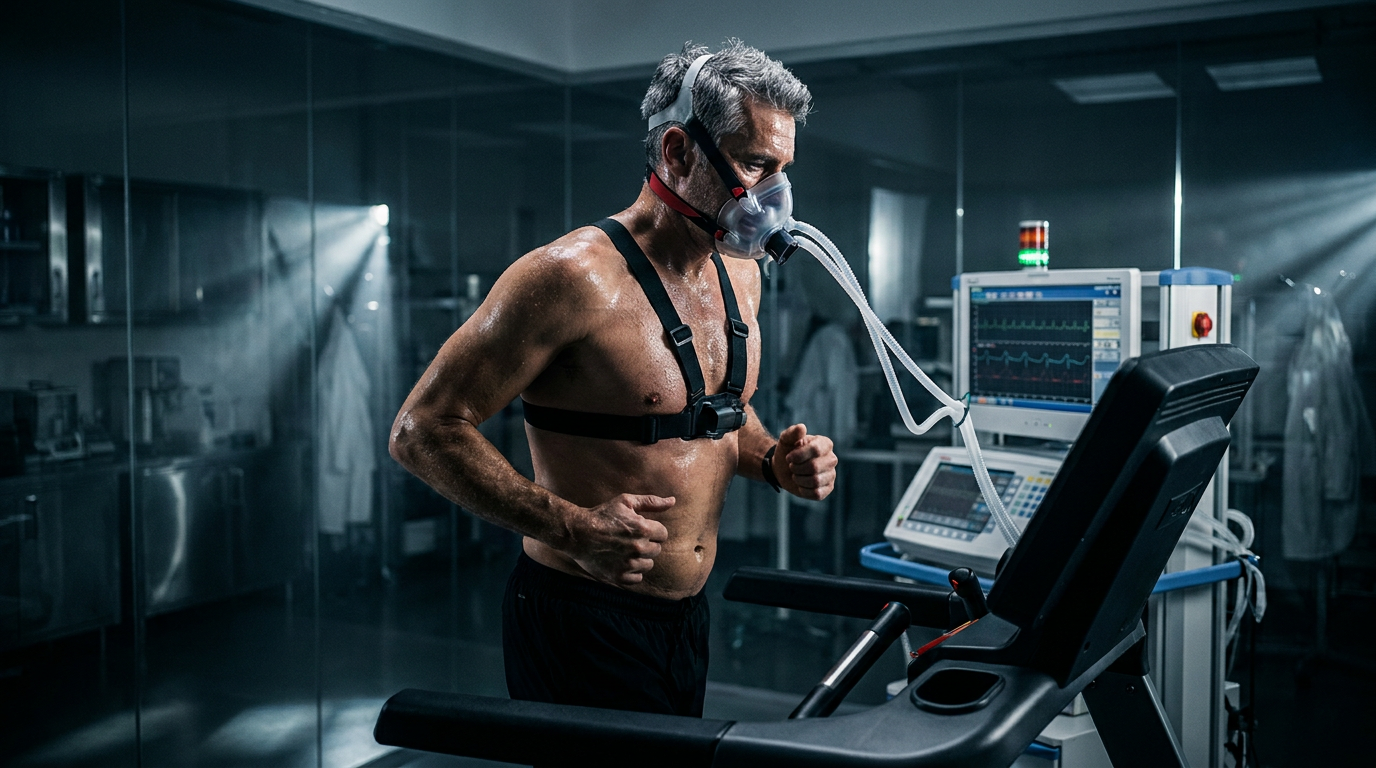
What exactly is VO2 max? It is the maximum volume of oxygen an individual can consume and utilize during intense, exhaustive exercise, typically measured in milliliters of oxygen per kilogram of body weight per minute (mL/kg/min). It serves as the gold standard for aerobic endurance. Achieving a high score requires a powerful heart capable of pumping large volumes of blood, elastic arteries to deliver that blood, and dense networks of cellular mitochondria to extract the oxygen and convert it into usable energy.[3][5]
As humans age, VO2 max naturally declines by roughly 10% per decade after the age of 30, a decay rate that can accelerate in later years. If an individual's baseline is already average or below average in middle age, this inevitable age-related decline eventually pushes them below the threshold required for independent living. Once VO2 max drops below roughly 18 mL/kg/min, routine daily activities—such as climbing a flight of stairs, carrying groceries, or getting up from the floor—become maximal exertion events, leading to a rapid loss of autonomy.[4][6]
As humans age, VO2 max naturally declines by roughly 10% per decade after the age of 30, a decay rate that can accelerate in later years.
But aerobic capacity is only half of the longevity equation. The other critical pillar is muscular strength and mass. A massive 2018 prospective cohort study published in The BMJ analyzed half a million participants from the UK Biobank, focusing on grip strength as a reliable, non-invasive proxy for overall muscular function and central nervous system integrity. The researchers tracked the participants for an average of seven years to observe health outcomes.[2]

The BMJ study revealed that higher grip strength was robustly associated with a lower risk of all-cause mortality, as well as a reduced incidence of cardiovascular disease, respiratory disease, and various forms of cancer. Every 5-kilogram reduction in grip strength correlated with a 16% to 20% increase in all-cause mortality risk. The association was so strong that researchers concluded grip strength could improve the predictive accuracy of standard office-based risk scores for cardiovascular events.[2]
Skeletal muscle is not merely a mechanical system for locomotion; it is a highly active endocrine organ. It serves as the body's primary metabolic sink for glucose disposal, playing a crucial role in preventing insulin resistance and type 2 diabetes. Furthermore, muscle is a critical reservoir of amino acids. During severe illness, trauma, or cancer—conditions that frequently induce cachexia, or severe muscle wasting—this protein reserve can literally be the difference between survival and death.[2][6]
Longevity physicians and researchers have increasingly oriented their clinical practices around these two physical metrics. Experts argue that VO2 max and muscle mass should be treated as primary vital signs, advocating for aggressive, targeted exercise interventions to build a physical reserve. The philosophy is straightforward: by training to achieve the fitness level of a healthy person a decade younger, patients create a biological buffer that can withstand the inevitable physiological insults of aging.[4][6]
To effectively improve VO2 max, exercise physiologists often recommend specific high-intensity interval training (HIIT) protocols. A widely prescribed method is the "4x4 protocol": four minutes of maximum sustained effort—such as running, rowing, or cycling at a pace that makes conversation impossible—followed by four minutes of active recovery. This cycle is repeated four to six times. The intense demand forces the cardiovascular system to adapt, increasing stroke volume and mitochondrial efficiency.[4][6]

This high-intensity work is typically paired with a high volume of low-intensity "Zone 2" cardio—steady-state exercise where one can comfortably hold a conversation. Zone 2 training builds the aerobic base, increasing the density of capillary beds and improving the body's ability to utilize fat for fuel. When combined with heavy resistance training to stave off sarcopenia, this trifecta forms the foundation of modern longevity protocols.[4][6]
Despite the overwhelming data, some epidemiologists urge caution regarding the interpretation of causality. The "healthy user bias" suggests that people with elite VO2 max and high grip strength are also highly likely to sleep well, eat nutritious diets, possess higher socioeconomic status, and avoid destructive habits. Furthermore, reverse causality plays a significant role: underlying, undiagnosed illnesses naturally reduce a person's ability to exercise long before a formal diagnosis or death occurs.[2][6]
However, even after researchers rigorously adjust for these confounding variables—including smoking, body mass index, and baseline medical conditions—the independent predictive power of physical fitness remains staggering. While genetics undeniably dictate the absolute ceiling of an individual's physical capacity, the trajectory is highly modifiable for nearly everyone.[1][2]
The emerging consensus in longevity science represents a fundamental shift in how we view aging. Traditional medicine can manage chronic disease and delay death, but only physical training can build the physiological armor required to extend "healthspan"—the period of life spent free from disability and rich in vitality. By prioritizing VO2 max and muscular strength, individuals can actively shape their biological trajectory, ensuring that their final decades are defined by capability rather than decline.[3][4][6]
How we got here
2016
The American Heart Association officially recommends incorporating cardiorespiratory fitness into routine clinical evaluations as a vital sign.
May 2018
The BMJ publishes a massive UK Biobank study linking grip strength to reduced mortality across half a million participants.
Oct 2018
JAMA Network Open publishes the landmark Cleveland Clinic study of 122,000 patients, demonstrating no upper limit to the survival benefits of aerobic fitness.
2023–2026
Longevity medicine gains mainstream traction, with physicians popularizing VO2 max and Zone 2 training protocols for the general public.
Viewpoints in depth
Longevity Physicians' View
Physical capacity should be optimized to elite levels to build a reserve against aging.
Physicians in the emerging longevity space argue that traditional medicine's goal of merely preventing disease is insufficient. They view VO2 max and muscle mass as the ultimate vital signs, advocating for aggressive, athletic-style training protocols for the general public. Their philosophy is that building an 'elite' physical reserve in middle age is the only way to absorb the inevitable physiological declines of aging without losing independence.
Epidemiologists' View
The extreme benefits of fitness may be partially inflated by healthy user bias and reverse causality.
While no epidemiologist disputes that exercise is beneficial, many caution against taking the hazard ratios at face value. They point out that individuals with elite VO2 max scores are almost certainly wealthy enough to afford free time, highly educated, and free of underlying chronic illnesses that would prevent intense training. This 'healthy user bias' means that VO2 max is not just a biological mechanism, but a proxy for a highly privileged and healthy lifestyle.
What we don't know
- Whether the extreme longevity benefits seen in observational studies are entirely causal, or partially the result of healthy user bias.
- The exact biological mechanisms by which elite cardiovascular fitness delays the onset of neurodegenerative diseases like Alzheimer's.
- The optimal minimum effective dose of high-intensity exercise required to maintain VO2 max in advanced old age.
Key terms
- VO2 Max
- The maximum rate at which the heart, lungs, and muscles can effectively use oxygen during exercise, used as the gold standard for aerobic fitness.
- All-Cause Mortality
- The death rate from all causes of death for a population in a given time period, frequently used in clinical trials to measure overall survival.
- Sarcopenia
- The age-related, involuntary loss of skeletal muscle mass and strength, which significantly increases the risk of falls and loss of independence.
- Cachexia
- A complex metabolic syndrome associated with underlying illness (like cancer) characterized by severe loss of muscle with or without loss of fat mass.
- Hazard Ratio
- A statistical measure used in survival analysis to compare the risk of an event (like death) happening in one group compared to another over time.
Frequently asked
What is a good VO2 max score?
It varies heavily by age and sex. For a 40-year-old man, a score of 45 mL/kg/min is considered good, while elite athletes may score above 60. For a 40-year-old woman, 38 mL/kg/min is good, with elite scores above 50.
Can I test my VO2 max without a lab?
Yes. While lab testing with a respiratory mask is the gold standard, many smartwatches provide reasonably accurate estimates using heart rate data during a 12-minute run, known as the Cooper test.
Is it too late to improve my VO2 max if I am older?
No. Studies show that individuals in their 70s and 80s can still significantly improve their aerobic capacity and muscle strength through targeted, consistent training.
Why is grip strength used to measure longevity?
Grip strength is a simple, non-invasive test that strongly correlates with total body muscle mass, nutritional status, and the integrity of the central nervous system.
Sources
Source coverage
6 outlets
3 viewpoints surfaced






[1]JAMA Network OpenTraditional Preventative Cardiology
Association of Cardiorespiratory Fitness With Long-term Mortality Among Adults Undergoing Exercise Treadmill Testing
Read on JAMA Network Open →[2]The BMJEpidemiologists & Skeptics
Associations of grip strength with cardiovascular, respiratory, and cancer outcomes and all cause mortality: prospective cohort study of half a million UK Biobank participants
Read on The BMJ →[3]PubMedLongevity Physicians & Researchers
Survival of the fittest: VO2max, a key predictor of longevity?
Read on PubMed →[4]CBS NewsLongevity Physicians & Researchers
Dr. Peter Attia: Exercise is key to longevity
Read on CBS News →[5]National GeographicTraditional Preventative Cardiology
Why boosting your VO2 max could help you live longer
Read on National Geographic →[6]Factlen Editorial TeamEpidemiologists & Skeptics
Synthesis by Factlen editorial team
Read on Factlen Editorial Team →


Every angle. Every day.
Get health stories with full source coverage and perspective breakdowns delivered to your inbox.