
Projectile Strike on Tanker in Strait of Hormuz Injures 12 Seafarers Off Oman Coast
A Panamanian-flagged LR2 tanker sustained a projectile strike off the coast of Oman on October 6, injuring a dozen crew members and igniting a fire. The incident marks a continued escalation of maritime risks in the critical chokepoint, prompting immediate condemnation from the Indian government.
By Marina Lopez

Commercial fleet managers and marine insurers in London face an immediate decision on whether to maintain transits through the Strait of Hormuz or absorb the financial penalties of halting operations. Their next risk assessment window opens this week as regional navies deploy additional assets to secure the 21-mile-wide corridor following a new strike.[1][2]
On October 6, 2026, an unidentified projectile struck the MT On Peace, a Panamanian-flagged LR2 tanker, as it navigated the waters off the coast of Oman. The impact ignited a fire on the 115,000-deadweight-ton vessel, which is owned by a Dubai-based shipping company.[7][9]
The strike resulted in injuries to 12 crew members, 11 of whom are Indian nationals. Emergency response teams managed to contain the blaze within two hours, but the casualty count underscores the physical risks currently borne by the 1.9 million civilian seafarers operating globally.[3][6]
Assessing the Casualties
The Indian government swiftly issued a formal condemnation of the attack, emphasizing the vulnerability of its citizens working in the international maritime sector. Officials in New Delhi stated that they are coordinating with Omani authorities to manage the medical evacuation of the injured sailors.[4][8]
"We strongly condemn the attack on the commercial vessel which has resulted in injuries to our seafarers," an Indian external affairs spokesperson noted in a press briefing on October 6. The statement called for the immediate cessation of hostilities targeting civilian maritime infrastructure.[6][9]
The MT On Peace was operating in a heavily trafficked transit lane approximately 40 nautical miles off the Omani coast when the projectile hit. The Royal Oman Police and regional coast guard units coordinated the initial rescue efforts, stabilizing the vessel before it could pose an environmental hazard.[5][7]
A Chokepoint Under Pressure
The Strait of Hormuz remains one of the world's most critical maritime chokepoints, handling approximately 21 million barrels of oil per day, or roughly 20 percent of global petroleum consumption. Any disruption in this narrow waterway immediately ripples through international energy markets.[1]
This latest incident follows a pattern of escalating maritime confrontations in the area throughout 2026. Just weeks prior, an Iranian Islamic Revolutionary Guard Corps vessel intercepted and struck a Togo-flagged tanker, raising alarms across Western defense ministries and prompting threats of severe retaliation.[2][3]
Marine insurance premiums for vessels transiting the Persian Gulf have surged in response to the sustained threat environment. Underwriters in the Lloyd's of London market are now requiring specialized war risk coverage, which can add up to $500,000 to the cost of a single seven-day voyage.[1][2]
The Operational Calculus
Fleet managers must weigh these soaring insurance costs against the logistical reality of the region. Unlike the Red Sea, where vessels can divert around the Cape of Good Hope, the Persian Gulf offers no alternative maritime exit for the Middle East's energy exports.[8]
The Dubai-based owners of the MT On Peace have not yet released a detailed damage assessment of the LR2 tanker. Structural engineers will need to evaluate the hull integrity and cargo containment systems before the vessel can be safely towed to a dry dock in the United Arab Emirates for comprehensive repairs.[9]
Regional security coalitions, including the 42-nation Combined Maritime Forces, are increasing their surveillance flights over the Omani coastline. These patrols aim to deter further strikes, though the asymmetric nature of drone and missile attacks makes absolute prevention difficult across thousands of square miles of open water.[2][5]
Looking Ahead
The immediate priority for the maritime industry is securing the safe recovery of the injured Indian seafarers. Medical facilities in Muscat are currently treating the crew, with several reported to be in stable condition following the initial trauma and smoke inhalation.[4][5]
As the investigation into the projectile's origin continues, shipping registries and flag states are issuing updated navigation warnings for the fourth quarter of 2026. The coming days will reveal whether major energy exporters adjust their loading schedules in response to the heightened risk profile.[1][7]
Viewpoints in depth
Maritime Insurers' View
Underwriters argue that the escalating threat environment necessitates significantly higher premiums for Gulf transits.
Marine insurance syndicates maintain that the persistent risk of projectile strikes fundamentally alters the actuarial calculus for vessels operating near the Strait of Hormuz. Underwriters argue that the specialized war risk coverage now required is a direct reflection of the potential for catastrophic hull damage and environmental liability. They emphasize that until regional security forces can guarantee safe passage, the financial burden of these risks must be priced into every voyage.
Indian Government's View
New Delhi emphasizes the unacceptable physical risks currently borne by civilian seafarers from neutral nations.
Indian officials view the targeting of commercial vessels as an intolerable threat to the global maritime workforce, which relies heavily on Indian nationals. The government argues that seafarers are non-combatants who should not be subjected to geopolitical crossfire. Diplomatic statements from New Delhi consistently demand that all regional actors respect the freedom of navigation and ensure the safety of the crews that keep international supply chains functioning.
Energy Importers' View
Nations reliant on Middle Eastern oil stress the need for uninterrupted transit through the critical chokepoint.
Major energy-importing nations, particularly in Asia, view any disruption in the Strait of Hormuz as a direct threat to their economic stability. These governments argue that the waterway is a global utility, and that localized conflicts must not be allowed to choke off the 21 million barrels of oil that transit the corridor daily. They advocate for robust, multinational naval escorts to deter attacks and stabilize energy markets.
Key points
- A projectile struck the Dubai-owned, Panamanian-flagged MT On Peace on October 6, 2026, off the coast of Oman.
- Twelve crew members, including 11 Indian nationals, sustained injuries when the strike sparked a fire onboard the LR2 tanker.
- The Indian government issued a formal condemnation of the attack, highlighting the growing risks to international seafarers.
- The incident adds to a sequence of maritime escalations in the Strait of Hormuz, complicating transit for global energy shipments.
What we don’t know
- The exact origin and type of the projectile that struck the MT On Peace remains unconfirmed by independent investigators.
- It is unclear whether the Dubai-based ownership of the vessel was the specific reason it was targeted.
- The full extent of the structural damage to the LR2 tanker and the timeline for its repair have not been disclosed.
How we got here
Mid-2026
Maritime tensions escalate in the Persian Gulf as regional conflicts spill over into commercial shipping lanes.
September 2026
An Iranian Islamic Revolutionary Guard Corps vessel intercepts and strikes a Togo-flagged tanker in the Strait of Hormuz.
October 6, 2026
An unidentified projectile strikes the Panamanian-flagged MT On Peace off the coast of Oman, injuring 12 crew members.
October 7, 2026
The Indian government formally condemns the attack as medical teams in Muscat treat the injured sailors.
- Indian Government
- Prioritize the safety and repatriation of civilian seafarers caught in the crossfire.
- Regional Security Forces
- Emphasize the need for coordinated naval patrols to deter asymmetric attacks.
- Maritime Insurers
- Focus on pricing the escalating physical risks into voyage premiums.
Perspectives this story doesn't cover
- The perpetrators who launched the projectile, whose motives remain unstated.
- The charterers of the MT On Peace, who face immediate supply chain disruptions.
Sources
Source coverage
9 outlets
3 viewpoints surfaced








- [1]The Maritime ExecutiveMaritime Insurers
12 Seafarers Injured in Attack on LR2 Tanker in Strait of Hormuz
Read on The Maritime Executive → - [2]gCaptainRegional Security Forces
A Dozen Seafarers Injured in Strait of Hormuz Tanker Attack, India Says
Read on gCaptain → - [3]Seatrade Maritime NewsMaritime Insurers
At least 12 seafarers injured in Hormuz tanker attack
Read on Seatrade Maritime News → - [4]The Straits TimesIndian Government
India says 12 injured after tanker attacked off Oman
Read on The Straits Times → - [5]Muscat DailyRegional Security Forces
12 sailors injured in attack on vessel near Oman
Read on Muscat Daily → - [6]The WireIndian Government
Eleven Indians Injured After 'Projectile' Hits Vessel Transiting Strait of Hormuz
Read on The Wire → - [7]Anadolu AgencyRegional Security Forces
Panamanian-flagged vessel hit, catches fire off coast of Oman
Read on Anadolu Agency → - [8]Al Arabiya EnglishIndian Government
India says 12 injured after tanker attacked off Oman
Read on Al Arabiya English → - [9]The Free Press JournalIndian Government
MT On Peace Hit By Projectile In Strait Of Hormuz, 11 Indians Injured; India Condemns Attack
Read on The Free Press Journal →
More in Transportation
See all →Hydrodynamics
Under-Keel Water Acceleration Drops Hydrodynamic Pressure: Why Moving Ships Squat Toward the Seabed in Shallow Channels
6 sources
Maritime Safety
Water Density Differentials and a 1/48th Draft Margin: How the 1966 Load Line Convention Calculates Plimsoll Freeboard Marks
9 sources
Maritime Law
How the York-Antwerp Rules and the Principle of General Average Distribute Maritime Cargo Losses
7 sources
Aviation Safety
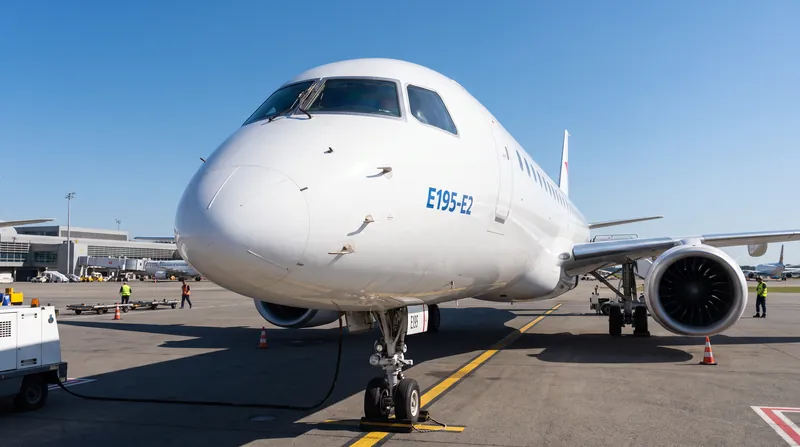
Embraer and Honeywell Open Crisis Room After GPS Fault Disrupts Global E2 Jet Fleet
7 sources
Comments
Every angle. Every day.
Get Transportation stories with full source coverage and perspective breakdowns, free every day.