
Polaris Divests Vietnam Plant as Final Step in Indian Motorcycle Separation
Polaris is shuttering its $36 million motorcycle manufacturing facility in Vietnam, marking the final operational step in its divestiture of the Indian Motorcycle brand.
By Kavya Nair

- Corporate Streamlining
- Views the divestment as a necessary step for Polaris to shed underperforming assets and refocus on its core off-road powersports business.
- Brand Independence
- Focuses on the opportunity for Indian Motorcycle to operate as a standalone, rider-focused company free from conglomerate entanglement.
Perspectives this story doesn't cover
- Vietnam Plant Workforce
- Local Supply Chain Partners
When a major automotive conglomerate spins off a heritage brand—much like Ford's divestment of Aston Martin or Harley-Davidson's brief ownership of MV Agusta—the financial transaction usually closes years before the physical supply chains actually untangle. The separation of Indian Motorcycle from Polaris differs in its aggressive speed: less than a year after the initial sale agreement to private equity firm Carolwood LP, the operational break reached its final stage this week. Polaris announced the divestment of its motorcycle manufacturing facility in Vietnam, severing its last major production tie to the historic American brand and forcing a complete supply chain reset.[1][2]
The $36 million facility, located in the Ba Thien II Industrial Park in Vietnam's Phu Tho province, was conceptualized in late 2022 and commissioned in 2023. Spanning 12 hectares, the plant was designed with an annual capacity to produce 10,000 mid-sized motorcycles and 30,000 large-displacement engines, primarily to support the Indian Motorcycle lineup for export markets. Its closure marks a remarkably short two-year operational run for a site that was originally intended to anchor the brand's international expansion and engine production capabilities.[1][3]
According to recent filings with the U.S. Securities and Exchange Commission, the Vietnam plant was classified as part of a disposal group held for sale alongside the Indian Motorcycle business. The classification confirms that the facility was always intended to be severed from Polaris's core portfolio following the decision to sell a majority stake in the motorcycle brand. Polaris Vietnam Managing Director Matt Kantrud confirmed the facility's final day of production in a recent professional update, signaling the definitive end of the line for the joint venture.[1][2]
The divestment represents a strategic streamlining for both corporate entities, allowing each to retreat to its respective strengths rather than managing competing priorities. For Polaris, the move completes a broader withdrawal from core motorcycle manufacturing, a sector that requires vastly different supply chain and dealer network strategies than its other products. The separation allows the company to concentrate its capital and management execution entirely on its highly profitable off-road vehicle, snowmobile, and watercraft divisions, which have historically driven the bulk of its revenue and market dominance.[1][3]
That refocusing comes at a critical time for the powersports giant, as the broader recreational vehicle market normalizes after years of pandemic-era volatility. Polaris's On Road segment, which housed the motorcycle division alongside commercial vehicles and related accessories, had faced sustained financial weakness in recent quarters. Sales in the segment fell 6 percent to $926.5 million in 2025, driven primarily by lower shipment volumes across its product portfolio. By shedding the manufacturing overhead associated with Indian Motorcycle, Polaris eliminates a division that had become a drag on its overall corporate profitability, freeing up resources for its core brands.[1]
That refocusing comes at a critical time for the powersports giant, as the broader recreational vehicle market normalizes after years of pandemic-era volatility.
For Indian Motorcycle, the separation grants the 125-year-old brand full independence under Carolwood's ownership. The brand is now operating as a standalone company with dedicated staff and a renewed focus on its core American cruiser and bagger DNA. Rather than existing as a minor 7 percent revenue slice of a $12 billion conglomerate, Indian Motorcycle is now a dedicated entity that can make product and manufacturing decisions based purely on the dynamics of the two-wheeled market.[2][3]
The Vietnam closure follows a similar consolidation move in January 2026, when Polaris announced the shutdown of its Osceola, Wisconsin, engine factory. That facility had also manufactured critical components for Indian motorcycles, and its closure signaled the beginning of the end for shared production resources. With the joint plants closing and operations transferring completely to Carolwood's dedicated management team, Indian Motorcycle is poised to consolidate its manufacturing footprint. The transition allows the newly independent brand to restructure its supply chain entirely on its own terms, likely shifting production closer to its primary North American consumer base.[2][3]
While none of the involved executives have released direct public statements regarding the specific fate of the Vietnam plant's local workforce, the broader industry impact is clear. The rapid closure of a recently built $36 million factory highlights the friction of corporate divorces, but it leaves Indian Motorcycle with a clean slate to dictate its own production future. The brand must now navigate fluctuating global customs tariffs—particularly in key European and Canadian markets—without being entangled in a larger corporate portfolio, setting the stage for its next era of independent manufacturing.[1][2][3]
The stakes
The closure severs the final manufacturing tie between Polaris and Indian Motorcycle, allowing the newly independent American brand to consolidate its global production under new ownership while Polaris refocuses on its core off-road vehicle business.
The essentials
- Polaris is divesting its $36 million motorcycle manufacturing plant in Phu Tho, Vietnam.
- The closure is part of a disposal group tied to the sale of the Indian Motorcycle brand to Carolwood LP.
- Commissioned in 2023, the plant had the capacity to build 10,000 motorcycles and 30,000 engines annually.
- The move completes Polaris's strategic withdrawal from core motorcycle manufacturing to focus on off-road vehicles.
- Indian Motorcycle will now operate with fully independent manufacturing and supply chain logistics.
Sources
Source coverage
3 outlets
2 viewpoints surfaced



- [1]The InvestorCorporate Streamlining
US powersports maker Polaris moves to divest Vietnam motorcycle plant
Read on The Investor → - [2]RideApart.comBrand Independence
Polaris Is Shuttering Its Vietnam Plant After Indian's Sale
Read on RideApart.com → - [3]SPEEDWEEK.comBrand Independence
Polaris closes another factory, this time in Vietnam
Read on SPEEDWEEK.com →
Comments

More in Shopping & Reviews
See all →Googlebook Launch
Googlebook Pre-Orders Open at $899, Launching a Unified Android-ChromeOS Platform
6 sources

Agentic AI
Amazon Blocks Meta's Muse AI Agent From Shopping Platform Over Data Dispute
6 sources
Gear Standards
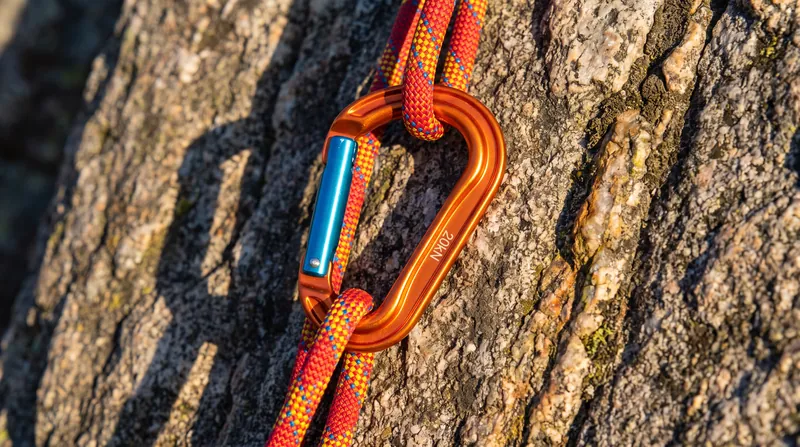
The 20kN Major Axis Rating: How UIAA and CE Standards Dictate a Carabiner's Minimum Breaking Strength
11 sources
Gear Chemistry
The Compliance Redesign: Global Regulations Force Complete Elimination of 'Forever Chemicals' in Outdoor Gear DWR Treatments
7 sources

Every angle. Every day.
Get Shopping & Reviews stories with full source coverage and perspective breakdowns delivered to your inbox.