
Next-Generation Nuclear: How Small Modular Reactors Are Reshaping the Energy Grid
Small modular reactors (SMRs) promise to deliver reliable, zero-carbon nuclear energy through factory-built, scalable designs that are cheaper and faster to construct than traditional power plants. With major commercial projects now breaking ground globally, the technology is moving from concept to reality.
By Factlen Editorial Team
- Nuclear Advocates & Industry
- Argues that SMRs are the only viable way to provide zero-carbon baseload power at scale.
- Energy Policymakers & Regulators
- Focuses on grid security, national energy independence, and the necessity of harmonizing international licensing.
- Environmental Skeptics
- Highlights concerns over unresolved nuclear waste issues and the financial risks of unproven advanced designs.
What's not represented
- · Local communities hosting legacy nuclear waste
- · Renewable energy developers competing for grid access
Why this matters
As global electricity demand surges—driven by artificial intelligence, industrial electrification, and the retirement of fossil fuel plants—SMRs offer a critical tool for providing continuous baseload power without greenhouse gas emissions.
Key points
- Small modular reactors (SMRs) generate up to 300 megawatts of electricity and are designed for factory assembly.
- Factory production aims to eliminate the massive cost overruns and delays associated with traditional nuclear plants.
- Modern designs feature passive safety systems that can cool the reactor without external power or human intervention.
- TerraPower's Natrium reactor recently received a historic construction permit from the U.S. Nuclear Regulatory Commission.
- Rolls-Royce SMR has secured major deployment contracts in the UK, the Czech Republic, and Sweden.
- Challenges remain regarding the supply chain for specialized HALEU fuel and the management of nuclear waste.
The global transition to clean energy faces a fundamental mathematical challenge: intermittent renewables like solar and wind require a steady, reliable backbone to keep the grid stable when the sun sets and the wind dies down. For decades, that baseload power was provided by massive, gigawatt-scale nuclear plants. However, traditional nuclear construction has been plagued by bespoke engineering, staggering cost overruns, and decades-long timelines. Enter the Small Modular Reactor (SMR)—a technology designed to strip away the bespoke complexity of atomic energy and replace it with the efficiency of an assembly line.[1]
At their core, SMRs operate on the same fundamental physics as their larger predecessors. They utilize nuclear fission—the splitting of heavy atomic nuclei, typically uranium—to release immense amounts of thermal energy. This heat is transferred via a coolant system to generate steam, which spins a turbine to produce electricity. The revolutionary aspect of an SMR is not the physics, but the packaging and the scale at which it is deployed.[1][2]
By definition, an SMR generates up to 300 megawatts electric (MWe) per unit, roughly a third of the capacity of a traditional reactor. This smaller footprint allows the reactors to be almost entirely prefabricated in controlled factory settings. Instead of constructing a unique, sprawling facility on-site, energy companies can order standardized reactor modules that are shipped by truck or rail and assembled at the destination. This modularity aims to drastically reduce financial risk, construction delays, and the upfront capital required to bring a plant online.[1][3]

The technology is also highly adaptable. While traditional reactors rely almost exclusively on light water for cooling, the next generation of SMRs employs a variety of advanced coolants. Some designs utilize liquid metals like sodium or lead, while others use molten salts or high-temperature gases. These advanced coolants allow the reactors to operate at much higher temperatures and lower pressures, increasing thermal efficiency and enabling the heat to be used directly for industrial processes, hydrogen production, or desalination.[1][3]
Safety systems have also been fundamentally reimagined. Modern SMRs rely heavily on "passive" or "inherent" safety features. Unlike older plants that require active, powered pumps and human intervention to cool the core during an emergency, passive systems use natural physical phenomena like gravity-fed water, natural circulation, and fail-safe shutdown mechanisms. If a modern SMR loses all external power, it is designed to safely cool itself down without any operator action, significantly reducing the risk of a catastrophic meltdown.[2][3]
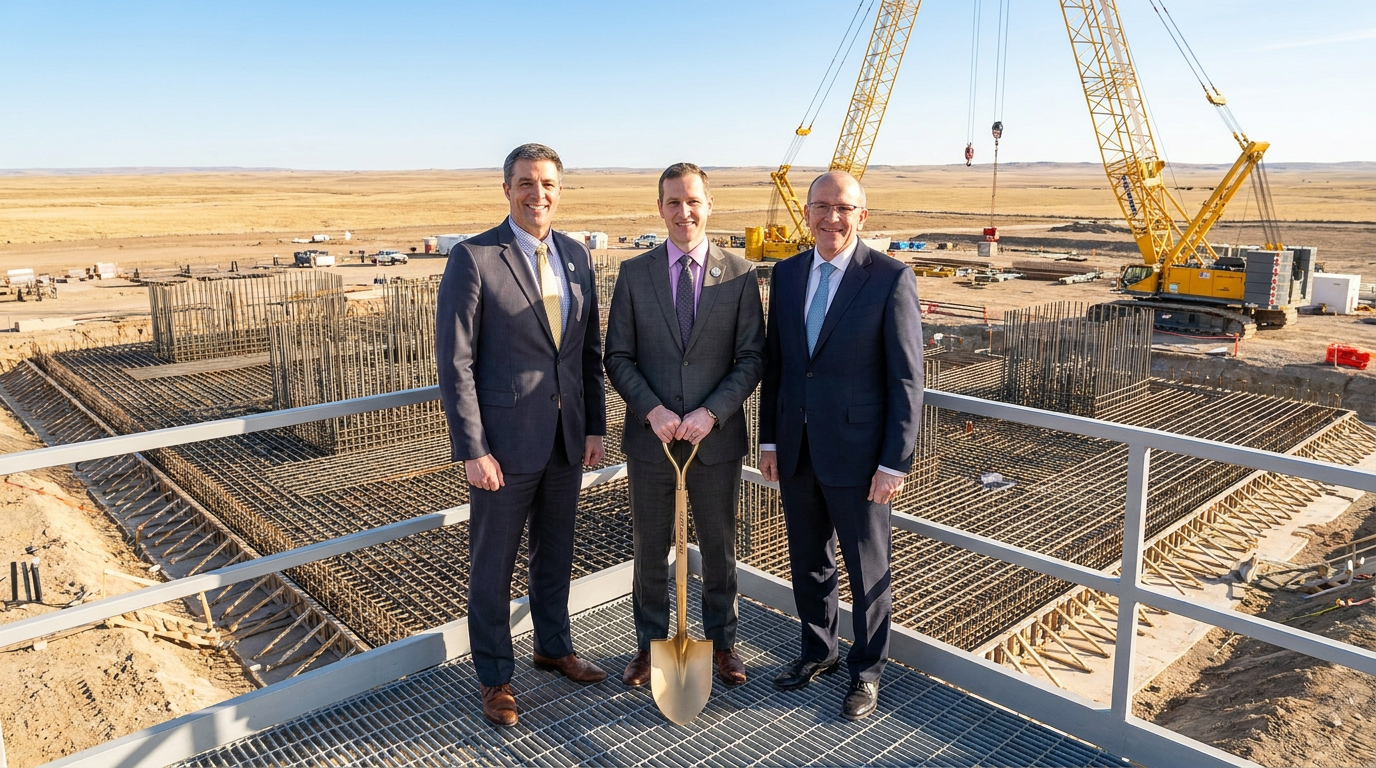
The theoretical promises of SMRs are now translating into concrete steel and poured foundations. In the United States, TerraPower—a nuclear innovation company chaired by Bill Gates—is leading the charge. In June 2024, the company broke ground on non-nuclear construction for its Natrium reactor in Kemmerer, Wyoming. By March 2026, the U.S. Nuclear Regulatory Commission (NRC) issued a historic construction permit for the facility, marking the first time in over 40 years that the agency approved a commercial non-light-water reactor.[4][5]

The theoretical promises of SMRs are now translating into concrete steel and poured foundations.
The Kemmerer project is a powerful symbol of the energy transition. The Natrium reactor is being built on the site of the retiring Naughton coal plant, allowing TerraPower to leverage the existing electrical grid connections and provide new, high-paying jobs to a community that has relied on fossil fuels for over a century. The 345-megawatt sodium-cooled fast reactor is paired with a molten salt energy storage system, allowing it to temporarily boost output to 500 megawatts to meet peak demand and seamlessly complement fluctuating renewable energy sources.[4][6]
Momentum is equally strong across the Atlantic. The European Commission has officially recognized SMRs as a vital component of the continent's Clean Industrial Deal, noting their ability to ensure grid stability and decarbonize heavy industry. British engineering giant Rolls-Royce SMR has emerged as a dominant player in the European market, utilizing a standardized, factory-built model to deploy pressurized water reactors.[3][9]
In the spring of 2026, Rolls-Royce SMR secured a flurry of international commitments. Following a contract with Great British Energy to design and deliver the UK's first SMRs in North Wales, the company signed an Early Works Contract with the ČEZ Group to deploy up to 3 gigawatts of capacity in the Czech Republic. Shortly after, Sweden's Videberg Kraft selected Rolls-Royce to deliver three SMRs on the Värö peninsula, a project that will add 1,500 megawatts of clean baseload capacity to the Swedish grid.[8]

Despite the rapid commercial progress, the global rollout of SMRs faces significant logistical and regulatory hurdles. The International Atomic Energy Agency (IAEA) currently tracks more than 80 distinct SMR designs in various stages of development worldwide. To prevent this diversity from creating a chaotic regulatory landscape, the IAEA launched the Nuclear Harmonization and Standardization Initiative (NHSI). The program aims to align international regulators around shared frameworks for design reviews and licensing, ensuring that an SMR approved in one country can be more easily deployed in another.[2]
Fuel supply chains present another critical bottleneck. Many advanced SMR designs, including TerraPower's Natrium, require high-assay low-enriched uranium (HALEU)—a fuel enriched to between 5% and 20%. Historically, the primary commercial supplier of HALEU was Russia. Following the invasion of Ukraine, Western nations scrambled to sever those ties, forcing companies like TerraPower to delay their initial timelines while domestic enrichment capabilities are established.[1][6]
Environmental and economic skeptics also urge caution. Critics point out that while SMRs are smaller, they still produce radioactive nuclear waste that requires long-term, secure storage. Furthermore, while factory production promises economies of scale, the "first-of-a-kind" demonstration plants are still highly expensive, and the industry must prove it can actually deliver these reactors on time and under budget before utility companies commit to massive fleet orders.[6]
Nevertheless, the trajectory of nuclear energy has definitively shifted. By replacing the daunting scale of traditional gigawatt plants with modular, flexible, and inherently safe designs, SMRs have transformed atomic power from a stagnant industry into a dynamic technological frontier. As the first commercial units prepare to come online by the end of the decade, they offer a tangible, scalable solution to one of humanity's most pressing challenges: powering a high-energy future without warming the planet.[1][4]
How we got here
October 2020
The U.S. Department of Energy awards TerraPower a matching grant to demonstrate its Natrium reactor technology.
June 2024
TerraPower breaks ground on non-nuclear construction for its Kemmerer, Wyoming plant.
March 2026
The U.S. Nuclear Regulatory Commission issues a historic construction permit for the Natrium reactor.
April 2026
Rolls-Royce SMR signs major deployment contracts in the UK and the Czech Republic.
June 2026
Sweden's Videberg Kraft selects Rolls-Royce to deliver 1,500 megawatts of SMR capacity.
2030
Expected completion and operational launch of the first commercial-scale Natrium reactor.
Viewpoints in depth
Nuclear Advocates & Industry
Argues that SMRs are the only viable way to provide zero-carbon baseload power at scale.
Industry proponents emphasize that the transition away from fossil fuels cannot be achieved with intermittent renewables alone. They argue that SMRs solve the historical Achilles' heel of nuclear power—staggering cost overruns and decades-long construction delays—by shifting production from bespoke construction sites to controlled factory assembly lines. By standardizing designs, companies believe they can achieve economies of scale, making nuclear energy an affordable, plug-and-play solution for heavy industry, desalination plants, and data centers.
Environmental Skeptics
Highlights concerns over unresolved nuclear waste issues and the financial risks of unproven advanced designs.
Skeptics and environmental watchdogs argue that while SMRs are smaller, they do not eliminate the fundamental hazards of atomic energy. They point out that these reactors still produce long-lived radioactive waste, for which no permanent global repository currently exists. Furthermore, critics warn that the 'first-of-a-kind' demonstration plants are already facing supply chain bottlenecks and cost revisions, suggesting that the billions of dollars invested in SMRs might be better spent on deploying existing, cheaper renewable technologies like wind, solar, and grid-scale batteries.
Energy Policymakers & Regulators
Focuses on grid security, national energy independence, and the necessity of harmonizing international licensing.
For government officials and international regulators, SMRs represent a critical geopolitical and infrastructure asset. Policymakers view these reactors as a way to replace retiring coal plants while retaining high-skilled local jobs and ensuring national energy sovereignty. However, regulatory bodies stress that the global success of SMRs depends entirely on international cooperation. Without standardized licensing frameworks—such as those being developed by the IAEA—the technology risks becoming mired in fragmented, country-by-country approval processes that would negate the benefits of mass factory production.
What we don't know
- Whether the first commercial SMRs will actually be delivered on time and under budget.
- How quickly Western nations can scale up domestic enrichment of HALEU fuel to replace Russian supplies.
- Where the long-term radioactive waste generated by these new reactors will ultimately be stored.
Key terms
- Small Modular Reactor (SMR)
- A nuclear reactor with an electrical output of 300 megawatts or less, designed to be factory-built and transported to a site for assembly.
- Nuclear Fission
- The physical process of splitting a heavy atomic nucleus, which releases a massive amount of thermal energy used to generate electricity.
- Passive Safety Systems
- Engineering features that rely on natural phenomena (like gravity) rather than active mechanical pumps to safely shut down and cool a reactor during an emergency.
- HALEU
- High-Assay Low-Enriched Uranium, a specialized nuclear fuel enriched between 5% and 20% that is required by many next-generation advanced reactors.
- Baseload Power
- The minimum amount of electrical power needed to be supplied to the electrical grid at any given time, traditionally provided by coal or nuclear plants.
Frequently asked
Can a Small Modular Reactor fit in my backyard?
No. While they are a fraction of the size of traditional nuclear plants, SMRs still require an industrial footprint of roughly two soccer fields.
What happens to an SMR if it loses all power?
Modern SMRs utilize passive safety systems that rely on natural physics, like gravity and natural convection, to safely cool the reactor down without human intervention or external electricity.
Do SMRs still produce nuclear waste?
Yes. Like traditional reactors, SMRs produce radioactive waste that must be carefully managed and stored, though some advanced designs aim to recycle or extract more energy from the fuel.
When will the first commercial SMRs be ready?
Several advanced projects, such as TerraPower's Natrium reactor in Wyoming, are currently under construction and are expected to come online by 2030.
Sources
Source coverage
9 outlets
3 viewpoints surfaced









[1]World Nuclear AssociationNuclear Advocates & Industry
Small Modular Reactors
Read on World Nuclear Association →[2]International Atomic Energy AgencyEnergy Policymakers & Regulators
Small modular reactors (SMR)
Read on International Atomic Energy Agency →[3]European CommissionEnergy Policymakers & Regulators
Small modular reactors explained
Read on European Commission →[4]Engineering News-RecordEnergy Policymakers & Regulators
TerraPower Begins Construction on First US Commercial-Scale Advanced Nuclear Reactor
Read on Engineering News-Record →[5]U.S. Department of EnergyEnergy Policymakers & Regulators
NRC Issues Construction Permit for TerraPower's Natrium Advanced Reactor
Read on U.S. Department of Energy →[6]High Country NewsEnvironmental Skeptics
Atomic energy, out of a box? In the rural West, an experimental reactor technology inches closer to reality.
Read on High Country News →[7]World Nuclear NewsNuclear Advocates & Industry
TerraPower and HD Hyundai sign Natrium reactor agreements
Read on World Nuclear News →[8]NucNetNuclear Advocates & Industry
Videberg Kraft Chooses Rolls-Royce SMR For Nuclear Reactors In Sweden
Read on NucNet →[9]Rolls-Royce SMRNuclear Advocates & Industry
Our Progress
Read on Rolls-Royce SMR →
Every angle. Every day.
Get energy stories with full source coverage and perspective breakdowns delivered to your inbox.