
Smart Ring vs. Smartwatch: Which Wearable Should You Buy in 2026?
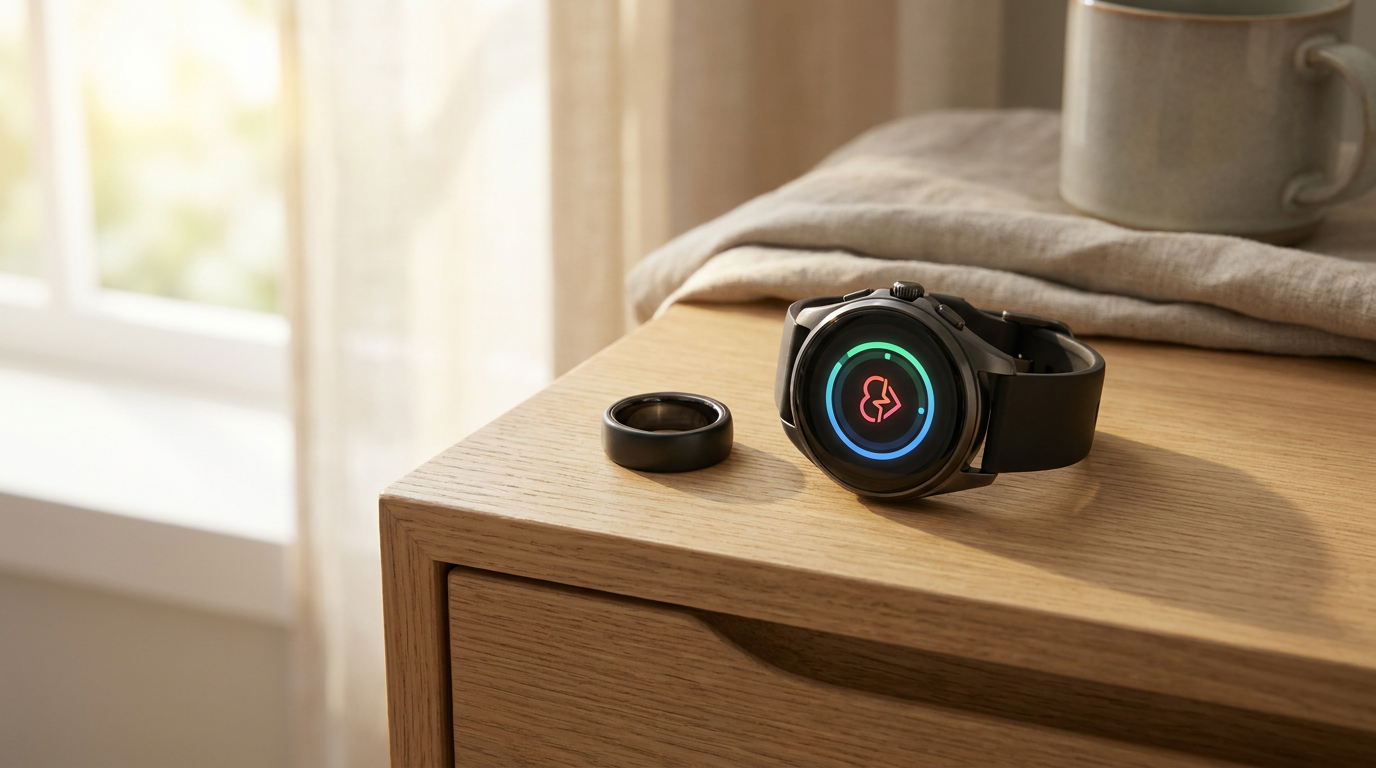
As smart rings go mainstream, consumers face a choice between passive health monitoring and the active, feature-rich experience of a smartwatch. The decision comes down to your priorities: sleep and digital minimalism, or real-time fitness tracking and connectivity.
By Factlen Editorial Team
- Passive Health Trackers
- Value comfort, sleep data, and long battery life without the distraction of a glowing screen.
- Active Fitness Enthusiasts
- Rely on real-time feedback, built-in GPS, and active workout coaching during exercise.
- Ecosystem Integrators
- Advocate for using both devices in tandem to achieve comprehensive 24/7 data coverage.
What's not represented
- · Traditional Watch Collectors
Why this matters
Choosing the right wearable dictates whether you actually use it. Picking a device that matches your lifestyle ensures you get consistent, actionable health data rather than an expensive gadget that sits in a drawer.
Key points
- Smart rings excel at sleep tracking due to their lightweight, comfortable design.
- Smartwatches remain the gold standard for real-time workout metrics and GPS tracking.
- Rings offer up to a week of battery life, while watches require daily charging.
- The choice depends entirely on whether you want passive data collection or an active digital companion.
The wearable health technology market has officially fractured into two distinct philosophies for 2026. On one side sits the traditional smartwatch, dominated by the Apple Watch Series 11 and Samsung Galaxy Watch 7, acting as a vibrant, active companion on the wrist. On the other side is the rapidly maturing smart ring category, led by the Oura Ring 4 and the Samsung Galaxy Ring, which serves as a passive, discreet observer. Consumers are no longer just choosing a brand; they are choosing how they want to interact with their health data.[6]
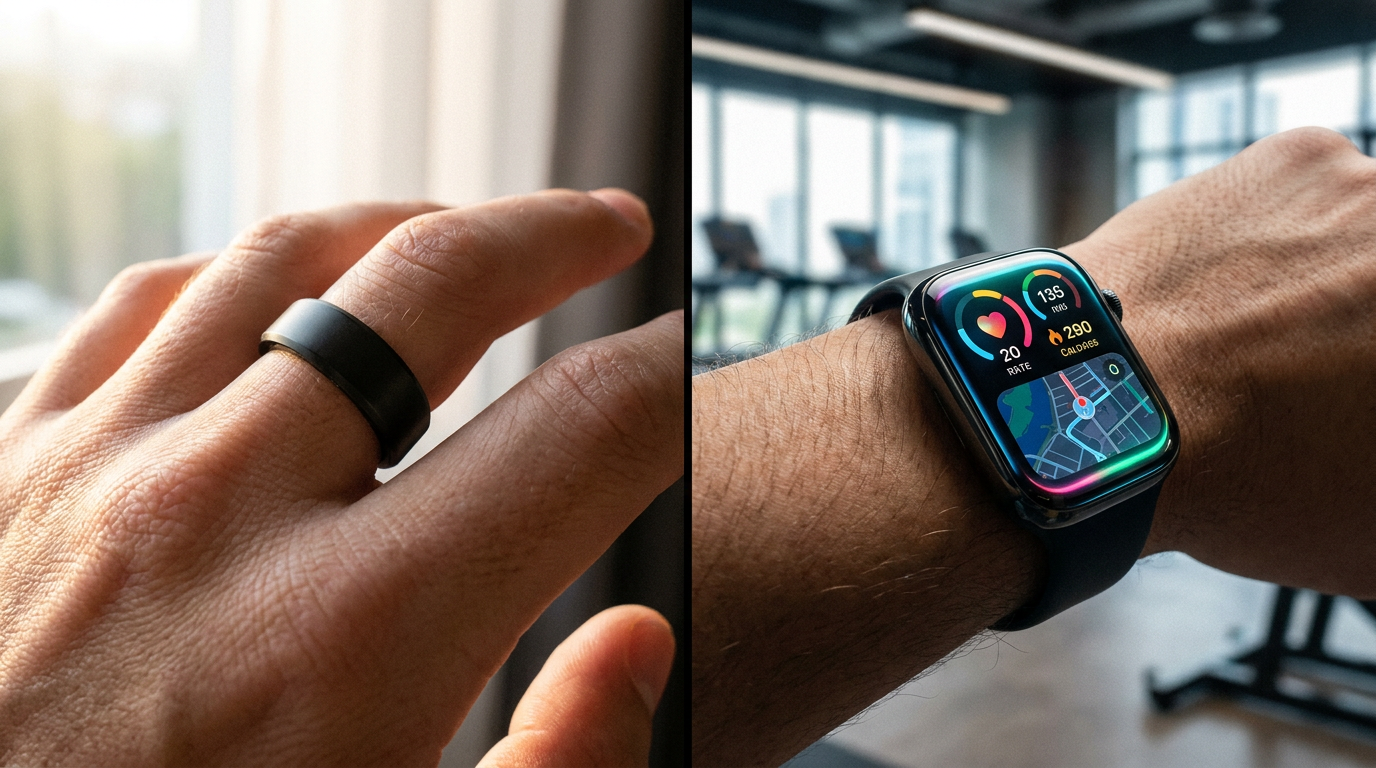
The fundamental trade-off between these devices comes down to digital minimalism versus real-time connectivity. Smartwatches are designed to command attention, offering a screen that delivers notifications, live workout metrics, and apps right to your wrist. Smart rings strip all of that away. Weighing as little as three grams, they quietly collect biometric data around the clock and send it to a smartphone for later review, completely eliminating the distraction of another glowing screen.[2][5]
When evaluating the case for smart rings, the primary advantage is sleep and recovery tracking. Compliance is the biggest hurdle in nocturnal health monitoring, and the lightweight, screenless form factor of a ring means most users simply forget they are wearing it. Reviewers consistently note that wearing a bulky, 40-gram smartwatch to bed can be uncomfortable and disruptive, whereas a titanium ring seamlessly integrates into nighttime routines.[3][6]
The evidence supporting ring-based sleep tracking is rooted in anatomy. The arteries in the finger are closer to the skin surface and feature a denser capillary network than the wrist, providing photoplethysmography sensors with a remarkably clean signal for resting heart rate and blood oxygen levels. Furthermore, smart rings excel at tracking minute shifts in skin temperature, which algorithms use to accurately predict illness onset and track menstrual cycles.[5][6]

However, the argument against smart rings centers on their limitations during active movement. Without a screen, they cannot provide real-time feedback like pace, distance, or heart rate zones during a run. Furthermore, smart rings lack built-in GPS, meaning runners and cyclists must still carry their phones to map their routes. Reviewers also point out that rings often struggle to accurately capture high-intensity workouts, sometimes relying on artificial intelligence to guess the activity after the fact.[3][4][5]
However, the argument against smart rings centers on their limitations during active movement.
This is exactly where the case for smartwatches becomes undeniable. For active fitness tracking, devices like the Apple Watch Series 11 remain the gold standard. They offer built-in GPS, detailed stride and cadence metrics, and bright OLED displays that allow athletes to adjust their effort mid-workout. The smartwatch acts as an active coach, vibrating to signal a new heart rate zone or a completed mile.[3][4][5]
The evidence for choosing a smartwatch extends beyond fitness into personal safety and daily utility. Modern smartwatches include life-saving features such as fall detection, crash detection, and cellular connectivity that allows users to leave their phones at home entirely. They also offer FDA-cleared electrocardiogram capabilities to detect irregular heart rhythms, a feature that is only just beginning to appear in premium smart rings.[4][5]
The primary argument against the smartwatch is battery anxiety. The robust features and bright screens come at a steep cost to longevity. An Apple Watch Series 11 typically requires charging every 18 to 24 hours, while the Samsung Galaxy Watch 7 follows a similar daily charging cadence. In stark contrast, smart rings like the Oura Ring 4 and Galaxy Ring boast battery lives of up to seven days, requiring only a brief 30-minute charge once a week.[1][3][4]

Interestingly, manufacturers are beginning to suggest that consumers do not necessarily have to choose. Samsung has explicitly designed its ecosystem so that the Galaxy Watch and Galaxy Ring can be worn simultaneously, sharing the biometric workload to extend battery life and improve overall accuracy. While purchasing both remains an expensive luxury, it highlights the complementary nature of the two form factors.[1]
Ultimately, a smart ring fits well when your primary goals are sleep optimization, recovery tracking, and long-term health awareness. It is the ideal choice for individuals who want to wear traditional mechanical watches during the day, or those who find constant wrist notifications overwhelming and prefer to review their health data on their own terms.[2][6]

Conversely, a smartwatch fits well when you train regularly and require real-time feedback during workouts. It is the necessary tool for runners who need phone-free GPS tracking, tech enthusiasts who want seamless app integration, and anyone who values the safety net of on-wrist communication and fall detection.[4][5]
There is no single winner in the 2026 wearable landscape, only the right tool for specific conditions. Buyers must weigh the friction of daily charging and screen fatigue against the benefits of live data and connectivity, ensuring their chosen device aligns with how they actually live and move.
How we got here
2015
Smartwatches go mainstream with the launch of the original Apple Watch.
2018
Oura Ring Gen 2 popularizes the smart ring form factor for sleep tracking.
2024
Samsung enters the ring market with the Galaxy Ring, validating the category.
2026
Smart rings and smartwatches establish distinct, competing ecosystems for health tracking.
Viewpoints in depth
Digital Minimalists
Users who prioritize sleep data and want to eliminate screen distractions.
This camp argues that the primary value of a wearable is long-term trend analysis, not real-time alerts. By removing the screen, smart rings force users to engage with their health data intentionally rather than reactively. They point to higher overnight compliance rates as proof that comfort trumps features when it comes to gathering accurate baseline health metrics.
Active Athletes
Users who rely on real-time feedback and GPS tracking during workouts.
For this group, a wearable is a coaching tool first and a health monitor second. They argue that passive data collection is useless in the middle of a marathon or a cycling interval. The ability to glance at a wrist and immediately adjust pace or effort based on live heart rate zones makes the smartwatch an indispensable piece of training equipment.
The Dual-Wear Ecosystem
Users who wear both devices to achieve comprehensive 24/7 data coverage.
A growing segment of tech enthusiasts and manufacturers argue that the devices are complementary, not competitive. By wearing a smartwatch during the day for fitness and connectivity, and switching to a smart ring at night for sleep tracking, users get the best of both worlds. Companies like Samsung are actively encouraging this by allowing their devices to share data and extend battery life when worn together.
What we don't know
- Whether future smart rings will successfully integrate reliable real-time workout tracking without sacrificing battery life.
- If the trend of wearing both a ring and a watch will gain mainstream traction despite the high combined cost.
Key terms
- Photoplethysmography (PPG)
- Optical sensor technology used to measure heart rate and blood oxygen by illuminating the skin and measuring changes in light absorption.
- Heart Rate Variability (HRV)
- The variation in time between consecutive heartbeats, used as a key indicator of physical recovery, stress, and overall readiness.
- Digital Minimalism
- A philosophy of reducing screen time and digital distractions in daily life, which smart rings cater to by lacking a display.
Frequently asked
Can I wear a smart ring while lifting weights?
Most manufacturers advise against wearing smart rings during heavy weightlifting to prevent scratching the device or injuring your finger.
Do smart rings require a monthly subscription?
It depends on the brand. The Oura Ring requires a monthly fee to access all your data, while the Samsung Galaxy Ring does not.
Which device is more accurate for tracking sleep?
Smart rings are generally considered more accurate for sleep tracking because they are less prone to movement artifacts and measure skin temperature more consistently.
Sources
Source coverage
6 outlets
3 viewpoints surfaced






[1]9to5GoogleEcosystem Integrators
Samsung Galaxy Ring vs Galaxy Watch comparison
Read on 9to5Google →[2]WareablePassive Health Trackers
Samsung Galaxy Ring vs Galaxy Watch 7
Read on Wareable →[3]NBC NewsEcosystem Integrators
Oura Ring vs Apple Watch comparison 2025 2026
Read on NBC News →[4]ForbesActive Fitness Enthusiasts
Oura Ring Vs. Apple Watch: Which Is The Better Health Tracker?
Read on Forbes →[5]CNETActive Fitness Enthusiasts
The Apple Watch vs. Oura Ring Debate for Me Comes Down to One Feature
Read on CNET →[6]AskVoraPassive Health Trackers
Smart Ring vs Smartwatch 2026 guide
Read on AskVora →

Every angle. Every day.
Get shopping stories with full source coverage and perspective breakdowns delivered to your inbox.