
NBER Study Using IRS Data Finds $214 Billion in Ineligible COVID-19 Unemployment Payments
A new analysis of administrative tax data reveals that nearly a quarter of all pandemic-era unemployment benefits went to suspicious or ineligible claims, heavily concentrated in the temporary Pandemic Unemployment Assistance program. Researchers suggest that better data-sharing could have prevented nearly half of these anomalous payments before they were issued.
By Logan Price


- Labor Economists
- Focuses on the structural trade-offs between the speed of emergency relief delivery and the integrity of verification systems.
- System Administrators
- Highlights the technical debt, legacy IT systems, and lack of federal data-sharing that left state agencies blind to anomalies.
- Fiscal Policy Analysts
- Argues for structural alternatives, such as employer-side payroll subsidies or integrated federal data rails, to prevent future leakage.
Fast facts
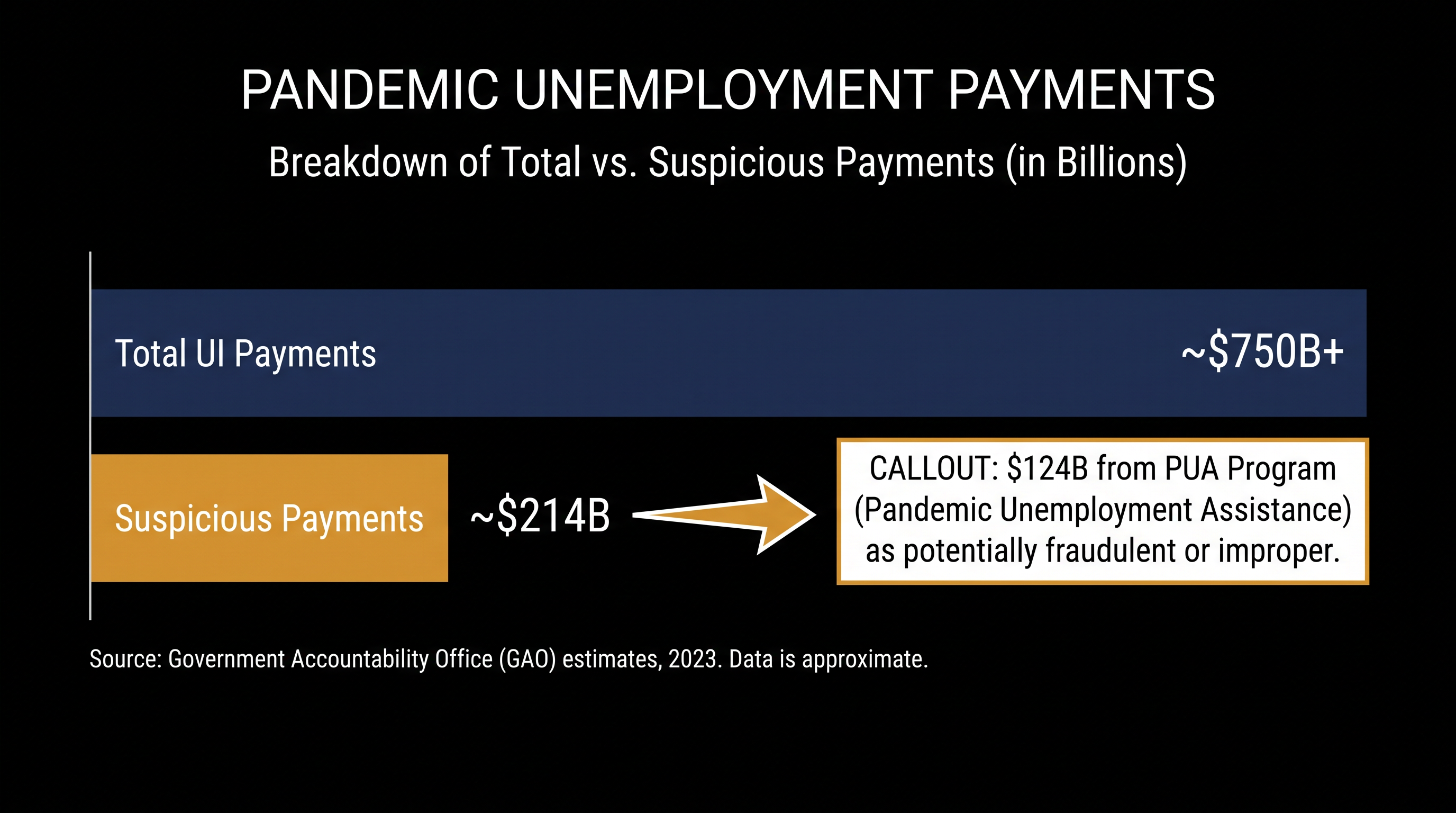
- A new NBER analysis of IRS tax data reveals that $214 billion in pandemic unemployment payments went to suspicious or ineligible claims.
- The anomalous payments represented roughly 24 percent of all unemployment benefits distributed during the crisis.
- The Pandemic Unemployment Assistance (PUA) program accounted for $124 billion of the suspicious payments, representing 45 percent of all PUA funds.
- Anomalous claims were heavily concentrated in specific ZIP codes and among tax returns that reported zero income in 2019.
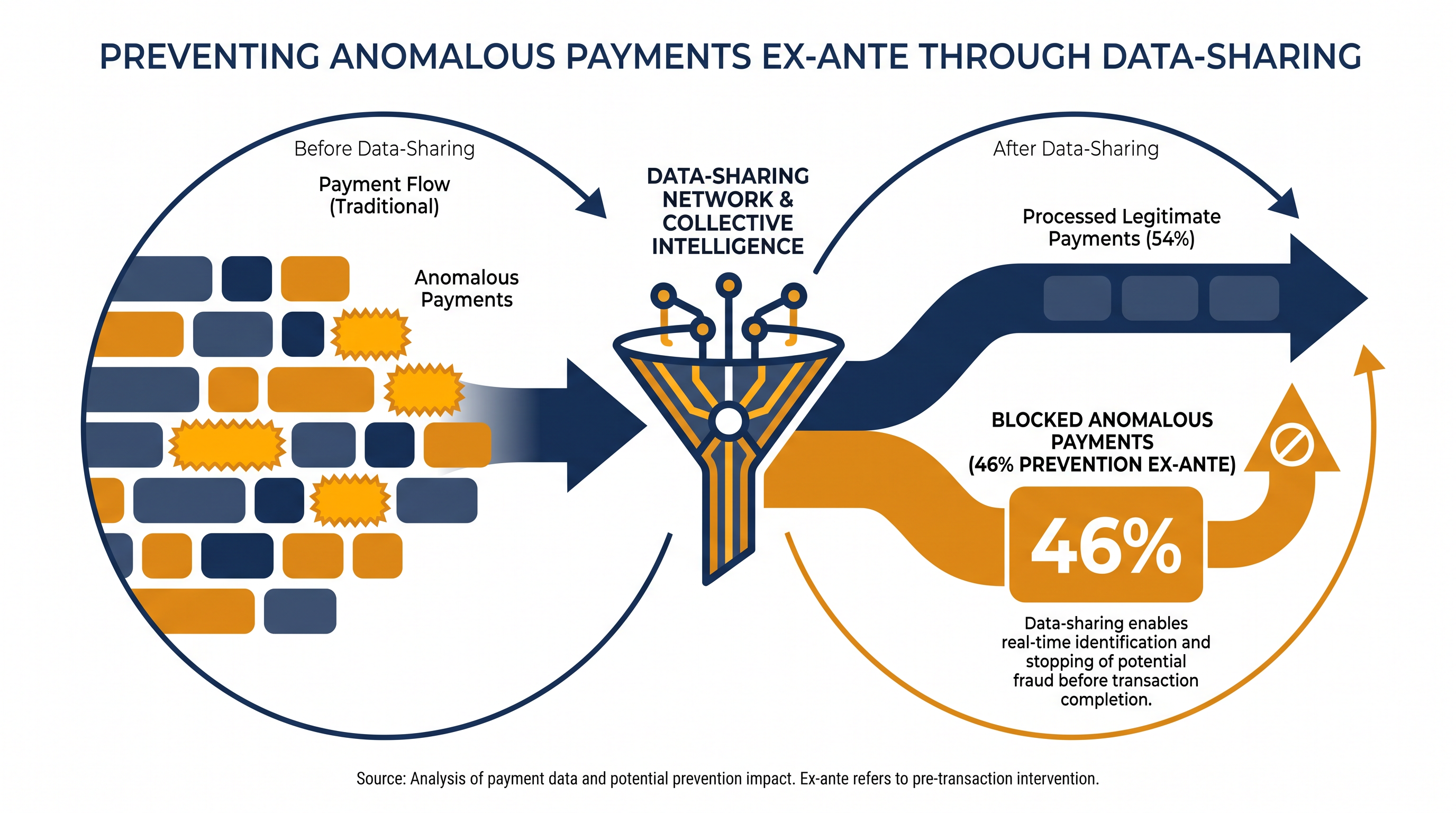
- Researchers estimate that 46 percent of the suspicious payments could have been prevented ex-ante if state agencies had access to federal data.
Why this matters
By mapping exactly how $214 billion in emergency relief was misdirected, this data provides a clear blueprint for fixing the structural vulnerabilities in the American social safety net before the next crisis hits.
How we got here
March 2020
Congress passes the CARES Act, creating the Pandemic Unemployment Assistance (PUA) program to cover non-traditional workers.
Mid-2020 to 2021
State agencies process historic volumes of claims, relying heavily on self-certification to expedite emergency relief.
September 2021
Federal pandemic unemployment programs officially expire, ending the expanded benefit distributions.
Fall 2024
NBER working paper utilizes IRS administrative data to quantify the exact scale of anomalous payments during the crisis.
During the COVID-19 pandemic, the United States government distributed historic sums of unemployment insurance to stabilize households during unprecedented lockdowns. A new working paper from the National Bureau of Economic Research (NBER) provides the most precise accounting yet of where that money actually went. Bypassing survey estimates in favor of administrative tax data, the analysis reveals that $214 billion of those payments went to suspicious or ineligible claims. That figure represents roughly 24 percent of all unemployment benefits distributed during the crisis, highlighting a massive structural failure in how emergency relief was vetted and delivered. The short version is stated plainly in the data: the system prioritized speed over verification, resulting in unprecedented leakage. The rest of this evidence pack examines exactly how the data models isolated these anomalies, where the vulnerabilities were concentrated, and what the researchers suggest could have prevented the losses.[1]
To build this forensic map, economists Adam Isen of Johns Hopkins University, Elira Kuka of George Washington University, and Bryan A. Stuart of the Federal Reserve Bank of Philadelphia utilized population-level IRS tax records. By matching Form 1099-G unemployment issuances against pre-pandemic income records from 2019, they were able to track the flow of funds with granular precision. This approach bypassed the limitations of traditional household surveys, which notoriously underreport benefit receipt, and allowed the researchers to identify patterns of anomalous payments that state-level audits might miss. The resulting dataset provides a comprehensive look at the mechanics of the pandemic unemployment system, mapping the exact coordinates where the administrative plumbing failed to hold water.[1][2][5]
The data shows that the vulnerability was not distributed evenly across all relief efforts, but was instead highly concentrated in one specific initiative: the Pandemic Unemployment Assistance (PUA) program. Designed as a temporary measure to cover gig workers, freelancers, and independent contractors who lacked traditional W-2 histories, PUA accounted for $124 billion of the anomalous payments identified in the study. That figure represents a staggering 45 percent of all PUA funds distributed. While traditional state unemployment programs also experienced leakage, the sheer scale of the anomalies within PUA indicates that the program's unique design features made it the primary vector for misdirected funds.[1]
The mechanism behind this vulnerability is straightforward. Traditional unemployment insurance requires a multi-party verification process: when a worker files a claim, the state agency cross-checks the application against wage records submitted by the former employer. PUA, by design, removed this friction. Because gig workers and freelancers do not have traditional employers to verify their lost income, the program relied heavily on self-certification to expedite relief during a national economic freeze. The data confirms that removing the employer-verification step, while necessary to reach non-traditional workers quickly, effectively dismantled the primary safeguard against anomalous claims, allowing ineligible applications to surge through the system.[6]
One of the most glaring red flags identified in the tax data was the concentration of suspicious benefits among individuals who reported zero income in the year prior to the pandemic. The researchers found that anomalous payments were heavily clustered in tax returns with no 2019 income. In a normal economic environment, a worker with no prior-year earnings would lack the labor force attachment required to qualify for unemployment benefits. However, the emergency rules, combined with overwhelmed state IT systems that were unable to automatically cross-reference federal tax histories, allowed these claims to process and pay out billions of dollars.[1][2]
The evidence pack also reveals a distinct geographic footprint to the leakage. The anomalous payments were not randomly scattered across the country; rather, they were highly concentrated in specific ZIP codes at rates far exceeding legitimate claims. This spatial clustering is a hallmark of coordinated network exploitation rather than individual, opportunistic over-claiming. When thousands of claims originate from a single residential block or commercial address, it strongly suggests the presence of automated filing operations designed to extract funds at scale, exploiting the self-certification loopholes built into the emergency programs.[1]
The evidence pack also reveals a distinct geographic footprint to the leakage.
Interestingly, the NBER analysis found that the scale of a state's pandemic-era leakage was not entirely unprecedented. The data shows a strong correlation between a state's pre-pandemic level of unemployment fraud and its volume of anomalous COVID-19 payments. States with historically porous verification systems and aging IT infrastructure simply scaled up their existing vulnerabilities when the federal government flooded the system with emergency cash. The pandemic did not necessarily create new types of administrative failures; it acted as a massive multiplier on the weaknesses that were already present in state-level unemployment administration.[1]
Perhaps the most actionable claim in the study is the researchers' calculation regarding ex-ante prevention. The models suggest that 46 percent of these suspicious payments could have been identified and stopped before the money ever left the Treasury. If state unemployment agencies had been granted real-time access to federal tax data and other centralized information systems, simple cross-checks would have flagged nearly half of the anomalies instantly. The failure to prevent these payments was not a lack of data, but a lack of data-sharing infrastructure connecting the federal repositories with the state agencies tasked with distributing the funds.[1][6]
It is crucial to be explicit about the limits of this evidence. While administrative tax data can flag anomalies—such as a claimant with no 2019 income or a single address receiving dozens of payments—it cannot definitively prove criminal fraud in every single instance. Some portion of the "suspicious" payments may represent legitimate gig workers who simply failed to file taxes in 2019, or administrative errors generated by state agencies struggling to interpret rapidly changing federal guidance. The $214 billion figure represents the universe of highly anomalous payments, but the exact ratio of organized theft to bureaucratic friction remains partially obscured.[6]
Ultimately, the data illustrates the classic administrative trade-off between speed and security. In March 2020, facing a catastrophic collapse in labor demand, policymakers made a deliberate choice to prioritize getting cash to desperate households over rigorous, time-consuming vetting. The NBER analysis does not argue that the relief was unnecessary, but rather it quantifies the exact cost of that choice: $214 billion in misdirected funds. It provides a stark accounting of what happens when a 20th-century administrative apparatus is asked to execute a 21st-century emergency response.[6]
Looking forward, the researchers model counterfactual policies to demonstrate how different structural approaches could have altered the outcome. They suggest that alternative delivery mechanisms could have simultaneously provided better insurance against income loss, delivered benefits more quickly, and lowered the amount of suspicious payments. For example, utilizing existing IRS direct-deposit rails or implementing employer-side payroll subsidies—similar to the short-time work schemes utilized in several European countries—might have bypassed the fragile state unemployment infrastructure entirely, maintaining the link between workers and verified employers.[1][3]

The findings provide a clear, data-driven blueprint for future crisis response. The evidence suggests that modernizing state IT systems and legally permitting cross-agency data sharing are not just bureaucratic housekeeping tasks, but necessary prerequisites for deploying emergency fiscal policy without massive leakage. If the plumbing of the American social safety net is not upgraded to allow for real-time verification, future emergency interventions will face the exact same trade-off between speed and integrity that defined the COVID-19 response.[4][6]
The $214 billion figure is more than just a post-mortem accounting of pandemic chaos; it is a structural diagnosis. By mapping exactly where the pipes broke, the NBER analysis transforms a vague narrative of "government waste" into a precise, solvable data problem. It offers a constructive path forward, demonstrating that with better data integration and modernized delivery mechanisms, the government can build a safety net capable of catching those who fall without entangling billions of dollars in anomalous claims.[6]
Viewpoints in depth
Labor Economists' Assessment
Evaluating the trade-off between the speed of emergency relief and program integrity.
Labor economists emphasize that the $214 billion in anomalous payments must be viewed in the context of the unprecedented economic freeze of March 2020. The Pandemic Unemployment Assistance (PUA) program was designed to bypass traditional verification specifically because gig workers and freelancers lacked the W-2 histories required by legacy systems. While this design choice resulted in massive leakage, economists argue it also prevented a catastrophic collapse in household consumption. The debate now centers on how to build systems that do not force policymakers to choose between speed and security during a crisis.
System Administrators' Reality
The challenge of processing historic claim volumes without integrated data infrastructure.
From an administrative perspective, the leakage was a predictable consequence of technical debt. State unemployment agencies were tasked with processing decades' worth of claims in a matter of weeks, using IT systems that in some cases dated back to the 1980s. More critically, these state systems were siloed from federal repositories like the IRS. Administrators point out that without real-time API access to federal tax data to verify 2019 income, state workers were effectively flying blind, forced to rely on self-certification and manual reviews that were easily overwhelmed by automated claim networks.
Fiscal Policy Analysts' Solutions
Proposing structural alternatives to the current state-federal unemployment architecture.
Fiscal policy experts argue that the pandemic exposed the fundamental fragility of relying on state-level unemployment offices to deliver federal macroeconomic stimulus. They advocate for structural alternatives for future crises, such as utilizing the IRS's direct-deposit rails to distribute universal baseline support, or adopting European-style short-time work schemes that subsidize employers directly to keep workers on payroll. By maintaining the link between workers and verified employers, or by using centralized federal data, these analysts argue the government can deliver rapid relief while structurally eliminating the vectors for anomalous claims.
Key terms
- Form 1099-G
- An IRS tax form used by government agencies to report unemployment compensation and other state or local payments to taxpayers.
- Pandemic Unemployment Assistance (PUA)
- A temporary federal program created in 2020 to provide unemployment benefits to gig workers, freelancers, and independent contractors who do not qualify for traditional state benefits.
- Ex-ante
- A term meaning 'before the event,' used here to describe the ability to identify and stop anomalous payments before the funds are actually distributed.
- Administrative Tax Data
- Official records collected by the IRS during the tax filing process, considered more accurate for economic research than self-reported household surveys.
What we don’t know
- Exactly how much of the $214 billion represents organized criminal fraud versus administrative errors or legitimate gig workers who lacked 2019 tax records.
- How much of the misdirected funding was ultimately spent into the domestic economy versus extracted by international cybercriminal networks.
- Whether current efforts to modernize state unemployment IT systems have sufficiently closed these data-sharing gaps for future crises.
Sources
Source coverage
6 outlets
3 viewpoints surfaced






[1]National Bureau of Economic ResearchLabor Economists
Unemployment Insurance Payments During the Pandemic
Read on National Bureau of Economic Research →[2]Internal Revenue ServiceSystem Administrators
IRS Administrative Tax Data and Form 1099-G
Read on Internal Revenue Service →[3]Federal Reserve Bank of PhiladelphiaFiscal Policy Analysts
Economic Research: Labor Markets and Unemployment
Read on Federal Reserve Bank of Philadelphia →[4]George Washington UniversityLabor Economists
Department of Economics Research
Read on George Washington University →[5]Johns Hopkins UniversityLabor Economists
Economic Analysis of Pandemic Policies
Read on Johns Hopkins University →[6]Factlen Editorial TeamFiscal Policy Analysts
Synthesis by Factlen editorial team
Read on Factlen Editorial Team →
Comments
Every angle. Every day.
Get data analysis stories with full source coverage and perspective breakdowns delivered to your inbox.