
MiniMax Releases M3, an Open-Weight AI Model Rivaling Proprietary Giants in Coding and Reasoning
Shanghai-based AI lab MiniMax has launched M3, a highly efficient open-weight model featuring a one-million-token context window and native multimodality. The release democratizes access to frontier-level artificial intelligence, allowing developers to build complex autonomous systems at a fraction of the cost.
By Factlen Editorial Team
- Open-Source Developers
- Celebrate the democratization of frontier-level capabilities and the massive cost reductions for building agentic workflows.
- AI Infrastructure Providers
- Focus on the efficiency gains of the MSA architecture and the ability to host powerful models at scale.
- Pragmatic Analysts
- Acknowledge the impressive benchmarks but caution that 'open-weight' with commercial restrictions isn't true open-source.
What's not represented
- · Proprietary AI Labs (OpenAI, Google, Anthropic)
- · Enterprise Compliance Officers
Why this matters
For years, the most capable AI models were locked behind expensive paywalls and controlled by a few massive tech companies. The release of an open-weight model that can autonomously code, analyze video, and process entire codebases at a fraction of the cost means independent developers and smaller businesses can now build advanced AI applications without relying on proprietary giants.
Key points
- MiniMax M3 is a new open-weight AI model featuring a one-million-token context window and native multimodality.
- The model scored 59.0% on the SWE-Bench Pro coding benchmark, surpassing GPT-5.5 and Gemini 3.1 Pro.
- A novel MiniMax Sparse Attention (MSA) architecture reduces compute costs to 1/20th of previous generations at maximum context.
- The release allows independent developers to run frontier-level, autonomous coding agents locally or at drastically reduced API costs.
On June 1, 2026, Shanghai-based AI lab MiniMax released its flagship model, M3, sending ripples through the global developer community. Billed as the first open-weight model to unite frontier-level coding, a one-million-token context window, and native multimodality, M3 represents a major milestone in the democratization of artificial intelligence.[4][8]
The most striking claim accompanying the launch is M3's performance on SWE-Bench Pro, a rigorous benchmark that tests an AI's ability to autonomously resolve real-world software engineering issues. MiniMax reports that M3 achieved a score of 59.0%, effectively surpassing proprietary heavyweights like OpenAI's GPT-5.5 and Google's Gemini 3.1 Pro. While it sits just a hair behind Anthropic's Claude Opus 4.7, the result firmly establishes an open-weight model in the top tier of AI capabilities.[2][4][7]
Beyond raw coding scores, M3 is designed for long-horizon, complex agentic tasks. Its one-million-token context window—five times larger than its predecessor, the M2.7—allows the model to ingest entire software repositories, multi-document research pipelines, or extensive logs without losing track of earlier information. This massive memory capacity transforms the AI from a simple code-completion tool into a persistent, autonomous collaborator.[4][5][8]

To prove the model's endurance, MiniMax showcased M3 executing multi-hour autonomous workflows. In one demonstration, the model spent 12 hours reproducing an academic research paper, generating 18 code commits and 23 figures entirely on its own. In another, a 24-hour CUDA kernel optimization run saw M3 improve hardware utilization from a dismal 7.6% to 71.3%, achieving a 9.4x speedup after 145 autonomous submissions.[4][5][8]
The technical foundation enabling these feats is a novel architecture called MiniMax Sparse Attention (MSA). Traditional "dense" transformer models suffer from quadratic cost increases as the context window grows, making million-token prompts prohibitively expensive and slow to process. MSA solves this by using a lightweight index to scan incoming tokens, selectively applying heavy computation only to the most relevant data blocks.[7][8]
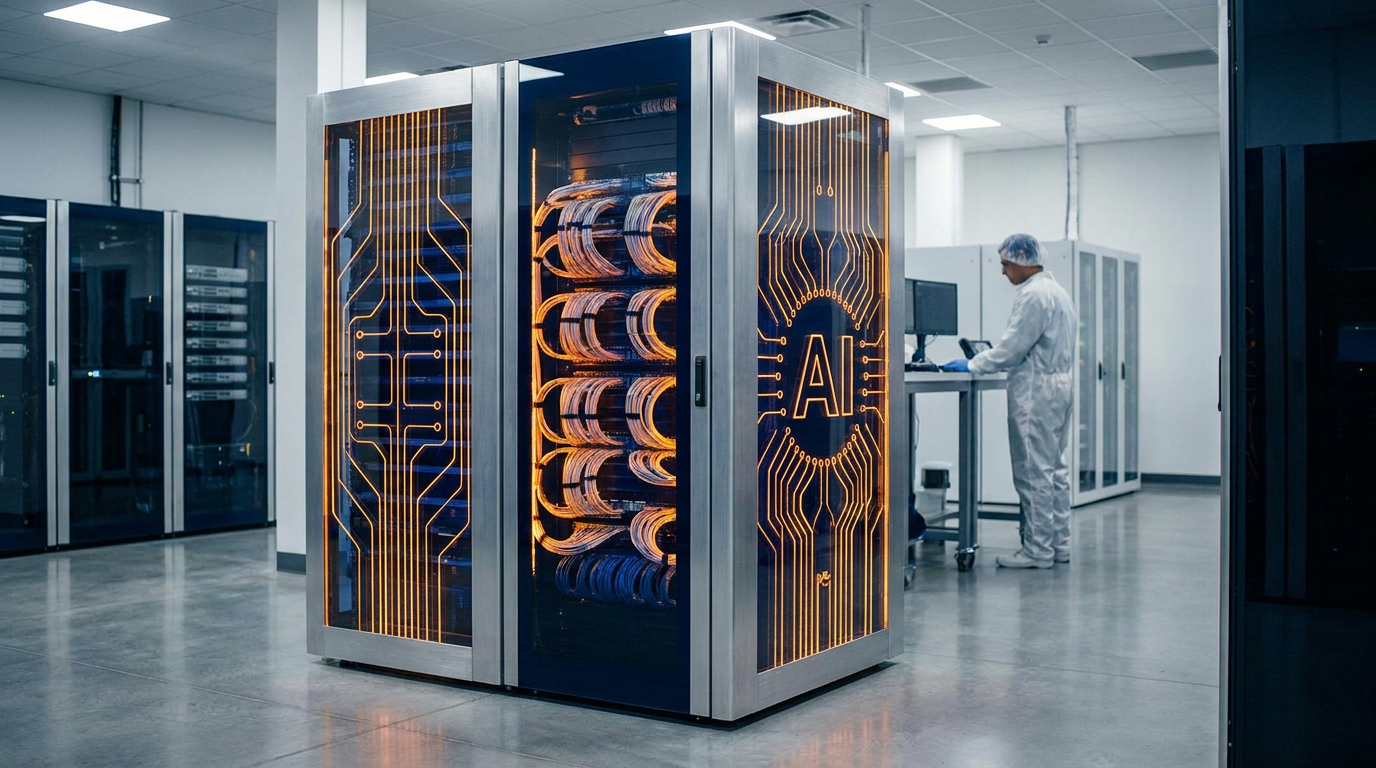
The efficiency gains from MSA are staggering. At a context length of one million tokens, M3's per-token compute requirement drops to just 1/20th of the previous generation's cost. Infrastructure providers report that this architecture delivers up to a 15x speedup during the decoding phase and a 9x speedup during prefilling, turning ultra-long context from a theoretical spec-sheet feature into a practically deployable tool.[5][7][8]

At a context length of one million tokens, M3's per-token compute requirement drops to just 1/20th of the previous generation's cost.
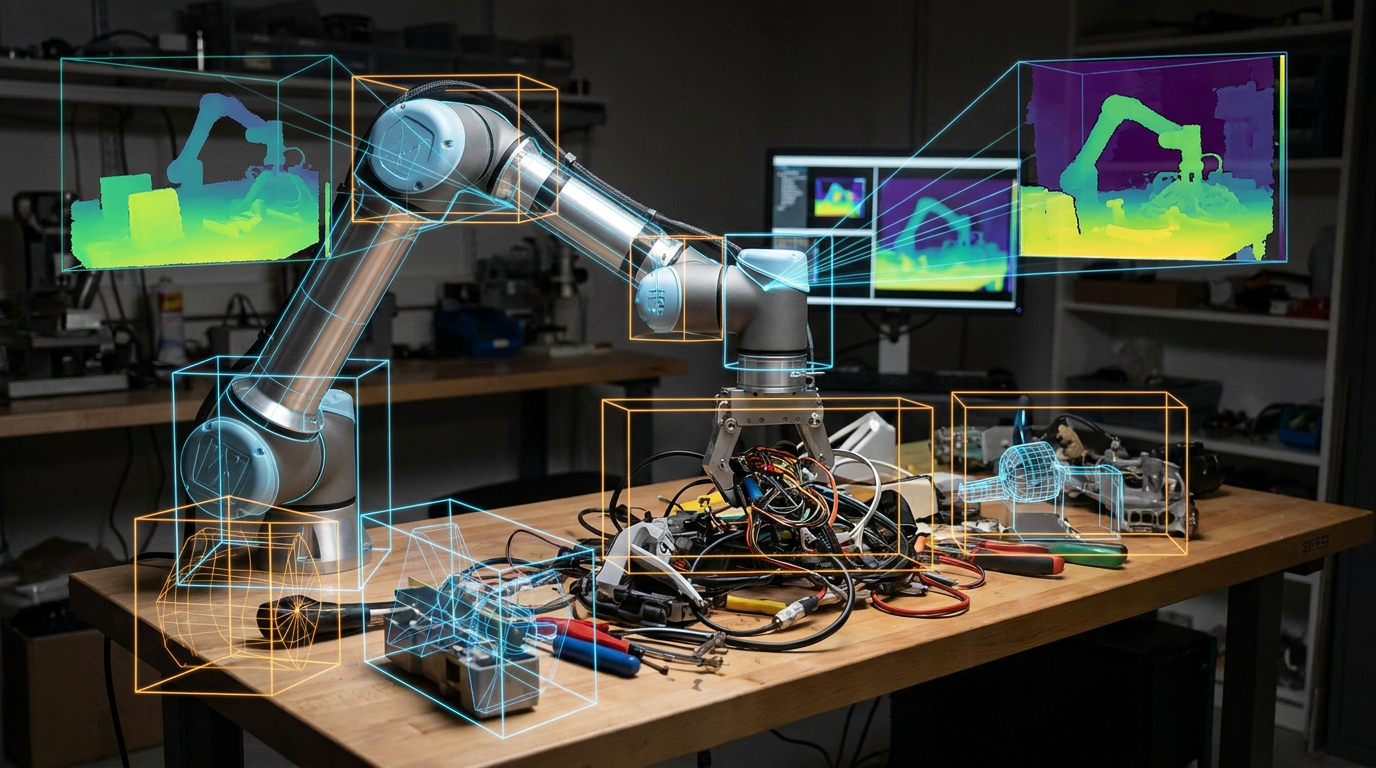
M3 is also natively multimodal, meaning it does not rely on bolt-on vision models to understand the world. It can process text, images, and video simultaneously, and is even capable of operating a desktop computer. Developers can instruct the model to watch a video of a user interface bug, read the associated codebase, and autonomously navigate the operating system to implement and test a fix.[1][2][8]
The economic implications of M3 are as significant as its technical specs. Standard pay-as-you-go API pricing for the model sits at roughly $0.60 per million input tokens, which is a fraction of the cost of closed frontier models. For developers building agentic workflows that require thousands of automated API calls, this aggressive pricing structure makes complex AI applications financially viable for startups and independent creators.[3][7]
However, pragmatic analysts in the developer community have urged caution regarding the "open-source" label. While M3's weights are available for download, allowing for local execution and fine-tuning, the model ships under a license that includes specific commercial-use conditions. Furthermore, skeptics note that the headline-grabbing benchmark scores were run on MiniMax's own infrastructure, prompting calls for independent verification before enterprise adoption.[6][7]

Despite these caveats, the broader ecosystem has embraced the release with remarkable speed. Major AI infrastructure platforms, such as Fireworks AI, rolled out Day-0 support for M3, optimizing their serverless inference engines to handle the model's massive context window. Simultaneously, MiniMax launched "MiniMax Code," a dedicated agentic workspace designed to leverage M3's native multimodality and multi-agent team capabilities.[5][8]
The arrival of M3 underscores a rapid shift in the global AI landscape, where international labs are consistently matching or exceeding the output of Silicon Valley's most well-funded companies. Alongside models like DeepSeek V4 and Kimi K2.7, MiniMax has proven that the open-weight ecosystem is no longer playing catch-up. For developers worldwide, the era of relying exclusively on proprietary APIs for frontier-level intelligence appears to be drawing to a close.[1][2][3][8]

The push toward local execution is a defining trend of mid-2026. By utilizing open-source frameworks alongside open-weight models like M3, developers can deploy highly secure, context-aware systems entirely within their own infrastructure. This localized approach bypasses traditional API dependencies, ensuring that sensitive corporate data or proprietary codebases never have to leave the user's secure environment.[1][6]
Ultimately, the release of MiniMax M3 serves as a powerful democratizing force in the technology sector. By packaging frontier coding, multimodal understanding, and massive context into an efficient, accessible format, the model lowers the barrier to entry for advanced software engineering. It leaves the global developer community more capable, better equipped, and less reliant on centralized gatekeepers to build the next generation of digital tools.[1][5][8]
How we got here
Early 2025
MiniMax releases the M2 series, temporarily abandoning sparse attention architectures due to production stability concerns.
April 2026
Competing open-weight models like Kimi K2.6 and DeepSeek V4 push the boundaries of reasoning, intensifying the global open-source AI race.
June 1, 2026
MiniMax officially launches M3, reintroducing sparse attention (MSA) and claiming the top spot on the SWE-Bench Pro coding benchmark.
June 12, 2026
Major AI infrastructure platforms roll out Day-0 support for M3, enabling widespread developer access to the model's million-token context window.
Viewpoints in depth
Open-Source Developers
Celebrate the democratization of frontier-level capabilities and the massive cost reductions for building agentic workflows.
For independent developers and open-source advocates, the M3 release represents a breaking of the oligopoly held by massive Western tech giants. By providing a model that can handle million-token contexts and autonomous coding tasks locally, developers are no longer forced to send proprietary codebases through expensive, rate-limited APIs. This camp emphasizes that the dramatic reduction in compute costs enables a new wave of grassroots innovation, allowing small startups to build complex, multi-agent software systems that were previously financially unviable.
AI Infrastructure Providers
Focus on the efficiency gains of the MSA architecture and the ability to host powerful models at scale.
Cloud hosts and infrastructure platforms view the M3 release through the lens of hardware utilization and serving economics. The reintroduction of sparse attention—specifically the MSA architecture—solves the crippling quadratic cost curve that previously made ultra-long context windows unprofitable to host. For these providers, the ability to deliver a 15x decoding speedup means they can serve more users on fewer GPUs, transforming million-token prompts from a marketing gimmick into a sustainable, high-margin enterprise service.
Pragmatic Analysts
Acknowledge the impressive benchmarks but caution that 'open-weight' with commercial restrictions isn't true open-source.
Industry analysts and licensing purists offer a more measured reaction to the hype. They point out that while M3's weights are publicly downloadable, the model ships under a modified license that imposes strict conditions on commercial deployment. This camp argues that 'open-weight' should not be conflated with true open-source freedom. Furthermore, they caution enterprise buyers against making architectural commitments based solely on vendor-run benchmarks, advocating for independent, third-party verification of M3's capabilities before integrating it into mission-critical production environments.
What we don't know
- Whether M3's vendor-reported benchmark scores will hold up under rigorous, independent third-party verification.
- How strictly MiniMax will enforce the commercial-use conditions attached to the model's modified open-weight license.
- How quickly Western proprietary labs will adjust their pricing models in response to highly capable, low-cost open-weight alternatives.
Key terms
- Open-weight model
- An AI model where the pre-trained parameters are publicly available for download, though the training data and code may remain proprietary.
- SWE-Bench Pro
- A rigorous software engineering benchmark that tests an AI's ability to autonomously resolve real-world GitHub issues in complex codebases.
- Sparse Attention
- An architectural technique that allows an AI to selectively focus only on the most relevant parts of a long text, drastically reducing computational cost.
- Context window
- The maximum amount of text, code, or data an AI model can process and 'remember' in a single interaction.
- Multimodality
- The ability of an AI system to natively understand and process multiple types of data, such as text, images, and video.
Frequently asked
Is MiniMax M3 completely free and open-source?
M3 is an 'open-weight' model, meaning developers can download and run it locally. However, its license includes certain commercial-use conditions that businesses must review before deploying it in paid products.
How does M3 compare to ChatGPT or Claude?
On rigorous coding benchmarks like SWE-Bench Pro, M3 scores 59.0%, which slightly edges out OpenAI's GPT-5.5 and Google's Gemini 3.1 Pro, though it remains just behind Anthropic's Claude Opus 4.7.
What makes the 1-million-token context window useful?
It allows the AI to ingest massive amounts of information at once—such as entire software codebases, hours of video, or hundreds of research papers—without forgetting earlier details during long tasks.
Sources
Source coverage
8 outlets
3 viewpoints surfaced







[1]DevFlokersOpen-Source Developers
Open-Source AI Projects, New Model Releases & Research Papers: June 2026 Roundup
Read on DevFlokers →[2]KiloOpen-Source Developers
MiniMax M3... The best open-source coding models in 2026
Read on Kilo →[3]Build Fast With AIOpen-Source Developers
What is the best open-source AI model in June 2026?
Read on Build Fast With AI →[4]DataNorthPragmatic Analysts
MiniMax launches M3
Read on DataNorth →[5]Fireworks AIAI Infrastructure Providers
MiniMax M3 is now available on Fireworks AI
Read on Fireworks AI →[6]LushbinaryPragmatic Analysts
MiniMax M3 launched June 1, 2026
Read on Lushbinary →[7]Thomas WiegoldPragmatic Analysts
What Is MiniMax M3?
Read on Thomas Wiegold →[8]MiniMaxAI Infrastructure Providers
MiniMax M3: Frontier Coding, 1M Context, Native Multimodality — All in One Model
Read on MiniMax →


Every angle. Every day.
Get ai stories with full source coverage and perspective breakdowns delivered to your inbox.