
McLaren's Hungarian GP Victory Blows Open 2026 Formula 1 Championship Race
Lando Norris secured McLaren's first victory of the 2026 season with a dominant 15-second win at the Hungaroring, ending Mercedes' ten-race pole streak. The breakthrough performance, fueled by a major upgrade package, shatters the early-season duopoly and sets the stage for a multi-team championship battle.
By Meera Iyer

- McLaren Optimists
- Believe the MCL40 has massive untapped potential and that the Hungarian GP win is the start of a sustained title challenge.
- Mercedes Pragmatists
- View the result as a track-specific anomaly, remaining confident that their 72-point Constructors' lead will hold.
- Red Bull Overachievers
- Focus on maximizing points through strategy and driver skill, acknowledging their car currently lacks the raw pace to win on merit.
Perspectives this story doesn't cover
- Ferrari's internal assessment of their mid-season slump
- Midfield teams battling for the final points positions
At a glance
- Lando Norris won the 2026 Hungarian Grand Prix by 15 seconds, securing McLaren's first victory of the season.
- The win ended a ten-race pole and victory streak dominated by Mercedes and Ferrari.
- McLaren's comprehensive aerodynamic upgrades, including a new floor and rear wing, performed perfectly according to wind tunnel data.
- Max Verstappen claimed second place for Red Bull after a grueling 29-lap final stint on soft tires.
- Championship leader Kimi Antonelli finished third, extending his advantage over Lewis Hamilton to 50 points.
- McLaren confirmed that further aggressive upgrades are scheduled for the upcoming races.
- 15 seconds
- Norris's margin of victory
- 50 points
- Antonelli's championship lead
- 10 races
- Mercedes' pole streak ended
- 72 points
- Mercedes' Constructors' lead over Ferrari
For the first ten rounds of the 2026 Formula 1 World Championship, the sport appeared locked in a predictable two-horse race between the resurgent powerhouses of Mercedes and Ferrari. That narrative was emphatically shattered at the Hungaroring. Lando Norris delivered a masterclass performance to secure McLaren's first victory of the season at the Hungarian Grand Prix, crossing the finish line a staggering 15 seconds clear of the field. The result not only ended a ten-race Mercedes pole streak but fundamentally altered the competitive calculus for the second half of the season, proving that the front-running duopoly can be beaten on pure pace.[2]
The foundation for McLaren's breakthrough was laid on Saturday, when Norris snatched pole position and dismantled the stranglehold Mercedes had held over qualifying since the season opener. The Woking-based squad arrived in Budapest armed with a comprehensive aerodynamic upgrade package. This suite of developments featured a heavily revised ground-effect floor, intricate new bargeboards, and a modified rear wing endplate designed specifically for the high-downforce demands of the tight, twisting Hungarian circuit. According to McLaren's engineering team, the new components correlated perfectly with their wind tunnel data, instantly transforming the MCL40 into the undisputed class of the field.[2][3]
Despite the ultimate margin of victory, the race itself was fraught with early peril for the eventual winner. When the lights went out, Norris found himself immediately under pressure from his teammate, Oscar Piastri. The Australian executed a brilliant launch, sweeping past Norris at Turn 2 to seize control of the race on the opening lap. For the first half of the Grand Prix, Piastri dictated the tempo, forcing Norris to manage his tires in the turbulent, dirty air of his sister car while McLaren's pit wall resisted calls from the reigning World Champion to orchestrate a position swap.
The intra-team dynamic was violently upended just after the midway point of the 70-lap contest. Shortly after completing his second pit stop, Piastri encountered heavy traffic in the first sector and made costly contact with the Williams of Carlos Sainz while attempting to lap the slower car. The collision severely compromised Piastri's rhythm and was soon followed by terminal heartbreak. A sudden gearbox failure forced the Australian to retire the car, evaporating what had looked like a guaranteed McLaren 1-2 finish and leaving Piastri as one of the weekend's biggest losers.[2]
Released into clear air, Norris unleashed the full, terrifying potential of the upgraded McLaren. The Briton began lapping consistently faster than anyone else on track, building an insurmountable gap that insulated him from the chaotic strategic battles unfolding in his wake. Norris's pace was so commanding that he was able to dictate his own strategy through a late Virtual Safety Car period, ultimately cruising to his twelfth career victory and his first since securing the 2025 World Championship.[2]
Released into clear air, Norris unleashed the full, terrifying potential of the upgraded McLaren.
Behind the dominant McLaren, the battle for the remaining podium positions provided a thrilling testament to driver overperformance. Max Verstappen, wrestling with a Red Bull RB22 that he admitted was only the fourth-fastest car on the grid, delivered a strategic masterstroke to claim second place. Opting to stay out during the late Virtual Safety Car, Verstappen committed to a grueling 29-lap final stint on the soft compound tires—a massive gamble that required immense tire management on a circuit notorious for thermal degradation.[1]
Verstappen's podium was secured through a breathtaking, aggressive overtake on Ferrari's Lewis Hamilton into Turn 1. Capitalizing on a tow from a lapped car, the Dutchman threw his Red Bull down the inside under heavy braking, surprising the seven-time champion. Verstappen later admitted he was baffled by the result, noting that the car felt extremely oversteery and difficult to balance from corner to corner. He described the drive as one of the hardest of his year, making the second-place finish feel like a massive overachievement for the Milton Keynes squad.[1]
For Mercedes, the weekend was an exercise in damage limitation. Kimi Antonelli, the breakout star of the 2026 season who arrived in Hungary with seven victories already to his name, quietly navigated the chaos to secure third place. The young Italian capitalized on a fresh set of tires following the Virtual Safety Car to consolidate his position, ensuring he extended his lead in the Drivers' Championship. Antonelli now sits on 219 points, a commanding 50-point advantage over Hamilton as the sport heads toward the summer break.[2]
Hamilton's race unraveled in the closing stages. After losing second place to Verstappen, the Ferrari driver was hit with a devastating five-second penalty for speeding in the pit lane. The sanction dropped him to fifth in the final classification, behind his teammate Charles Leclerc, and dealt a significant blow to his hopes of reeling in Antonelli for the title. Meanwhile, George Russell endured a miserable afternoon in the second Mercedes, recovering to seventh after a disastrous start left him mired in the midfield.
The broader implications of McLaren's sudden resurgence have deeply divided the paddock. Mercedes team principal Toto Wolff publicly dismissed the threat, suggesting that the Hungaroring's unique layout naturally favored the MCL40's characteristics. Wolff quipped that even artificial intelligence would have predicted McLaren as the favorite in Budapest, pointing to the team's historic dominance at the venue as a reason not to panic about Mercedes' 72-point lead in the Constructors' Championship.[2]
Inside the McLaren garage, however, the tone is decidedly more ominous for their rivals. Norris issued a stark warning after the race, insisting that the team has not yet gotten close to extracting the maximum potential from their 2026 challenger. McLaren Technical Director Nick Houldey backed up his driver's confidence, confirming that the Hungarian Grand Prix breakthrough was merely the first phase of an aggressive development pipeline, with further substantial upgrades scheduled for the upcoming races.
As Formula 1 prepares for the grueling second half of the calendar, the competitive landscape has been irrevocably altered. While Antonelli and Mercedes retain a formidable mathematical advantage, the sheer pace of the upgraded McLaren suggests that the era of predictable, single-team dominance in 2026 is over. With Red Bull continuing to extract podiums through sheer tactical brilliance and Ferrari desperate to reclaim their early-season form, the championship race has been blown wide open, promising a spectacular multi-team war of attrition.
The backstory
March 2026
Mercedes and Ferrari establish early dominance, winning the first ten races of the season.
July 25, 2026
Lando Norris secures pole position at the Hungaroring, ending Mercedes' streak of ten consecutive poles.
July 26, 2026
Norris wins the Hungarian Grand Prix by 15 seconds, marking McLaren's first victory of the 2026 campaign.
August 2026
McLaren confirms further aggressive upgrades are scheduled for the second half of the season.
Still unresolved
- Whether McLaren's pace advantage will translate to high-speed, low-downforce circuits like Spa and Monza.
- How Mercedes will respond to their first genuine pace deficit of the 2026 season.
- If Red Bull's upcoming upgrade packages can cure the balance issues currently plaguing the RB22.
Sources
Source coverage
3 outlets
3 viewpoints surfaced



- [1]RACERRed Bull Overachievers
Verstappen doesn't understand how he finished second in Hungarian GP after car struggles
Read on RACER → - [2]WikipediaMercedes Pragmatists
2026 Hungarian Grand Prix
Read on Wikipedia → - [3]McLaren RacingMcLaren Optimists
2026 Hungarian Grand Prix – Race Report
Read on McLaren Racing →
Comments
More in Sports
See all →Recap
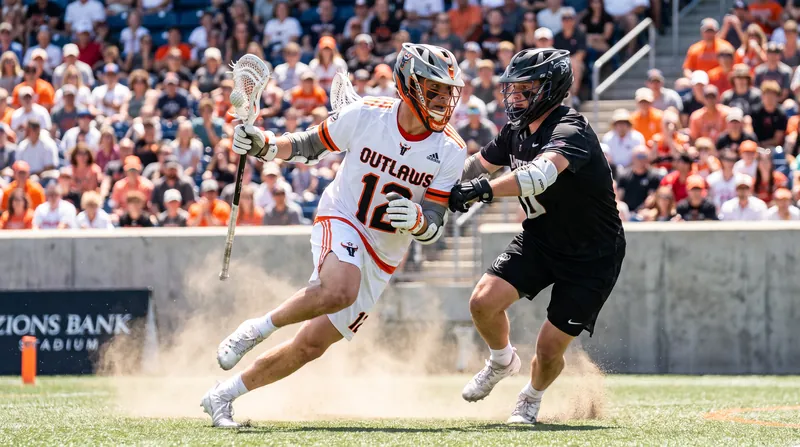
Denver Outlaws Stun Utah Archers 11-5 to Capture Western Conference Crown
6 sources
Standings
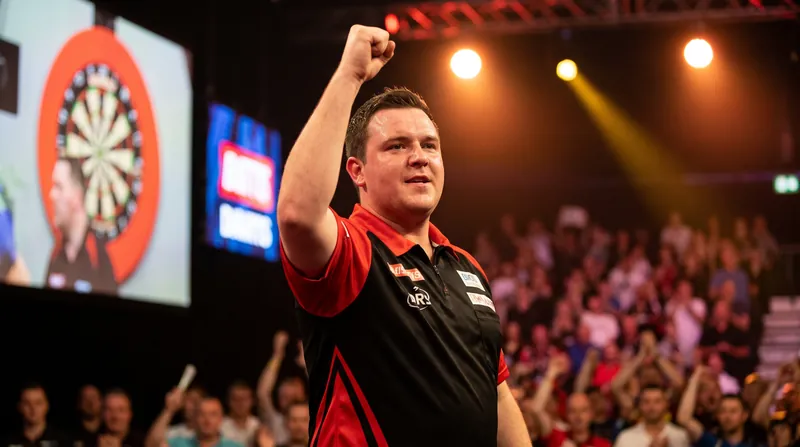
Cameron Menzies Defies Travel Nightmare to Claim PC29 Title as Minehead Bubble Race Intensifies
4 sources
Power ranking
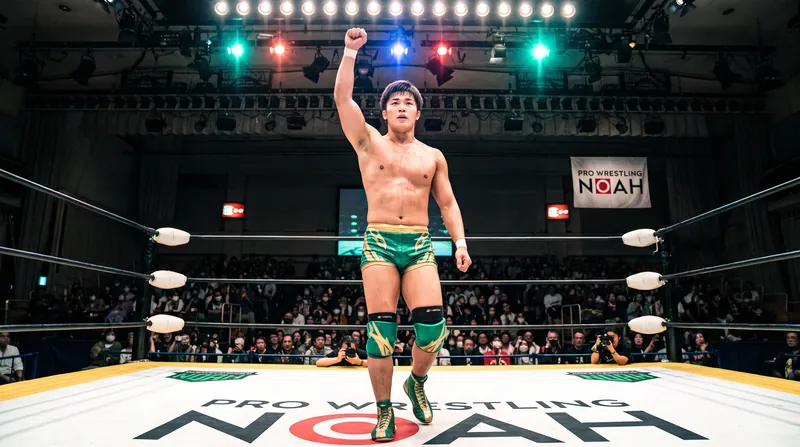
N-1 Victory Power Rankings: Kaito Kiyomiya Commands A Block While B Block Descends Into Chaos
5 sources
Standings
Asian Games Gymnastics Standings: Yeo Seojeong Tops Vault Qualifications as Medal Race Heats Up in Nagoya
5 sources
Every angle. Every day.
Get Sports stories with full source coverage and perspective breakdowns delivered to your inbox.