
Landmark Study: Just Five Minutes of Daily Cognitive Training Universally Boosts Mental Health and Clarity
A three-year study of nearly 4,000 adults reveals that brief, daily cognitive exercises can significantly improve brain performance and emotional resilience at any age.
By Lan Xu

- Cognitive Researchers
- Scientists focused on the brain's lifelong neuroplasticity and capacity for continuous optimization.
- Public Health Advocates
- Experts prioritizing scalable, accessible interventions to improve population-wide mental fitness.
- Aging & Longevity Optimists
- Voices championing the empowerment of older adults and the dismantling of ageist health myths.
Why this matters
This research fundamentally changes how we approach aging and mental fitness, proving that cognitive decline is not inevitable. By dedicating just five minutes a day to targeted mental exercises, anyone can build a sharper, more resilient brain, regardless of their age or starting point.
Key points
- A three-year study of 3,966 adults found that 5 to 15 minutes of daily cognitive training improves brain health across all ages.
- The training focused on strategy-based micro-learning, such as filtering information and avoiding multitasking, rather than traditional puzzles.
- Participants who entered the study with the lowest baseline cognitive scores experienced the most rapid and significant improvements.
- The daily exercises also yielded universal mental health benefits, significantly reducing symptoms of depression, anxiety, and stress.
For decades, the medical community and the general public have operated under a "decline-based" model of aging, assuming that cognitive peak occurs in early adulthood and is followed by an inevitable downward trajectory. Misplacing keys, forgetting names, and experiencing mental fog have long been accepted as the standard hallmarks of an aging mind. This narrative has fueled widespread anxiety about growing older, framing cognitive health as a fixed trait that can only be managed, never improved. But a growing body of neuroscientific research is beginning to dismantle this fatalistic view, suggesting that the human brain is far more adaptable than previously understood.[2]
A landmark study recently published in the Nature portfolio journal Scientific Reports has provided some of the most compelling evidence to date that cognitive decline is not an inevitable part of aging. Researchers have demonstrated that the brain can continue to strengthen and improve at any stage of life, provided it receives the right kind of consistent stimulation. The findings challenge the traditional, reactive model of neurology—which typically waits for symptoms of disease to appear before intervening—and advocate for a proactive approach to mental fitness.[3][5][8]
The core revelation of the research is both profound and highly accessible: just five to fifteen minutes of daily, targeted cognitive training can universally boost mental health, emotional resilience, and cognitive clarity. These micro-bursts of mental exercise were shown to significantly reduce symptoms of psychological distress, including depression and anxiety, while simultaneously lifting overall quality of life. Crucially, these benefits were observed regardless of an individual's baseline diagnostic history, suggesting a universal mechanism for cognitive enhancement.[1][3][8]
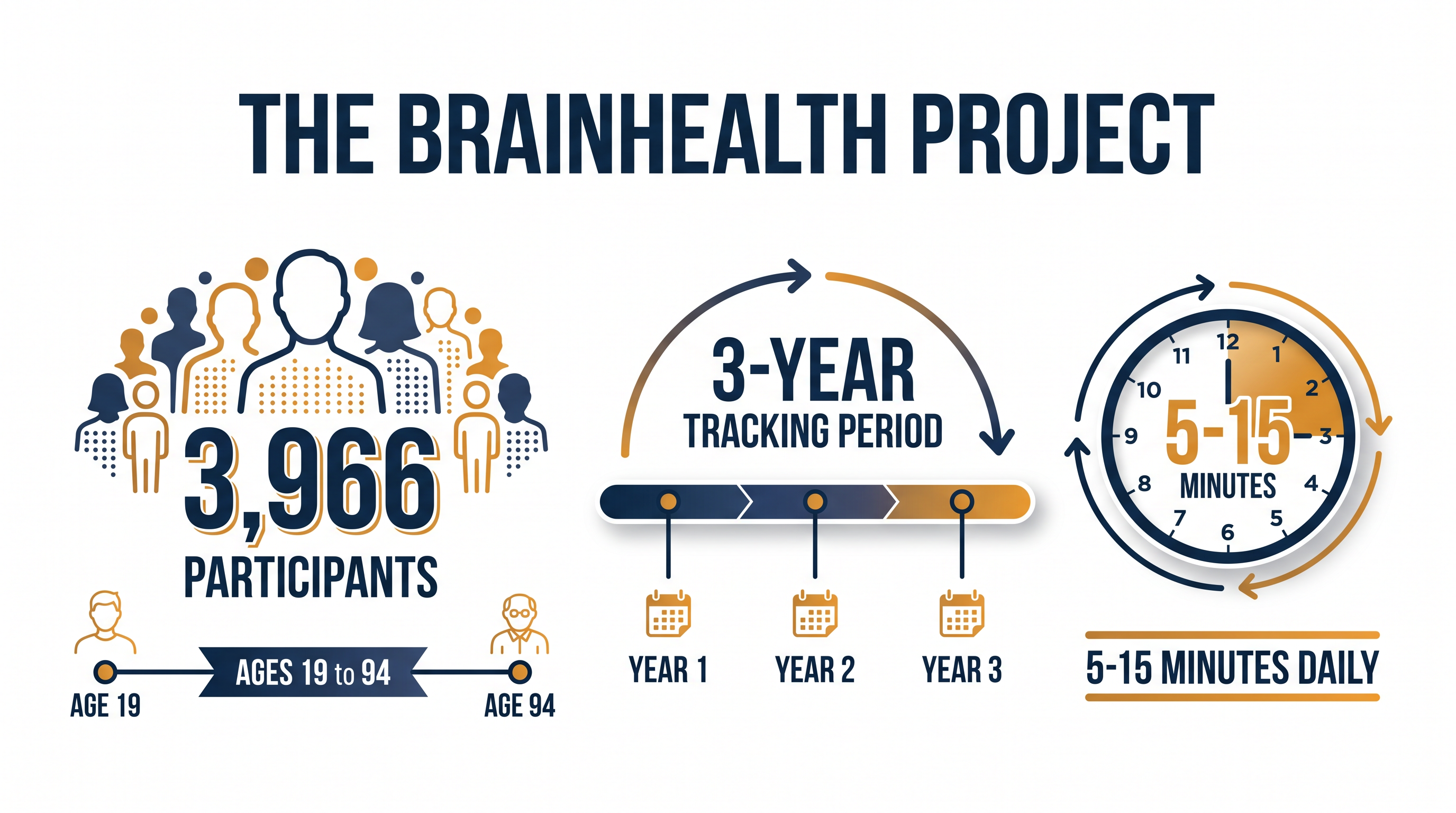
To reach these conclusions, researchers at the Center for BrainHealth at The University of Texas at Dallas conducted a massive, three-year longitudinal study. They tracked 3,966 adults, gathering data through an initiative known as The BrainHealth Project. Unlike smaller, short-term studies that often struggle to prove lasting behavioral changes, this project's scale and duration provided a robust look at how daily habits compound over time to alter the brain's physical and functional reality.[4][5][8]
The demographic spread of the study further dismantled the myth that brain training is exclusively a defensive measure for the elderly. Participants ranged in age from 19 to 94. The data revealed that younger adults in their twenties and thirties experienced cognitive gains equal to those achieved by participants in their seventies and eighties. The brain, it appears, is not defined by the calendar, but by its continuous capacity for growth and rewiring.[2][3][7]
The intervention itself deliberately avoided the commercial "brain games" and crossword puzzles that have flooded the market in recent years. Instead, participants engaged in strategy-based micro-learning designed to strengthen executive function. For example, a daily five-minute exercise might involve reading a short text and actively crossing out unimportant information—a practice designed to train the brain to filter out non-essential noise and reduce cognitive overload. Other modules focused on the dangers of multitasking, teaching participants to focus on a single task for uninterrupted blocks of time.[1][6]
To measure the efficacy of these interventions, the researchers utilized a proprietary tool called the BrainHealth Index (BHI). Unlike traditional cognitive assessments that are primarily designed to detect deficits, disease, or dementia, the BHI is calibrated to capture upward potential. It evaluates participants across three interconnected pillars: cognitive clarity (reasoning and processing speed), emotional balance (mental resilience and stress management), and connectedness (social purpose and meaningful engagement).[4][5][8]
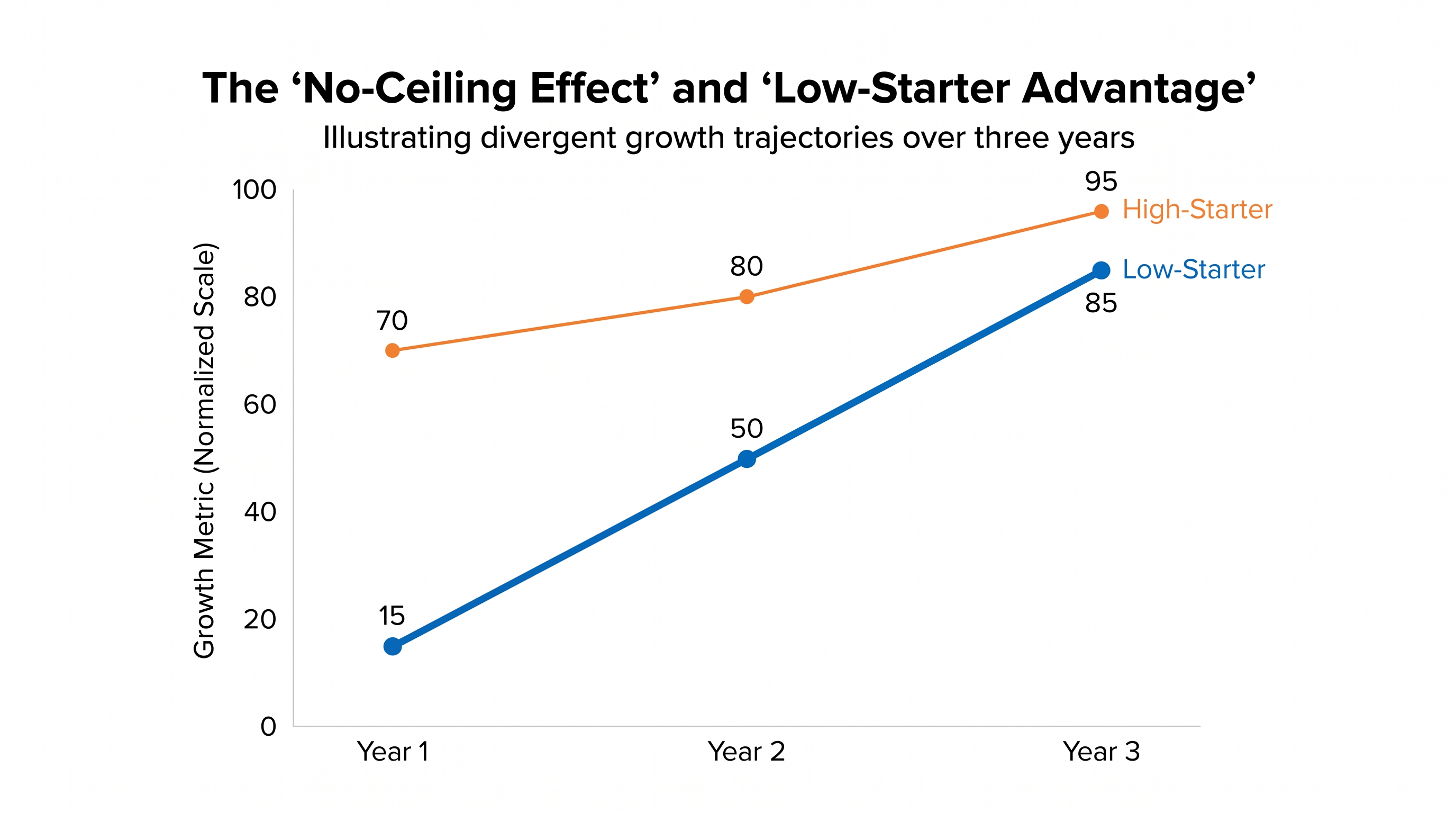
To measure the efficacy of these interventions, the researchers utilized a proprietary tool called the BrainHealth Index (BHI).
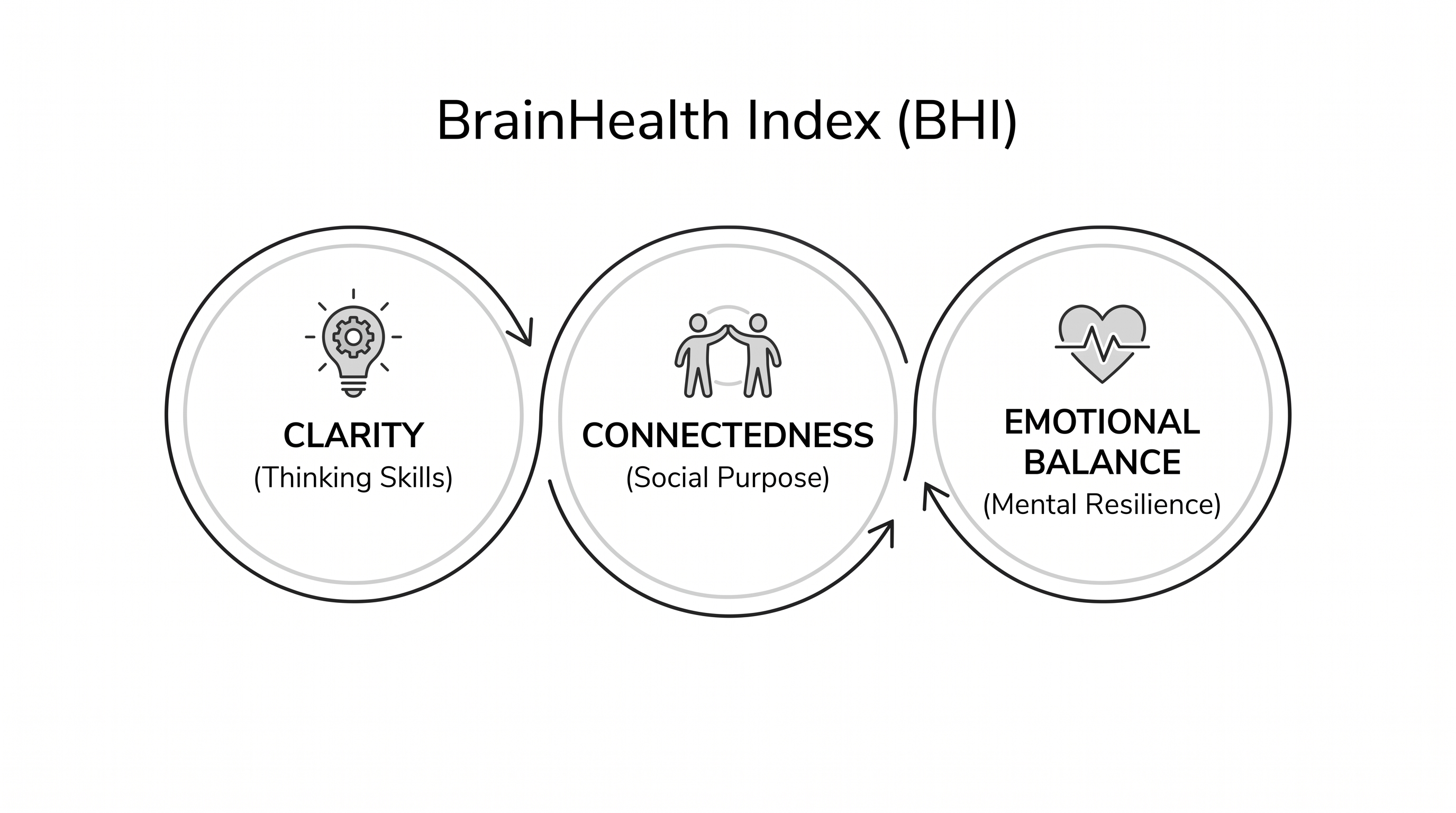
One of the most encouraging discoveries emerged from what researchers termed the "low-starter advantage." Participants who entered the three-year study with the lowest baseline BHI scores actually demonstrated the most rapid and significant rates of improvement. This finding sends a powerful public health message: poor brain health, whether due to chronic stress, sedentary habits, or aging, is not a permanent life sentence. The brain retains the plasticity required to recover and optimize its function, even from a diminished starting point.[3][5][8]
Conversely, the study also identified a "no-ceiling effect" among the most cognitively fit participants. Individuals who began the program with top-tier BHI scores did not plateau; instead, they continued to show measurable improvements over the entire 1,000-day tracking period. This suggests that there is no known upper limit to human brain optimization. Just as an elite athlete can continue to refine their physical conditioning, a healthy brain can continuously sharpen its processing speed and emotional regulation.[2][4][8]
The mental health implications of the study are particularly timely. While the primary goal was to measure cognitive clarity, the data revealed a deep, intrinsic link between how we process information and how we feel. Improvements in cognitive clarity were significantly associated with improvements in emotional balance. By learning strategies to control their brain function and manage mental energy, participants reported feeling more empowered and in control of their lives, which naturally reduced baseline anxiety and stress.[4][8]
This newfound agency proved vital during periods of personal hardship. The researchers documented a "rebound effect," observing how participants utilized their daily cognitive strategies to recover and maintain their brain health during major life stressors. Whether navigating a personal illness, a sudden job loss, or the heavy demands of caregiving, individuals who maintained their five-minute daily training routines exhibited remarkable mental resilience, preventing the cognitive backsliding typically associated with chronic stress.[3][5]
The underlying biological mechanism driving these improvements is neuroplasticity—the brain's lifelong ability to reorganize itself by forming new neural connections. Every time a participant engaged in a focused, strategic mental exercise, they were effectively strengthening specific neural pathways. The researchers emphasize that the brain functions much like a muscle; it requires intentional, consistent exertion followed by deliberate periods of rest to grow stronger.[2][6][7]
The scalability of the intervention is perhaps its most revolutionary aspect. By requiring only five to fifteen minutes a day, the training fits seamlessly into the margins of modern life. This "microburst" approach removes the barrier of time that often prevents people from adopting new health regimens. It leverages the psychological principle of habit formation, proving that consistency and frequency are far more important for neurological development than the total duration of any single training session.[1][4][8]
Public health advocates are already looking at how these findings could reshape community wellness programs. If a scalable, technology-driven intervention can meaningfully reduce years of cognitive decline while maximizing performance across the lifespan, it could alleviate an enormous burden on global healthcare systems. The focus is shifting from merely extending the human lifespan to actively expanding the "healthspan"—ensuring that our cognitive vitality matches our physical longevity.[4][5]
Despite the overwhelmingly positive data, researchers acknowledge certain limitations and areas for future study. The current findings rely heavily on the BrainHealth Index and self-reported engagement, and scientists are now working to correlate these behavioral improvements with objective biological markers, such as functional MRI scans and physiological signals like heart rate variability. Additionally, the study noted that the results might not perfectly generalize across all educational backgrounds, as the self-directed nature of the training requires a baseline level of digital literacy and motivation.[4][8]
Ultimately, the research from the Center for BrainHealth offers a profound reframing of human potential. It proves that our cognitive trajectory is not a passive ride into inevitable decline, but an active journey that we can steer through daily, intentional habits. By dedicating just a few minutes a day to strategic mental exercises, individuals of any age can cultivate a sharper, more resilient mind, proving that the brain is defined not by the years it has lived, but by the possibilities it continues to build.[3][5]
How we got here
2020
The Center for BrainHealth launches The BrainHealth Project to study lifelong cognitive optimization.
2021
Researchers pilot the BrainHealth Index (BHI) to measure clarity, connectedness, and emotional balance.
May 2026
The landmark three-year findings are published in the journal Scientific Reports.
Viewpoints in depth
Cognitive Researchers
Scientists focused on the brain's lifelong neuroplasticity and capacity for continuous optimization.
For neuroscientists and clinical researchers, the UT Dallas study represents a paradigm shift in how the medical community views the aging brain. Rather than accepting a 'decline-based' model where cognitive peak occurs in early adulthood, these experts point to the data showing a 'no-ceiling effect.' They argue that the brain remains highly trainable and rewirable across the entire lifespan, capable of forming new neural pathways when subjected to consistent, strategy-based stimulation. Their focus is now shifting toward correlating these behavioral improvements with objective biomarkers, such as fMRI data, to further map the biology of cognitive growth.
Public Health Advocates
Experts prioritizing scalable, accessible interventions to improve population-wide mental fitness.
Public health professionals view the five-minute micro-training model as a highly scalable solution to a growing global crisis of cognitive decline and mental fatigue. Because the intervention requires minimal time and can be delivered digitally, it bypasses traditional barriers to healthcare access. These advocates emphasize that proactive brain care should be treated with the same urgency as cardiovascular health. They argue that integrating brief cognitive exercises into daily routines, schools, and workplaces could drastically reduce the societal burden of age-related cognitive impairment and improve baseline mental health across all demographics.
Aging & Longevity Optimists
Voices championing the empowerment of older adults and the dismantling of ageist health myths.
For those focused on longevity and the quality of life in later years, the study is a powerful tool to combat ageism in medicine and society. This camp highlights the 'low-starter advantage' and the fact that participants in their seventies and eighties saw gains equal to those in their twenties. They argue that the narrative of inevitable mental decline causes unnecessary anxiety and often leads to a self-fulfilling prophecy where older adults stop challenging their minds. By proving that poor brain health is not a permanent life sentence, they advocate for a cultural shift that treats aging as a period of continued mental growth and agency.
What we don't know
- Researchers are still working to correlate the self-reported behavioral improvements with objective biological markers, such as functional MRI scans.
- It remains unclear if the results perfectly generalize across all educational backgrounds, as the self-directed training requires baseline digital literacy.
Key terms
- BrainHealth Index (BHI)
- A multidimensional metric developed by UT Dallas that measures cognitive clarity, emotional balance, and social connectedness.
- Cognitive Clarity
- The brain's ability to reason, process information quickly, and solve complex problems efficiently.
- Neuroplasticity
- The brain's lifelong ability to reorganize itself by forming new neural connections in response to learning and experience.
- Executive Function
- The set of mental skills necessary for managing everyday tasks, such as planning, problem-solving, and adapting to new situations.
- Micro-training
- Brief, targeted daily exercises designed to strengthen specific cognitive or physical skills in just a few minutes.
Frequently asked
What kind of brain training was used in the study?
Participants engaged in strategy-based micro-learning, such as filtering out non-essential information from texts, rather than traditional crossword puzzles or games.
Does this work for people who already have cognitive decline?
Yes. The study found that participants who started with the lowest baseline scores actually experienced the most rapid and significant improvements.
Is this training only effective for older adults?
No. Younger adults in their twenties and thirties saw cognitive gains equal to those in their seventies and eighties, demonstrating universal benefits.
How long does it take to see results?
Participants showed measurable improvements at their six-month assessments, with benefits continuing to compound over the three-year study period.
Sources
Source coverage
8 outlets
3 viewpoints surfaced








[1]Inc.Public Health Advocates
Is there anything you can do to improve your own brain function in just a few minutes a day?
Read on Inc. →[2]Science FocusAging & Longevity Optimists
A landmark new study suggests the brain remains far more adaptable than many people realise
Read on Science Focus →[3]Neuroscience NewsCognitive Researchers
Brain Performance Can Improve at Any Age
Read on Neuroscience News →[4]The WeekPublic Health Advocates
Recent study challenges the belief that cognitive decline is inevitable
Read on The Week →[5]SciTechDailyCognitive Researchers
A long-term study found that brain health can improve throughout life
Read on SciTechDaily →[6]KERA NewsPublic Health Advocates
Give your brain regular breaks
Read on KERA News →[7]India TimesAging & Longevity Optimists
Doing this for just 5 minutes daily can improve the brain even in the 90's
Read on India Times →[8]Center for BrainHealthCognitive Researchers
A three-year longitudinal study of ~4,000 adults reveals that there's no ceiling for brain health improvement
Read on Center for BrainHealth →


Every angle. Every day.
Get lifestyle stories with full source coverage and perspective breakdowns delivered to your inbox.