
Landmark Phase 3 Trial Shows First Drug to Stabilize Kidney Function Decline in IgA Nephropathy Over Two Years
Otsuka's Voyxact (sibeprenlimab) has become the first treatment to halt progressive kidney function decline in IgA nephropathy, returning patients to normal physiological rates over a two-year Phase 3 trial.


- Clinical Researchers
- Focus on the unprecedented efficacy of halting eGFR decline and fundamentally altering the disease's natural history.
- Patient Advocates
- Emphasize the drug's potential to prevent dialysis, avoid organ transplantation, and improve overall quality of life.
- Industry & Market Analysts
- Analyze the regulatory milestones and the highly competitive landscape of emerging IgAN treatments.
Why this matters
IgA nephropathy typically leads to relentless, irreversible kidney damage, often requiring dialysis or a transplant in young adults. By proving that a targeted biologic can actually halt this decline and return kidney function to normal aging rates, this trial marks a turning point from merely managing symptoms to fundamentally altering the disease's course.
Key points
- Otsuka's Voyxact (sibeprenlimab) stabilized kidney function in IgA nephropathy patients over a two-year Phase 3 trial.
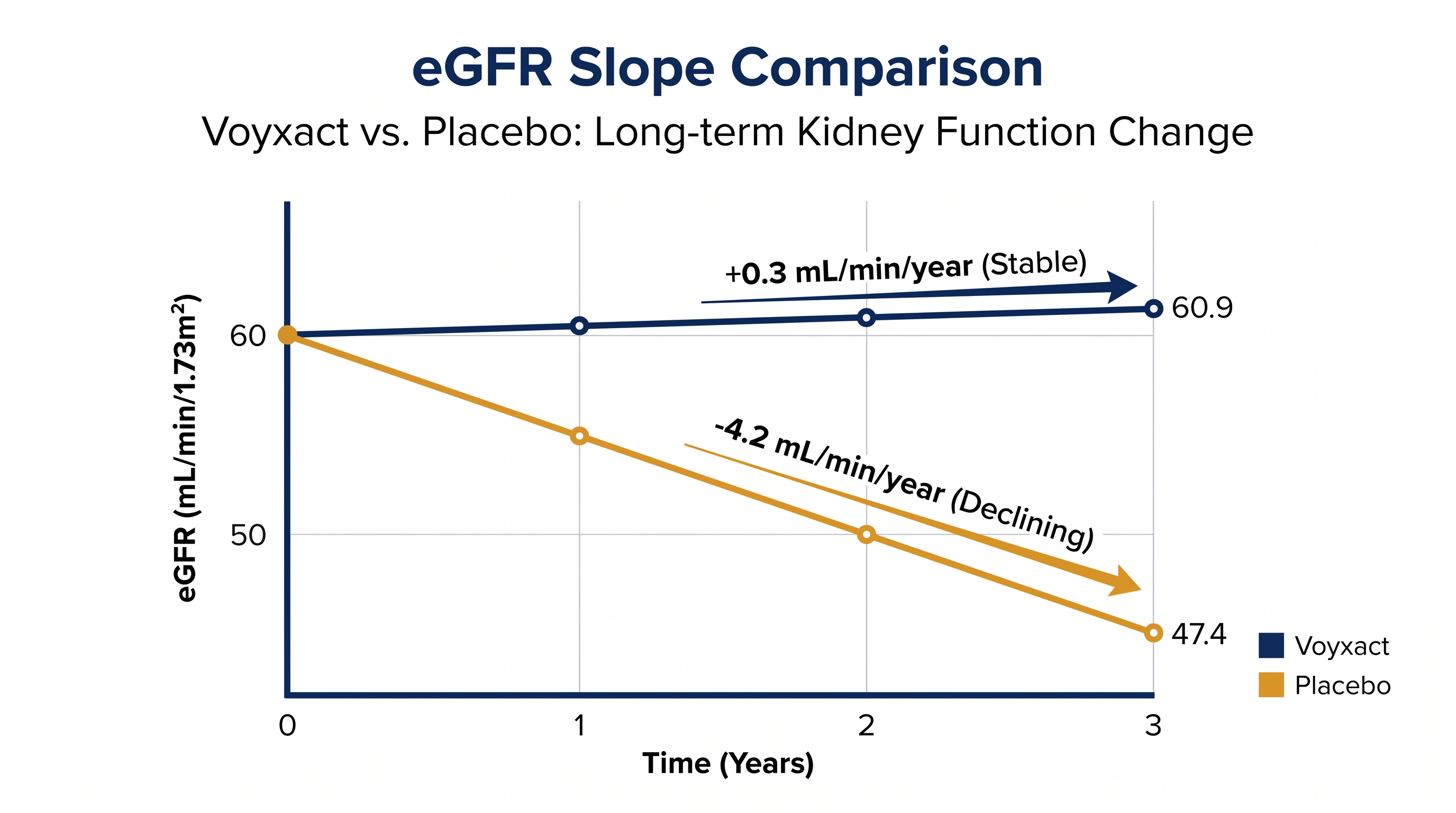
- The drug achieved an annualized eGFR slope of +0.3 mL/min/year, compared to a -4.2 mL/min/year decline for placebo.
- Voyxact is the first APRIL inhibitor to halt disease progression to normal physiological rates.
- The therapy previously received accelerated FDA approval in November 2025 based on proteinuria reduction.
- Otsuka is now submitting the 24-month data to the FDA for full traditional approval.
In a watershed moment for nephrology, a new targeted therapy has become the first to completely halt the progressive decline of kidney function in patients with IgA nephropathy (IgAN). Results from a landmark Phase 3 clinical trial demonstrate that the biologic drug Voyxact (sibeprenlimab) stabilizes the kidneys' filtration rate over two years, returning patients to the normal physiological baseline seen in healthy adults. The data, presented during a late-breaking session at the GlomCon Hawaii 2026 conference, marks a profound shift in how the medical community approaches the rare autoimmune disease. For decades, a diagnosis of IgA nephropathy carried the looming, seemingly inevitable threat of end-stage renal failure, dialysis, and the need for a kidney transplant, leaving patients and clinicians with few disease-modifying options.[1][3][5][6][7]
The Phase 3 VISIONARY trial tracked 510 adults with biopsy-confirmed IgAN who were at high risk for disease progression, making it one of the most comprehensive studies ever conducted in this patient population. Patients were randomized to receive either a monthly subcutaneous injection of sibeprenlimab or a placebo, alongside maximally tolerated standard-of-care treatments like blood pressure medications and SGLT2 inhibitors. The trial's key secondary endpoint measured the annualized slope of the estimated glomerular filtration rate (eGFR)—the definitive, gold-standard metric of how well the kidneys filter waste from the blood. Over the 24-month observation period, patients receiving the placebo experienced a steep and dangerous eGFR decline of -4.2 mL/min/1.73 m² per year, illustrating the aggressive natural trajectory of the disease.[1][2][4][6][8]
In stark contrast, patients treated with Voyxact achieved an annualized eGFR slope of +0.3 mL/min/1.73 m², a slight positive trajectory indicating that kidney function was not only preserved but entirely stabilized. This stabilization perfectly matches the normal age-related decline of less than 1 mL/min/year outlined by the Kidney Disease: Improving Global Outcomes (KDIGO) clinical practice guidelines. "Two years of eGFR stability in patients with IgAN is an incredible finding," noted Dr. John Kraus, chief medical officer at Otsuka, the pharmaceutical company behind the drug, emphasizing that the results fundamentally alter the disease's natural progression by moving beyond mere symptom management to active, long-term disease modification.[1][2][3][6]
IgA nephropathy, sometimes known as Berger's disease, typically manifests in adults between the ages of 20 and 40, striking patients in the prime of their lives and imposing a massive physical and psychological burden. The condition is driven by a complex immune system malfunction where a specific, abnormally formed protein—galactose-deficient IgA1—accumulates in the kidneys. Over time, these protein deposits trigger severe, localized inflammation, scarring the delicate glomerular filters and progressively destroying the organ's ability to clean the blood. Until recently, treatments were largely limited to broad immunosuppressants, steroids, and blood pressure drugs that only slowed the damage while exposing patients to significant systemic side effects.[3][4][5][6][7]
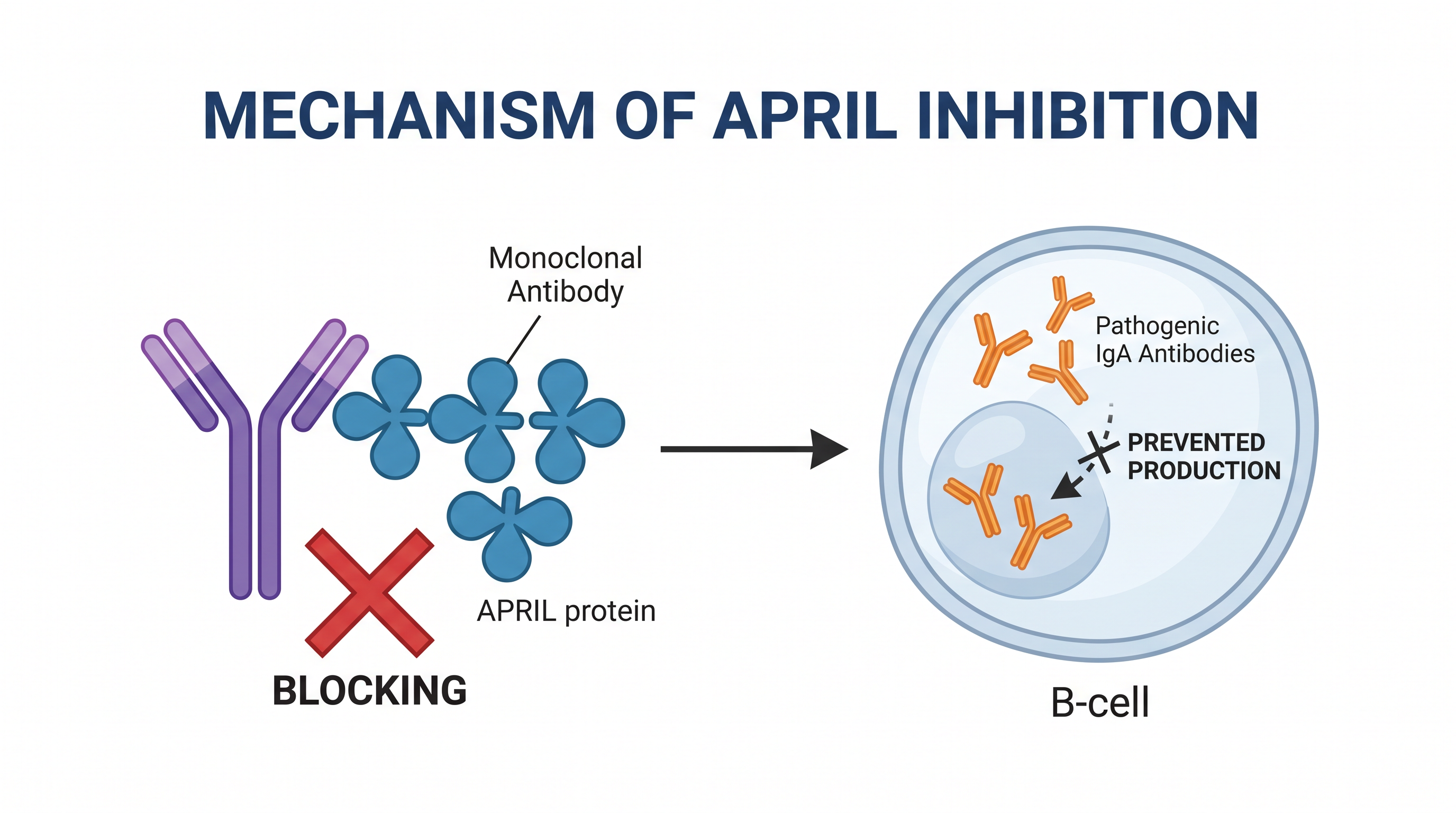
Voyxact represents a new class of precision medicine tailored specifically to the underlying biology of the disease. It is a humanized monoclonal antibody designed to selectively bind to and block a signaling protein known as APRIL (A Proliferation-Inducing Ligand). APRIL plays a critical role in the survival of certain B cells and the downstream production of antibodies. By neutralizing the APRIL protein, sibeprenlimab effectively cuts off the production of the pathogenic, galactose-deficient IgA1 at its biological source, preventing the harmful immune complexes from ever forming and reaching the kidneys in the first place.[1][3][4][7]
Voyxact represents a new class of precision medicine tailored specifically to the underlying biology of the disease.
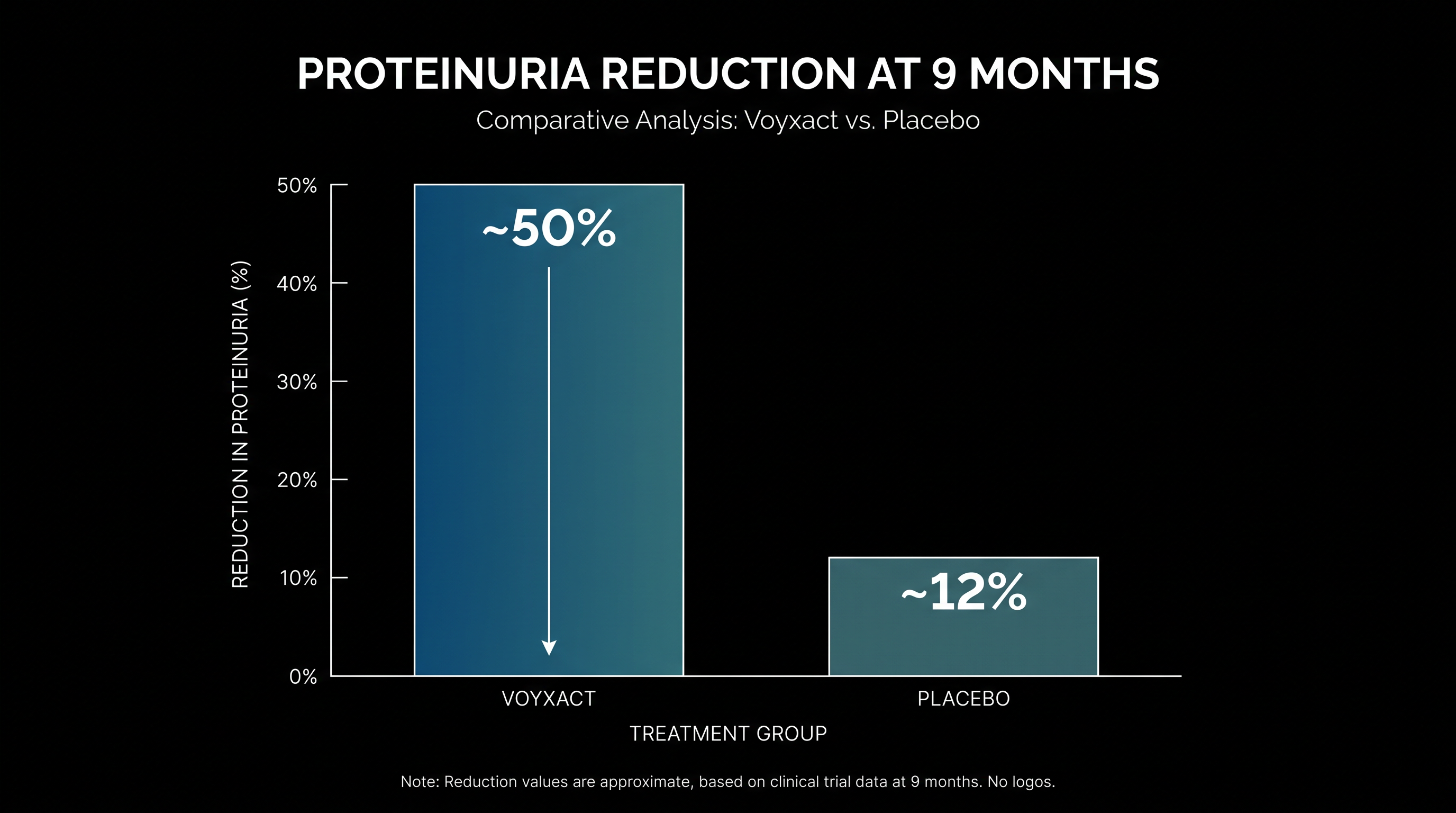
The drug's journey to this clinical milestone has been remarkably rapid, reflecting the urgent unmet need in the nephrology community. In November 2025, the U.S. Food and Drug Administration (FDA) granted Voyxact accelerated approval based on highly promising interim 9-month data from the same VISIONARY trial. That early data showed the drug reduced proteinuria—the spilling of protein into the urine, which serves as a key early marker of kidney stress and structural damage—by roughly 50% compared to placebo. However, because proteinuria is only a surrogate marker, the FDA required long-term eGFR data to definitively confirm that the drug actually preserved organ function over time.[4][5][6]
The newly released 24-month eGFR results provide that definitive proof, clearing the path for the drug's permanent integration into clinical practice. Armed with this data, Otsuka has announced it is now submitting a supplemental Biologics License Application (sBLA) to the FDA to convert the accelerated authorization into a full, traditional approval. Crucially, the profound efficacy demonstrated in the trial did not come at the cost of severe side effects. The safety profile of sibeprenlimab remained highly favorable and comparable to the placebo over the entire two-year period, with most adverse reactions reported as mild or moderate.[1][2][6]
The overall rate of adverse events was nearly identical between the two groups, hovering around 90%, with injection site reactions and mild respiratory infections being the most commonly reported issues. Furthermore, because Voyxact targets a highly specific immune pathway rather than broadly suppressing the entire immune system like traditional steroids, the rate of serious infections was actually lower in the treatment group (1.9%) compared to the placebo group (4.0%). This targeted safety profile is particularly vital for young patients who will likely need to remain on the therapy for decades to maintain their kidney health.[1][4][5]
The clinical success of sibeprenlimab arrives amid a broader renaissance in IgA nephropathy research and drug development. The treatment landscape is rapidly expanding, with several other targeted therapies advancing through late-stage clinical trials. For instance, Vera Therapeutics recently secured FDA approval for atacicept (Trutakna), a dual inhibitor that blocks both APRIL and a related cytokine called BAFF, while Novartis has gained traction with its complement pathway inhibitor Fabhalta. This wave of innovation suggests that nephrologists will soon have an arsenal of precision tools to tackle the disease from multiple biological angles, potentially opening the door to combination therapies that could drive remission rates even higher.[1][4][7]
As these precision biologics enter the market, the standard of care for IgA nephropathy is being entirely rewritten, shifting the focus from delaying failure to preserving lifelong health. Otsuka is also developing an autoinjector version of Voyxact, which would make the once-monthly at-home administration even more convenient for patients managing the chronic condition. For young adults facing a diagnosis that once guaranteed a lifetime of chronic illness, dietary restrictions, and the eventual need for organ transplantation, the ability to permanently stabilize kidney function with a targeted monthly injection offers a previously unimaginable lease on a healthy, dialysis-free life.[1][4][5][6][7]
How we got here
2024
Phase 2 trial data published in the New England Journal of Medicine shows sibeprenlimab significantly reduces proteinuria.
November 2025
The FDA grants Voyxact accelerated approval based on 9-month proteinuria reduction data from the VISIONARY trial.
July 2026
Otsuka announces positive topline two-year eGFR results from the Phase 3 VISIONARY trial.
August 2026
Full 24-month data is presented at the GlomCon Hawaii 2026 conference, showing complete stabilization of kidney function.
Viewpoints in depth
Nephrologists & Researchers
Medical professionals view the stabilization of eGFR as a transformative milestone.
For decades, nephrologists have relied on supportive care—like blood pressure medications and broad immunosuppressants—to merely slow the inevitable decline of kidney function in IgAN patients. Researchers emphasize that achieving an eGFR slope of +0.3 mL/min/year is not just a statistical win; it represents a fundamental alteration of the disease's natural history. By hitting the KDIGO guideline target of less than 1 mL/min/year decline, clinicians believe they can now offer patients a realistic chance of avoiding dialysis entirely.
Patient Advocacy Groups
Advocates highlight the profound impact on quality of life and long-term prognosis.
Organizations like NephCure stress that IgA nephropathy often strikes adults in the prime of their lives, between ages 20 and 40. The looming threat of kidney failure and the need for a transplant creates immense psychological and financial burdens. Patient advocates view targeted therapies like sibeprenlimab as a beacon of hope, particularly because the drug is well-tolerated and can be self-administered monthly, allowing patients to maintain their independence and daily routines without the severe side effects of traditional steroids.
Pharmaceutical Industry Analysts
Market analysts focus on the competitive dynamics of the rapidly expanding IgAN treatment landscape.
The IgAN market has seen a surge of innovation, with multiple targeted therapies—including dual APRIL/BAFF inhibitors and complement pathway blockers—entering the fray. Analysts note that Otsuka's two-year eGFR data gives Voyxact a significant competitive edge in securing traditional FDA approval. However, they also point out that the landscape will remain highly competitive as rivals like Vera Therapeutics and Novartis release their own long-term data, potentially leading to a paradigm where combination therapies become the standard of care.
What we don't know
- Whether the stabilization of kidney function will persist beyond the two-year mark.
- How sibeprenlimab will perform when used in combination with other emerging targeted therapies for IgAN.
- The long-term effects of sustained APRIL inhibition on the broader immune system over decades of use.
Key terms
- IgA Nephropathy (IgAN)
- An autoimmune disease where a protein called immunoglobulin A (IgA) builds up in the kidneys, causing inflammation and tissue damage.
- eGFR (Estimated Glomerular Filtration Rate)
- A key measure of kidney function that calculates how well the kidneys are filtering waste from the blood.
- Proteinuria
- The presence of excess protein in the urine, a primary indicator of kidney damage and disease progression.
- APRIL (A Proliferation-Inducing Ligand)
- A signaling protein in the immune system that drives the production of the harmful antibodies responsible for IgA nephropathy.
- Monoclonal Antibody
- A lab-made protein designed to bind to a specific target in the body, such as the APRIL protein, to block its activity.
Frequently asked
What is Voyxact (sibeprenlimab)?
Voyxact is a targeted biologic drug, administered as a monthly injection, designed to treat IgA nephropathy by blocking a specific immune protein called APRIL.
How does this drug help the kidneys?
By blocking the APRIL protein, Voyxact stops the body from producing the abnormal IgA antibodies that build up in and damage the kidney's delicate filters.
Is Voyxact already available to patients?
Yes, it received accelerated FDA approval in late 2025 for reducing proteinuria. The new two-year data will be used to seek full traditional approval.
Does it cure IgA nephropathy?
It is not a cure, but the two-year trial data shows it can effectively halt the decline of kidney function, stabilizing it at a normal, healthy rate.
Sources
Source coverage
8 outlets
3 viewpoints surfaced








[1]Fierce PharmaClinical Researchers
In a first, Otsuka's Voyxact stabilizes IgAN patients' kidney function decline to normal levels
Read on Fierce Pharma →[2]American Pharmaceutical ReviewIndustry & Market Analysts
Otsuka Reports Phase 3 VISIONARY Data Showing Kidney Function Benefit for Sibeprenlimab in IgAN
Read on American Pharmaceutical Review →[3]CheckRareClinical Researchers
Results From the VISIONARY Clinical Trial of Sibeprenlimab in Patients With IgA Nephropathy
Read on CheckRare →[4]Pharmacy TimesIndustry & Market Analysts
Sibeprenlimab, a new APRIL blocker, cuts proteinuria in IgA nephropathy
Read on Pharmacy Times →[5]NephCurePatient Advocates
The FDA Grants Accelerated Approval to VOYXACT, a New Treatment Option for Adults with IgA Nephropathy
Read on NephCure →[6]Otsuka USIndustry & Market Analysts
Otsuka Reports Positive Phase 3 VISIONARY Two-Year eGFR Results Demonstrating VOYXACT (sibeprenlimab-szsi) Prevented Progression to Kidney Failure
Read on Otsuka US →[7]MedCentralPatient Advocates
Emerging therapies in IgA nephropathy target specific pathways to prevent disease progression
Read on MedCentral →[8]New England Journal of MedicineClinical Researchers
Sibeprenlimab in IgA Nephropathy - Interim Analysis of a Phase 3 Trial
Read on New England Journal of Medicine →



Every angle. Every day.
Get health stories with full source coverage and perspective breakdowns delivered to your inbox.