
FIFA President Gianni Infantino Faces Leadership Crisis Following Collapse of $4 Billion World Cup Deal
A failed proposal to sell a 20 percent stake in FIFA's commercial rights to private equity has triggered an internal revolt and boycott threats from European federations. Infantino is now reportedly seeking US diplomatic backing to stabilize his presidency.
By Ryder James
- European Federations
- View the commercialization as a threat to the global soccer calendar and traditional governance, demanding Infantino's resignation.
- FIFA Executive Leadership
- Argue that private investment is necessary to maximize revenue and distribute wealth to smaller nations outside Europe.
- Governance Critics
- See the secretive nature of the deal and the reliance on US political figures as evidence of entrenched corruption and lack of transparency.
Why this matters
The battle over FIFA's commercial rights will determine how billions of dollars in World Cup revenue are distributed, directly impacting the funding of grassroots soccer programs and the balance of power in global sports.
Key points
- FIFA President Gianni Infantino abandoned a $4 billion plan to sell a 20% stake in FIFA's commercial rights to private equity.
- The proposal sparked a massive backlash, including a unanimous boycott threat from European governing body UEFA.
- An internal movement dubbed 'Project Kill The Monster' is actively seeking to force Infantino's resignation.
- Infantino reportedly sought diplomatic backing from US officials, though the State Department denied a scheduled call.
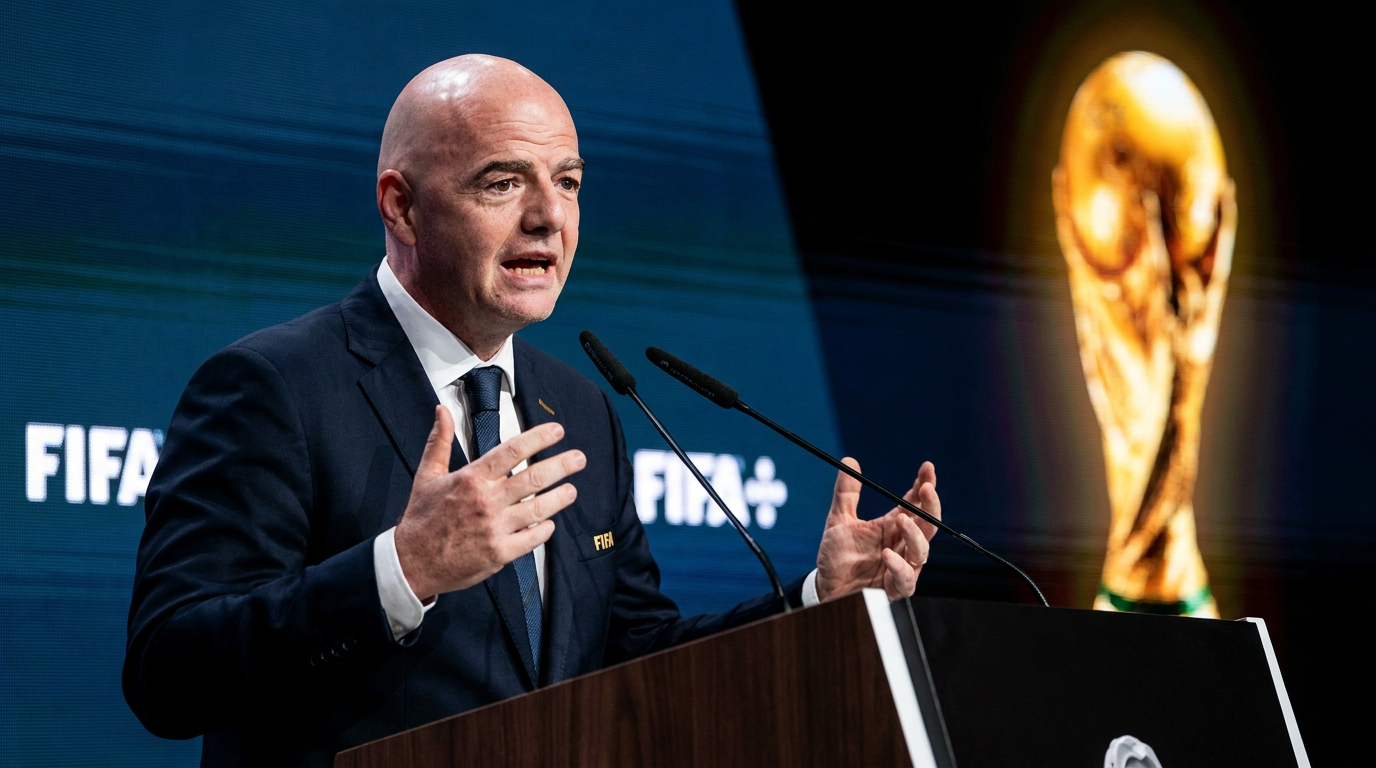
FIFA President Gianni Infantino is navigating the most severe leadership crisis of his tenure, facing an internal revolt and seeking diplomatic lifelines after the collapse of a massive commercial privatization plan. The fallout from the aborted $4 billion deal has fractured the global soccer community, prompting boycott threats from Europe and triggering a campaign among senior executives to force his resignation.[1][2][3][4]
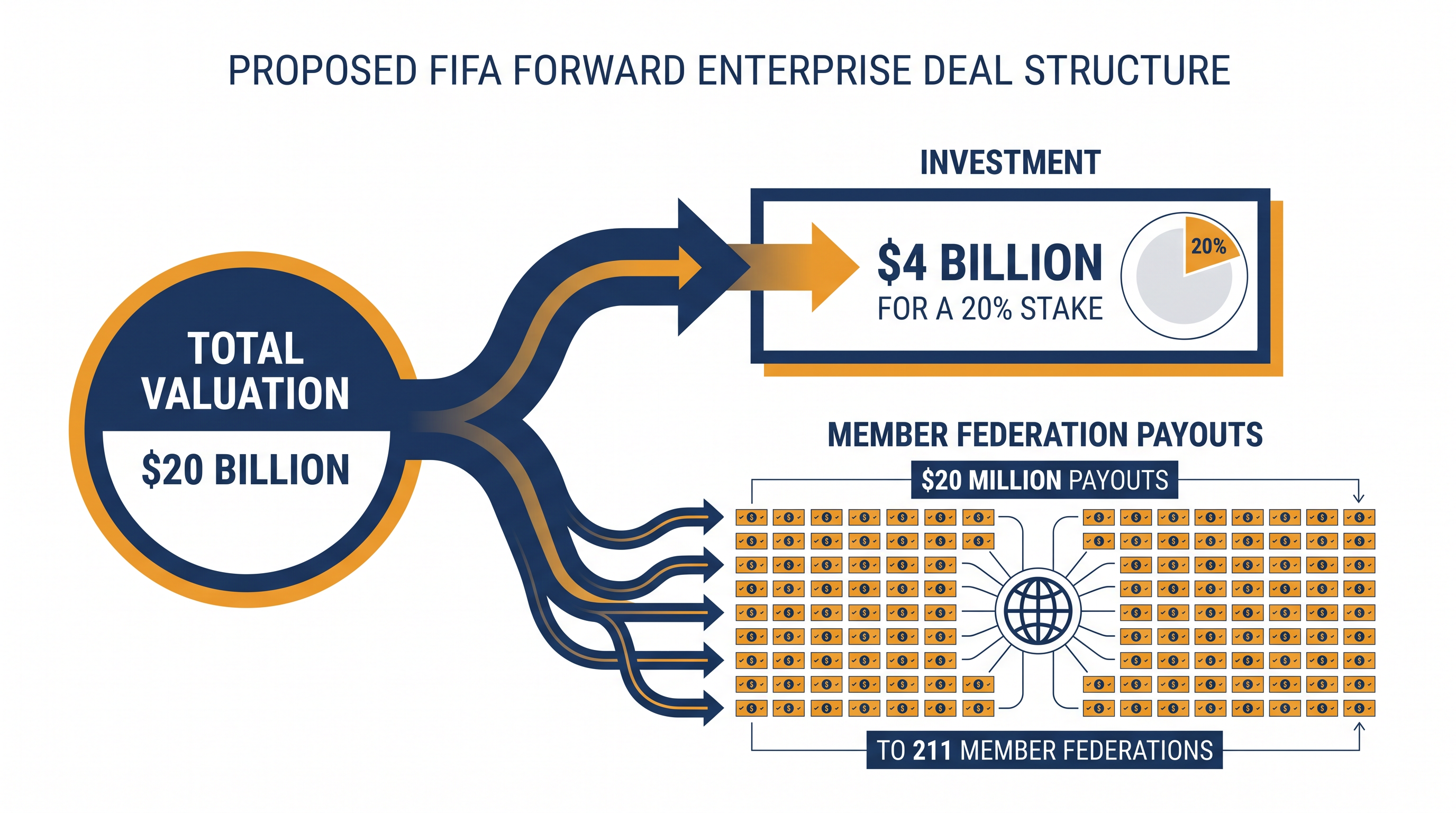
The crisis stems from a secretive proposal to spin off FIFA's commercial assets—including broadcasting, sponsorship, licensing, and ticketing rights—into a new subsidiary dubbed FIFA Forward Enterprise. Under the plan, Thrive Capital, a private equity firm led by American investor Josh Kushner, would have acquired a 20 percent stake in the venture for just over $4 billion, valuing the new entity at $20 billion.[1][3][5][7]
To secure backing, Infantino's administration offered each of FIFA's 211 member federations a $20 million cash payout, a transformative sum for smaller nations in Africa, Asia, and the Caribbean. The initiative was framed as a way to unlock unprecedented capital and modernize the sport's revenue streams, doubling the standard distributions federations currently receive from World Cup cycles.[1][3]
However, the clandestine nature of the negotiations sparked immediate outrage when the details leaked to the press. European soccer's governing body, UEFA, viewed the move as a direct threat to the balance of the global calendar and its own lucrative competitions like the Champions League. On July 30, UEFA voted unanimously to boycott all FIFA-organized events, including the 2030 World Cup, unless the plan was abandoned.[1][3][4][5]
The resistance extended deep into FIFA's own ranks. Senior advisor Carlos Cordeiro resigned in protest, while Chief Operating Officer Kevin Lamour publicly stated he felt "deceived" by the lack of transparency. Faced with a unified European bloc and fracturing internal support, Infantino formally scrapped the privatization plan on Friday, acknowledging that the project had created untenable divisions.[3][4][6]
Senior advisor Carlos Cordeiro resigned in protest, while Chief Operating Officer Kevin Lamour publicly stated he felt "deceived" by the lack of transparency.
The reversal has not quelled the unrest. A coordinated movement among senior FIFA officials, internally nicknamed "Project Kill The Monster," is now actively mobilizing to oust Infantino before his current term ends. Several European football associations, including those of England, Wales, Sweden, and Serbia, have formally withdrawn their support for his 2027 reelection bid.[1][4][6]
Isolated in Zurich, Infantino has reportedly turned to his political connections in the United States for leverage. Sources indicate the FIFA chief made multiple unsuccessful attempts to contact US President Donald Trump, with whom he has cultivated a close relationship during the buildup to the 2026 North American World Cup.[2][5][7]
Following those attempts, reports emerged that Infantino scheduled a private call with US Secretary of State Marco Rubio for Monday morning. While insiders briefed on the matter stated the discussion was officially framed around utilizing soccer as a tool for American "soft power," they noted the underlying motivation was to secure high-profile public backing to stabilize his presidency. The US State Department subsequently denied that any such call was planned.[1][2][5][7]
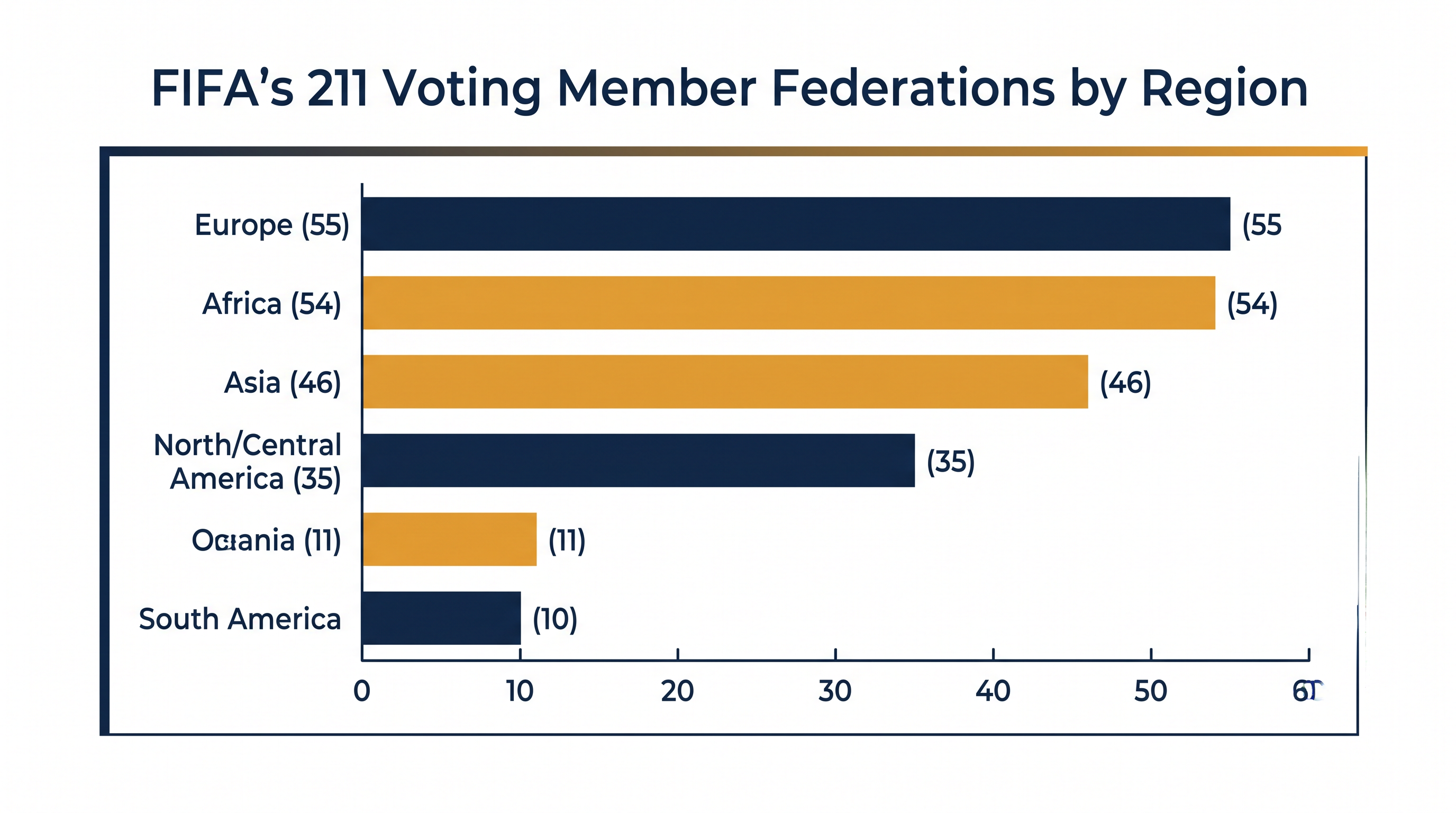
The crisis highlights a growing schism in global soccer governance. While European and North American federations are leading the charge for Infantino's removal, his traditional power bases in Africa and South America have remained largely neutral. These blocs, which rely heavily on FIFA development grants, hold the key to his survival, as Infantino needs 106 votes to secure reelection in 2027.[1][3]
As the September deadline for federations to accept the now-defunct $20 million offer approaches, the focus shifts to whether UEFA will present a challenger for the FIFA presidency. For now, the collapse of the Thrive Capital deal serves as a stark reminder of the limits of private equity in international sports, leaving FIFA's leadership structure in a precarious standoff.[1][3][5][7]
How we got here
Late July 2026
Details leak of Infantino's secret plan to sell a 20% stake in FIFA's commercial rights to Thrive Capital.
July 30, 2026
UEFA votes unanimously to boycott all FIFA competitions, including the 2030 World Cup, if the plan proceeds.
July 31, 2026
Facing a massive internal and external revolt, Infantino officially abandons the privatization proposal.
August 3, 2026
Reports emerge of Infantino seeking US diplomatic backing as European federations withdraw their reelection support.
Viewpoints in depth
European Federations
European soccer bodies view the privatization plan as an existential threat to the global sporting calendar.
Led by UEFA, European nations argue that spinning off the World Cup's commercial rights to private equity would inevitably lead to demands for more games and expanded tournaments to maximize returns. They fear this would congest an already packed fixture schedule, exhaust elite players, and siphon attention and revenue away from established domestic leagues and the Champions League.
FIFA's Commercial Advocates
Proponents argue that private capital is essential to modernize the sport and fund global development.
Allies of the Infantino administration maintain that FIFA must aggressively expand its revenue streams to support smaller federations. By offering $20 million payouts to all 211 member nations, the plan aimed to democratize wealth currently concentrated in Europe, providing game-changing infrastructure and development funds to countries in Africa, Asia, and the Caribbean.
Governance Watchdogs
Critics point to the secretive negotiations as evidence of systemic transparency failures.
For governance experts and internal critics, the primary issue is the clandestine manner in which the $4 billion deal was brokered. The fact that senior executives and key stakeholders were kept in the dark until the plan was leaked has reignited historical concerns about FIFA's operational integrity, prompting calls for sweeping institutional reform.
What we don't know
- Whether UEFA will formally present a challenger to run against Infantino in the 2027 presidential election.
- How the 54 voting members of the African confederation (CAF) will align now that the promised $20 million payouts have been rescinded.
- If the US State Department will publicly clarify the nature of any communications between Infantino and American officials.
Key terms
- FIFA Forward Enterprise
- The proposed, now-abandoned subsidiary that would have controlled FIFA's broadcasting, sponsorship, licensing, and ticketing rights.
- Thrive Capital
- The American private equity firm that sought to acquire a 20 percent stake in FIFA's commercial assets for $4 billion.
- UEFA
- The Union of European Football Associations, the administrative body for soccer in Europe and a primary opponent of the privatization plan.
Frequently asked
Why did FIFA want to sell its commercial rights?
The plan aimed to unlock $4 billion in immediate private equity capital, which FIFA intended to distribute as $20 million payouts to each of its 211 member federations to fund global soccer development.
Why did European federations oppose the deal?
European bodies feared that private investors would demand an expanded calendar of games to maximize profits, threatening player health and competing with existing European tournaments.
Can Gianni Infantino be forced out of office?
While there is an internal movement to oust him, Infantino can only be removed through a formal no-confidence vote or by losing the scheduled 2027 presidential election, which requires the backing of 106 member federations.
Sources
Source coverage
7 outlets
3 viewpoints surfaced







[1]ForbesEuropean Federations
FIFA President Gianni Infantino Races To Secure Future After World Cup Privatization Plan Backfires
Read on Forbes →[2]Al JazeeraEuropean Federations
FIFA boss Infantino turns to Trump amid revolt over World Cup plan
Read on Al Jazeera →[3]PBSEuropean Federations
FIFA president Infantino faces unclear future after scrapping World Cup investment plan
Read on PBS →[4]The MirrorGovernance Critics
FIFA officials plot 'Kill the Monster' movement to oust Gianni Infantino
Read on The Mirror →[5]The New RepublicGovernance Critics
FIFA Boss Begs Trump for Help After Disastrous World Cup Sell-Off
Read on The New Republic →[6]Hindustan TimesFIFA Executive Leadership
FIFA President Gianni Infantino in turmoil over plans to sell World Cup
Read on Hindustan Times →[7]BusinessDayFIFA Executive Leadership
Infantino seeks Trump backing as FIFA leadership crisis deepens
Read on BusinessDay →
Every angle. Every day.
Get sports stories with full source coverage and perspective breakdowns delivered to your inbox.