
The Fusion Bottleneck: How a New Public-Private Partnership is Rewiring the Path to Commercial Energy
As private fusion companies race toward grid power by the 2030s, a new wave of public-private partnerships is tackling the industry's biggest engineering hurdle: the supply chain and breeding blanket technology.

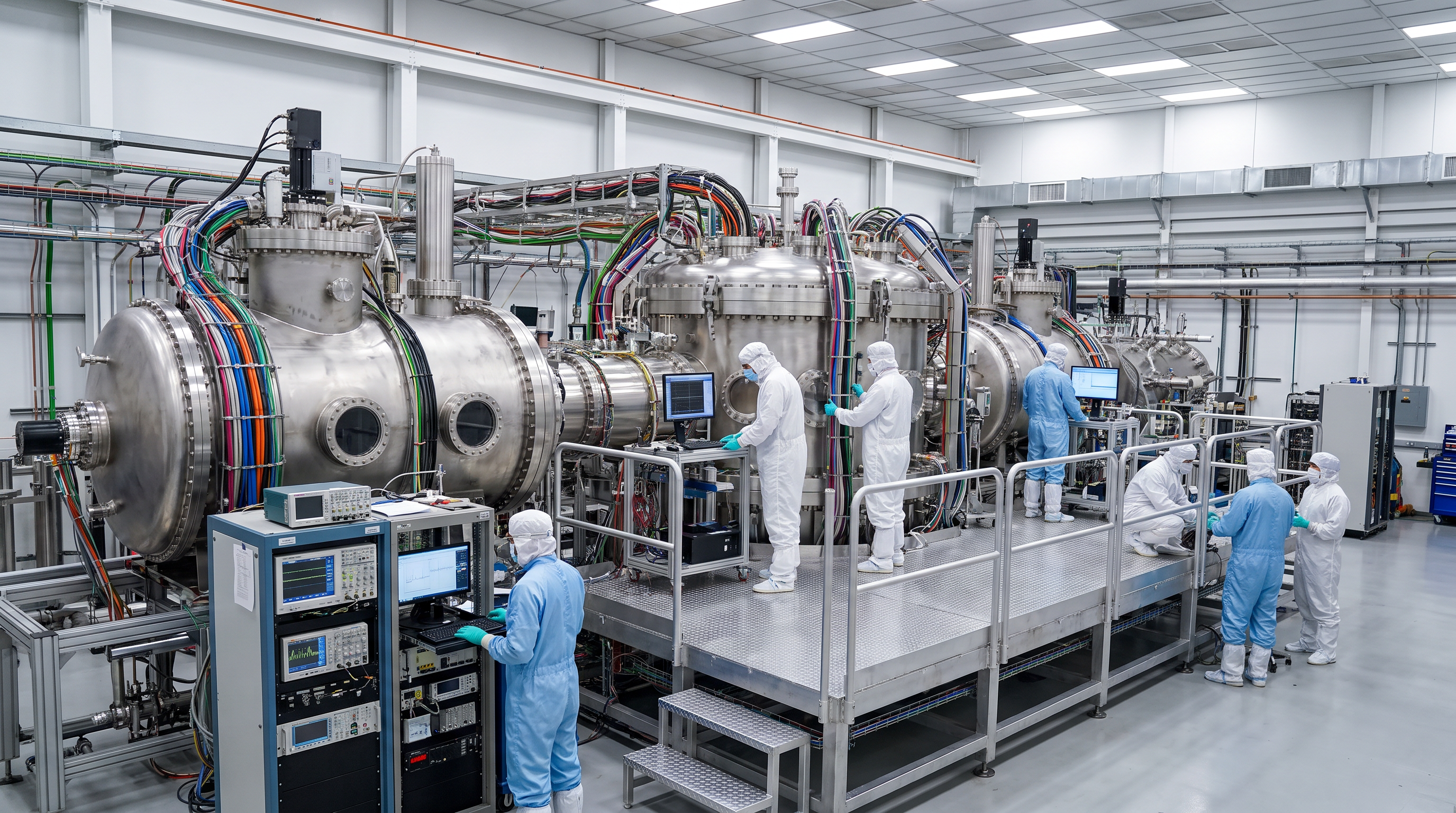
- Commercial Fusion Startups
- Private companies racing to deploy fusion power to the grid by the 2030s.
- Public Research Institutions
- National laboratories and government agencies focused on foundational science and shared infrastructure.
- Supply Chain & Manufacturing Partners
- The specialized industrial base tasked with building fusion components.
Why this matters
Fusion energy promises a virtually limitless, carbon-free power source that could permanently solve global energy scarcity. By shifting from theoretical physics to shared industrial test facilities, these partnerships dramatically reduce the time and cost required to bring commercial fusion power to the grid.
Key points
- The fusion industry has shifted from proving basic physics to solving massive engineering and supply chain bottlenecks.
- A new public-private partnership will build the world's first Fusion Blanket Component Test Facility (BCTF) in San Diego.
- The BCTF will allow startups to test breeding blankets, which are essential for generating electricity and sustaining fusion fuel.
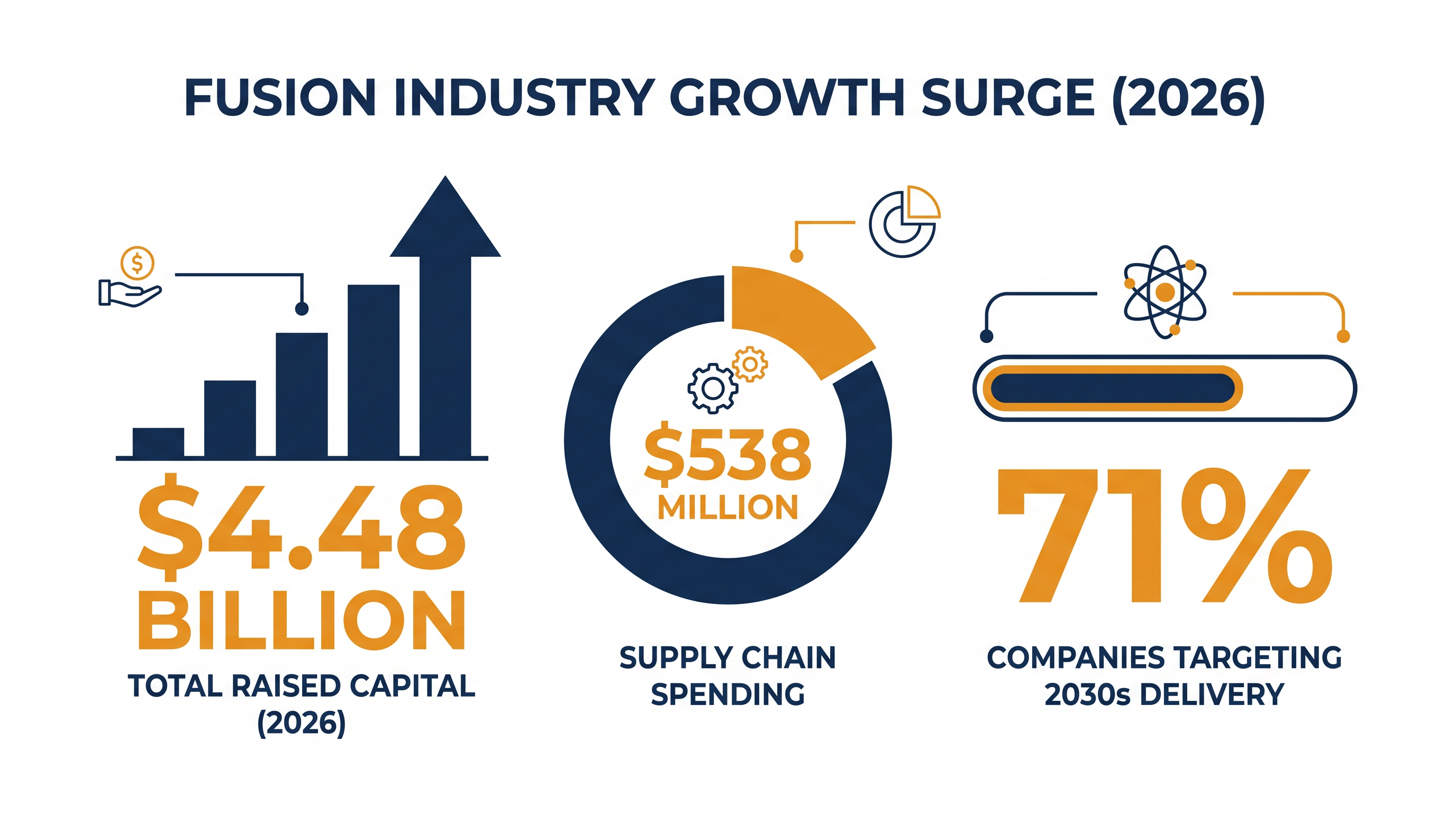
- Private fusion companies raised a record $4.48 billion over the past year, with supply chain spending surging 24%.
- The U.S. Department of Energy's milestone-based funding is accelerating commercial designs, including Zap Energy's 50-megawatt Z-pinch plant.
For decades, the quest for fusion energy was fundamentally a physics problem: could humanity replicate the process that powers the sun inside a machine on Earth? That question was definitively answered in December 2022 when the National Ignition Facility achieved net energy gain, producing more energy from a fusion reaction than was used to ignite it. Today, the industry has crossed a critical threshold. The challenge is no longer just proving that fusion works in a laboratory, but demonstrating that it can generate electricity at a commercial scale and at a competitive cost.[6]
The transition from scientific milestone to industrial power source has exposed a new set of hurdles. As private fusion companies race toward commercialization, they are colliding with a massive engineering and supply chain bottleneck. Building a fusion power plant requires specialized materials, advanced heat management systems, and complex fuel cycles that simply do not exist at a commercial scale today. To bridge this gap, the U.S. Department of Energy (DOE) and private industry are rewiring how fusion development is funded, shifting from isolated research grants to massive public-private partnerships designed to de-risk the hardest engineering challenges.[1][4]
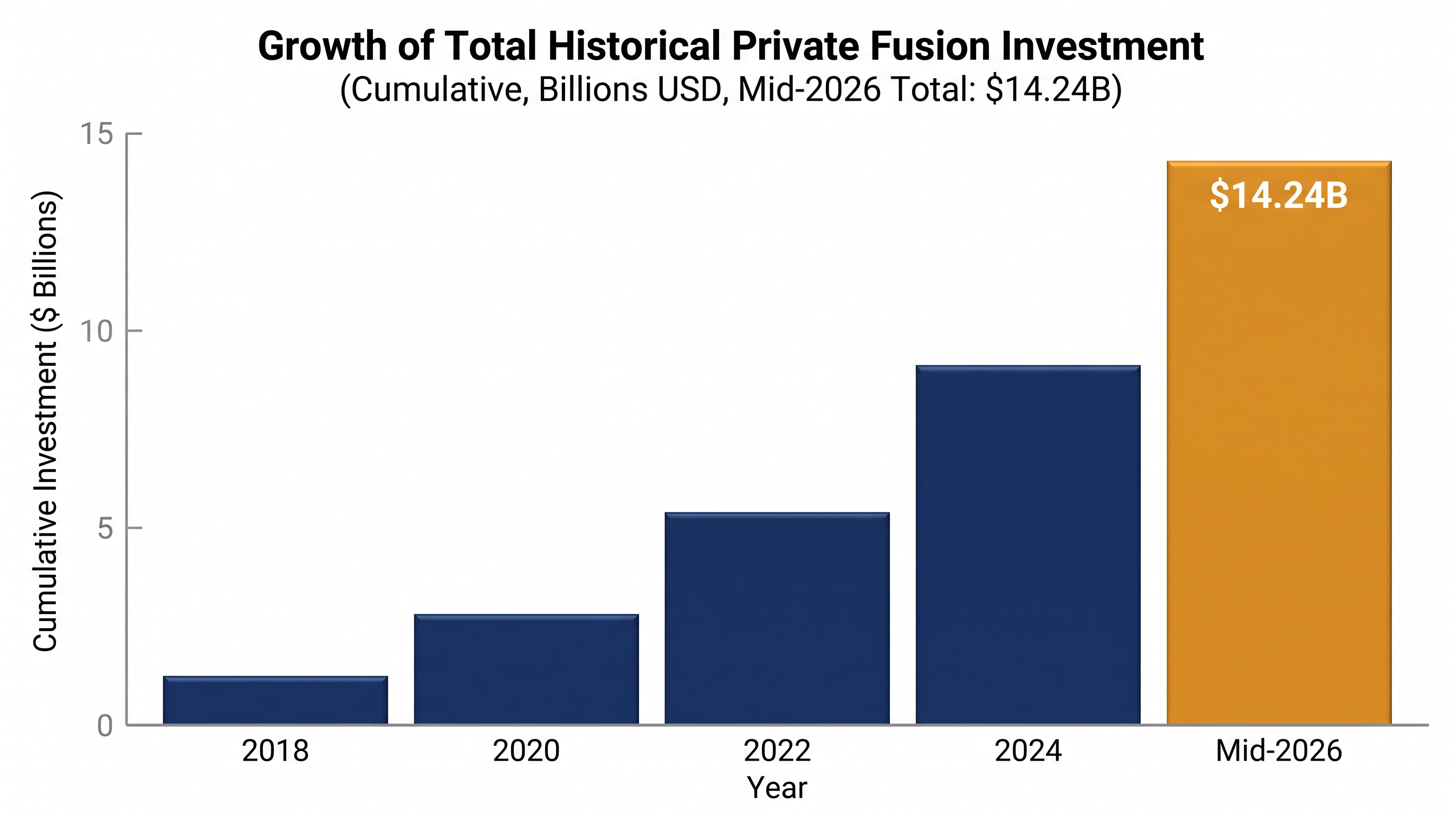
The scale of the pivot is captured in the Fusion Industry Association’s (FIA) 2026 Global Fusion Industry Report, released in July. The report reveals that the private fusion sector raised a record $4.48 billion over the past year, bringing total historical investment to $14.24 billion. More tellingly, supply chain spending by fusion companies surged 24 percent in 2025 to $538 million. The capital is flowing, and according to the FIA, 71 percent of surveyed fusion companies now expect to see a fusion power plant delivering electricity to the grid by the 2030s.[2][4]
Yet, capital alone cannot solve the physics and materials science gaps that remain. The FIA’s 2026 Supply Chain Report identified power systems, heat management technologies, and vacuum vessels as the primary bottlenecks constraining the industry. However, the most daunting challenge cited by nearly half of all fusion companies is the development of fusion fuel cycle systems—specifically, the 'breeding blanket.'[4]
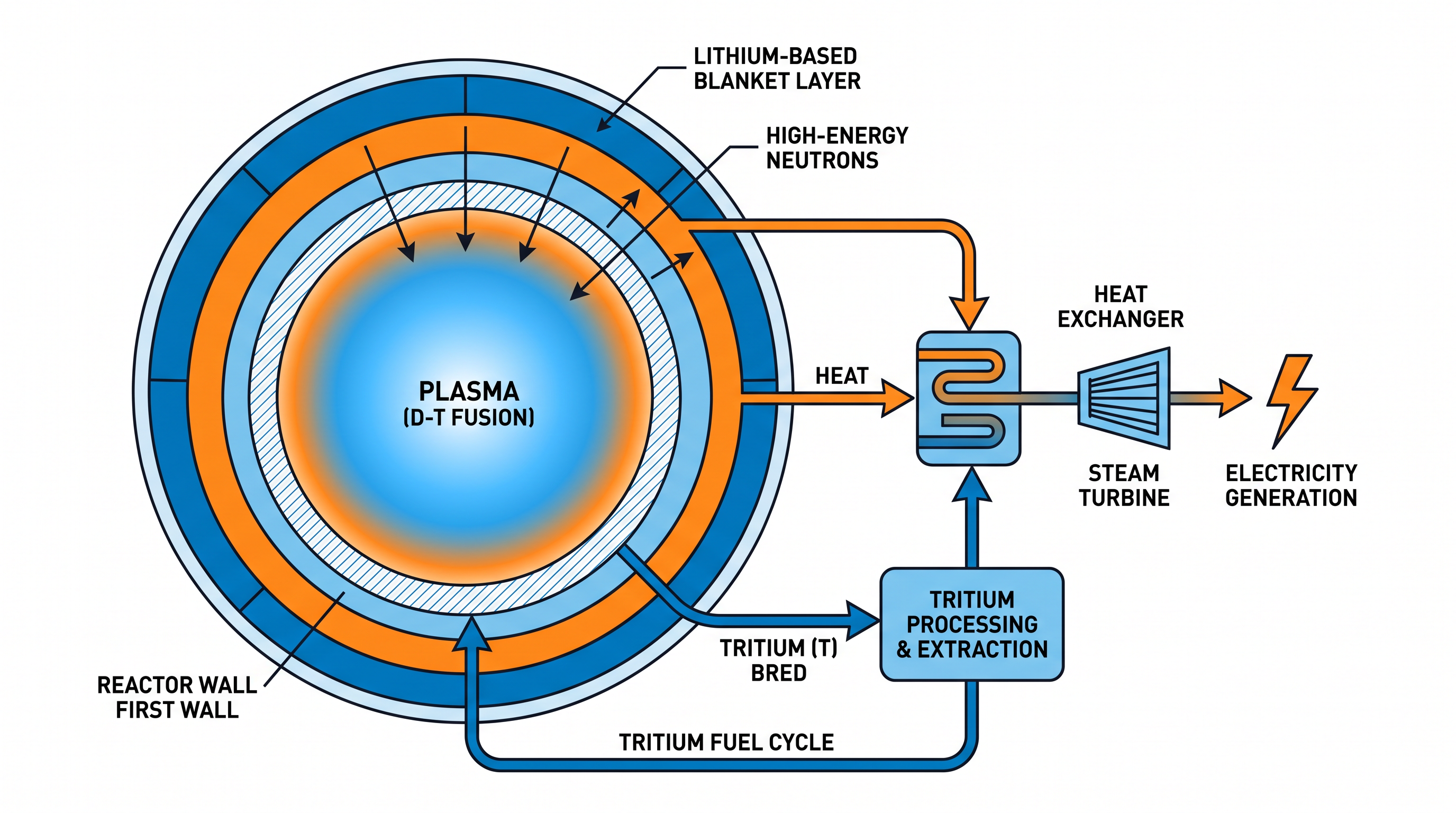
A breeding blanket is a specialized, lithium-based lining that sits inside the walls of a fusion vessel. It serves two existential functions for a commercial reactor. First, it must capture the intense kinetic energy of the neutrons released by the fusion reaction and convert that heat into electricity. Second, as those neutrons strike the lithium in the blanket, they breed tritium—a rare isotope of hydrogen that is required to fuel the ongoing fusion reaction. Without a functioning blanket, a fusion plant can neither generate usable power nor sustain its own fuel supply.[5]
Despite its critical importance, no facility in the world is currently capable of testing a full-scale breeding blanket under the extreme conditions of a commercial power plant. This gap represents one of the most significant unresolved challenges standing between today’s experimental machines and tomorrow's commercial grid. Recognizing that no single private company can shoulder the multi-billion-dollar risk of developing this infrastructure alone, the DOE has stepped in to socialize the risk.[1][5]
In June 2026, a landmark public-private partnership was announced to tackle the blanket bottleneck head-on. Backed by an initial seed investment from the DOE to the Idaho National Laboratory (INL), a consortium was formed to design the world's first Fusion Blanket Component Test Facility (BCTF). The collaboration brings together INL, the University of California San Diego, Japan-based Kyoto Fusioneering, and General Atomics.[5]
In June 2026, a landmark public-private partnership was announced to tackle the blanket bottleneck head-on.
The BCTF is slated to be built at General Atomics’ Magnet Technologies Center in San Diego, California—the same site where the massive central solenoid for the international ITER project was recently completed. The facility will allow engineers to circulate blanket fluids, evaluate heat removal, test mechanical stress, and safely extract tritium fuel at power plant levels. To accelerate the project, the state of California awarded General Atomics a $20 million California Competes Tax Credit in June 2026, cementing San Diego's status as an emerging epicenter for the fusion economy.[3][5]
“The Blanket Test Facility would give the fusion community the speed and scale needed to de-risk next-generation blanket designs,” noted Dr. Brian Grierson, director of Fusion Energy Technologies at General Atomics. “It’s where innovation meets practicality, and where we transform theory into real-world systems.” By building a shared testing ground, the BCTF will allow multiple private fusion startups to validate their proprietary blanket designs without having to build their own multi-million-dollar testbeds.[5]
The BCTF is just one piece of a broader federal strategy to rewire the fusion landscape. In June 2026, the DOE released its finalized Fusion Science & Technology Roadmap, outlining a 'Build-Innovate-Grow' approach to rapidly commercialize fusion power by the mid-2030s. A central pillar of this roadmap is the expansion of the Milestone-Based Fusion Development Program, which offers flexible, private-sector-friendly funding to companies that hit specific technical targets.[1]
The milestone program is already yielding tangible results. In May 2026, Zap Energy announced that the DOE had approved its preconceptual design report for a Z-pinch fusion power plant. Unlike massive tokamak reactors, Zap’s approach uses current-driven compression to stabilize plasma, resulting in a highly compact system. The approved design outlines a demonstration facility capable of generating 50 megawatts of net electrical output per module, detailing everything from the liquid metal first wall to the tritium fuel cycle.[7]
Other major players are forging their own public-private alliances to accelerate commercialization. In April 2026, Inertia Enterprises announced a landmark strategic partnership with Lawrence Livermore National Laboratory (LLNL)—the home of the National Ignition Facility. The agreement is designed to address specific engineering challenges on the path from proven physics to a commercial power plant, marking one of the largest private sector-led partnerships in the history of the U.S. national lab system.[8]
These partnerships represent a fundamental shift in how the United States approaches deep-tech industrial policy. Rather than the government attempting to build a commercial reactor itself, or leaving private startups to navigate the 'valley of death' alone, the new model leverages public infrastructure—like national labs and shared test facilities—to de-risk the hardest engineering challenges. This allows private capital to focus on rapid iteration, manufacturing scale, and grid integration.[1][2][8]
Despite the unprecedented momentum, significant uncertainties remain. The fusion environment is uniquely hostile; materials must withstand intense neutron bombardment and extreme thermal stress for decades without degrading. While the BCTF will test blanket components, qualifying materials that can survive the full lifespan of a commercial reactor remains an open question. Furthermore, the U.S. electrical grid faces its own interconnection bottlenecks, with massive backlogs of generation capacity waiting to come online.[4][6]
Nevertheless, the narrative around fusion has irrevocably shifted. It is no longer a question of whether fusion energy is scientifically possible, but rather how quickly the supply chain can be built to support it. With billions in private capital flowing and robust public-private partnerships tackling the core engineering bottlenecks, the foundation for a commercial fusion industry is actively being poured. The race to the grid is officially underway.[2][4][5]
How we got here
Dec 2022
The National Ignition Facility achieves net energy gain (Q>1), proving the fundamental physics of fusion.
May 2026
Zap Energy receives DOE approval for its preconceptual Z-pinch fusion power plant design.
June 2026
The DOE updates its Fusion Science & Technology Roadmap and announces the Fusion Blanket Component Test Facility (BCTF).
July 2026
The Fusion Industry Association reports that private fusion investment has reached $14.24 billion.
Viewpoints in depth
Commercial Fusion Startups
Private companies racing to deploy fusion power to the grid by the 2030s.
Startups argue that the physics of fusion are largely proven, and the remaining hurdles are purely engineering and manufacturing. They advocate for milestone-based funding that rewards technical achievement rather than traditional research grants. By leveraging private capital for rapid iteration, they believe they can compress the timeline to commercialization, provided the supply chain can scale to meet their component needs.
Public Research Institutions
National laboratories and government agencies focused on foundational science and shared infrastructure.
Public institutions view their role as bridging the 'valley of death' between basic science and commercial viability. They recognize that no single startup can afford to build multi-billion-dollar testing facilities for unproven components like breeding blankets. By socializing the risk of these massive infrastructure projects, national labs aim to provide a shared testing ground that lifts the entire domestic fusion ecosystem.
Supply Chain & Manufacturing Partners
The specialized industrial base tasked with building fusion components.
Suppliers are eager to pivot into the fusion economy, as evidenced by a 24% increase in supply chain spending. However, they face a 'chicken-and-egg' dilemma: they need long-term visibility into fusion demand before making massive capital investments in new manufacturing capacity. They emphasize that without standardized components and clear regulatory frameworks, scaling the production of specialized materials will remain a critical bottleneck.
What we don't know
- Whether current materials science can produce components capable of withstanding decades of extreme neutron bombardment without degrading.
- How quickly the U.S. electrical grid can resolve its massive interconnection backlog to accommodate new fusion power plants once they are built.
Key terms
- Breeding Blanket
- A specialized lining inside a fusion reactor that captures heat for electricity generation and breeds tritium fuel to sustain the reaction.
- Tritium
- A rare, radioactive isotope of hydrogen that, when fused with deuterium, serves as the primary fuel for most commercial fusion reactor designs.
- Net Energy Gain (Q>1)
- The critical threshold where a fusion reaction produces more energy than the amount of energy required to ignite it.
- Z-pinch
- A fusion approach that uses a powerful electrical current to generate a magnetic field that compresses and confines plasma, eliminating the need for massive external magnets.
Frequently asked
What is the 'bottleneck' in fusion energy?
While the core physics of fusion have been proven, the industry lacks the specialized supply chain and materials needed to build a commercial power plant. Key bottlenecks include heat management systems, vacuum vessels, and tritium breeding blankets.
What is a breeding blanket?
A breeding blanket is a lithium-based lining inside a fusion reactor. It captures high-energy neutrons to generate electricity and breeds tritium, a rare isotope needed to fuel the ongoing fusion reaction.
When will fusion energy be available on the grid?
According to a 2026 Fusion Industry Association report, 71% of private fusion companies expect to deliver fusion power to the electrical grid by the 2030s, though significant engineering challenges remain.
Sources
Source coverage
8 outlets
3 viewpoints surfaced







[1]U.S. Department of EnergyPublic Research Institutions
Milestone-Based Fusion Development Program
Read on U.S. Department of Energy →[2]Fusion Industry AssociationCommercial Fusion Startups
2026 Global Fusion Industry Report
Read on Fusion Industry Association →[3]General AtomicsSupply Chain & Manufacturing Partners
General Atomics Receives $20 Million Tax Credit to Advance Fusion Energy Development
Read on General Atomics →[4]World Nuclear NewsSupply Chain & Manufacturing Partners
Fusion supply chain spend up, but challenges remain
Read on World Nuclear News →[5]Business WireSupply Chain & Manufacturing Partners
General Atomics and DOE Announce BCTF Design Development
Read on Business Wire →[6]ObserverSupply Chain & Manufacturing Partners
The central challenge facing the sector remains unchanged: demonstrating that fusion can generate electricity at a commercial scale
Read on Observer →[7]Zap EnergyCommercial Fusion Startups
Zap Energy Achieves DOE Milestone for Preconceptual Z-Pinch Fusion Power Plant Design
Read on Zap Energy →[8]Inertia EnterprisesCommercial Fusion Startups
Inertia Enterprises Signs Landmark Public-Private Partnership with Lawrence Livermore National Laboratory
Read on Inertia Enterprises →
Every angle. Every day.
Get meta stories with full source coverage and perspective breakdowns delivered to your inbox.